Ryan Lochte Biography: The Wild Child Who Almost Lost It All
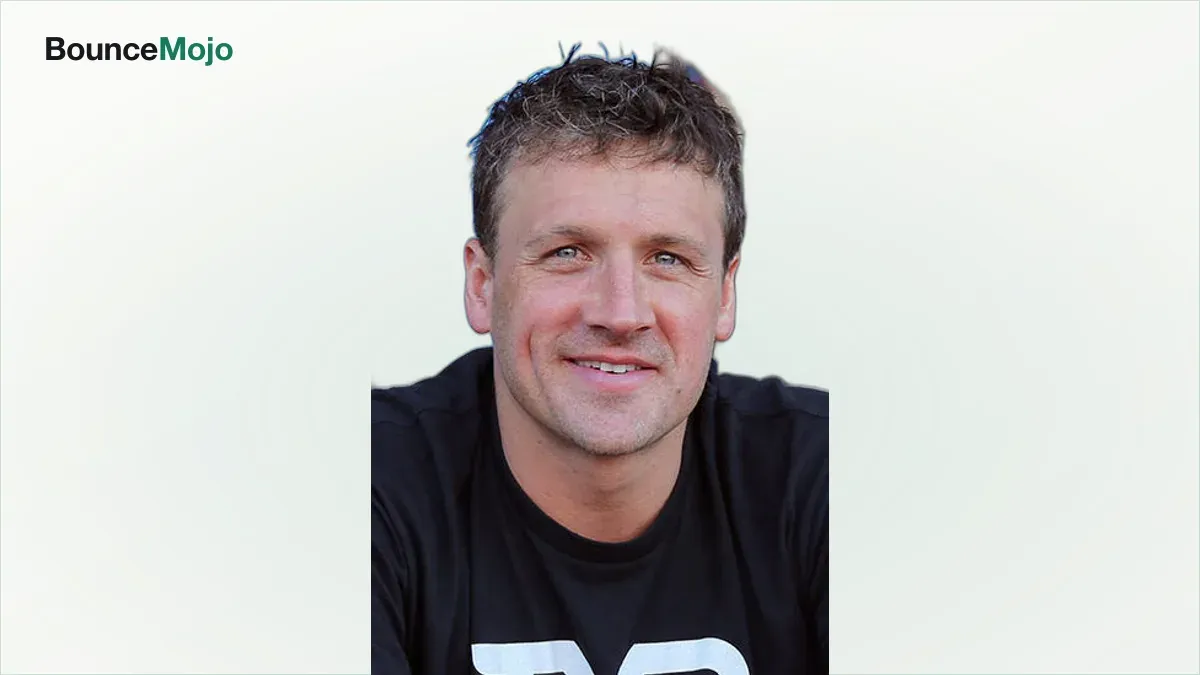
Everybody remembers the night in Rio. Almost nobody remembers the 12 medals it overshadowed.
Here’s what most people miss: one of the most decorated swimmers in Olympic history is best known for a lie he told at a gas station.
The Myth vs. The Reality
The myth is a party. Ryan Lochte, the goofy, grinning American swimmer with the grill in his teeth and the reality show, the fun-loving foil to the intense Michael Phelps. Wild. Likable. A little dumb, by his own cheerful admission.
That image is real. It’s also what nearly destroyed him.
Here’s the truth: beneath the party-boy persona was one of the greatest swimmers of his generation, a 12-time Olympic medalist whose achievements were genuinely historic. But the same recklessness that made him a marketable character also led him to a night in Rio that torched his reputation and his fortune.
Think about it: the personality that made Lochte rich is the same personality that made him fall. The brand and the flaw were the same thing.
Now, that combination of talent and immaturity doesn’t appear randomly. It was shaped by a childhood spent entirely inside the sport, and a career spent chasing a rival he could never quite catch. That’s where the story really starts.
The World That Made Ryan Lochte
To understand Lochte, you have to understand American swimming in the Phelps era.
He was born on August 3, 1984, in Rochester, New York, into a family where swimming was the family business. Both of his parents were swim coaches. The sport wasn’t a hobby in the Lochte house. It was the center of everything. When Ryan was 12, the family moved to Florida so his father could coach there, and Ryan’s own path accelerated.
The era he swam in was dominated by one man. Michael Phelps was rewriting the record books and becoming the most famous Olympian alive. Any American swimmer of Lochte’s generation lived in Phelps’s shadow, measured against a standard that was almost impossible to meet.
Here’s the deal: to be the second-best swimmer in the world during the Phelps years was to be simultaneously great and overshadowed. Lochte won constantly and still often finished behind the one man who mattered most.
But the real environment that shaped Lochte wasn’t the rivalry. It was a lifelong immersion in the pool that built an incredible athlete without always building the judgment to match. Which is where the climb, and the cracks, begin.
The Crucible: Early Life and the Climb
The environment that shaped him
Lochte’s whole childhood was swimming, and that total immersion made him elite fast.
Raised by two swim coaches, he grew up around the sport in a way few athletes do. He wasn’t a naturally disciplined student or a serious kid, by his own accounts. What he had was raw physical talent and an easygoing, fun-loving temperament that made him magnetic but sometimes careless.
You might be wondering: how does a coach’s kid become a global star? In Lochte’s case, through sheer physical gifts and a work ethic in the water that his casual personality masked. He swam for the University of Florida under coach Gregg Troy, where he became an NCAA and international force.
By the mid-2000s he had arrived on the world stage, and the medals started coming.
The catalyst
Then came the rivalry that defined his career: Michael Phelps.
Lochte and Phelps became the twin faces of American swimming, and their head-to-head races, especially in the grueling individual medley events, were among the most anticipated in the sport. Lochte pushed Phelps, occasionally beat him, and won a growing pile of his own medals across the 2004, 2008, 2012, and 2016 Olympics.
His peak came around 2011 and 2012. He was named World Swimmer of the Year, won multiple world titles, and by the London 2012 Olympics was one of the most marketable athletes in America, earning an estimated $2.3 million a year in endorsements.
Here’s the deal: at that moment, Lochte had everything, medals, money, and fame. But the personality that made him so marketable, the loose, careless, party-loving character, was a liability waiting to surface. And it surfaced spectacularly in Rio.
The Key Players
No life story is a solo act, and Lochte’s is defined by the people around him.
Start with his parents, both swim coaches, who built his entire world around the pool and gave him his start in the sport.
Then, towering over everything, there’s Michael Phelps. Not a villain, but the rival and teammate who defined Lochte’s career by comparison. Phelps was the standard Lochte was always measured against, and the contrast, disciplined Phelps versus wild Lochte, shaped both men’s public images. Phelps also became the model of what Lochte could have been off the pool: a stable, protected brand.
There was Gregg Troy, his college and Olympic coach, who developed his talent at Florida.
And there were the teammates caught up in the Rio incident, whose involvement complicated the fallout and spread the damage.
But the person who mattered most, for better and worse, was Lochte himself, whose choices in a single night rewrote his entire legacy. And those choices came at a devastating cost.
The Turning Point
The pinnacle
The pinnacle was London 2012 and the years around it. Lochte was at the top of the sport, a multiple Olympic and world champion, World Swimmer of the Year, and a genuine crossover celebrity with his own reality show, What Would Ryan Lochte Do?
By the time he reached the 2016 Rio Olympics, he had amassed 12 Olympic medals, six of them gold, second only to Phelps among male swimmers. On paper, he was one of the greatest American Olympians of all time.
Then, in a single night in Rio, it all came apart.
The price
The price was self-inflicted, and enormous.
During the 2016 Games, Lochte and several teammates had a late-night altercation at a gas station, where an intoxicated Lochte damaged a bathroom. Rather than admit it, Lochte claimed they had been robbed at gunpoint by men posing as police. The story made global headlines, and then it unraveled fast as surveillance footage contradicted his account.
The fallout was brutal. Lochte lost major sponsors, including Speedo and Ralph Lauren, almost overnight. He was suspended for 10 months by the U.S. Olympic Committee and USA Swimming. Years of endorsement income and public goodwill vanished in days. The party-boy persona that had made him rich suddenly read as reckless and dishonest.
Here’s the truth: no rival ever beat Ryan Lochte as badly as Ryan Lochte beat himself in Rio.
That fall, though, revealed something more human beneath the persona.
The Unvarnished Truth
Lochte’s story only makes sense when you tell the hard parts honestly, and there are plenty.
The central truth is immaturity. For years, Lochte’s brand was built on being the fun, careless, not-too-bright athlete, and he leaned into it happily. But that same carelessness, the failure to think through consequences, is exactly what led to the Rio disaster. The persona wasn’t just an image. It reflected a real lack of judgment at a critical moment.
There’s also the financial recklessness. Lochte has admitted, with unusual candor, that he blew through much of the millions he earned. He has spoken openly about the money mistakes he made, a rare admission from a former star.
Here’s what’s easy to miss: his greatest strength and greatest weakness were the same trait. The loose, spontaneous personality that made him a marketable, likable character is the same one that made him fabricate a story in a foreign country during the Olympics. You couldn’t separate the two.
None of that excuses the lie. And the criticism that followed was fierce, and largely deserved.
Controversies and Criticisms
Lochte’s career has one controversy that overshadows all others, plus a pattern that led to it.
The Rio scandal is the defining stain. Lying about being robbed at gunpoint, in a host country during the Olympics, and implicating that country’s safety, was a serious failure that drew intense global criticism. Many felt his behavior embarrassed his country and disrespected Brazil. The damage to his reputation was severe and, in the eyes of many, self-inflicted and fully earned.
Beyond Rio, critics pointed to a broader pattern of immaturity and poor judgment throughout his career. The party-boy image that networks loved also fed a perception that Lochte was more spectacle than substance, a great athlete who never fully grew up.
There were also later missteps, including a suspension related to an improper intravenous infusion post that violated anti-doping protocols, which reinforced the sense that Lochte struggled to stay out of trouble.
In fairness, he has shown genuine contrition, spoken honestly about his mistakes, and worked to rebuild. But the criticisms are real, and his own choices created most of them.
So what does a champion like this actually teach the rest of us? A hard, valuable lesson.
What We Can Learn From Ryan Lochte
Navigating hard times
Lochte’s story is a lesson in how fast success can collapse, and how a person responds when it does.
He went from a $2.3-million-a-year endorsement star to a suspended, sponsor-less cautionary tale in a matter of days. The lesson isn’t subtle: reputation is fragile, and a single reckless choice can undo years of work. For any high-earner, protecting your name is protecting your livelihood.
In other words: talent gets you to the top, but character keeps you there, and Lochte learned that the hardest possible way.
The success blueprint
The more hopeful blueprint is about accountability and reinvention.
After Rio, Lochte didn’t vanish. He owned his mistakes publicly, kept competing, leaned back into reality television, and slowly rebuilt some of his income and public standing. He turned even his financial failures into candid talks about money and recovery. It wasn’t a clean redemption, but it was a real attempt to rebuild.
Want the fuller financial picture behind the rise and fall? The full net worth breakdown shows exactly how peak endorsement millions swung to crisis and back. And to see where he ranks among the sport’s biggest earners, the richest Olympians list puts it in context.
The deeper takeaway is about the cost of persona. Lochte proved that the exact image that makes you marketable can be the thing that destroys you. Being the fun, careless character is profitable right up until carelessness has real consequences. Manage your brand, but don’t let it become an excuse to stop thinking.
Which brings us to the final reckoning on the man.
Final Verdict
Ryan Lochte is going to be remembered for the wrong night, and that’s the tragedy of it.
Casual fans will remember Rio: the fabricated robbery, the lost sponsors, the embarrassment. A fairer accounting reveals a genuinely great swimmer, a 12-time Olympic medalist who spent his career pushing the greatest swimmer alive and winning a historic haul of his own.
Here’s the bottom line: the medals should have been the story, and instead a reckless lie became it. Lochte’s career is a study in squandered goodwill, a reminder that for a public figure, the brand is the bank, and one bad night can empty it.
He earned everything in the pool. He gave much of it away in a gas-station bathroom in Rio. The lesson isn’t cruel, it’s cautionary: guard your name, because it’s worth more than any medal. That’s the version worth remembering.
Shop Ryan Lochte on Amazon
Books, audiobooks, merch and more, handpicked for fans.
As an Amazon Associate we earn from qualifying purchases.
Frequently Asked Questions
Where did Ryan Lochte grow up?+
Lochte was born in Rochester, New York, into a swimming family. His parents were both swim coaches, and the family moved to Florida when he was 12 so his father could coach there.
How many Olympic medals did Ryan Lochte win?+
Lochte won 12 Olympic medals, including six golds, across four Games from 2004 to 2016, second only to Michael Phelps among male swimmers.
What was the 2016 Rio scandal?+
Lochte falsely claimed he and teammates were robbed at gunpoint in Rio. Footage revealed they had actually vandalized a gas-station bathroom. The fallout cost him major sponsors and a 10-month suspension.
Who was Ryan Lochte's biggest rival?+
His greatest rival and teammate was Michael Phelps. Their races, especially in the 200m and 400m individual medley, were some of the most anticipated events in Olympic swimming.
What did Ryan Lochte do after swimming?+
Lochte became a reality-TV personality, starring in What Would Ryan Lochte Do? and appearing on Dancing with the Stars and Celebrity Big Brother, while working to rebuild his reputation.
Want the money side of the story?
Read Ryan Lochte's Full Net Worth Breakdown →Shop Ryan Lochte on Amazon
Books, audiobooks, merch and more, handpicked for fans.
As an Amazon Associate we earn from qualifying purchases.