Ryan Bader Biography: The Quiet Wrestler Who Conquered Two Divisions
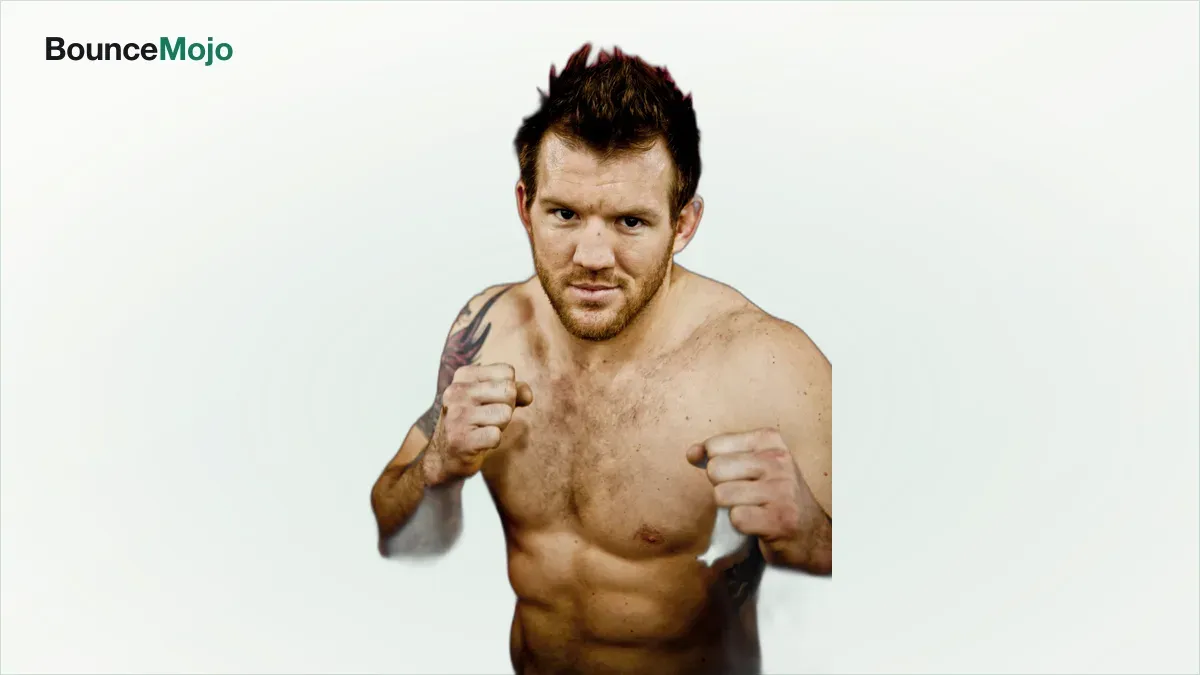
Most people know Ryan Bader as a solid, dependable champion. That description is accurate, and it undersells one of the most quietly remarkable careers in modern MMA.
Here’s what most people miss: the unflashy wrestler who rarely made headlines pulled off a feat almost no fighter in history has matched, ruling two entire weight divisions at the same time.
The Myth vs. The Reality
The myth is dismissive. Ryan Bader: a good-not-great wrestler, a solid gatekeeper who never quite cracked the elite in the UFC, a champion in a “lesser” promotion. Steady. Unspectacular. Roll credits.
The reality is far more impressive than the label suggests.
Here’s the deal: Bader didn’t just have a nice career. He became a two-division champion, holding the Bellator light heavyweight and heavyweight titles simultaneously, a feat so rare that only a handful of fighters in the sport’s history can claim anything like it. The “unspectacular” narrative ignored one of the most efficient, accomplished careers around.
And the “just a wrestler” framing misses the intelligence behind it. Bader made shrewd choices, about promotions, about style, about longevity, that maximized a career many flashier fighters would have squandered.
You might be wondering: how does a quiet college wrestler with no interest in trash talk end up ruling two divisions? To understand that, you have to understand where he came from.
The World That Made Ryan Bader
Bader was born in 1983 in Reno, Nevada, and came up in the deep, disciplined world of American amateur wrestling.
He wrestled at Arizona State University, one of the country’s storied programs, in an environment that rewards exactly what Bader embodied, work ethic, toughness, and a willingness to grind without applause. College wrestling is a brutal, unglamorous sport that filters out anyone chasing quick fame. It shaped him into a competitor built for the long haul rather than the highlight reel.
Now: this background made Bader the opposite of the modern attention-seeking fighter. He wasn’t loud. He didn’t chase controversy. He came from a culture that valued results over noise, and it stamped his entire approach to the fight game.
That collision, a humble wrestling ethos meeting a sport increasingly driven by personality and spectacle, is the backdrop for Bader’s whole career. He wasn’t built to sell a fight with his mouth. He was built to win it with his preparation.
But before the titles, there was a young wrestler at Arizona State, forming a friendship that would help launch him into MMA.
The Crucible: Early Life and the Climb
The Environment That Shaped Him
Bader’s wrestling career at Arizona State put him alongside future stars, most notably Cain Velasquez, who would become a UFC heavyweight champion. That teammate bond and shared training pushed both men and gave Bader a natural bridge into MMA.
His elite wrestling gave him a foundation most fighters would envy, control, takedowns, and the conditioning to grind through hard rounds. When he transitioned to mixed martial arts, he already possessed the single most reliable skill in the sport.
Think about it: while many prospects were learning to wrestle, Bader had already competed at the highest level of American collegiate wrestling.
That head start is hard to overstate. Elite college wrestling is one of the most demanding pursuits in all of sports, a grind of weight cuts, dawn practices and relentless one-on-one competition with no teammates to hide behind. It builds a particular kind of athlete: disciplined, durable, and comfortable in discomfort. Bader carried all of that into MMA. When fights got hard, when rounds got long, he had a reservoir of toughness most opponents simply couldn’t match. His wrestling wasn’t just a skill. It was a mindset forged years before he ever stepped into a cage.
The Catalyst
Here’s the truth: a reality show changed everything.
Bader entered The Ultimate Fighter, the UFC’s reality-competition series, for its eighth season in 2008, and he won it. That victory earned him a UFC contract and launched his professional career on a national stage. It was the break that turned a talented wrestler into a rising MMA prospect.
It gets better. Bader built a long, respectable UFC run as a durable light heavyweight, beating good opponents and establishing himself as a reliable top contender, even if the very top of the division stayed just out of reach.
For years he lived in a frustrating spot: too good to be a stepping stone, not quite dominant enough to seize the belt in one of the UFC’s deepest divisions. He beat contenders, lost the occasional big one, and kept grinding. A lesser competitor might have accepted that ceiling and coasted. Bader did the opposite. He studied his losses, kept refining his game, and quietly prepared for the moment that would let all that accumulated experience finally pay off.
That’s where the climb toward greatness truly began. But the biggest chapter came only after a bold decision to change course, and the people around him shaped that leap.
The Key Players
No career is built alone, and Bader’s is defined by a few key relationships.
Cain Velasquez. His Arizona State wrestling teammate and close friend became one of the greatest heavyweights in UFC history. Their bond, forged on the wrestling mats, helped draw Bader into MMA and gave him a training partner and ally at the highest level.
The Bellator promotion. The decision to join Bellator in 2017 was the turning point of Bader’s career. There, freed from the UFC’s crowded light heavyweight logjam, he became a headline champion, the mechanics of which live in his net worth breakdown.
Fedor Emelianenko. In the Bellator Heavyweight Grand Prix, Bader faced the legendary Russian, a fight that crowned him a two-division champion and linked his name to one of the sport’s all-time greats.
His coaches and camp. Bader’s steady evolution from pure wrestler to well-rounded champion came through dedicated coaching and a disciplined training environment that suited his temperament.
Think about it: every one of these relationships reinforced the same thing, a patient, results-first approach that valued smart choices over splashy ones.
The Turning Point
The Pinnacle
Bader’s mountaintop came in Bellator.
He won the light heavyweight title, then entered the Heavyweight Grand Prix, a tournament to crown the division’s best, and won it, defeating the legendary Fedor Emelianenko in the final. That victory made him the simultaneous holder of two Bellator championship belts, light heavyweight and heavyweight, one of the rarest achievements in the entire sport.
As his own net worth story lays out, that double reign and Grand Prix win maximized his earning power, giving him more championship peaks than most fighters ever reach.
The Price
Here’s the kicker: the very steadiness that made him a champion kept him from the superstar spotlight.
Bader’s control-based style and quiet personality earned respect but not the mainstream fame of louder, flashier fighters. He spent his best years in Bellator, a major promotion but one without the UFC’s pay-per-view megadeals and global spotlight. He won more than almost anyone, yet remained underrated by casual fans. The pinnacle brought belts and security, and with them the quiet frustration of an elite career that never got its full share of attention. Which brings us to the honest truths behind the champion.
The Unvarnished Truth
Bader is not a flawless fighter, and his career had real complications.
Early in his UFC run, he suffered notable losses at key moments, defeats that stalled his momentum and fueled the “good but not great” narrative that followed him for years. His cautious, control-first style, while effective, sometimes drew criticism for lacking excitement.
Now: none of this diminishes what he built. Much of his so-called blandness was actually discipline, the same trait that let him win consistently and compete deep into his thirties without burning out. When you value results over spectacle, you don’t always get the credit you deserve.
But those early losses and the low-key persona are real parts of the story. Bader’s career is a study in how being underrated can be both a burden and, in some ways, a quiet advantage.
The most honest thing anyone can say about Bader is this: his greatest strength and his biggest obstacle to fame were the same trait. His steady, unflashy consistency. It made him a two-division champion and kept him out of the mainstream spotlight.
Controversies and Criticisms
Bader’s career has been remarkably clean, but it hasn’t escaped debate.
The “boring” criticism. His control-heavy style drew the familiar complaint aimed at wrestlers, that he neutralizes opponents rather than thrilling fans.
The UFC-versus-Bellator debate. Critics argue his championships came in Bellator rather than the UFC, complicating where he ranks among the sport’s elite, a debate common to any star of a rival promotion.
Early-career losses. His UFC stumbles at big moments left a lingering “underachiever” tag that his later Bellator success only partly erased.
Low profile. Some argue Bader never marketed himself enough, leaving money and mainstream recognition on the table by refusing to play the personality game.
Compared with the scandals that follow some fighters, Bader’s controversies are entirely about style and promotional politics rather than any personal misconduct, a rare thing in combat sports.
What We Can Learn From Ryan Bader
Navigating Hard Times
The first lesson is about response to setback: early failures don’t have to define the whole story. Bader stumbled at key UFC moments, the kind of losses that break a fighter’s confidence.
But here’s the truth his career makes plain: he adapted rather than quit. He made a bold promotional change, refined his game, and reached heights his UFC struggles never suggested were possible. Real success wasn’t avoiding early losses. It was refusing to let them write the ending.
The Success Blueprint
If you want the replicable part, it’s this: master a reliable core skill and make smart strategic choices around it. Bader’s wrestling was elite before he ever fought, and his decision to join Bellator gave that skill the perfect stage to shine.
That’s transferable far beyond the cage. The lesson isn’t “switch companies.” It’s “know your strengths, then put yourself where they’ll be valued and rewarded most.” That strategic clarity made him a two-division champion and one of the sport’s steadily well-earning names on our richest MMA fighters ranking.
Becoming Better
The deepest lesson is about the underrated power of consistency. Bader didn’t win with one magic performance. He won by being reliable, disciplined and durable over a career that spanned well over a decade at the top.
In other words, greatness doesn’t always announce itself loudly. Sometimes it looks like showing up, doing the work, and quietly stacking wins until you’ve achieved something almost no one else ever has. It’s a lesson that outlasts any highlight reel.
Final Verdict
Ryan Bader is one of the most accomplished and underrated champions in modern MMA, and the word “underrated” is doing real work. He didn’t have the loudest voice or the flashiest style, but he achieved something rare and lasting, ruling two divisions at once in a sport that humbles almost everyone who tries.
And here’s the twist that reframes everything: the fighter dismissed as “just a solid wrestler” quietly built one of the most efficient championship careers of his era, the two belts, the Grand Prix crown, the longevity, all achieved without the drama that fuels most stars. His full earning story, and how those titles built his fortune, lives in his net worth breakdown, and it’s proof that substance can outlast spectacle.
If you want to understand the value of consistency in combat sports, study Bader’s career. The wrestling foundation, the smart promotional move, the two-division reign. He’s the rare champion who let his results do all the talking, and the results said plenty.
Shop Ryan Bader on Amazon
Books, audiobooks, merch and more, handpicked for fans.
As an Amazon Associate we earn from qualifying purchases.
Frequently Asked Questions
Where is Ryan Bader from?+
Ryan Bader was born in Reno, Nevada, and rose through the college wrestling ranks at Arizona State University before turning to mixed martial arts.
How did Ryan Bader start his MMA career?+
Bader launched his career by winning The Ultimate Fighter Season 8 in 2008, the reality-competition victory that earned him a UFC contract.
What is Ryan Bader best known for?+
He is best known for becoming a two-division Bellator champion, holding the light heavyweight and heavyweight belts simultaneously, and winning the Heavyweight Grand Prix.
Who is Ryan Bader's most famous friend in MMA?+
Bader is close friends with former UFC heavyweight champion Cain Velasquez, his college wrestling teammate at Arizona State University.
What is Ryan Bader's fighting style?+
Bader is a wrestling-based fighter with heavy hands, using a control-first approach built on his elite college wrestling background.
Want the money side of the story?
Read Ryan Bader's Full Net Worth Breakdown →Shop Ryan Bader on Amazon
Books, audiobooks, merch and more, handpicked for fans.
As an Amazon Associate we earn from qualifying purchases.