Royce Gracie Biography: The Skinny Kid Who Proved Jiu-Jitsu Works
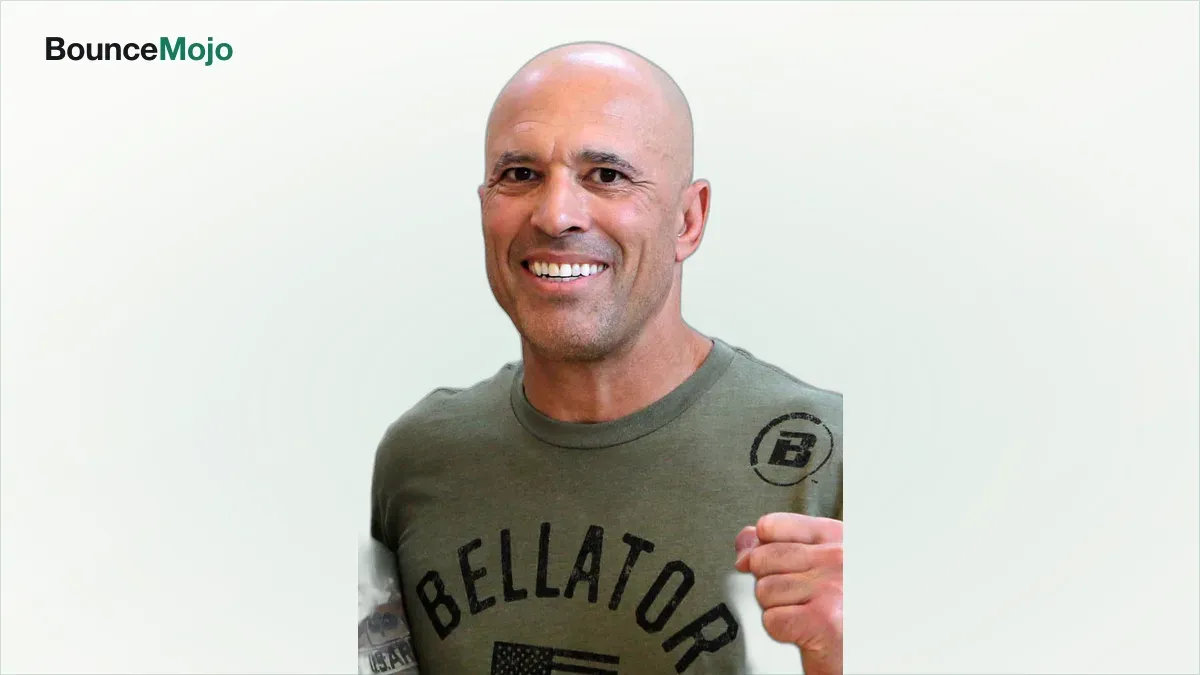
Most people picture a fighter as a mountain of muscle. Royce Gracie was the opposite, and that was exactly the point.
Here’s what most people miss: the Gracie family didn’t send their biggest brother into the first UFC. They sent the slim one on purpose, betting a family’s entire reputation on the idea that skill beats size.
The Myth vs. The Reality
The myth is simple. Royce Gracie: the unbeatable jiu-jitsu wizard who walked into a cage and made giants tap like magic.
The reality is more human and more interesting.
Here’s the deal: Royce was not the most physically gifted Gracie, not the strongest, not the most feared in the family gym. Insiders often called older brother Rickson the truly frightening one. Royce was chosen for the first UFC precisely because he looked ordinary. Slim. Calm. Almost fragile next to the wrestlers and strikers he faced.
That was the whole strategy. The Gracies wanted to prove that their art, not their genetics, was the difference. If a normal-sized man could beat monsters, the technique sold itself.
You might be wondering: how does a family bet its entire name on one quiet young man? To understand that, you have to understand the world that made him.
The World That Made Royce Gracie
Royce was born in 1966 in Rio de Janeiro, into a country where the Gracie name already carried weight.
His father, Helio Gracie, had spent decades refining a version of jiu-jitsu built for smaller people, leverage and timing over brute force. The family had issued open challenges for years, the famous “Gracie Challenge,” inviting fighters of any style to test themselves. In Brazil, this was legend. In the wider world, almost nobody had heard of it.
Now: the martial-arts landscape of the early 1990s was fractured and full of myth. Karate schools, kung fu academies, and boxing gyms each claimed superiority, and there was no honest way to settle it. Movies had convinced the public that flying kicks won fights. Nobody had a clean answer to the oldest question in combat: which style actually works?
That vacuum is the backdrop for everything Royce became. He wasn’t just a fighter. He was the family’s answer to a question the whole world was quietly asking.
Remember, too, that Brazil itself was a proving ground unlike anywhere else. The Gracies had spent generations testing their art in real fights against boxers, wrestlers, and brawlers of every kind. By the time Royce was born, the family had already learned, through decades of hard experience, that leverage and technique could neutralize size. Royce didn’t inherit a theory. He inherited proof, refined over three generations, and he was about to carry it to a global audience.
But before the cage, there was a boy growing up on the mats of Rio.
The Crucible: Early Life and the Climb
The Environment That Shaped Him
Royce grew up inside the family business, and that business was fighting.
The Gracie household ran on jiu-jitsu. Training wasn’t a hobby, it was identity, discipline, and legacy all at once. Royce learned to grapple almost before he learned much else, surrounded by brothers and cousins who lived and breathed the art. His father Helio was the philosopher-founder, and every child was expected to carry the technique forward.
Here’s the truth: that upbringing gave Royce something rarer than talent. It gave him total calm under pressure. While other fighters relied on aggression, he had been raised to stay patient, to wait for the mistake, to trust the ground game when everything looked lost.
As a young man he moved to the United States, following his brother Rorion, who was determined to spread jiu-jitsu on American soil. That move set the stage for everything.
The Catalyst
The catalyst was an idea: build an event where styles could finally fight for real.
Rorion Gracie helped create the Ultimate Fighting Championship as a showcase, and the family needed a champion. They chose Royce. The reasoning was pure marketing genius. Send the least intimidating Gracie, and let the technique speak.
It gets better, and stranger. On November 12, 1993, in Denver, Colorado, Royce walked into a caged arena in a plain white gi, weighing far less than most of his opponents. What happened next didn’t just win a tournament. It launched an entire sport, and turned a quiet young man into a founding father.
The Key Players
No one changes history alone, and Royce’s story is crowded with family.
Helio Gracie. His father was the source of it all, the co-founder of the family art and the philosophical center of the household. Helio’s belief that leverage beats strength is the exact idea Royce carried into the cage.
Rorion Gracie. His older brother was the visionary businessman who brought jiu-jitsu to America and co-created the UFC as a platform to prove it. Rorion chose Royce, coached the strategy, and stood in his corner.
Rickson Gracie. His older brother was widely considered the most dangerous fighter in the family. Rickson’s shadow is part of Royce’s story, proof that Royce didn’t need to be the scariest Gracie to become the most famous one.
The opponents. Ken Shamrock, Dan Severn, and a parade of larger, stronger men served as the perfect foils. Each one Royce submitted made the point louder: size was not destiny.
Think about it: every key player in his life pushed toward the same moment, a family, a platform, and a lineup of giants, all set up to test one quiet man. That test became his peak.
The Turning Point
The Pinnacle
The first UFC is Royce’s mountaintop.
In a single night in 1993, he submitted three larger opponents and won UFC 1. He followed it by winning UFC 2 and UFC 4, and by fighting the legendary 36-minute draw with Ken Shamrock at UFC 5. Fans had never seen anything like it. A slim man in pajamas was calmly choking out fighters who looked like they could break him in half.
The image endured. Royce Gracie, unbothered, dragging bigger men to the ground and finishing them with patience instead of power. He became the sport’s first true star and, in 2003, entered the inaugural UFC Hall of Fame class. As his own net worth story explains, those wins became the foundation of a teaching career that has paid him ever since.
The Price
Here’s the kicker: being first came with a cost.
Royce fought in an era before massive purses, PPV shares, and eight-figure sponsorships. He built the audience that later fighters would cash in on, yet he never saw that windfall himself. He carried the pressure of an entire family’s reputation on his shoulders, night after night, knowing a single loss could unravel the myth.
The pinnacle made him a legend. It did not make him a mogul. That gap between influence and income is the quiet tension of his whole career, and it leads straight to the more human parts of his story.
The Unvarnished Truth
Royce was a pioneer, not a saint, and honesty serves him better than legend.
Later in his career, the sport he helped create evolved past him. Fighters learned jiu-jitsu, added wrestling and striking, and became complete athletes. Royce’s specialized approach, so dominant in 1993, no longer guaranteed victory against a new generation trained in everything.
Now: there was also a serious blemish. After a 2007 fight, Royce tested positive for an anabolic steroid and was suspended and fined by the athletic commission. He disputed the finding, but the record stands, and it complicated the image of a fighter long seen as proof that pure technique wins.
None of this erases what he did. It simply makes him human. The man who proved a martial art was also a competitor who aged, adapted, and stumbled like anyone else. Which brings us to the criticisms.
Controversies and Criticisms
Royce’s career carried real debates, and pretending otherwise flattens him.
The steroid suspension. His 2007 positive test remains the sharpest mark on his record, an uncomfortable footnote for a man whose whole brand was that skill beats shortcuts.
The special rules. Critics have long noted that some of Royce’s biggest fights, especially in Japan, came with unusual rules, no time limits or conditions that arguably favored his grappling style. Supporters counter that he was simply playing to the strengths the era allowed.
Fading with the sport. As MMA matured, some argued Royce’s later appearances traded on nostalgia more than dominance, that he kept fighting past the point where his approach could win against modern, well-rounded opponents.
The family-machine question. A few observers have framed the early UFC as a Gracie marketing vehicle first and a fair test second, since the family both ran the event and supplied the champion. That critique is real, even if the result, jiu-jitsu’s global rise, is undeniable.
What We Can Learn From Royce Gracie
Navigating Hard Times
The first lesson is about pressure: carry the weight without letting it crush you. Royce walked into the unknown with a family’s reputation on his back and stayed calm. His entire method was to wait, breathe, and trust his preparation when the moment looked most dangerous.
But here’s the truth the sport makes plain: being early is lonely. Royce did the proving and watched others collect the payday. Real durability meant finding a second act, teaching, when the first one, fighting, could no longer pay the way it did for the generation he inspired.
The Success Blueprint
If you want the replicable part, it’s this: Royce won by making his supposed weakness his weapon. He was smaller, so he made size irrelevant. He turned a disadvantage into the whole selling point.
That’s transferable. The lesson isn’t “be small.” It’s “prove your idea in the most public, undeniable way possible.” Royce didn’t argue that jiu-jitsu worked, he demonstrated it against giants, and the demonstration built a career. His placement among the founders on our richest MMA fighters ranking tells the financial half; his influence over modern stars like Jon Jones tells the other.
Becoming Better
The deepest lesson is about legacy over glory. Royce never became the richest fighter, and it never seemed to be the goal. He chose to be the one who proved something, then spent decades teaching it forward.
In other words, impact can outlast income. The purses he missed are gone. The sport he helped birth, and the countless students his example created, are still here, which is the strangest and truest twist in his whole story.
Final Verdict
Royce Gracie is one of the most important figures in combat-sports history, and “important” matters more here than “greatest,” though he was extraordinary. He didn’t just win fights. He answered a question the whole martial-arts world had argued about for a century, and he answered it with his body, in front of everyone.
And here’s the twist that reframes everything: the man who beat giants was never the strongest Gracie, never the highest-paid fighter, and never the most feared in his own gym. He was simply the one who stepped forward when the family needed proof, and in doing so he built something no purse could buy, a legacy woven through every grappler alive today. The full financial picture lives in his net worth breakdown, and it tells the most fitting ending imaginable: the pioneer who earned in respect what he never chased in riches.
Shop Royce Gracie on Amazon
Books, audiobooks, merch and more, handpicked for fans.
As an Amazon Associate we earn from qualifying purchases.
Frequently Asked Questions
Where did Royce Gracie grow up?+
Royce Gracie grew up in Rio de Janeiro, Brazil, the son of Helio Gracie, co-founder of Gracie jiu-jitsu. He trained on the family mats from early childhood and moved to the United States as a young man to help spread the art.
Why was Royce chosen for the first UFC?+
The Gracie family deliberately chose Royce because he was slim and unassuming. If the smallest, least intimidating Gracie could win, it would prove that technique, not size, wins fights.
How many early UFC tournaments did Royce Gracie win?+
Royce won UFC 1, UFC 2, and UFC 4, submitting a string of larger opponents and establishing Brazilian jiu-jitsu as the foundation of modern mixed martial arts.
Is Royce Gracie related to other famous fighters?+
Yes. Royce belongs to the legendary Gracie family. His father Helio helped create Gracie jiu-jitsu, and his brothers, including Rickson Gracie, are grappling icons in their own right.
What is Royce Gracie's legacy?+
Royce is remembered as the man who proved jiu-jitsu on the biggest stage, entered the inaugural UFC Hall of Fame class in 2003, and inspired a generation of fighters to learn grappling.
Want the money side of the story?
Read Royce Gracie's Full Net Worth Breakdown →Shop Royce Gracie on Amazon
Books, audiobooks, merch and more, handpicked for fans.
As an Amazon Associate we earn from qualifying purchases.