Rory McIlroy Biography: The Prodigy Who Waited a Decade to Win
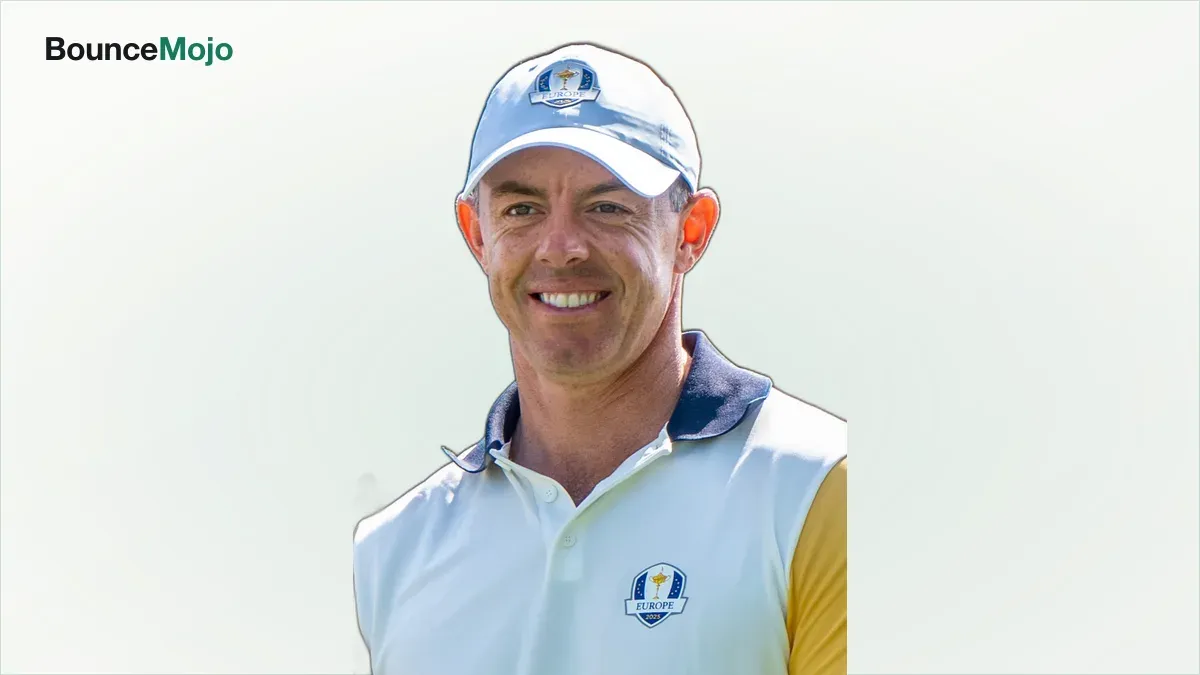
Eleven Years Between the Fourth Major and the Fifth
Everything interesting about Rory McIlroy sits inside one gap.
He won four major championships by the age of 25. He won the fifth at 35. The decade in between is the story, and it is the part the “effortless prodigy” version of him leaves out entirely.
The easy telling goes: natural talent, fluid swing, born to win, Hall of Fame from the cradle. That telling is not false. It is just the setup. McIlroy did win early and often, and then he ran into a wall of expectation and near-misses that turned the pursuit of one specific title, the Masters, into an emotional ordeal that stretched across more than ten years.
The “effortless” framing also hid what he actually is: a fiercely determined competitor who wore his heart on his sleeve, who cried after losses, and who carried the burden of a nation and a sport waiting for him to finish the job.
Holywood, and the Parents Who Worked the Extra Shifts
McIlroy was born in 1989 in Holywood, County Down, Northern Ireland, into a working-class family that organized itself, lovingly, around a single dream.
His father, Gerry, worked multiple jobs, bartending and cleaning, to fund Rory’s golf. His mother, Rosie, worked extra shifts too. The sacrifice was enormous and single-minded. This family believed their boy was special and poured everything into that belief, and the evidence arrived early: as a toddler he reportedly chipped golf balls into a washing machine, and by age nine he was winning junior world titles. The talent was obvious enough that the sacrifice felt less like a gamble than an investment.
He also carried a heritage heavier than most fans realize. McIlroy grew up in a Northern Ireland still shadowed by the Troubles, and his family knew loss from that era firsthand. Meanwhile Northern Irish golf was entering a golden era, with Graeme McDowell and Darren Clarke proving that champions could come from this small corner of the world. When McIlroy rose to global stardom he became a unifying figure in a place long divided, a source of shared pride across old fault lines.
That role added meaning, and pressure. He was never simply chasing his own dream. He was carrying the hopes of a small country that badly wanted a hero it could all cheer for.
Congressional, 2011: Eight Shots Clear at Twenty-Two
He turned professional in 2007 at 18 and rose with dazzling speed, his powerful, rhythmic swing marking him as a generational talent. The golf world anointed him a future No. 1 almost immediately, which is its own kind of trap: when you are anointed early, the expectations arrive early too, and they never let up.
The breakthrough was a statement. At the 2011 U.S. Open at Congressional, McIlroy, still just 22, won his first major by a staggering eight shots, setting scoring records and announcing himself as the game’s next great force.
More followed fast: the 2012 and 2014 PGA Championships and the 2014 Open Championship. By 25 he had four majors, multiple stints as world No. 1, a reputation as the finest ball-striker of his generation, and every reason to expect he would pile up many more.
Then the majors stopped.
Augusta, Every April, for a Decade
The one venue standing between McIlroy and immortality was the one that kept refusing him.
The wound started early. In 2011, a 21-year-old McIlroy blew a four-shot final-round lead at the Masters. After 2014 the pattern hardened into something worse: years of major near-misses and painful final-round collapses, with Augusta the recurring site of the heartbreak. Each spring brought fresh hope and, for a decade, fresh disappointment. He wept openly after some defeats, the pressure visible on his face.
This became the central question mark over an otherwise stellar career, and it produced the sharpest criticism he ever faced. Doubters questioned his mental toughness at Augusta, pointing to 2011 and to later Sunday stumbles. His openness was reframed as a weakness, with critics arguing that his best rivals kept their emotions more tightly controlled under pressure.
Here is the honest counterweight: McIlroy never hid the pain or pretended to be a machine. He let the world watch him struggle, doubt and hurt, and then he kept showing up. Every April at Augusta he volunteered for public failure one more time. That is not the absence of toughness. It is a specific and unglamorous kind of it.
The Fights He Picked Off the Course
Two other arguments followed him through his prime, and both cost him more than the trophies suggest.
The first was money versus performance. His early-career switch to Nike clubs, tied to a huge endorsement deal, was blamed by some for a temporary dip in form, reviving an old debate about what a contract can quietly take from a player.
The second was larger. When the Saudi-backed LIV circuit split the sport, McIlroy became the PGA Tour’s most prominent defender, arguing for the traditional structure of the game. It was a role he was praised for by loyalists and criticized for by others, and his position appeared to soften as the tour itself negotiated with the Saudi fund, drawing accusations of inconsistency. He has admitted the toll it took.
The cost is easy to underrate. This was a burden that consumed enormous energy during the exact years he was trying to win the tournament that had eluded him. He was fighting for the shape of his sport and for his own legacy at the same time.
What the 2025 Green Jacket Actually Settled
At the 2025 Masters, McIlroy completed the career Grand Slam, joining the rarest company in golf history.
The emotion of it, the tears, the release of more than a decade of accumulated pressure, told you what the wait had been worth. Some victories matter precisely because they were so hard to earn, and the value of a dream is often measured by how long you had to fight for it. The prodigy who won early learned that the sweetest triumph was the one that made him wait.
He did not get there alone. Gerry and Rosie’s sacrifice is the emotional foundation of the entire career, and their pride in his wins is a recurring, moving thread through it. His wife, Erica Stoll, a former PGA of America official, has been the steadying presence in his personal life through every high and low of the decade-long chase.
That is the twist that reframes the whole career. The player everyone expected to win effortlessly instead gave golf one of its greatest stories of perseverance, and his hardest-won victory meant more than all the ones that came easily.
The other half of the story is what he built while he waited. McIlroy paired elite talent with early business decisions that outran his prime, signing a landmark Nike deal young and taking equity in ventures like the TGL league alongside Tiger Woods, the idol who became a mentor, friend and eventually business partner. That foresight is why he ranks among the wealthiest names on our richest golfers list, and the full accounting lives in his net worth breakdown.
But the fortune is the footnote. The boy from Holywood, funded by parents who worked around the clock, finished the dream they had all sacrificed for, on the sport’s grandest stage, eleven years later than anyone expected.
Shop Rory McIlroy on Amazon
Books, audiobooks, merch and more, handpicked for fans.
As an Amazon Associate we earn from qualifying purchases.
Frequently Asked Questions
How many majors has Rory McIlroy won?+
McIlroy has won four major championships: the 2011 U.S. Open, the 2012 and 2014 PGA Championships, the 2014 Open Championship, and the 2025 Masters that completed his career Grand Slam.
How long did it take Rory McIlroy to complete the career Grand Slam?+
It took more than a decade. After winning his fourth major in 2014, McIlroy waited nearly 11 years and endured many near-misses before finally winning the 2025 Masters.
Where did Rory McIlroy grow up?+
McIlroy grew up in Holywood, County Down, Northern Ireland. His father worked multiple jobs to fund his early golf, and Rory was a prodigy from a very young age.
Why did Rory McIlroy oppose LIV Golf?+
McIlroy became a leading defender of the PGA Tour during its conflict with the Saudi-backed LIV circuit, arguing for the traditional structure of the sport, a stance that made him a central figure in golf's civil war.
Want the money side of the story?
Read Rory McIlroy's Full Net Worth Breakdown →Shop Rory McIlroy on Amazon
Books, audiobooks, merch and more, handpicked for fans.
As an Amazon Associate we earn from qualifying purchases.