Ronda Rousey Biography: The Fighter Who Opened the Door for Women
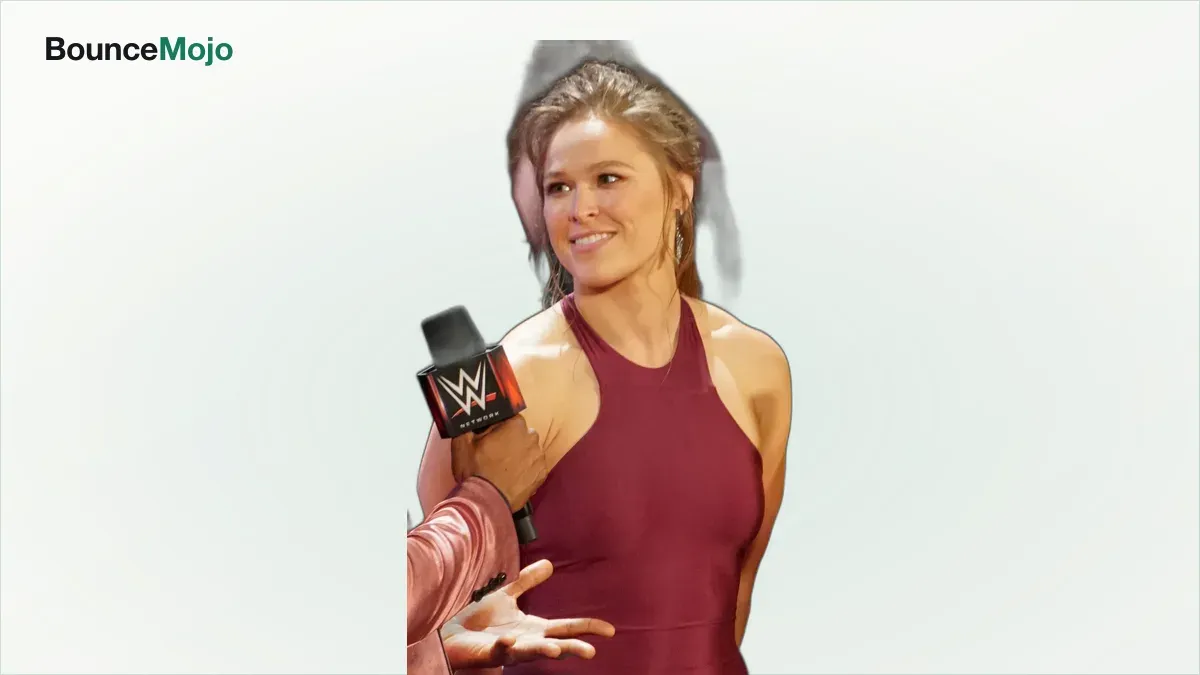
Most people remember Ronda Rousey for one thing: the armbar, the aura, and then the shocking knockout that ended it all. That’s the highlight reel. It isn’t the woman.
Here’s what most people miss: the fighter who kicked down the door for women in the UFC survived a childhood most people couldn’t, long before she ever threw a punch.
The Myth vs. The Reality
The myth is neat. Ronda Rousey: the unstoppable armbar machine, the woman who terrified an entire division, then crumbled the moment she was truly tested and quit the sport. Dominant. Then broken. Roll credits.
The reality is far more complicated and far more human.
Here’s the deal: Rousey’s dominance was real, but so was the weight she carried into every cage. This was a woman who couldn’t speak intelligibly as a child, who lost her father to suicide at eight, and who built her armor out of grief and grit. The “invincible” persona hid someone deeply vulnerable.
And the “she quit” framing is cruel and shallow. Rousey’s fall was one of the harshest public collapses in sports, and how she processed it, and what she chose to do next, says more about her than any win ever did.
You might be wondering: how does a girl who couldn’t talk become the most feared woman in fighting? To understand that, you have to understand where she came from.
The World That Made Ronda Rousey
Rousey was born in 1987 in Riverside, California, into a family already steeped in fighting greatness.
Her mother, AnnMaria De Mars, was the first American to win a World Judo Championship, in 1984. That meant Ronda grew up not just around judo, but around excellence and expectation. Her mother’s toughness, both on the mat and as a parent, set an impossibly high bar.
Now: this was also an era when women’s combat sports barely existed as a professional pursuit. There was no clear path for a girl who wanted to fight for a living. Judo offered Olympic glory but little money. MMA, when Ronda arrived, had no place for women at all at its highest level.
She entered the story as an outsider in every sense, a woman in a man’s sport, carrying personal trauma and a legendary mother’s legacy. Everything she’d become, she’d have to build, and in some cases invent.
But before the Olympics and the octagon, there was a child fighting battles no one could see.
The Crucible: Early Life and the Climb
The Environment That Shaped Her
Rousey’s childhood was marked by hardship almost immediately. She was born with her umbilical cord wrapped around her neck, and for the first six years of her life she struggled with apraxia, a speech disorder that left her unable to form intelligible sentences.
Then came the defining tragedy. When Ronda was eight, her father Ron died by suicide. He suffered from a rare blood disorder and, after a sledding accident left him with a back injury that wouldn’t heal, was told he had little time left. His death left a wound that shaped everything that followed.
Her mother pushed her into judo at 11, and Ronda took to it with ferocious intensity. The mat became an outlet for grief, anger, and a need to prove herself. She trained relentlessly, driven by a hunger that came straight from her losses.
Here’s the truth: Rousey’s toughness wasn’t a costume. It was forged by a childhood of speechlessness, loss, and a family standard of excellence that left no room for excuses.
The Catalyst
The turning point came at the 2008 Beijing Olympics.
Rousey became the first American woman to win an Olympic medal in judo, taking bronze. It was a landmark achievement, but judo offered no real career or income. Ronda retired from the sport at 21, drifted through hard years working odd jobs and living lean, and searched for a way forward.
Then she found MMA. She saw a sport with money, attention, and a wide-open frontier for women, if someone could force the door open. She would be that someone.
It gets better, and then it gets brutal. Her rise would rewrite the sport, and the people who helped and challenged her shaped every step.
The Key Players
No revolution happens alone, and Rousey’s rise was powered by a crucial cast.
AnnMaria De Mars. Her mother, the world-champion judoka, was her first coach, her toughest critic, and the source of both her drive and the shadow she fought to escape. Their bond is fierce and complicated.
Dana White. The UFC president once said women would never fight in the promotion. Rousey changed his mind. He built her into the face of a new division and the company’s biggest pay-per-view star, a partnership that made them both enormous money.
Holly Holm. The fighter who ended everything. In 2015, Holm knocked Rousey out with a head kick, shattering the aura of invincibility and delivering one of the most shocking upsets in sports history.
Travis Browne. The former UFC heavyweight who became her husband, part of the life she built as she stepped away from competition toward family.
Think about it: every one of these figures reflects the same theme, the tension between an invincible image and a very human person. That tension defined her peak, and her fall.
The Turning Point
The Pinnacle
From 2012 to 2015, Rousey was the most dominant and marketable fighter in the world, male or female.
She won 12 straight MMA fights, many in under a minute, finishing opponents with her signature armbar before they could react. She became the first UFC women’s champion, headlined pay-per-views, landed magazine covers and movie roles, and turned into a genuine crossover celebrity. As her own net worth story lays out, in 2015 alone she reportedly earned around $14 million across every venture at once.
The dominance was almost cartoonish. Several of her title defenses ended in seconds, opponents caught in an armbar or dropped before they’d found their range. She beat Cat Zingano in 14 seconds. She flattened Bethe Correia in 34. Fans didn’t tune in expecting a competitive fight. They tuned in to see how fast she’d win, and how spectacular the finish would be. That aura of invincibility made her bigger than the sport itself, landing her on magazine covers, talk-show couches, and movie screens. For a stretch in 2015, Ronda Rousey wasn’t just the best women’s fighter alive. She was arguably the most famous athlete in America, a mainstream star who happened to break arms for a living.
For a few years, she wasn’t just a champion. She was the face of the entire sport, proof that a woman could be its biggest star.
The Price
Here’s the kicker: the invincible image she built became a trap.
Rousey was marketed, and marketed herself, as unbeatable. When Holly Holm knocked her out in November 2015, the fall was devastating, not just a loss but the collapse of a myth in front of the world. A brutal knockout loss to Amanda Nunes in 2016 followed, and Rousey’s MMA career effectively ended.
The price of being sold as invincible was that defeat couldn’t be just a defeat. It was a public unraveling. Rousey later spoke about how dark that period was, and how she struggled with the loss of the identity she’d built. Which brings us to the more painful truths behind the star.
The Unvarnished Truth
Rousey’s story includes real vulnerability, and pretending otherwise flattens her.
After the Holm loss, she disclosed she’d had suicidal thoughts, a raw admission from someone whose entire brand was toughness. She largely withdrew from the public eye, struggled to process a defeat that felt like the end of who she was, and took a long time to find her footing again.
Now: none of that is weakness. A woman who lost her father to suicide at eight, then had her carefully built identity shattered on live television, was carrying more than any highlight reel showed. The same all-or-nothing intensity that made her a champion made the fall almost unbearable, because she’d tied her whole self to winning.
The most honest thing you can say about Rousey is this: the armor that made her seem invincible was built over a person who had already survived more than most, and when the armor cracked, what spilled out was painfully human.
Controversies and Criticisms
For a trailblazer, Rousey drew real criticism.
Poor sportsmanship claims. At her peak, Rousey was criticized for refusing to shake opponents’ hands and for prickly, dismissive behavior toward rivals, a persona that read as confident to some and arrogant to others.
Her reaction to losing. Critics pointed to how completely she disappeared after the Holm loss, questioning whether the invincible image had left her unable to handle adversity in public.
The WWE run and “real” vs. “scripted.” Her move to professional wrestling drew both praise and skepticism, and a later on-air rant about the business blurred lines and sparked debate among fans.
Media friction. Rousey had a famously tense relationship with parts of the press, walking out of interviews and clashing with reporters, which shaped some of the harsher coverage she received.
What We Can Learn From Ronda Rousey
Navigating Hard Times
The first lesson is about surviving loss. Rousey endured a speech disorder, her father’s death, and a public collapse of her identity, and she kept going. Her willingness, years later, to speak openly about her darkest moments turned private pain into something that could help others.
Here’s the truth her fall makes plain, though: tying your entire self-worth to a single outcome is dangerous. Rousey was so completely her “unbeatable” persona that losing it nearly destroyed her. Real resilience meant learning she was more than her record.
The Success Blueprint
If you want the replicable part, it’s this: Rousey didn’t wait for permission. She forced open a door that powerful people swore would stay shut, and became the first through it.
That’s transferable far beyond fighting. The lesson is to see the opportunity others say doesn’t exist, then make yourself impossible to ignore. Her pioneering status turned into income across MMA, WWE, film, and books, and as our richest MMA fighters ranking shows, it left her among the wealthiest women the sport has produced.
Becoming Better
The deepest lesson is about redefining yourself. After fighting, Rousey chose family, farming, and a quieter life over chasing the spotlight she once owned. She reclaimed her story on her own terms, including through her bestselling memoir.
In other words, you are allowed to become someone new when the old version ends. Rousey’s greatest act may not be an armbar or a title. It’s the decision to build a life beyond the identity that once nearly consumed her.
Final Verdict
Ronda Rousey is one of the most important figures in the history of combat sports, and “important” carries as much weight as “great,” though she was surely that too. She didn’t just win. She created a place for women to compete, headline, and get paid at the highest level of a sport that had none. Every female fighter who follows walks through the door she opened.
And here’s the twist that reframes everything: the woman sold as invincible was, all along, someone who had already survived the unsurvivable, and whose most powerful moments came not in victory but in how she faced defeat and rebuilt. The full picture of what that career was worth lives in her net worth breakdown, but the money was never the real story.
If you want the truth in her own words, read My Fight / Your Fight (2015), her memoir written with Maria Burns Ortiz. It’s not a polished PR story. It’s a candid account of grief, obsession, and the making of a champion, told before her famous fall, which makes rereading it now all the more haunting. Read it if you love fighting, and read it more closely if you’ve ever had to rebuild yourself from nothing.
Shop Ronda Rousey on Amazon
Books, audiobooks, merch and more, handpicked for fans.
As an Amazon Associate we earn from qualifying purchases.
Frequently Asked Questions
Where did Ronda Rousey grow up?+
Ronda Rousey was born on February 1, 1987, in Riverside, California, the youngest of three daughters of judo world champion AnnMaria De Mars and Ron Rousey. She spent part of her childhood in North Dakota before the family returned to California.
What happened to Ronda Rousey's father?+
Ron Rousey died by suicide when Ronda was eight. He suffered from a rare blood disorder and, after a sledding accident left him with a back injury that would not heal, faced a grim prognosis. His death shaped Ronda's early life more than any other event.
Was Ronda Rousey an Olympic athlete?+
Yes. Rousey was the first American woman to win an Olympic medal in judo, taking bronze at the 2008 Beijing Games. Her mother AnnMaria De Mars had been the first American to win a world judo title in 1984.
Why is Ronda Rousey important to women's MMA?+
Rousey was the first UFC women's champion and the fighter who convinced the promotion to create a women's division. Her stardom and dominance opened the door for every female fighter who followed.
Did Ronda Rousey write a book?+
Yes. Her 2015 memoir My Fight / Your Fight, co-written with Maria Burns Ortiz, was a bestseller that told her story from childhood trauma to UFC glory in candid detail.
Want the money side of the story?
Read Ronda Rousey's Full Net Worth Breakdown →Shop Ronda Rousey on Amazon
Books, audiobooks, merch and more, handpicked for fans.
As an Amazon Associate we earn from qualifying purchases.