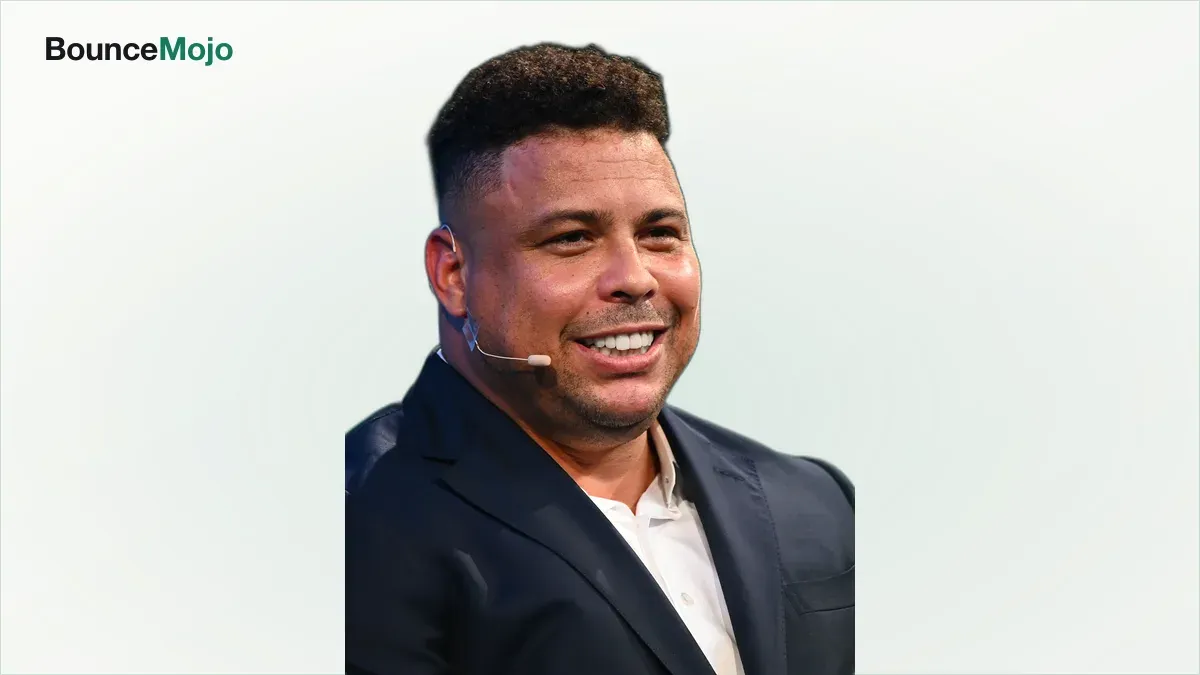
Ronaldo Nazario Biography: The Phenomenon Who Beat His Own Body
Most people know Ronaldo Nazario as one of the greatest strikers ever, or they confuse him with the Portuguese one. Both miss the real drama of his life.
Here’s what most people miss: at his absolute peak, this man was arguably the best striker football has ever seen, and then his own body tried to destroy him, twice.
The Myth vs. The Reality
The myth is dazzling. Ronaldo Nazario: the original Ronaldo, “Il Fenomeno”, a striker so fast, strong and skillful that defenders looked like traffic cones. Two World Cups. Goals for fun. A god of the game.
The reality is a story of genius and fragility braided together.
Here’s the deal: at his peak, from roughly 1996 to 1998, Ronaldo may genuinely have been the best striker who ever lived, a blur of pace and power that no one could handle. But that peak was terrifyingly short, cut down by injuries so severe that his career became as much about survival as brilliance.
And the “unstoppable phenomenon” framing hides the vulnerability. This was a man who broke down mysteriously before a World Cup final, whose knees gave out repeatedly, who had to rebuild his body and his game more than once just to keep playing.
You might be wondering: how does the greatest striker on earth end up fighting his own body for his career? To understand that, you have to understand where he came from.
The World That Made Ronaldo Nazario
Ronaldo was born in 1976 in Rio de Janeiro, into a poor family in a working-class suburb.
Brazil in that era was football-obsessed in a way few countries ever are. The sport was a national religion and, for kids from poor neighborhoods, one of the only realistic routes out of poverty. Talent poured out of the streets, the beaches and the futsal courts.
Now: Ronaldo grew up in that pressure cooker of talent. Futsal, the fast, tight indoor game, sharpened his close control and quick feet. The competition was brutal, and to stand out you had to be extraordinary.
His family struggled financially, and football was always more than a game for him. It was a lifeline. A shy, chubby kid off the pitch, he became something else entirely with the ball at his feet.
That world, a football-mad nation where the poor dreamed of escape through the game, is the backdrop for everything. But before the fame, there was a teenager whose talent was about to shock the planet.
The Crucible: Early Life and the Climb
The Environment That Shaped Him
Ronaldo’s gift was obvious early. He came through youth football in Brazil and joined Cruzeiro as a teenager, where he scored at an absurd rate, announcing himself as a generational talent.
By 17 he was in Brazil’s 1994 World Cup squad, a young reserve on a winning team. European giants took notice immediately.
Here’s the truth: raw talent this rare doesn’t stay hidden. The question was whether a poor kid from Rio could handle the weight of expectation that was about to land on him, expectation that only grew as he moved to Europe.
The Catalyst
The breakout came at PSV Eindhoven in the Netherlands, then, explosively, at Barcelona in 1996-97. That single season at Barcelona is the stuff of legend: Ronaldo scored a barrage of goals, some so outrageous they’re still replayed decades later, a solo run against Compostela chief among them.
He moved to Inter Milan for a world-record fee, and in Italy the nickname stuck: “Il Fenomeno.” He won the Ballon d’Or and looked untouchable.
It gets better, and then much darker. Because at the height of his powers, his body began to betray him, and one night in 1998 would become one of football’s enduring mysteries.
The Key Players
No career this dramatic unfolds alone, and Ronaldo’s is full of defining figures.
Brazil’s golden generation. He played alongside legends like Romario, Rivaldo and later Ronaldinho, part of a Brazilian side that carried the hopes of a nation. These teammates shared his triumphs and his heartbreaks.
Fabio Capello and his club managers. Demanding coaches across Europe helped shape and, at times, protect a player whose body needed careful management.
The medical teams. Few figures mattered more to Ronaldo’s career than the surgeons and physios who rebuilt his shattered knees. His comebacks were medical achievements as much as sporting ones.
Nike. His lifetime partner turned him into a global marketing icon, most famously in campaigns built around his 2002 redemption, a relationship that still pays him today.
Think about it: Ronaldo’s story is a constant tug-of-war between his extraordinary talent and his fragile body. That tension exploded at the worst possible moment.
The Turning Point
The Pinnacle
Ronaldo’s career has two peaks, and the second is the more human one.
The first was pure, untouchable brilliance in the late 1990s. But the defining moment came in 2002. After career-threatening knee injuries, ruptured tendons that many thought would finish him, Ronaldo fought his way back and led Brazil to the World Cup. He scored both goals in the final against Germany and won the Golden Boot.
It was one of the greatest comebacks in sports history. A man written off as broken stood on top of the world again. As his own net worth story shows, that redemption also cemented the commercial value that funds him to this day.
The Price
Here’s the kicker: the brilliance always came with a bill, and his body paid it.
The 1998 World Cup final remains a haunting chapter. Hours before the match, Ronaldo suffered some kind of convulsive fit or seizure; the full truth was never entirely clear. He played anyway, a shadow of himself, and Brazil lost to France. The episode became one of football’s great unsolved dramas.
Then came the knee injuries that stole years of his prime. Even at his best after 2002, he was never quite the untouchable force of his youth. The phenomenon had to become a survivor. Which brings us to the more human side of his story.
The Unvarnished Truth
Ronaldo is not a tidy sporting saint, and that makes him relatable.
He struggled with his weight and fitness throughout his career, a battle that became more visible as injuries and age caught up with him. His famously relaxed, pleasure-loving personality off the pitch was part of his charm, but it also fed criticism about his conditioning.
Now: none of that diminishes what he achieved. It humanizes it. A man fighting his own body and his own habits still reached the summit of the sport, twice. That’s arguably more impressive than untroubled dominance would have been.
His personal life has drawn attention too, including his marriages and relationships, which played out in the public eye. He has been open about the ups and downs of his post-football life, including health scares.
You might be wondering: could he have been even greater with a durable body and iron discipline? Almost certainly. But that version of Ronaldo would also have been less human, and arguably less loved. Fans didn’t just admire the phenomenon. They rooted for the man who kept falling and getting back up, who won the World Cup on rebuilt knees, who looked like one of them even as he did things none of them could.
The most honest thing you can say is this: Ronaldo’s genius was matched by his fragility, and he never pretended to be a machine. He was gloriously, vulnerably human.
Controversies and Criticisms
For all the glory, Ronaldo’s story includes real controversy and hard chapters.
The 1998 final mystery. What happened to Ronaldo before the World Cup final has been debated for decades, with theories ranging from a seizure to stress to sponsor pressure. The lack of a clear answer fueled endless speculation.
Fitness and weight questions. Throughout his career and especially in his later years, critics questioned his conditioning, arguing his lifestyle cost him even more of his prime than injuries did.
Club ownership turmoil. As an owner, Ronaldo has faced backlash. His stewardship of Real Valladolid drew criticism from fans during difficult seasons, and his Brazilian ventures have had turbulent, contested moments.
Personal controversies. Episodes in his personal life, including a widely reported incident, occasionally overshadowed his football legacy in the tabloids.
What We Can Learn From Ronaldo Nazario
Navigating Hard Times
The first lesson is about resilience: a catastrophic setback is not the end of the story. Ronaldo’s knees were shattered, his career declared over by many, and he came back to win the World Cup and score in the final. He turned the lowest point of his life into its greatest chapter.
But here’s the truth his story makes plain: that comeback took years of grinding, painful rehabilitation that no one saw. The glory of 2002 was built on countless unglamorous hours no camera captured.
The Success Blueprint
If you want the replicable part, it’s this: Ronaldo maximized a short peak and then reinvented himself. When his body could no longer be the phenomenon, he adapted his game, and later he pivoted entirely into ownership and business, reinvesting where he had the deepest expertise.
That’s transferable. The lesson isn’t “recover from a torn tendon.” It’s “when your first advantage fades, build your next act on the knowledge and network the first one gave you.” That reinvention is exactly what keeps him among the wealthiest names on our richest soccer players ranking.
Becoming Better
The deepest lesson is about accepting your limits without surrendering to them. Ronaldo never had a perfect body or perfect discipline, and he stopped pretending he did. He worked with what he had, fought for every comeback, and squeezed greatness out of an imperfect frame.
In other words, you don’t need to be invincible to be great. You need to keep getting up, and to keep finding new ways to win when the old ones stop working.
Final Verdict
Ronaldo Nazario is one of the most extraordinary footballers who ever lived, and “extraordinary” carries both meanings here, his talent and his ordeal. At his peak he redefined what a striker could be. Through his injuries, he redefined what a comeback could be.
And here’s the twist that reframes everything: the boy from a Rio slum who conquered the world as a player is now trying to conquer it as an owner, buying the clubs he once dreamed of playing for. The full mechanics of that second act live in his net worth breakdown, and they tell the real story: the phenomenon never stopped reinventing himself.
Here’s the truth about why he still matters: plenty of players have been fast, strong or clinical, and a few have won two World Cups. But almost none combined that peak brilliance with such public fragility and still came out the other side a champion and, later, a mogul. His whole life reads as a refusal to accept the ending everyone kept writing for him, first as an injured striker, then as a retired legend.
His legacy is a lesson in fragile greatness. He proved that being human, flawed, injured, imperfect, doesn’t disqualify you from the summit. Sometimes it’s exactly what makes the climb unforgettable.
Shop Ronaldo Nazario on Amazon
Books, audiobooks, merch and more, handpicked for fans.
As an Amazon Associate we earn from qualifying purchases.
Frequently Asked Questions
Where did Ronaldo Nazario grow up?+
Ronaldo grew up in Bento Ribeiro, a working-class suburb of Rio de Janeiro, in a poor family. He honed his skills on the street and in futsal before being spotted as a teenage prodigy.
How many World Cups did Ronaldo Nazario win?+
Ronaldo won two World Cups with Brazil, in 1994 (as a young squad member) and 2002, where he scored both goals in the final and won the Golden Boot after recovering from devastating injuries.
What happened to Ronaldo Nazario's knees?+
Ronaldo suffered catastrophic knee injuries, including ruptured tendons in 2000, that nearly ended his career. His comeback to win the 2002 World Cup is considered one of sport's greatest redemption stories.
Why is Ronaldo Nazario called 'Il Fenomeno'?+
He earned the nickname 'Il Fenomeno' (The Phenomenon) in Italy for his explosive pace, power and finishing as a young striker, a level of ability many consider unmatched at his peak.
What did Ronaldo Nazario do after retiring?+
After retiring, Ronaldo became a club owner and businessman, buying Spain's Real Valladolid and Brazil's Cruzeiro, and building marketing ventures while remaining a global football ambassador.
Want the money side of the story?
Read Ronaldo Nazario's Full Net Worth Breakdown →Shop Ronaldo Nazario on Amazon
Books, audiobooks, merch and more, handpicked for fans.
As an Amazon Associate we earn from qualifying purchases.