Rod Laver Biography: The Quiet Rocket Who Did the Impossible Twice
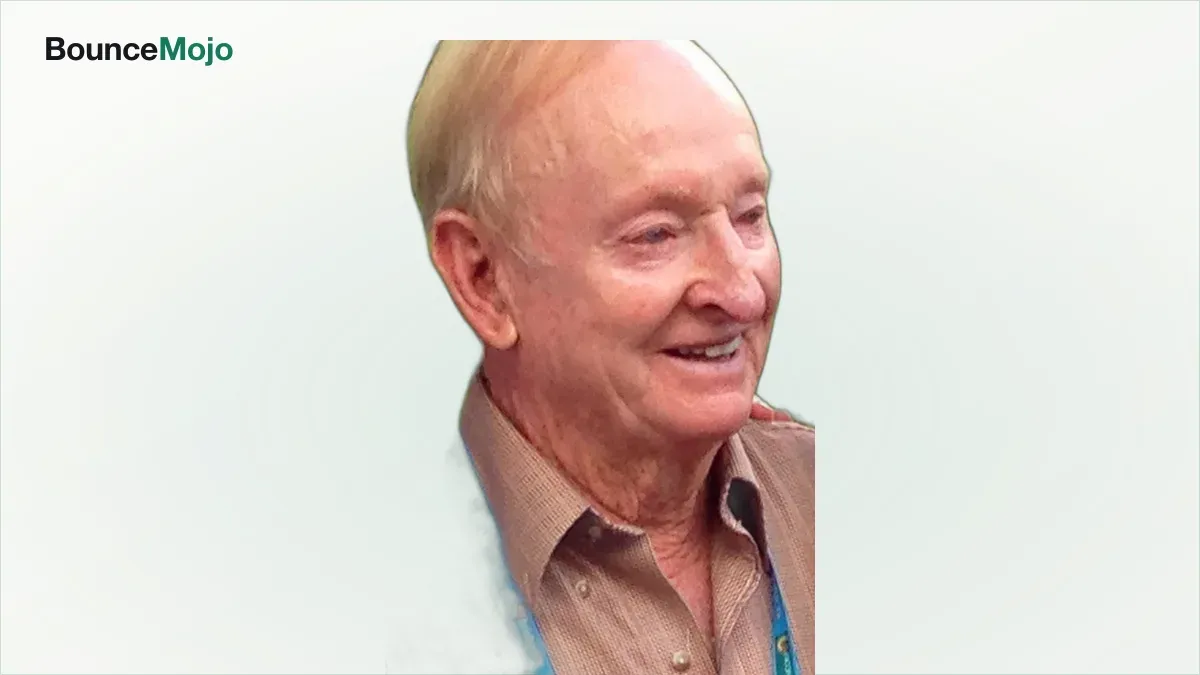
Most people know Rod Laver as a name on a stadium. Far fewer know he pulled off a feat so hard that nobody has repeated it in over fifty years.
Here’s what most people miss: the quiet, freckled redhead from a Queensland cattle town did the single hardest thing in tennis not once, but twice, and he did it while banned from the sport’s biggest events for five of his best years.
The Myth vs. The Reality
The myth is grand. Rod Laver: “the Rocket,” the greatest player of all time, immortalized on the center court of the Australian Open. A name spoken with reverence by Federer, Nadal, and every serious student of the game.
The reality is smaller, and somehow more impressive.
Here’s the deal: Laver was not a rocket at all, at least not in personality. He was a shy, undersized, left-handed farm kid who spoke quietly and let his racket do everything. The nickname was originally a bit of irony from his coach, aimed at a boy who seemed anything but explosive.
And the “greatest of all time” title? Laver earned it during an era that actively worked against him, in a sport that banned him from its biggest stages for years at the peak of his powers.
You might be wondering: how does a quiet country boy end up doing something no one else in history has done? To understand that, you have to understand the world he came from.
The World That Made Rod Laver
Laver was born in 1938 in Rockhampton, Queensland, deep in rural Australia, and the outback shaped him.
His was a working-class tennis family. The Lavers played on a homemade court, and young Rod, small and slight, learned the game against older, bigger brothers who gave him no easy points. Toughness came before talent.
Now: Australia in the 1950s and ’60s was the dominant force in world tennis, a conveyor belt of champions run with almost military rigor by the legendary Davis Cup captain Harry Hopman. To rise there, you had to be relentless.
Think about it: this was an amateur era. The greatest players in the world competed for trophies and expenses, not fortunes. A boy from the bush had no financial safety net, only the game itself. That collision, a humble country kid and the toughest tennis system on earth, is the backdrop for everything Laver became.
The Crucible: Early Life and the Climb
The Environment That Shaped Him
Laver grew up hitting on that backyard court, coached early by his father Roy and local mentors before catching the eye of Harry Hopman. Hopman saw the potential and, half-mockingly, dubbed the unassuming kid “Rocket.”
Let that land. The name was a joke about how un-rocket-like he was. Laver spent the rest of his career making it literal.
Under Hopman’s brutal fitness regime, Laver hardened. His left arm, famously oversized from years of play, generated topspin and power that belied his small frame. He learned to attack from anywhere on the court, an all-court style decades ahead of its time.
Here’s the truth: Laver’s edge was never intimidation. It was completeness. He could do everything, serve, volley, rally, chip, and he did it with a calm that never cracked. The quiet kid was building a game with no weaknesses.
The Catalyst
The breakthrough came fast once it started. In 1962, Laver won all four majors in a single calendar year, the Australian, French, Wimbledon, and US titles, completing the amateur Grand Slam. He was 23, and he had just done something almost no one ever manages.
Then came the decision that cost him dearly. In 1963, Laver turned professional, joining the barnstorming pro tour where the real money of the era lived.
It gets better, and much stranger, before it gets better again. Because turning pro meant Laver was banned from the very majors he’d just swept. For five prime years, the greatest player alive was locked out of tennis’s biggest events. And what he did when the doors finally reopened would define him forever.
The Key Players
No champion rises alone, and Laver’s story is shaped by a handful of crucial figures.
Harry Hopman. The iron Davis Cup captain who nicknamed him, drilled him, and forged the fitness and mental toughness that carried Laver’s career. Hopman built Australian tennis, and Laver was his masterpiece.
Ken Rosewall. The great Australian rival who pushed Laver for years on the pro tour and in the majors. Their contests defined an era, two of the finest players of their generation trading blows across two continents.
Roy Laver. His father, who built the family’s backyard court and set his son on the path. The working-class Queensland roots stayed with Laver his whole life.
Mary Benson. The American woman Laver married, who became the steady center of his life and, quietly, the financial brain behind his fortune. As his net worth story shows, she pushed him toward the investing that built his wealth long after the tennis money dried up.
By the way, every one of these relationships points at the same theme: a humble talent surrounded by people who sharpened him, on the court and off. That support carried him to the impossible.
The Turning Point
The Pinnacle
Laver’s defining moment came in 1969. Tennis had finally gone “Open” the year before, allowing professionals back into the majors. Laver, now free to compete for the biggest titles again, did the unthinkable.
He won all four majors again, completing a second calendar-year Grand Slam, this time as a professional in the Open Era. No man or woman has ever done it twice. It is arguably the single greatest achievement in the sport’s history.
Combined, his two slams and 11 major singles titles cemented him as the standard against which all-time greatness is measured. As his own net worth breakdown explains, that legacy still pays him decades later.
The Price
Here’s the kicker: the greatest feat in tennis was surrounded by loss.
Those five years Laver spent as a banned professional, from 1963 to 1968, robbed him of a shot at as many as twenty additional majors during his absolute prime. We will never know how many he truly could have won. The rules of his era erased them.
He also earned almost nothing for his amateur triumphs. The man who twice conquered all of tennis was, financially, starting from near zero. And the way he built security from that low base is a quieter story than his slams, but no less remarkable.
The Unvarnished Truth
Laver’s “flaws” are almost comically modest by modern standards, which is part of what makes him so admired.
He was famously shy and undemonstrative, sometimes to a fault. In an age that would later reward showmanship, Laver had none of it. He let others talk. He rarely sought the spotlight, and some felt he never fully claimed the fame his record deserved.
Now: there was no scandal, no meltdown, no dark confession. Laver’s story is unusual precisely because it lacks the wreckage that fills so many athlete biographies. His struggle was structural, the ban, the money, the era, not personal collapse.
The most honest thing about Laver is his relentless humility. Even as the sport’s greats line up to call him the best ever, he deflects, praises rivals, and keeps to the quiet dignity of the Queensland kid he never stopped being.
Controversies and Criticisms
For a figure so universally respected, real controversy is scarce, but the debates around Laver are worth naming.
The Open Era divide. Because Laver’s career straddled the amateur and Open eras, and because he was banned for years, comparing his record to modern champions is genuinely difficult. Skeptics point out he only played majors freely for part of his prime.
The “how many would he have won” question. His defenders argue Laver would have won a mountain of extra majors during his banned years. Critics counter that we simply cannot know, and that raw title counts favor modern stars.
The era-strength argument. Some question how deep his competition was compared to today’s global field. His backers respond that dominating any era so completely, twice, is proof enough.
The recognition gap. For decades, casual fans knew the arena better than the man. Laver’s quietness meant his fame never quite matched his achievement, a criticism aimed less at him than at how tennis remembered him.
What We Can Learn From Rod Laver
Navigating Hard Times
The first lesson is about setbacks you can’t control. Laver lost five prime years to a rule he didn’t make. He didn’t rage or quit. He kept playing, kept improving, and pounced the moment the door reopened, winning a second Grand Slam in 1969.
But here’s the truth his career makes plain: you can’t always change the system, but you can be ready when it changes. Laver stayed sharp through his exile so that when Open tennis arrived, he was the best-prepared man in the world.
The Success Blueprint
If you want the replicable part, it’s this: master everything and stay calm. Laver had no glaring weakness and no temper to exploit. He beat opponents with completeness and composure, not fireworks.
That’s transferable. The lesson isn’t “be flashy.” It’s “be complete, be steady, and outlast the moment.” That approach made him a legend on court and, financially, a name near the top of our richest tennis players ranking despite earning almost nothing in his prime.
Becoming Better
The deepest lesson is about humility as strength. Laver never needed the world to tell him he was great. He let the work speak, honored his rivals, and stayed grounded in his roots.
In other words, he proved you can reach the absolute summit of a sport without losing yourself. The quiet kid from Rockhampton became the greatest, and stayed the same person the whole way, which is the most enduring twist in his story.
Final Verdict
Rod Laver is, by a strong case, the greatest tennis player who ever lived, and the most underappreciated superstar in the sport’s history. Two calendar-year Grand Slams. Eleven majors despite a five-year ban. A game so complete that modern legends still study it.
And here’s the twist that reframes everything: the man they call “the Rocket” was never loud, never rich in his prime, and never sought the spotlight, yet his name now towers over the sport’s biggest stadium and its all-time debates. The full picture of the quiet fortune he built afterward lives in his net worth breakdown, and it’s the most fitting ending imaginable: a humble country kid who did the impossible twice, then let his name do the rest.
Shop Rod Laver on Amazon
Books, audiobooks, merch and more, handpicked for fans.
As an Amazon Associate we earn from qualifying purchases.
Frequently Asked Questions
Why is Rod Laver called 'the Rocket'?+
Ironically, the nickname started as a joke. Davis Cup captain Harry Hopman gave it to the young Laver because he was anything but fast or fiery at first. Laver grew into the name as his game exploded.
What makes Rod Laver's Grand Slam record unique?+
Laver is the only player, man or woman, to win two calendar-year Grand Slams, in 1962 as an amateur and again in 1969 in the Open Era. No one has matched it since.
Why did Rod Laver miss so many majors in his prime?+
After turning professional in 1963, Laver was banned from the Grand Slam events, which were amateur-only until 1968. He lost roughly five prime years of major titles to that rule.
Where is Rod Laver from?+
Laver was born in Rockhampton, Queensland, Australia, in 1938, and grew up in a rural, working-class family that played tennis on a homemade backyard court.
Is Rod Laver still alive?+
Yes. As of 2026 Rod Laver is in his late 80s and remains an honored figure at the Australian Open, where the main stadium bears his name.
Want the money side of the story?
Read Rod Laver's Full Net Worth Breakdown →Shop Rod Laver on Amazon
Books, audiobooks, merch and more, handpicked for fans.
As an Amazon Associate we earn from qualifying purchases.