Robinson Cano Biography: The Son Named for a Legend Who Lost His Own
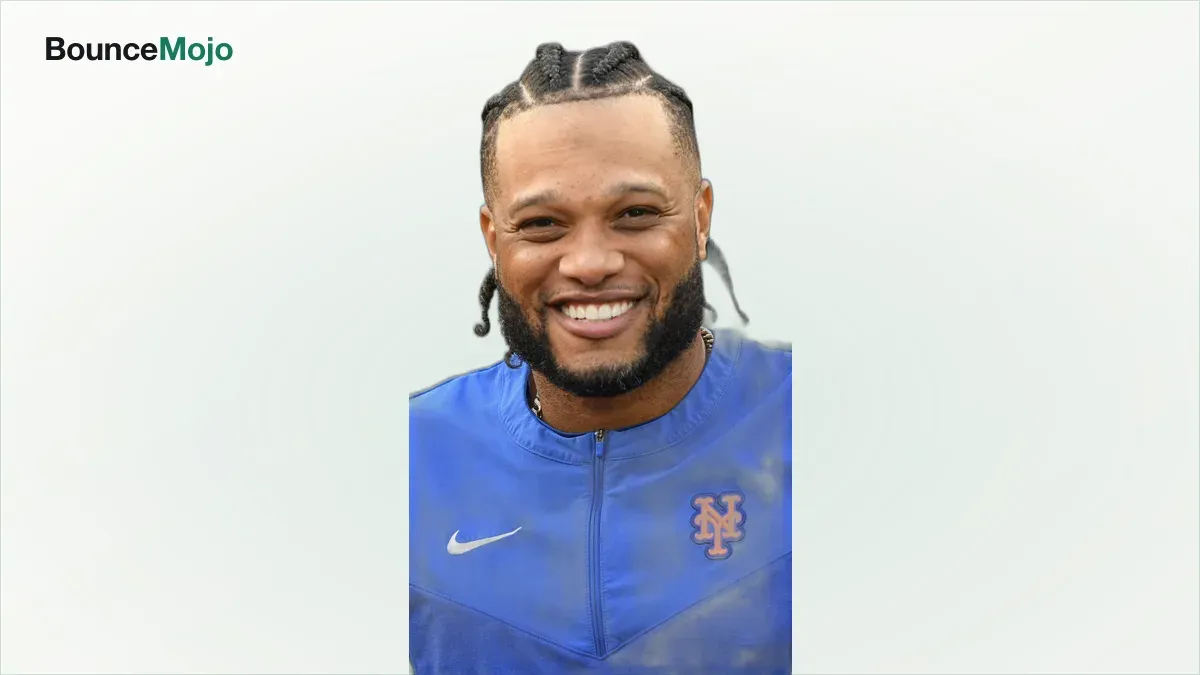
Everybody remembers the smooth swing and the $240 million contract. Almost nobody remembers that Robinson Cano was named for the man who broke baseball’s color line, and spent his career chasing a legacy his own choices would tarnish.
Here’s what most people miss: Cano had the talent to be remembered forever. What he did with it is a harder story.
The Myth vs. The Reality
The myth is that Robinson Cano was baseball royalty, a smooth, effortless second baseman born to play, who glided to stardom and a giant paycheck.
The talent part is completely real. Cano was gorgeous to watch, one of the most naturally gifted hitters and fielders of his era.
Here’s the truth: the effortless narrative hides both a real work ethic and a real fall. Cano came from a genuine baseball bloodline and earned his stardom, then damaged it with performance-enhancing drug suspensions that cost him tens of millions of dollars and a spot in the game’s clean pantheon. The smooth swing was real. So was the self-inflicted wound.
Think about it: a man named for the sport’s greatest symbol of integrity ended his career under a cloud of suspension.
And to understand it, you have to go back to San Pedro de Macorís.
The World That Made Robinson Cano
Cano arrived on October 22, 1982, in San Pedro de Macorís, Dominican Republic, a town so famous for producing big-league infielders that scouts treat it as its own institution.
Baseball ran in his blood, literally. His father, José Canó, was a former professional pitcher who signed with the Yankees organization and eventually pitched six games for the Houston Astros in 1989. And in a detail that would define his identity, José named his son Robinson after Jackie Robinson, over the early objections of his mother, Claribel.
That name mattered. It tied a Dominican kid to the most important figure in American baseball history before he’d ever swung a bat.
His childhood wasn’t confined to the island, either. Cano spent three years in the Newark, New Jersey school system, attending Barringer High School for a year before his family moved back to the Dominican Republic. That American chapter, however brief, planted early roots in the country where he’d become a star.
But here’s the kicker: growing up the son of a professional pitcher meant the game was never just a dream. It was the family business, with a built-in teacher.
Which is where the climb really started.
The Crucible: Early Life and the Climb
The environment that shaped him
Cano grew up with a professional pitcher as a father, which gave him something most prospects never have: an insider’s understanding of the game from childhood.
He honed his skills on the sandlots of San Pedro de Macorís, dreaming of following José into the majors. His father’s career, modest as it was in big-league terms, gave the family credibility and connections in a baseball-obsessed town, and it gave young Robinson a standard to chase.
You might be wondering how much a father like that shapes a career. Enormously. José understood the professional path, the scouts, the grind, and he could teach his son the finer points that separate prospects from stars.
In January 2001, the Yankees signed Cano as an amateur free agent for a bonus of just over $100,000. The son had signed with his father’s old organization.
The catalyst
The catalyst was New York itself.
Cano climbed the Yankees’ system and reached the majors in 2005, quickly establishing himself as a special talent. His swing was smooth, his hitting elite, and his defense at second base among the best in the game. He became a multiple-time All-Star and Silver Slugger, and in 2009 he won a World Series in the Bronx.
Here’s the deal: by the early 2010s, Cano wasn’t just good. He was widely considered the best second baseman in baseball, a franchise cornerstone in the sport’s biggest market. That status was about to translate into a life-changing contract.
But the decisions that would define his legacy, for better and worse, were still ahead.
The Key Players
No career is a solo act, and Cano’s began with the man who named him.
Start with his father, José Canó. Everything about Cano’s path, the name, the early instruction, the connection to the Yankees, traces back to José. His father’s own big-league cup of coffee gave Robinson both a blueprint and a target to surpass, which he did many times over. The full net worth breakdown shows just how far past his father’s earnings he climbed.
Then there’s the New York Yankees, who signed him, developed him, and made him a champion. His prime years in the Bronx built the reputation that earned him his fortune.
And there’s the Seattle Mariners, who handed him the $240 million contract that changed his family’s life. That partnership, though, would later be strained by the suspensions that followed him from New York to the Pacific Northwest.
Now: talent and a great name are one thing. Keeping a legacy clean is another. And Cano’s peak came just before his hardest fall.
The Turning Point
The pinnacle
The pinnacle came in late 2013, when Cano hit free agency at 31, right at his peak.
The Seattle Mariners signed him to a ten-year, $240 million contract, one of the largest deals in baseball history at the time. For a kid from San Pedro de Macorís and the son of a journeyman pitcher, it was almost unimaginable wealth. He had reached the very top of the sport’s pay scale.
On the field, Cano remained excellent for years in Seattle, and later contributed to a New York Mets team after a trade. He piled up hits, made All-Star teams, and built a résumé that, on talent alone, pointed toward Cooperstown.
He had the money. He had the numbers. He had the name.
The price
But every rise has its reckoning, and Cano’s was severe.
In 2018, he was suspended 80 games for a performance-enhancing drug violation. Then, in November 2020, came the hammer: a suspension for the entire 2021 season after another failed PED test. That second suspension alone cost him at least $24 million in salary, and it did something money can’t measure. It shattered his Hall-of-Fame candidacy.
Here’s the truth: the guaranteed money in his contract meant he stayed wealthy, but the cost to his legacy was total. A player once bound for Cooperstown became a cautionary tale. The name Robinson, chosen to honor baseball’s greatest symbol of integrity, now carried an ironic weight.
Which brings up the parts of Cano’s story that are hardest to reconcile.
The Unvarnished Truth
Cano’s talent was never in question. His judgment was.
The PED suspensions are the defining flaw of his career, and there’s no softening them. He failed drug tests not once but twice, the second time after already serving a lengthy ban. For a player of his ability, it was a stunning, self-inflicted wound. He didn’t need to cheat to be great. He was already great.
You might be wondering what drove it. The honest answer is that we can’t fully know. But the pattern, cheating even after being caught, suggests a player unwilling or unable to walk the straight path his talent never required.
There’s also a quieter truth. Cano’s easy, effortless style, so beautiful to watch, sometimes drew criticism as a lack of hustle. Fans and analysts occasionally read his smoothness as indifference, fairly or not. That perception, combined with the suspensions, complicated how he was seen even at his best.
None of it erases the brilliance. But it permanently shadows it.
Controversies and Criticisms
Cano’s controversies are central to his story, not footnotes to it.
The PED suspensions dominate everything. They cost him money, games, and, most lastingly, his reputation and Hall-of-Fame chances. In a sport still reckoning with its steroid era, Cano became one of its most prominent recent cautionary figures.
Then there’s the hustle criticism. Throughout his career, Cano faced periodic knocks that his relaxed style meant he didn’t always run out grounders or play with maximum urgency. Supporters argued it was simply his natural, unhurried rhythm. Critics saw complacency. The debate followed him for years.
And his massive Mariners contract, once a triumph, became a talking point about the risks of long-term mega-deals, especially once suspensions entered the picture. The money that made him rich also made him a symbol of contracts gone sideways.
So what does a story like his actually teach the rest of us? Perhaps more than a cleaner one would.
What We Can Learn From Robinson Cano
Navigating hard times
Cano’s life is a lesson in how quickly self-inflicted wounds can undo a lifetime of talent.
He had everything, ability, wealth, a legendary name, and still made choices that cost him dearly. The takeaway isn’t just about drugs. It’s about protecting what you build. Cano’s talent was a gift. His decisions were a choice, and the choices are what people will remember.
In other words: greatness earns the fortune, but character protects the legacy. Cano proved you can have one without the other.
The success blueprint
The blueprint here is complicated, and honest.
On the field, Cano’s rise is a genuine success story: a Dominican kid with a pro-pitcher father who became the best second baseman of his era and signed a $240 million contract. That part is worth studying. Want the fuller financial picture? The net worth breakdown shows how one contract built a nine-figure fortune. And to see where he ranks, the richest baseball players list puts it in context.
But the deeper lesson is subtraction, not addition. Cano teaches that the fastest way to shrink a legacy is to cut corners you never needed to cut. His talent alone would have carried him to greatness. The shortcut is what cost him.
Which brings us to the final word on the man.
Final Verdict
Robinson Cano will be remembered as one of the most gifted second basemen who ever lived, and as one of its saddest what-ifs.
The fuller truth is a story of a kid named for Jackie Robinson, raised in a baseball family in San Pedro de Macorís, who climbed to the very top of the sport and secured generational wealth, then damaged his own legacy with choices he never needed to make.
Here’s the bottom line: the myth is effortless baseball royalty. The reality is a brilliant, flawed career, elite talent and a giant fortune, permanently shadowed by self-inflicted wounds.
He got the money. He kept most of it. But the clean legacy his talent deserved, and the name Robinson demanded, slipped through his fingers. That’s the Robinson Cano worth understanding, in full.
Shop Robinson Cano on Amazon
Books, audiobooks, merch and more, handpicked for fans.
As an Amazon Associate we earn from qualifying purchases.
Frequently Asked Questions
Who is Robinson Cano named after?+
Robinson Cano was named after Jackie Robinson by his father, Jose Cano, a former big-league pitcher, despite early objections from his mother.
Where did Robinson Cano grow up?+
Cano grew up in San Pedro de Macoris, Dominican Republic, a town famous for producing MLB infielders, and spent three years attending school in Newark, New Jersey.
Was Robinson Cano's father a baseball player?+
Yes. His father, Jose Cano, was a former professional pitcher who appeared in six games for the Houston Astros in 1989.
Why was Robinson Cano suspended?+
Cano was suspended 80 games in 2018 and the full 2021 season for performance-enhancing drug violations, which badly damaged his legacy.
What was Robinson Cano's biggest achievement?+
Cano was an eight-time All-Star and multiple-time Silver Slugger winner, widely regarded as one of the best second basemen of his era, and a 2009 World Series champion with the Yankees.
Want the money side of the story?
Read Robinson Cano's Full Net Worth Breakdown →Shop Robinson Cano on Amazon
Books, audiobooks, merch and more, handpicked for fans.
As an Amazon Associate we earn from qualifying purchases.