Roberto Carlos Biography: From Coffee Fields to Football Immortality
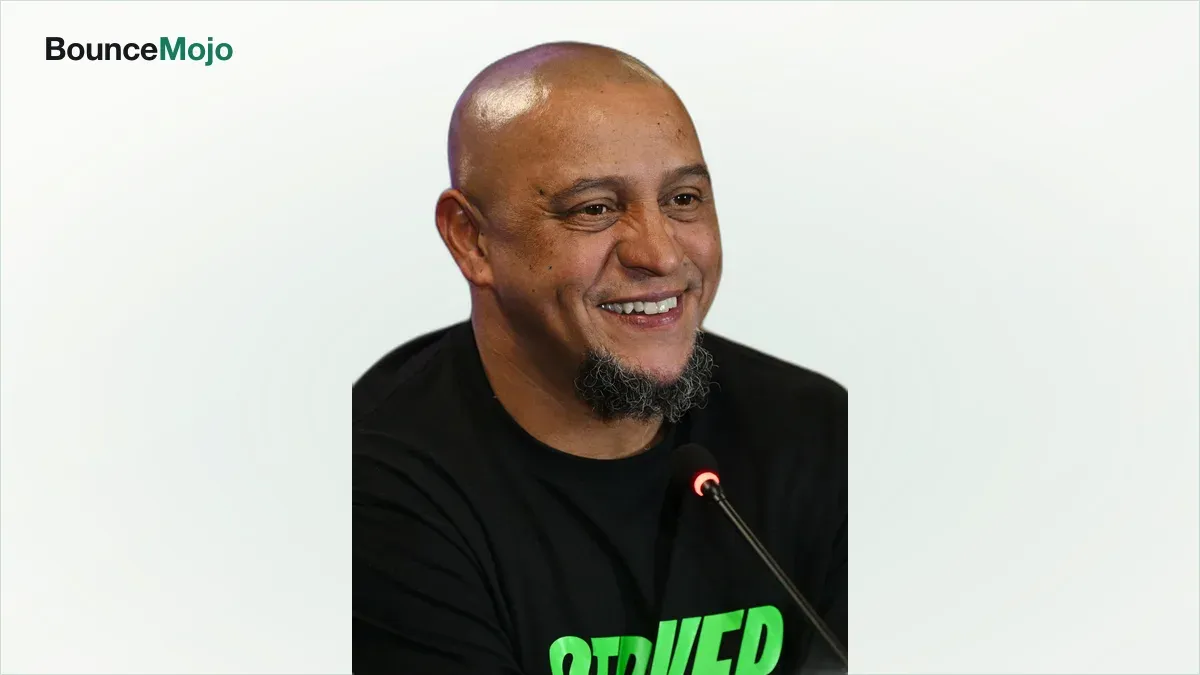
Most people know Roberto Carlos for one thing: the impossible free-kick against France that seemed to bend the laws of physics. That single strike hides a much harder story.
Here’s what most people miss: the man who curled that ball into the net once worked a factory floor as a child to help feed his family.
The Myth vs. The Reality
The myth is thunder. Roberto Carlos: the man with the strongest left foot in football, the free-kick specialist who bent the ball around walls and goalkeepers, a Galactico among Galacticos.
The reality is rooted in hardship.
Here’s the deal: Roberto Carlos was born into real poverty. His family worked a coffee plantation, and he took a job in a textile factory at 12 to help them survive. The power in that famous left foot was forged in a childhood with nothing to spare.
And the “born superstar” framing misses how unlikely he was. At 5 foot 6, he was told repeatedly he was too small to make it as a defender. Scouts and coaches doubted his size. He rewrote the position anyway.
You might be wondering: how does a poor boy from a Brazilian coffee town become the most famous left-back in history? To understand that, you have to go back to Garca.
The World That Made Roberto Carlos
Roberto Carlos was born in 1973 in Garca, in Brazil’s Sao Paulo state.
This was working-class, rural Brazil, a place where football was both a passion and one of the only real routes out of poverty. His parents, Oscar and Vera Lucia, worked hard for little, and money was always tight. The young Roberto grew up understanding sacrifice long before he understood fame.
Now: that background hardened him. He worked in a textile factory as a boy, playing football whenever he could, like so many Brazilian children who dreamed of escape through the game. The discipline and hunger that defined his career came from those early years of doing whatever it took to help his family.
This was also the golden tradition of Brazilian football, a nation that produced attacking, joyful, technically brilliant players. Roberto Carlos would take that flair and pour it into a defender’s shirt, changing what a full-back could be.
But before any of that, a small, doubted teenager had to prove the experts wrong.
The Crucible: Early Life and the Climb
The Environment That Shaped Him
Roberto Carlos’s talent was clear early, but so was the doubt. His height worked against him in a sport that often prized size in defenders.
He began his professional career at Uniao Sao Joao, a modest club, and impressed enough to earn a call-up to the Brazil national team in 1992 at just 19, despite playing at what many saw as a lesser club. His raw pace and astonishing left foot were impossible to ignore.
Here’s the truth: that early struggle against doubt built his relentless drive. Roberto Carlos never assumed a place at the top was his by right. He earned it by being faster, stronger, and more explosive than anyone thought a man his size could be.
The Catalyst
His rise accelerated fast. He joined Palmeiras in 1993 and won two Brazilian league titles, then moved to Inter Milan in Italy in 1995.
The Inter spell was brief and frustrating, as he was often played out of position. But it opened the door to the move that changed everything.
It gets better: in 1996, Real Madrid signed him, and unleashed him as an attacking left-back. That’s where Roberto Carlos became a legend, and where his fortune, traced in his own net worth breakdown, truly took shape.
The Key Players
No one reaches Roberto Carlos’s heights alone, and his story runs through some of the biggest names in the game.
His parents, Oscar and Vera Lucia. The hardworking coffee-plantation family who taught him sacrifice and kept him grounded through poverty and fame alike.
Ronaldo Nazario. His teammate for Brazil and Real Madrid, part of a golden generation of Brazilian talent that conquered the world.
Zinedine Zidane. His fellow Galactico at Real Madrid, one of the greatest players ever, alongside whom Roberto Carlos won the Champions League.
Florentino Perez. The Real Madrid president who built the Galacticos era and kept Roberto Carlos at the heart of the most glamorous team in the world.
Think about it: a poor family that instilled hunger, and superstar teammates who shared the glory. That combination reached its peak in the summer of 2002.
The Turning Point
The Pinnacle
Roberto Carlos’s mountaintop came with Brazil in 2002.
He was a key part of the World Cup-winning side in Japan and South Korea, adding the one trophy that had eluded him after finishing runner-up in 1998. At club level, his Real Madrid years brought four La Liga titles and three Champions Leagues, a haul that puts him among the most decorated defenders ever.
But his single most famous moment came years earlier, in 1997, when he struck a free-kick against France that swerved so violently it stunned the watching world. That goal, and the World Cup that followed, made him a global icon whose fame built the fortune detailed in his net worth breakdown.
The Price
Here’s the kicker: the glory came with the ordinary strains of a long career at the very top.
Roberto Carlos played at a punishing pace for over a decade, his explosive style demanding everything from his body. He carried the weight of being a Galactico, a national hero, and a marketing icon all at once. The joy of his football hid the relentless demands of staying elite for so long, across so many seasons and continents.
The pinnacle brought immortality and wealth. It also demanded a career of constant sacrifice and scrutiny. Which brings us to the human side behind the legend.
The Unvarnished Truth
Roberto Carlos’s story is largely one of triumph, but he is human, and his life has drawn its share of attention.
His personal affairs, including reporting around his marriage and finances, have made headlines, the ordinary scrutiny that follows any wealthy public figure. Estimates of his fortune have varied wildly, in part because of these very public disputes.
Now: none of that diminishes what he built on the pitch. Roberto Carlos redefined his position, won everything, and did it as a small man who was told he was too small. His flaws and struggles are those of a real person, not a marketing myth.
The honest read is that Roberto Carlos’s greatest strength, his relentless drive from a hard start, also made him a man who chased the top of the game and the top of the lifestyle. He earned both, and lived both fully, with all the complications that come with immense fame and fortune.
Controversies and Criticisms
Roberto Carlos’s career is celebrated, but a few points draw discussion.
The financial disputes. Reporting around his divorce and fortune has produced wildly different net-worth estimates, a reminder of how private and messy elite wealth can be.
The defensive questions. Some critics argued that his attacking instincts left gaps at the back, a common charge against marauding full-backs of his style.
The later-career travels. His moves to clubs in Turkey, Russia, and beyond drew comment from those who wanted legends to retire at the top, though others saw a player and coach extending a rich career.
The size doubters, proven wrong. The early skepticism about his height now reads as a criticism of the doubters, not the man. Roberto Carlos turned a supposed weakness into a defining strength.
What We Can Learn From Roberto Carlos
Navigating Hard Times
The first lesson is about origins: poverty is a starting point, not a sentence. Roberto Carlos worked a factory floor as a child and rose to win the World Cup and conquer Europe. His beginnings did not cap his future.
But here’s the truth his story makes plain: the doubts of others can fuel you. Roberto Carlos was told he was too small his whole young life. He used that doubt as rocket fuel and rewrote the position entirely.
The Success Blueprint
If you want the replicable part, it’s this: turn one skill into a signature that the world can’t ignore. Roberto Carlos’s free-kicks made him unforgettable and endlessly marketable. That single, unmistakable weapon helped build the fortune that ranks him among the names on our richest soccer players list.
That’s transferable. The lesson is that a rare, distinctive skill can define a career and a brand. Roberto Carlos proved that being the best in the world at one thing pays for a lifetime.
Becoming Better
The deepest lesson is about staying in the game. After retiring, Roberto Carlos moved smartly into ambassador, coaching, and management roles, keeping his income and profile alive rather than fading away. His post-playing wealth, detailed in his net worth breakdown, shows a man who never fully stepped off the pitch.
In other words, your career doesn’t have to end when the playing does. Roberto Carlos kept building. The goal isn’t just to win while you play. It’s to convert that fame into something that lasts.
Final Verdict
Roberto Carlos is one of the greatest left-backs in football history, and one of its most inspiring rags-to-riches stories. He went from a coffee town and a factory floor to World Cup glory and Galactico stardom, all while being told he was too small to make it.
And here’s the twist that reframes everything: the hardship everyone might pity was the source of his power. The poverty that forced a boy into a factory built the hunger, the drive, and the ferocious left foot that made him immortal. He turned nothing into everything.
Roberto Carlos’s fortune, laid out in his net worth breakdown, rewards a legendary career and a shrewd second act as ambassador and coach. But his story rewards something rarer: a poor boy from Garca who was told he was too small, and who bent a ball, and a whole sport, to prove the doubters wrong.
Shop Roberto Carlos on Amazon
Books, audiobooks, merch and more, handpicked for fans.
As an Amazon Associate we earn from qualifying purchases.
Frequently Asked Questions
Where did Roberto Carlos grow up?+
Roberto Carlos grew up in Garca, Sao Paulo state, Brazil, in a very poor family. His parents worked on a coffee plantation, and he began working in a textile factory at age 12.
What was Roberto Carlos's most famous free-kick?+
His most famous strike was a swerving free-kick against France in 1997 that bent so violently it seemed to defy physics, still one of the most replayed goals in football history.
How long did Roberto Carlos play for Real Madrid?+
He played 11 seasons at Real Madrid, from 1996 to 2007, becoming a cornerstone of the Galacticos and winning four La Liga titles and three Champions Leagues.
Did Roberto Carlos win the World Cup?+
Yes. Roberto Carlos won the 2002 World Cup with Brazil and was a runner-up in 1998, cementing his place among the greatest left-backs of all time.
What does Roberto Carlos do now?+
He works as a Real Madrid ambassador and has taken on coaching and management roles at clubs across several countries since retiring from playing.
Want the money side of the story?
Read Roberto Carlos's Full Net Worth Breakdown →Shop Roberto Carlos on Amazon
Books, audiobooks, merch and more, handpicked for fans.
As an Amazon Associate we earn from qualifying purchases.