Robert Lewandowski Biography: The Late Bloomer Turned Goal Machine
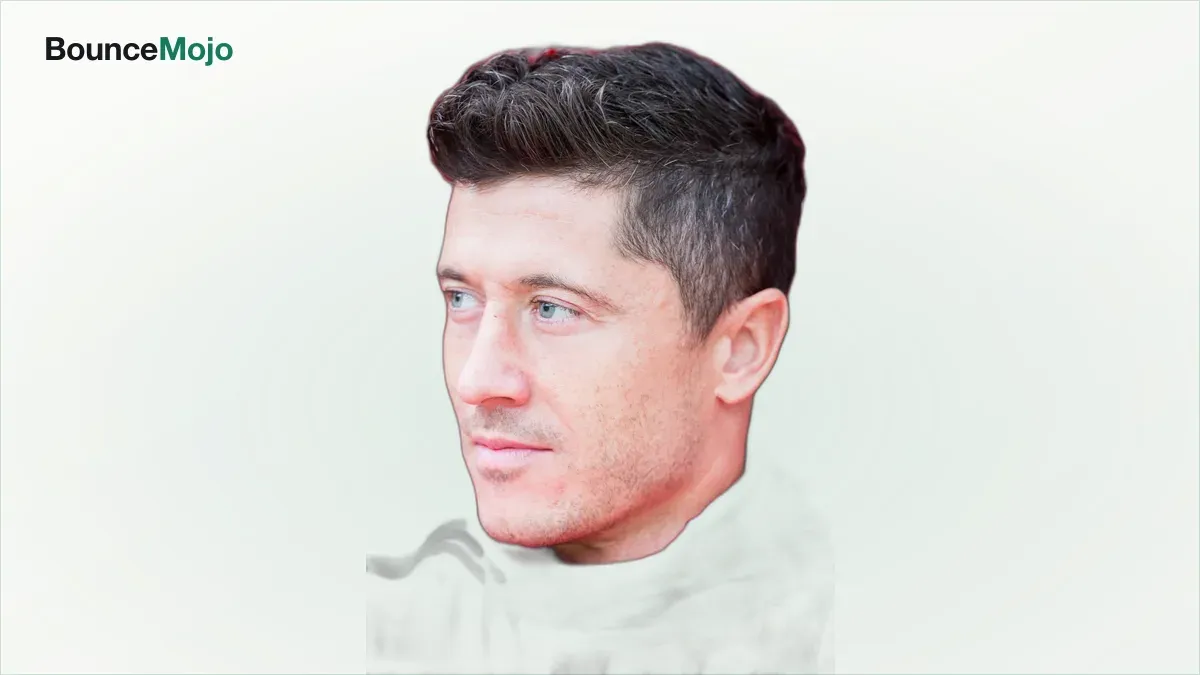
Most people know Robert Lewandowski as the striker who scored five goals in nine minutes. That highlight hides a much harder story.
Here’s what most people miss: before the records and the Ballon d’Or debates, Lewandowski was a skinny teenager other clubs didn’t want, grieving the father who taught him the game.
The Myth vs. The Reality
The myth is simple. Robert Lewandowski: a born goal machine, physically perfect, a striker who was always destined to break records for Bayern Munich and rack up wealth on our richest soccer players ranking.
The reality is far less tidy.
Here’s the deal: the young Lewandowski was small, easy to knock off the ball, and rejected by clubs who couldn’t see the finisher hiding inside the frail teenager. He wasn’t fast-tracked. He clawed his way up through the Polish lower leagues, one goal at a time.
And the “always confident” image misses the grief underneath it. The person who first believed in him, his own father, died before he made it. Everything Lewandowski became was built on that absence.
You might be wondering: how does an overlooked kid from Leszno turn into one of the most feared strikers alive? To understand that, you have to understand the world he came from.
The World That Made Robert Lewandowski
Lewandowski was born in 1988, in a Poland on the edge of enormous change.
He grew up as the country moved out of its communist era and into a new, uncertain future. Polish football in that period was proud but modest, far from the glamour of the Bundesliga or La Liga. A talented boy in Leszno did not grow up assuming European stardom was possible. It was a distant dream, not a career plan.
Now: sport ran deep in his family. His father Krzysztof was a Polish judo champion who also played football, and his mother Iwona was a volleyball player who later coached. Discipline, training, and competition were the family’s shared language.
That upbringing, humble but relentlessly athletic, is the backdrop for everything Lewandowski became. He wasn’t handed a system that manufactured stars. He had to become one through sheer repetition, in a place that rarely produced them.
But before any of that, there was a boy trying to prove he belonged at all.
The Crucible: Early Life and the Climb
The Environment That Shaped Him
The Lewandowski household was built around sport and structure. His father coached him, pushed him, and drilled the fundamentals into him from an early age.
But the young Robert had a problem: his body hadn’t caught up to his talent. He was slight and physically underdeveloped as a teenager, and that cost him. Bigger clubs looked at him and saw a boy too fragile for the professional game. He ended up playing for smaller sides in the lower reaches of Polish football, scoring goals in front of tiny crowds.
Here’s the truth: those years in the wilderness were the making of him. Forced to survive on positioning, timing, and finishing rather than raw power, he built the striker’s brain that would later terrorize the best defenders in the world.
Then his body finally caught up. A late growth spurt added the height and strength he’d been missing, and suddenly the polished technique had a powerful frame to go with it.
The Catalyst
The turning point was drenched in grief.
In 2005, when Robert was just 16, his father Krzysztof died. The man who had coached him, believed in him, and shaped his entire relationship with the game was gone. Lewandowski has spoken about how the loss hardened his resolve, how he wanted to reach the very top partly to honor his father.
It gets better, and stranger. A few years later, a natural disaster nearly redirected his whole career. In 2010, Lewandowski was reportedly close to signing for Blackburn Rovers in England, but the eruption of Iceland’s Eyjafjallajokull volcano grounded flights across Europe and scrambled the deal. Instead, he ended up joining Borussia Dortmund in Germany, the move that launched him into the elite.
That accident of timing sent him toward the people who would define his rise.
The Key Players
No striker scores alone, and Lewandowski’s climb is full of people who sharpened him, doubted him, and pushed him higher.
Krzysztof Lewandowski. His late father is the emotional core of the story. The judo champion who first coached him left a standard Robert has chased his entire life. Much of his relentlessness traces back to a promise made to a man who never saw the payoff.
Jurgen Klopp. At Dortmund, the charismatic manager turned Lewandowski from a promising forward into a complete striker. Klopp’s high-energy system gave him the platform to explode onto the European stage and win back-to-back Bundesliga titles.
Pep Guardiola. At Bayern Munich, Guardiola refined him further, sharpening his movement and link play until he was arguably the most complete number nine in the world. Under Guardiola and later Hansi Flick, Lewandowski hit historic heights.
Anna Lewandowska. His wife, a former karate athlete and wellness entrepreneur, became his partner in health, business, and discipline. Her influence on his nutrition and recovery is widely credited with extending his career deep into his thirties.
Think about it: every one of these figures pushed him toward the same thing, the extraction of every last drop of talent. That obsession pays off at his peak.
The Turning Point
The Pinnacle
Lewandowski’s mountaintop came at Bayern Munich.
On September 22, 2015, he came off the bench against Wolfsburg and scored five goals in nine minutes, a feat so absurd it entered the record books and went around the world. It was the perfect distillation of the striker he’d become: cold, precise, unstoppable in the box.
The bigger triumph came in 2020, when he led Bayern to a treble of the Bundesliga, German Cup, and Champions League, scoring at a rate that made him the clear best striker on earth. Many argued he was robbed of the Ballon d’Or that year when the award was cancelled, and he later won FIFA’s Best Men’s Player twice. He shattered Bundesliga scoring records, including a single-season mark that had stood for decades.
As his own net worth story lays out, those peak years also made him one of the highest earners in the sport.
The Price
Here’s the kicker: that level of dominance demanded a level of sacrifice most people never see.
Lewandowski built his body and career on brutal discipline, controlled diet, obsessive recovery, and a training regime that never really stopped. The relentless standard that made him great also meant a life with little room for slack. He has spoken about the pressure of always being expected to score, of a reputation that punishes any dry spell.
And the loyalty he showed clubs was not always returned in kind. When he decided he needed a new challenge, the fallout was messy. Which brings us to the choices that made him enemies.
The Unvarnished Truth
Lewandowski is not the flawless machine his highlight reel suggests, and pretending otherwise misses what makes him interesting.
He can be single-minded to a fault. Teammates and managers have described a man so focused on his own numbers and standards that he holds everyone, including himself, to a punishing bar. That intensity has occasionally spilled into tension over transfers, contracts, and playing time.
Now: none of that makes him a villain. It’s the residue of a man who was overlooked, then lost his father, then had to fight for everything he got. When you claw your way up from the Polish lower leagues, you don’t easily switch off the drive that got you there.
But that same drive made his exits complicated. His departures from Dortmund and later Bayern were public, occasionally bitter affairs, with agents, statements, and fan anger involved. He has been accused of forcing moves and prioritizing his own trajectory over club loyalty.
The honest read is this: the very hunger that made Lewandowski a goal machine also made him restless and, at times, hard to keep happy. His greatest strength and his sharpest edge are the same trait.
Controversies and Criticisms
Lewandowski’s career has not been free of friction.
The Dortmund exit. In 2014, Lewandowski left Borussia Dortmund for their fiercest rivals, Bayern Munich, on a free transfer. To Dortmund fans, it was a betrayal, a star running off to strengthen the enemy for nothing. To Lewandowski, it was a career decision at the peak of his powers.
The Bayern departure. In 2022, he pushed hard to leave Bayern for Barcelona, publicly signaling that his time in Munich was over. Some club figures felt he’d forced the move; supporters were split between gratitude for his goals and frustration at the manner of his going.
International heartbreak. For all his club success, Lewandowski has faced criticism over Poland’s underwhelming runs at major tournaments. Critics argue his stellar club form never fully translated to deep World Cup or Euros campaigns for his country, a knock he has openly acknowledged.
The individual-versus-team debate. His laser focus on goals has, at times, drawn quiet criticism that he prioritizes his own tally. Supporters counter that a striker’s job is to score, and few in history have done it better.
What We Can Learn From Robert Lewandowski
Navigating Hard Times
The first lesson is about patience under rejection: being overlooked early is not a verdict, it’s a delay. Lewandowski was too small, too slight, and stuck in the lower leagues, and he still became one of the best strikers alive.
But here’s the truth his story makes plain: he used the wilderness years instead of resenting them. Forced to rely on brains over brawn, he built the skills that outlasted every faster, stronger teenager who was picked ahead of him.
The Success Blueprint
If you want the replicable part, it’s this: Lewandowski won by becoming elite at one specific thing and refusing to let it slip. He didn’t try to be everything. He became the best finisher in the world and monetized that clarity, on the pitch and off it, as his placement among the sport’s wealthiest names on our richest soccer players ranking shows.
That’s transferable. Master a single high-value skill, protect it with relentless discipline, and let it compound over a long career. His longevity, stretched by obsessive fitness, turned a great career into a historic one, in the same conversation as goal-scoring benchmarks like Zlatan Ibrahimovic.
Becoming Better
The deepest lesson is about honoring a debt. Lewandowski built his entire drive around a promise to a father who died before the payoff. He turned grief into fuel rather than an excuse.
In other words, the people who shape us early can keep shaping us long after they’re gone, if we let their standard become our own. That’s the quiet engine behind everything he achieved.
Final Verdict
Robert Lewandowski is one of the greatest strikers of his generation, and the word “great” is doing lighter lifting than “relentless.” He was rejected, then bereaved, then overlooked, and he answered every setback with goals.
And here’s the twist that reframes everything: the fragile teenager nobody wanted became so complete a finisher that people argued he’d been robbed of the sport’s biggest individual prize. He didn’t just score. He redefined what a modern number nine could be, and he built a fortune and a family business empire around it.
For the full picture of how his relentless career converted into wealth, read his net worth breakdown, where the salaries, the endorsements, and the businesses behind the goals all add up. It’s the most fitting ending imaginable: the boy who had to earn every yard, still compounding, long after the doubters wrote him off.
Shop Robert Lewandowski on Amazon
Books, audiobooks, merch and more, handpicked for fans.
As an Amazon Associate we earn from qualifying purchases.
Frequently Asked Questions
Where did Robert Lewandowski grow up?+
Robert Lewandowski grew up in Leszno, Poland, in a sporting family. His father Krzysztof was a judo champion and footballer, and his mother Iwona played volleyball, so athletic discipline surrounded him from childhood.
Why was Robert Lewandowski nearly overlooked as a young player?+
As a teenager Lewandowski was small and slight, and he was released or passed over by bigger Polish clubs. He played in the lower divisions and only earned a top move after a growth spurt and a run of prolific scoring.
What happened to Robert Lewandowski's father?+
Lewandowski's father Krzysztof, the man who first coached and inspired him, died in 2005 when Robert was just 16. Robert has said the loss made him more determined to reach the top for his father's sake.
How did Robert Lewandowski's transfer to Bayern happen?+
Lewandowski left Borussia Dortmund for arch-rivals Bayern Munich on a free transfer in 2014 after his contract expired, one of the most talked-about moves in Bundesliga history.
What is Robert Lewandowski best known for?+
He is best known as one of the most prolific strikers of his era, including the famous night he scored five goals in nine minutes for Bayern, plus his Bundesliga goal records and Ballon d'Or contention.
Want the money side of the story?
Read Robert Lewandowski's Full Net Worth Breakdown →Shop Robert Lewandowski on Amazon
Books, audiobooks, merch and more, handpicked for fans.
As an Amazon Associate we earn from qualifying purchases.