Raul Gonzalez Biography: Atletico's Cast-Off Turned Madrid's Soul
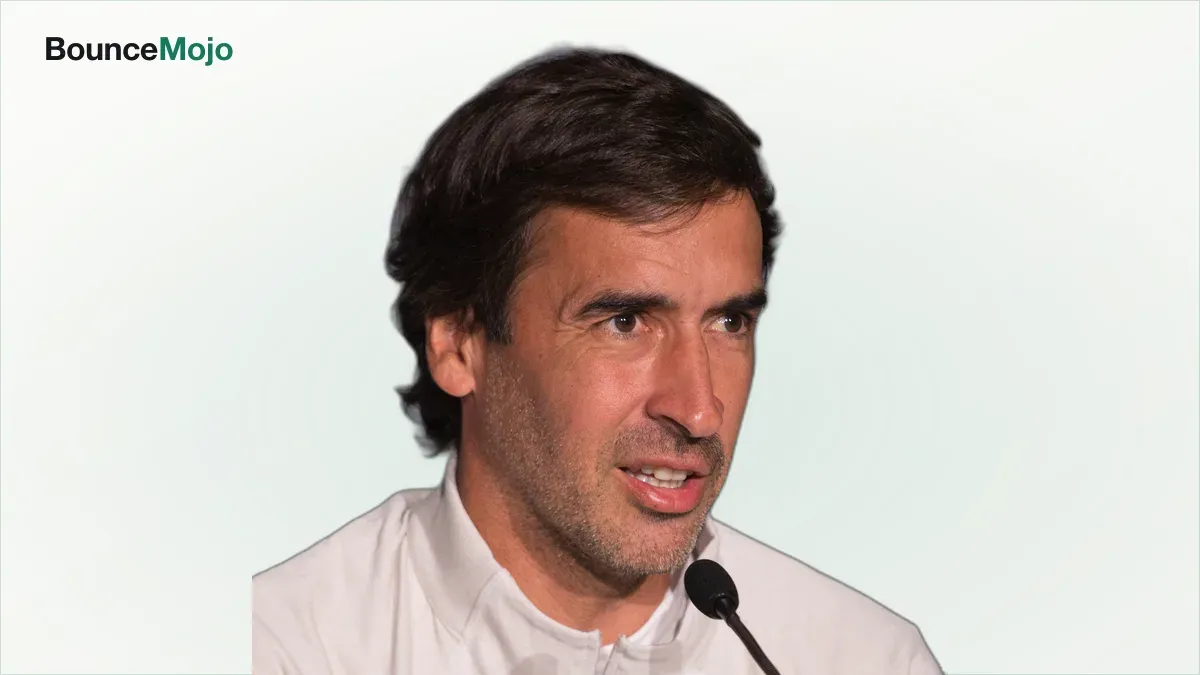
Most people know Raul Gonzalez as Mr. Real Madrid, the loyal captain in white. That image hides the club that let him go first.
Here’s what most people miss: Raul came up at Atletico Madrid, the club across the city, and only became a Real legend because Atletico cut him loose.
The Myth vs. The Reality
The myth is neat. Raul: born to wear white, a lifelong Real Madrid man who glided through 16 golden seasons and onto the legends’ section of our richest soccer players ranking.
The reality has a twist right at the start.
Here’s the deal: Raul didn’t begin at Real Madrid. He was an Atletico Madrid youth product, a boy in the red-and-white academy across town. When Atletico ran into financial trouble and cut back its youth setup, Raul was let go, and Real Madrid pounced. The greatest loyalist in the club’s modern history arrived by way of their bitterest rivals.
And the “quiet, uncontroversial” label undersells the drama. Raul’s exclusion from Spain’s greatest-ever squad, and his eventual departure from Madrid, sparked debates that still rage.
You might be wondering: how does a boy dropped by one Madrid club become the soul of the other? To understand that, you have to understand the world he came from.
The World That Made Raul Gonzalez
Raul was born in 1977, in a Spain still emerging from the shadow of the Franco era.
He grew up in San Cristobal de los Angeles, a working-class neighborhood on the southern edge of Madrid. This was a modest, football-loving world, far from glamour. Spanish football was proud and passionate, but the money and global reach of the modern game were still years away. A talented kid dreamed of playing for the local giants, not of nine-figure fortunes.
Now: the city was split, as it still is, between Atletico Madrid and Real Madrid. Raul’s family had Atletico leanings, and it was the red-and-white club that first took him in. His path to greatness began, improbably, on the “wrong” side of the city divide.
That backdrop, a working-class Madrid boy caught between two great clubs, is the setting for everything Raul became. He wasn’t handed to Real Madrid by fate. He was pushed there by circumstance, and he made it his home.
But before any of that, there was a boy who simply loved football more than anything.
The Crucible: Early Life and the Climb
The Environment That Shaped Him
Raul grew up in a modest household in a tough part of Madrid. Football was his obsession, and he showed serious talent early, earning a place in Atletico Madrid’s youth academy.
Then came the setback that changed everything. Atletico, under president Jesus Gil, shut down or heavily cut its youth ranks during a financial squeeze. Raul, a promising young forward, was released.
Here’s the truth: that rejection was the making of him. Real Madrid, sensing an opportunity, snapped him up for their own academy. The boy discarded by one club would spend the next 16 years tormenting opponents in the colors of the other.
He rose fast through Real’s ranks, his composure and finishing marking him out as special. The gap between released youth-teamer and first-team star closed in barely a year.
The Catalyst
The turning point came shockingly early.
In 1994, at just 17, Raul made his Real Madrid debut. He scored soon after and never let go of his place. Within a season he was a fixture, and within a few years the captain-in-waiting of one of the world’s biggest clubs.
His timing was perfect. He grew into his prime just as Real Madrid launched the Galactico era, assembling superstars like Zinedine Zidane, Luis Figo, Ronaldo, and later David Beckham. Amid all those global names, Raul remained the heartbeat, the local boy who embodied the club’s identity.
It gets better, and stranger. The same club that had to buy in superstars from around the world already had its soul in a kid Atletico had thrown away. That’s where his legend truly took hold.
The Key Players
No captain leads alone, and Raul’s story is shaped by teammates, rivals, and mentors.
Jorge Valdano. The Argentine coach and executive helped bring Raul into the Real Madrid first team and championed the young forward, giving him the platform to break through as a teenager.
Zinedine Zidane and the Galacticos. Raul captained a dressing room stacked with the biggest names in the sport, including Zinedine Zidane and David Beckham. Leading such egos required a quiet authority that defined his character.
Iker Casillas. His long-time teammate and fellow one-club icon shared the burden of representing Real Madrid’s identity through triumphs and turbulent years alike.
Cristiano Ronaldo. Years after Raul left, Cristiano Ronaldo would break his Real Madrid scoring records, a passing of the torch that underlined just how high Raul had set the bar.
Think about it: every one of these figures orbited the same institution, and Raul was its constant. That constancy peaks in Europe’s biggest games.
The Turning Point
The Pinnacle
Raul’s mountaintop was Real Madrid’s return to European glory.
He won three Champions League titles with the club, scoring in finals and becoming, for years, the competition’s all-time leading scorer. He captained Madrid through its most glamorous modern period, lifting trophies and setting a club scoring record that stood until Ronaldo arrived.
Across 16 seasons he scored more than 300 goals for Real Madrid and captained both club and country. He was the local kid who became a global icon without ever leaving home, at least not until he chose to.
As his own net worth story lays out, those years of elite wages formed the backbone of a nine-figure fortune.
The Price
Here’s the kicker: even legends get pushed out.
By the end of the 2000s, a new generation was arriving at the Bernabeu, and Raul’s role diminished. Rather than fade on the bench, he chose to leave in 2010, joining Schalke in Germany. It was a dignified exit, but an exit nonetheless from the only club he’d known.
There was a national heartbreak too. Despite years as a Spain regular, Raul was left out of the squads that won Euro 2008, the 2010 World Cup, and Euro 2012, Spain’s golden generation. He watched his country reach the summit without him. Which brings us to the debates that still follow him.
The Unvarnished Truth
Raul is often painted as the perfect professional, but the fuller picture has shades.
He could be fiercely competitive and, at times, protective of his status. As the long-serving captain and face of the club, he wielded real influence in the dressing room, and not every teammate or coach found that easy. Some observers felt his stature at Real Madrid occasionally made him difficult to drop or challenge.
Now: none of that makes him a villain. A player who carries a club’s identity for 16 years inevitably accumulates power, and using it to lead is part of the job. His authority was earned through consistency and sacrifice.
His international career remains the sore point. His omission from Spain’s most successful squads led to endless debate: was it a bold tactical call by coach Vicente del Bosque, or an injustice to a national great? Raul himself handled it with public grace, but it clearly stung.
There’s another layer to his story that fans forget: for all his fame, Raul remained strikingly private. He avoided the celebrity lifestyle, kept his family out of the tabloids, and let his football do the talking. In an age of increasingly branded, self-promoting stars, he was almost old-fashioned, a footballer who seemed genuinely uninterested in being a personality. That reserve won him respect, but it also meant he never built the sprawling commercial empire that more outgoing peers did, a choice that shaped his fortune as much as his playing career.
The honest read is this: Raul’s greatest strength, his central, irreplaceable role at Real Madrid, sometimes cast a long shadow, and his story carries the quiet ache of a legend left out of his country’s finest hour.
Controversies and Criticisms
Raul’s career, though clean by football’s standards, was not free of debate.
The Spain snub. The biggest controversy is his exclusion from Spain’s trophy-winning squads. Critics and fans still argue about whether the game’s evolving style simply passed his profile by, or whether a national icon was wrongly cast aside.
The captain’s influence. Some pointed to Raul’s enormous influence at Real Madrid as a double-edged sword, arguing that his standing made squad management harder for successive coaches during transitional seasons.
The style debate. As football tactics evolved toward high pressing and possession, some critics questioned whether Raul’s classic center-forward game aged as gracefully as his reputation, especially in his final Madrid years.
The Atletico question. For Atletico Madrid fans, Raul remains a painful “what if,” a homegrown talent lost to the rivals through a financial decision, then turned into a weapon against them for a decade and a half.
What We Can Learn From Raul Gonzalez
Navigating Hard Times
The first lesson is about rejection: being cut can be a redirection, not a defeat. Atletico let Raul go, and it turned out to be the doorway to a legendary career at Real Madrid.
But here’s the truth his story makes plain: Raul didn’t waste energy on resentment. He took the opportunity in front of him and made it historic. The setback became the setup.
The Success Blueprint
If you want the replicable part, it’s this: Raul won through loyalty and longevity. He didn’t chase the biggest transfer or the loudest headline. He committed, stayed consistent for 16 years, and built both a legacy and a fortune, as his placement among the game’s wealthiest names on our richest soccer players ranking shows.
That’s transferable. Reliability compounds. A long, steady run at the top can build as much wealth and respect as any single spectacular leap, a truth shared by durable stars like Zlatan Ibrahimovic.
Becoming Better
The deepest lesson is about the second act. Raul didn’t cling to his playing days or fade away. He built a coaching career inside Real Madrid, turning his legend into a new purpose and steady income.
In other words, the end of one chapter is the chance to write a better next one. Raul’s move from captain to coach shows how to stay valuable long after the cheering stops.
Final Verdict
Raul Gonzalez is one of the defining figures in Real Madrid’s history, and “defining” fits him better than “flashy,” though his goals were often sublime. He arrived by accident, stayed by choice, and became the soul of a club he wasn’t even born to serve.
And here’s the twist that reframes everything: the boy Atletico Madrid discarded became the very heart of their fiercest rivals, then walked away on his own terms and returned as a coach, refusing to let his story end at retirement. He didn’t just score goals. He embodied loyalty in an era that increasingly forgot what it meant.
For the full picture of how that steady, decades-long career converted into wealth, read his net worth breakdown, where the salaries, the endorsements, and the coaching income behind the legend all add up. It’s a fitting ending for a man who proved that the quiet, loyal path can lead somewhere extraordinary.
Shop Raul Gonzalez on Amazon
Books, audiobooks, merch and more, handpicked for fans.
As an Amazon Associate we earn from qualifying purchases.
Frequently Asked Questions
Where did Raul Gonzalez grow up?+
Raul grew up in San Cristobal de los Angeles, a working-class district of Madrid. He came from a modest family and was a passionate football fan long before he became a professional.
Why did Raul leave Atletico Madrid's youth academy?+
Raul came through Atletico Madrid's youth system, but when the club's academy faced financial cuts, he was let go. Real Madrid quickly signed him, a decision Atletico fans have regretted ever since.
What is Raul best known for at Real Madrid?+
Raul is best known as Real Madrid's long-serving captain and record scorer of his era, winning three Champions League titles across 16 seasons and defining the Galactico period.
Is Raul Gonzalez a coach now?+
Yes. Raul moved into coaching within Real Madrid's system, managing the club's youth and reserve teams, with many expecting him to eventually contend for the senior manager's job.
Why was Raul controversial with the Spain national team?+
Raul was a Spain regular for years but was left out of the squad that later won Euro 2008 and the 2010 World Cup, a decision that split fans and remains one of the great debates of his career.
Want the money side of the story?
Read Raul Gonzalez's Full Net Worth Breakdown →Shop Raul Gonzalez on Amazon
Books, audiobooks, merch and more, handpicked for fans.
As an Amazon Associate we earn from qualifying purchases.