Rashad Evans Biography: The Reality-Show Underdog Turned Champion
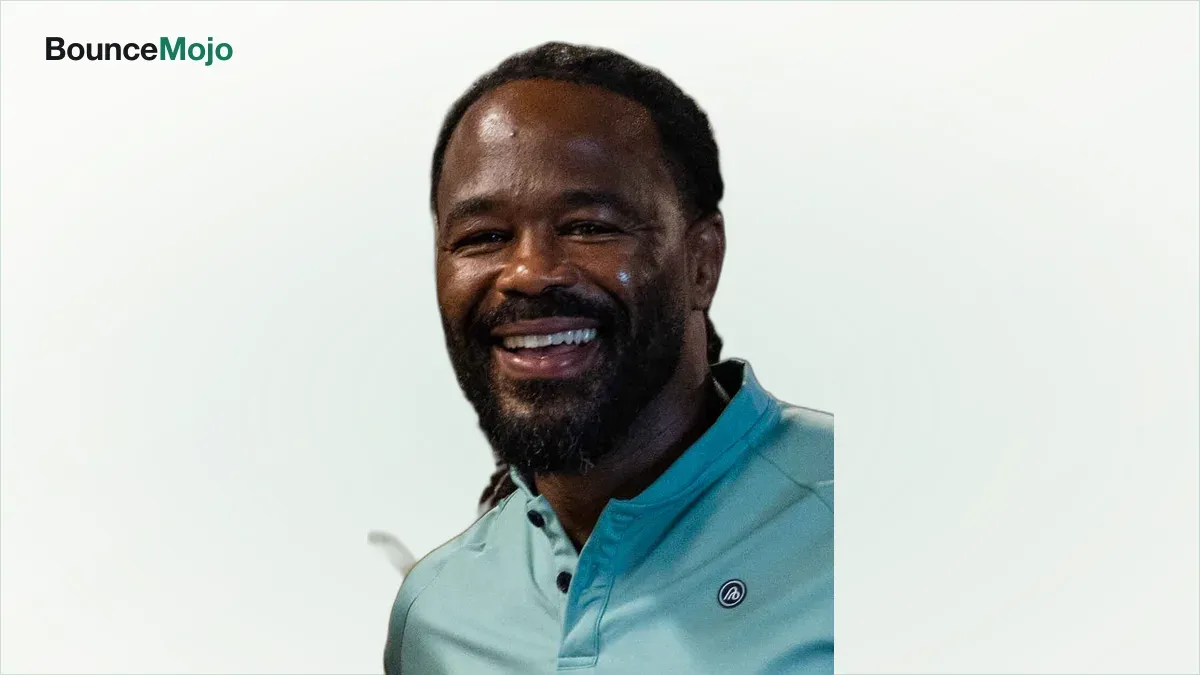
Most people remember Rashad Evans as a UFC champion. Fewer remember he started as a reality-show long shot nobody expected to last.
Here’s what most people miss: the fighter who won a title and a bitter grudge match may have made his smartest move at the broadcast desk, planning a second career while most fighters only think about the next fight.
The Myth vs. The Reality
The myth is neat. Rashad Evans: reality-show winner, UFC champion, the “Suga” showman who talked big and backed it up.
The reality has more substance under it.
Here’s the deal: Rashad wasn’t just a charismatic personality who got lucky on TV. He was a serious, high-level wrestler long before the cameras found him, a grinder who built his game on fundamentals and fight IQ rather than raw flash. The showmanship was real, but it sat on top of a genuinely disciplined athlete.
And the “reality-show fighter” label sells him short. Winning “The Ultimate Fighter” was a platform, not a shortcut. What he did with it, a title, major fights, and a smooth transition to broadcasting, took intelligence most of his peers didn’t display.
You might be wondering: how does a wrestler from Niagara Falls end up a champion and then an analyst? To understand that, you have to understand the world he came from.
The World That Made Rashad Evans
Rashad was born in 1979 and raised in Niagara Falls, New York, in a large, working-class family.
He came up in an environment where toughness was ordinary and where wrestling, a demanding, disciplined sport, offered a path forward. He grew into a legitimate amateur wrestler, learning the grind of a sport that rewards conditioning, technique, and mental toughness over glamour. That base shaped everything.
Now: Rashad’s rise coincided with a huge moment for MMA. “The Ultimate Fighter” reality show exploded in popularity in the mid-2000s, turning the UFC from a niche product into mainstream entertainment and creating a fast track for unknown fighters to become household names.
That timing, a disciplined wrestler meeting a sport suddenly hungry for TV-ready stars, is the backdrop for everything Rashad became. He had the skills and the personality exactly when the sport needed both.
Timing is easy to underrate, so pause on it. A few years earlier, MMA was barely on television and offered almost no path to mainstream fame. A few years later, the roster was flooded with polished, media-trained athletes competing for the same shots. Rashad hit the window right in the middle, when the reality show was creating instant stars and the talent pool hadn’t yet caught up. He was athletic, well-spoken, and technically sound at exactly the moment the sport was searching for exactly that. Some of his success was preparation. Some of it was being ready when the door swung open.
But before the title, there was a wrestler learning to fight.
The Crucible: Early Life and the Climb
The Environment That Shaped Him
Rashad grew up in a big family in a hard-nosed city.
Niagara Falls isn’t a glamorous place, and a large working-class household teaches you to compete for everything. Wrestling gave Rashad structure and an outlet, and he took to it, developing the discipline and grind that would later define his fighting. He learned early that talent means little without work.
Here’s the truth: that wrestling base was his foundation. It gave him elite conditioning, a strong takedown game, and the mental toughness to grind through hard fights. When he moved into MMA, he wasn’t starting from scratch, he was translating a skill he’d already mastered.
Wrestling also taught him something less obvious: how to lose and keep going. Few sports are as humbling as wrestling, where you spend years getting pinned and grinding through defeats before you ever taste real success. That thick skin served Rashad well in a fight game full of setbacks. He knew how to absorb a bad night, study it, and come back sharper, a discipline that separated him from more fragile talents who folded the first time things went wrong.
That translation earned him a shot at the platform that would launch his career.
The Catalyst
The catalyst was a reality-TV casting call.
Rashad joined “The Ultimate Fighter,” a competition where unknown fighters lived together and fought for a coveted UFC contract. For a young athlete, it was a once-in-a-lifetime shortcut to the biggest stage in the sport. Rashad seized it, winning his season and earning the contract that opened every door that followed.
It gets better, and stranger. That TV win was only the beginning. Rashad was about to climb from reality-show novelty to legitimate world champion, silencing anyone who thought the show was a gimmick.
The Key Players
No champion rises alone, and Rashad’s story is shaped by the people around him.
Greg Jackson. His longtime coach at the famed Jackson’s MMA camp helped turn a raw wrestler into a complete, strategic fighter. That relationship was central to his championship rise.
Jon Jones. A former teammate at the same camp who became his most bitter rival. Their fallout and eventual grudge match became one of the defining storylines of the era, and one of Rashad’s biggest fights.
Quinton “Rampage” Jackson. A fellow light heavyweight star and rival whose clashes with Rashad, in the cage and as coaching opponents on the reality show, boosted both men’s profiles.
ESPN. Later, the network became a key player in the second half of his story, giving Rashad a platform to turn his fight knowledge into a lasting broadcasting career.
Think about it: a great coach, a bitter rival, and a national network all shaped different chapters of the same smart career. The middle chapter was his peak.
The Turning Point
The Pinnacle
Rashad’s light heavyweight title reign is his mountaintop.
He climbed the division with his wrestling-heavy, athletic style and captured the UFC light heavyweight championship, cementing himself as one of the top fighters in the world. The reality-show underdog had become a genuine champion, and few could still call his rise a fluke.
The signature drama came with his rivalry against former teammate Jon Jones. Their grudge match was one of the biggest storylines of its time, a personal, high-stakes fight that drew enormous attention. As his own net worth story explains, marquee bouts like that are exactly what lifted his profile and his pay-per-view earnings.
The Price
Here’s the kicker: the sport is brutal, and no champion holds the peak forever.
Rashad’s title reign, like almost everyone’s, eventually ended. He faced tough losses against elite competition, and the physical toll of a long career mounted. The path from champion to the back end of a career is unforgiving, and Rashad walked it like every fighter must.
There was also the personal cost of that famous rivalry. A friendship turned into a feud, a reminder that fame and competition can fracture even close bonds. The pinnacle brought a belt and stardom, and it came with the wear that eventually pushes every fighter toward the exit. Which brings us to the human side.
The Unvarnished Truth
Rashad is respected, but his career had its share of hard chapters.
He suffered painful, high-profile losses, including knockouts that are difficult for any fighter to absorb publicly. The decline phase of a combat career is unglamorous, and Rashad experienced it in front of a large audience, a humbling reality that even champions can’t dodge.
Now: the rivalry with his former teammate also revealed the messier side of the sport. What began as camaraderie curdled into public animosity, and Rashad was candid about the hurt involved. It’s a reminder that the fight business can strain the closest relationships.
None of this diminishes him. It rounds him out. Rashad’s story isn’t a flawless highlight reel. It’s a real career with real setbacks, navigated by a fighter smart enough to plan his exit. Which brings us to the criticisms.
Controversies and Criticisms
Rashad’s career carried real debate, as most long ones do.
The Jon Jones fallout. The public feud with his former teammate drew criticism from fans on both sides, with plenty of debate about who was to blame for the breakup of the friendship and the camp dynamic.
Fighting too long questions. As with many veterans, observers debated whether Rashad continued competing past his prime, absorbing hard losses that a cleaner exit might have avoided.
The reality-show stigma. Early in his career, Rashad had to fight the perception that “Ultimate Fighter” winners were TV creations rather than legitimate contenders, a stigma he ultimately erased by winning a title.
Style debates. Critics sometimes argued that Rashad’s wrestling-heavy, controlled approach was effective but not always crowd-pleasing, a common knock on grappling-based champions in an era that prized knockouts.
What We Can Learn From Rashad Evans
Navigating Hard Times
The first lesson is about foundations: master one thing deeply before you chase the next. Rashad built his entire MMA career on a wrestling base he’d already perfected. When he switched sports, he wasn’t starting over, he was translating mastery.
But here’s the truth his losses make plain: even a strong foundation can’t stop the clock. Rashad faced tough defeats and a natural decline, and he handled them by preparing for what came after fighting rather than clinging to a fading prime.
The Success Blueprint
If you want the replicable part, it’s this: Rashad used a platform wisely. Winning a reality show could have been a gimmick that faded fast. Instead he treated it as a launchpad, building a real title run on top of the exposure.
That’s transferable. The lesson isn’t “go on TV.” It’s “when you get a rare opening, do the serious work to turn it into something lasting.” Rashad’s placement among the steady earners on our richest MMA fighters ranking tells the financial half; his standing alongside champions like Jon Jones tells the other.
Becoming Better
The deepest lesson is about planning ahead. Rashad built a broadcasting career while he was still relevant, so that when fighting ended, his income didn’t. That foresight is rare in a sport full of athletes who plan only for the next fight.
In other words, the smartest competitors think past the peak. Rashad’s smooth move from the cage to the analyst’s desk is arguably his most impressive victory.
Most fighters can’t do this. They define themselves so completely by fighting that when it ends, they have no idea who they are or how to earn. Rashad avoided that fate by building a second identity, analyst, communicator, storyteller, while the first one was still going strong. He treated his fame as a bridge to something durable rather than an end in itself, which is the quietest and wisest twist in his whole story.
Final Verdict
Rashad Evans is one of the more intelligent success stories of MMA’s boom era, and “intelligent” is the right word, because he out-thought the usual fighter’s arc. He didn’t just win a title. He turned a reality-show opening into a championship and then into a durable second career.
And here’s the twist that reframes everything: the fighter fans remember for a title and a bitter grudge match may deserve more credit for the fights he saw coming, the ones outside the cage. He planned for life after fighting when most of his peers didn’t, and it paid off. The full financial picture lives in his net worth breakdown, and it tells a fitting ending: a wrestler from Niagara Falls who won on TV, won a belt, and then won the long game most fighters lose.
Shop Rashad Evans on Amazon
Books, audiobooks, merch and more, handpicked for fans.
As an Amazon Associate we earn from qualifying purchases.
Frequently Asked Questions
Where did Rashad Evans grow up?+
Rashad Evans grew up in Niagara Falls, New York, in a large working-class family. He was a standout amateur wrestler before turning to mixed martial arts.
How did Rashad Evans get his start in the UFC?+
Rashad broke into the UFC by winning 'The Ultimate Fighter' season 2, the reality competition that gave unknown fighters a contract and a national platform.
What is Rashad Evans' nickname?+
Rashad Evans' nickname is 'Suga', a nod to boxing's Sugar Ray Robinson and Sugar Ray Leonard, reflecting his smooth, athletic style in the cage.
What happened between Rashad Evans and Jon Jones?+
Rashad and Jon Jones were teammates at Jackson's MMA who became bitter rivals. Their fallout led to a major grudge match, one of the most talked-about storylines of its era.
What does Rashad Evans do after retiring?+
Rashad became a respected MMA broadcast analyst, primarily with ESPN, using his fight knowledge to build a stable second career in the sport.
Want the money side of the story?
Read Rashad Evans's Full Net Worth Breakdown →Shop Rashad Evans on Amazon
Books, audiobooks, merch and more, handpicked for fans.
As an Amazon Associate we earn from qualifying purchases.