Randy Orton Biography: The Reluctant Heir Who Became a Legend
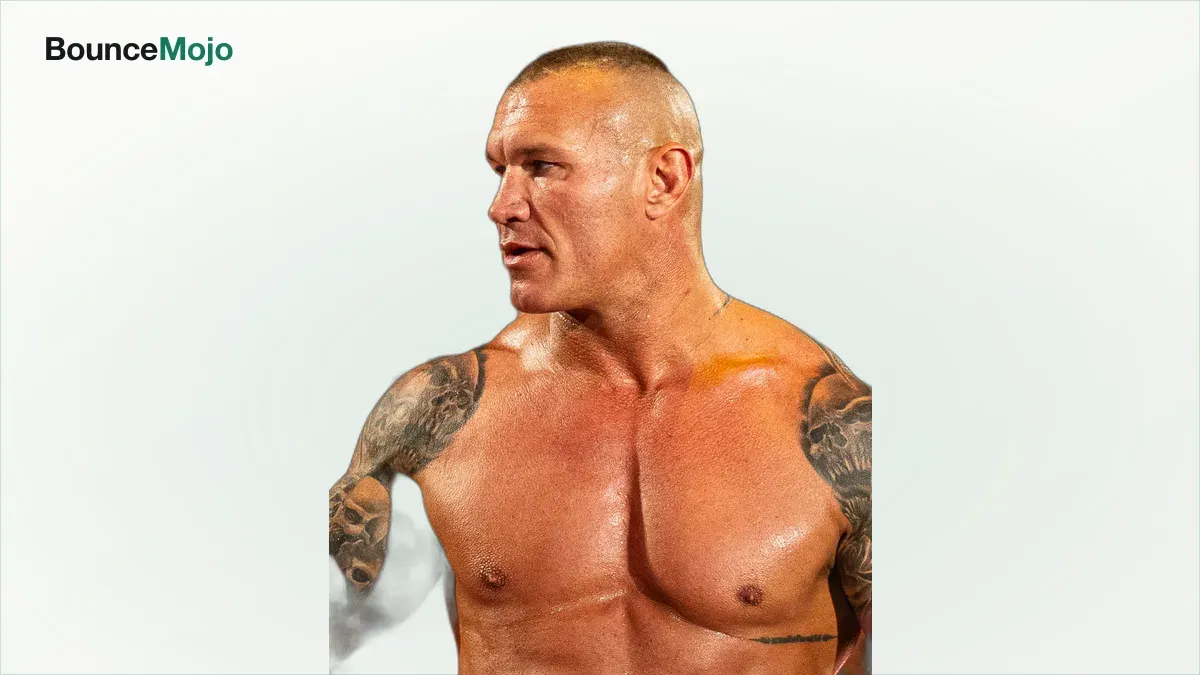
Randy Orton was born to do this, and for a while he wanted no part of it. A third-generation wrestler who almost threw it all away before it started.
Here’s what most people miss: the man who became one of the most gifted performers in WWE history was once a discharged Marine with a court-martial on his record and a warning from his own father ringing in his ears.
The Myth vs. The Reality
The myth is that Randy Orton is a natural, a man who glided into stardom on talent and a famous last name.
Here’s the truth: he almost blew it before he began.
The reality is that Orton’s path to greatness ran through a bad-conduct discharge, a stint in military confinement, and years of hard lessons about attitude and professionalism. The polished, dangerous “Viper” fans know today was forged out of a rebellious young man who had to grow up the hard way.
What makes Orton different is that he became one of the most technically gifted and reliable performers of his generation. Not the biggest personality, not the loudest promo, but a wrestler so smooth and consistent that he anchored WWE’s main event for two full decades.
And to understand that transformation, you have to start with the family he was born into.
The World That Made Randy Orton
Randal Keith Orton was born on April 1, 1980, in Knoxville, Tennessee, and raised largely in the St. Louis area. He entered a wrestling dynasty. His father, Bob Orton Jr., was a well-known professional wrestler, and his grandfather, Bob Orton Sr., had wrestled before him. Randy was a third-generation talent before he ever laced up a boot.
Picture it: a kid growing up around the wrestling business, watching his father live the grueling life on the road.
Here’s the deal: that closeness bred caution, not just ambition. Knowing the hardships firsthand, Randy’s parents tried to steer him away from the business. His father warned him bluntly that a wrestler’s life meant endless travel and long stretches away from family. The legacy was a gift, but it came with a warning label.
Wrestling in the 1980s and 1990s, the world Orton grew up watching, was a demanding grind of nightly matches and constant miles. His father knew exactly what it cost. That is why he hesitated to hand it down.
But before Randy could follow that path, he took a very different one.
The Crucible: Early Life and the Climb
The Environment That Shaped Them
Orton attended Hazelwood Central High School, where he wrestled as an amateur. After graduating in 1998, he did not head straight into the family business. Instead, he enlisted in the United States Marine Corps.
The environment demanded discipline, and young Randy struggled with it. His military career was brief and troubled. He went AWOL on two occasions and disobeyed an order from a commanding officer, and in 1999 he received a bad conduct discharge, spending 38 days in the brig at Camp Pendleton after a special court-martial.
Now: that failure was a turning point. Chastened, Orton finally turned to the one path that had been waiting for him all along.
The Catalyst for Breakout
Orton made his wrestling debut in 2000 in the St. Louis area, trained in part by his own father. His natural ability was obvious immediately. He had the size, the athleticism, and the second-nature feel for the business that only a wrestling upbringing can provide.
But here’s the truth: raw talent got him signed, but it did not make him a star. WWE saw the potential and moved fast, and by 2003 he was placed alongside some of the biggest names in the company.
That placement would change his career overnight.
The Key Players
Orton’s rise ran through a legendary group of mentors.
The most important was the Evolution stable, which paired him with Ric Flair, Triple H, and Batista. Positioned as the young prodigy of the group, Orton absorbed lessons from three of the biggest stars in the business. Flair, the greatest of all time, effectively passed the torch on-screen, branding Orton “The Legend Killer.”
Then there is his father, Bob Orton Jr., who trained him and warned him, and whose legacy Randy both inherited and eventually surpassed within the family.
You might be wondering about his personal life.
Orton has been open about the maturation process that came with fatherhood and marriage. His wife, Kim, and his children helped ground a man who had once been the rebellious kid with a court-martial. Family steadied him in a way the Marines never could.
Those relationships shaped him into a leader. And they set up the defining run of his career.
The Turning Point
The Pinnacle of Achievement
The turning point came fast and early. As a member of Evolution, Orton was pushed hard, and in 2004 he became the youngest world champion in WWE history at the time.
It gets better: that early peak was just the beginning. Orton went on to become a 14-time world champion, a total that ties him with his mentor Triple H and trails only John Cena and Ric Flair. He evolved from “The Legend Killer” into “The Viper,” and later into a genuine legend himself, headlining major shows for two decades.
For twenty years, Orton was a permanent fixture at the top of the card.
The Price of Admission
But the early success came with immaturity and a cost. Handed stardom young, Orton developed a reputation backstage for a difficult attitude, and he faced disciplinary issues and suspensions early in his career.
Here’s the kicker: he had to earn his standing twice. The talent got him to the top, but keeping a spot there required a personal transformation. He had to shed the reputation that nearly derailed him and prove he could be a reliable, professional leader.
The price of admission was growing up in public, learning maturity under the brightest lights in the business.
Behind the effortless “Viper” was a man who had to conquer himself first.
The Unvarnished Truth
Orton’s story includes real struggles with attitude and discipline, and he has not hidden them.
Early in his WWE run, he was seen as talented but immature, and he faced fines and suspensions for backstage behavior. His military discharge and court-martial are part of his public record, a rocky start he has never erased.
He has spoken candidly about needing to grow up, about the moment he realized his behavior was jeopardizing the opportunity his talent and family name had handed him.
Think about it: the willingness to change is what defines him. Plenty of gifted young performers flame out because they never mature. Orton did the opposite. He confronted his own flaws, corrected course, and turned a shaky start into one of the most respected careers in the business. The redemption is more impressive than the talent.
That growth did not come without controversy along the way.
Controversies and Criticisms
Orton’s early career carried real controversy. His bad conduct discharge from the Marines remains a matter of public record, and his backstage reputation as a young star led to suspensions and criticism.
Some fans and peers questioned whether he deserved his rapid push, given his attitude problems, and his early booking drew debate. He also navigated the ordinary controversies of a long career, including injuries and storyline disputes.
Here’s the deal: Orton answered his critics by outlasting them. Over two decades, he transformed his reputation from problem child to respected veteran and mentor. The controversies of his youth became the backstory to a redemption arc, not the summary of his career. He grew into exactly the professional his early self was not.
His own words reflect that hard-won perspective.
Quote Analysis and Literary Breakdown
Orton speaks with the measured confidence of a man who learned the hard way.
He has referred to himself as a third-generation superstar with a chip on his shoulder, acknowledging that the family legacy was both an advantage and a pressure he had to live up to.
On his early mistakes, he has been candid about immaturity, admitting that he was handed opportunities before he had the character to handle them. That honesty is central to his redemption story.
On longevity, he has emphasized consistency and reliability, framing his two-decade run as a matter of showing up and delivering, night after night, rather than chasing flash. That mindset is exactly why he built such a stable fortune, which you can read about in our richest wrestlers breakdown.
Read together, his words reveal a man who understands that talent opened the door but character kept him in the room.
There is a clear lesson in that.
What We Can Learn From Randy Orton
Navigating Hard Times
Orton’s story is a lesson in redemption. He started with a military discharge, a court-martial, and a bad backstage reputation, and he turned all of it around through maturity and hard work. He proves that a rough start does not have to be a final verdict.
His willingness to change is the key. Rather than let his early failures define him, Orton confronted them, grew up, and rebuilt his standing. That capacity for self-correction is rarer than talent.
The Success Blueprint
The professional lesson is about consistency over flash. Orton was never the biggest personality, but he was one of the most reliable and technically gifted performers in the company. He built a legendary career by simply being excellent every single night for twenty years.
The financial lesson is about stability. By becoming a dependable main-eventer and negotiating a strong guaranteed contract, Orton built one of the steadier fortunes in wrestling, avoiding the boom-and-bust cycle that ruined some of his own mentors.
Becoming Better
The deepest lesson from Orton is that a legacy is a starting point, not a guarantee. He was handed a famous name and enormous natural talent, and he still nearly wasted it. What saved his career was the decision to grow up, to take the opportunity seriously, and to earn his place rather than simply inherit it. Most people would kill for the advantages he was born with. Orton learned that advantages mean nothing without the character to use them. His career is a study in turning potential into achievement through maturity and discipline.
That combination points to a clear final take.
Final Verdict
Randy Orton’s story is about a reluctant heir who nearly threw away a birthright, then grew into one of the greatest performers his sport has ever seen. From a court-martialed Marine to a 14-time world champion, he transformed a rocky start into a two-decade reign at the top of WWE.
He did it by growing up. He shed the immaturity that nearly ended him, learned from legends in the Evolution stable, and became the reliable, technically brilliant “Viper” who anchored countless main events.
What lingers is the completeness of the redemption. The rebellious kid with a discharge and a bad attitude became the respected veteran who mentored the next generation, the third-generation prospect who arguably surpassed his entire family line.
That is the quiet triumph of Randy Orton. He inherited a legacy he did not ask for, nearly lost it to his own worst instincts, and then spent twenty years proving he deserved it after all. He turned a famous name into a legendary career, one consistent, excellent night at a time. In a business full of stars who burned bright and faded fast, Orton did something harder. He grew up, settled in, and simply refused to leave the top.
Shop Randy Orton on Amazon
Books, audiobooks, merch and more, handpicked for fans.
As an Amazon Associate we earn from qualifying purchases.
Frequently Asked Questions
Where did Randy Orton grow up?+
Randy Orton was born on April 1, 1980, in Knoxville, Tennessee, and raised largely in the St. Louis, Missouri area, into a family of professional wrestlers.
Was Randy Orton in the Marines?+
Yes, briefly. Orton enlisted after high school but received a bad conduct discharge in 1999 after going AWOL twice and disobeying an order, spending time in the brig at Camp Pendleton.
Is Randy Orton a third-generation wrestler?+
Yes. His father is Bob Orton Jr. and his grandfather was Bob Orton Sr., making Randy a third-generation professional wrestler.
What was the Evolution stable?+
Evolution was a dominant WWE faction of Ric Flair, Triple H, Batista, and Orton in the early 2000s that launched Orton toward main-event stardom.
How many world titles has Randy Orton won?+
Orton is a 14-time world champion, tying Triple H and trailing only John Cena and Ric Flair on the all-time list.
Want the money side of the story?
Read Randy Orton's Full Net Worth Breakdown →Shop Randy Orton on Amazon
Books, audiobooks, merch and more, handpicked for fans.
As an Amazon Associate we earn from qualifying purchases.