Randy Couture Biography: The Late Bloomer Who Became a UFC Legend
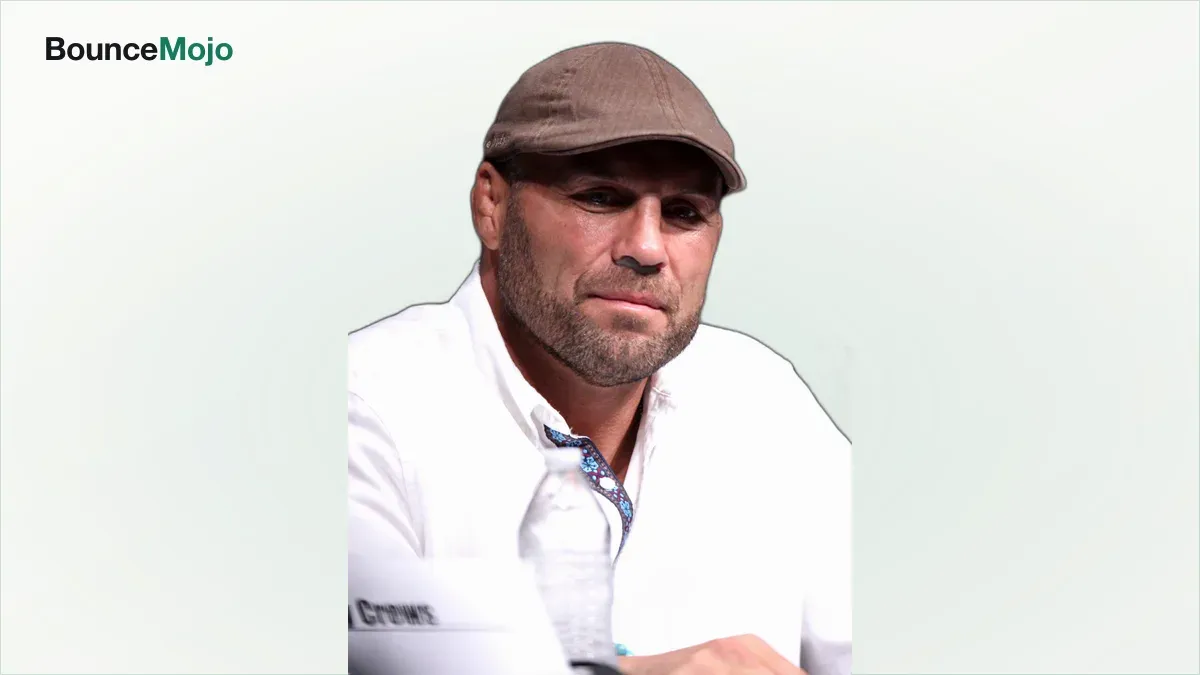
Most fans know Randy Couture as a UFC Hall of Famer and an Expendables movie star. What they forget is that he started his fight career at an age when most athletes are done.
Here’s what most people miss: “The Natural” wasn’t a natural at all in the sense fans imagine. He was a late-blooming Army wrestler who turned pro at 34 and became one of the greatest fighters alive through discipline, timing, and sheer refusal to accept limits.
The Myth vs. The Reality
The myth is flattering. Randy Couture: “The Natural,” a gifted fighter who dominated the UFC and glided into Hollywood.
The reality is grittier and more instructive.
Here’s the deal: Couture’s nickname is almost a joke on itself. He wasn’t a naturally gifted striker or a phenom. He was a supremely disciplined wrestler who out-prepared, out-thought, and out-gutted more talented opponents. His success came from work ethic and fight IQ, not raw gifts. That’s what makes his story useful rather than just impressive.
And the “smooth transition to stardom” framing misses the improbability of it all. Couture didn’t debut young and ride a wave. He turned pro at 34, an age considered ancient in combat sports, and still became a five-time champion across two weight classes. Everything he achieved, he achieved on borrowed time that he simply refused to acknowledge.
You might be wondering: how does a man start a Hall of Fame fight career in his mid-30s? To understand that, you have to understand the decades that came before.
The World That Made Randy Couture
Couture came up long before MMA existed as a mainstream sport.
He was born in 1963 in Everett, Washington, and grew up in the Pacific Northwest in a working-class world that prized toughness and self-reliance. His childhood had its hardships, and, as he later wrote, wrestling became his anchor, a sport that rewarded exactly the relentless, disciplined temperament he had.
Now: this was a completely different America than the one that would later embrace cage fighting. Couture came of age in the 1970s and 1980s, joined the US Army, and became an elite Greco-Roman wrestler when that was the pinnacle available to him. MMA wasn’t a career path. It barely existed. He built his entire foundation in a sport, amateur wrestling, that offered pride and Olympic dreams but almost no money.
That world, of Army discipline and Olympic-level wrestling, is the backdrop for everything Couture became. When MMA finally arrived, he was already a fully formed competitor. He just needed a new arena.
But before the cage, there was the mat, and the military that shaped him.
The Crucible: Early Life and the Climb
The Environment That Shaped Him
Couture’s discipline was forged in the US Army, where he served and wrestled at an elite level. He became a standout Greco-Roman wrestler, a three-time Olympic team alternate, and an NCAA All-American at Oklahoma State.
This was the crucible. Years of grinding, structured, unglamorous training built a man who understood preparation better than almost anyone. He learned to peak for competition, to game-plan, to control his body and his mind under pressure. None of it paid much. All of it would prove priceless.
Here’s the truth: those wrestling years built the entire foundation of his fighting career. When Couture stepped into the UFC, he already had the conditioning, the toughness, and the tactical mind of a lifelong competitor. He wasn’t learning to compete. He was just applying it to a new sport.
The Catalyst
The turning point came in 1997, when Couture, at 34, made his professional MMA debut. Most men his age were retiring. Couture was just beginning.
But here’s the kicker: his late start was a hidden advantage. He arrived in MMA fully mature, mentally and physically, with none of the recklessness of youth. He used his wrestling to control fights and his fight IQ to solve puzzles younger, flashier opponents couldn’t. He won a UFC tournament early and never looked back, launching one of the most improbable championship careers in the sport’s history.
The Key Players
No fighter climbs alone, and Couture’s story is shaped by rivals, mentors, and collaborators.
Chuck Liddell. Their trilogy is one of the defining rivalries of the UFC’s rise. Couture won the first meeting; Liddell knocked him out in the next two. Together, their bouts helped carry the promotion through its most important growth years.
Vitor Belfort. A young, explosive Belfort represented the kind of gifted athlete Couture repeatedly out-worked, their fights part of the storyline of his light-heavyweight reign.
Brock Lesnar. In 2008, an aging Couture returned to challenge the massive former pro wrestler for the heavyweight title, losing but proving his willingness to fight anyone, at any size, at any age.
Sylvester Stallone. In Hollywood, Stallone cast Couture in the Expendables franchise, opening a second career and introducing “The Natural” to audiences far beyond the cage.
Think about it: every one of these relationships pushed Couture to a bigger stage, from cage rival to movie co-star. But the peak of his fighting life carried a cost the highlight reels don’t show.
The Turning Point
The Pinnacle
Couture’s mountaintop was his collection of titles.
He won UFC championships in two weight classes, light heavyweight and heavyweight, a rare feat, and became one of the faces of the sport during its climb to legitimacy. He was inducted into the UFC Hall of Fame in 2006, cementing his status as an all-time great. His clean-cut, articulate presence made him one of MMA’s first true crossover stars, the fighter mainstream media and Hollywood could embrace. As his own net worth story lays out, that crossover appeal became the engine of his post-fight fortune.
The Price
Here’s the kicker: greatness late in life comes with a steep bill.
Couture fought into his late 40s, absorbing punishment against younger, bigger men. He also fought a long, public battle with the UFC’s management over pay and fighter treatment, briefly leaving the promotion in a bitter dispute. The pinnacle brought belts and fame, but also physical wear and business conflict that tested his relationship with the sport he helped build. Which leads to the harder truths.
The Unvarnished Truth
Couture was widely admired, but his life was not without struggle and complication.
His personal life saw multiple marriages and divorces, and, as he wrote candidly in his memoir, the fighting life took a toll on his relationships and his body. He walked away from the UFC at one point over money and respect, a public dispute that showed the tension between a fighter’s value and his pay. In more recent years, he suffered serious health scares, including cardiac events, a sobering reminder of the physical cost of his career.
Now: none of this makes him a villain. It humanizes him. A man who started fighting at 34 and continued into his late 40s was always writing checks his body would eventually have to cash. The discipline that made him great also drove him to keep going past when many would have stopped.
The most honest thing you can say about him is this: the relentless drive that built his legend was the same drive that made it hard to walk away, in the cage and out of it.
Controversies and Criticisms
Couture’s career had its share of friction, most of it around business.
The UFC pay dispute. Couture’s public battle with UFC management over pay and treatment was one of the first high-profile fighter-versus-promotion fights of its kind. Critics called it messy; supporters saw a champion standing up for fighters’ worth.
The Lesnar fight. Some questioned whether an aging Couture should have moved up to heavyweight to face the enormous Brock Lesnar. Couture answered by taking the fight anyway, true to his character.
Fighting too long. As with many legends, critics argued Couture competed past his prime. He never apologized for chasing one more challenge.
The health scares. His later cardiac events prompted difficult conversations about the long-term toll of a fighting life, conversations the whole sport continues to reckon with.
The acting critics. Some dismissed Couture’s Hollywood turn as stunt casting, a fighter playing a fighter rather than a real actor. Couture never claimed to be a great thespian. He treated the Expendables films for what they were: a lucrative, fun second career that leveraged exactly the tough-guy image he’d spent a decade building. In that sense, the “stunt casting” criticism missed the point entirely. Couture wasn’t trying to win an Oscar. He was building an empire.
What We Can Learn From Randy Couture
Navigating Hard Times
The first lesson is the most obvious and the most powerful: it’s never too late. Couture started a Hall of Fame fight career at 34 and won titles into his 40s. His entire life is proof that a late start is not a disqualification.
But here’s the truth his story makes plain: the “late” start only worked because of the decades of preparation underneath it. Couture wasn’t starting from zero at 34. He was applying a lifetime of wrestling discipline to a new arena. The lesson isn’t just “start late.” It’s “the work you do quietly, for years, is what makes any moment possible.”
The Success Blueprint
If you want the replicable part, it’s this: preparation beats talent when talent doesn’t prepare. Couture rarely had the most gifts in the cage. He almost always had the best plan, the best conditioning, and the best composure.
That’s transferable to anything. Out-work and out-think, and you can beat people with more raw ability. His approach put him in the same legendary tier as fellow wrestling-based greats like Dan Henderson, and his placement among the sport’s earners on our richest MMA fighters ranking tells the financial half of the story.
Becoming Better
The deepest lesson is about reinvention. Couture didn’t let one identity define him. Wrestler became fighter. Fighter became actor and businessman. Each chapter built on the last.
In other words, you are never stuck being only one thing. Couture reinvented himself again and again, and each version funded and enabled the next.
There’s one more lesson worth naming: composure is a skill you can train. Couture rarely panicked, in the cage or in negotiations, because decades of high-level wrestling had taught him to stay calm under pressure. That steadiness let him solve problems younger, more emotional fighters couldn’t, and it carried into his business and acting careers too. The ability to keep your head while everyone around you loses theirs is not a personality trait you’re born with. Couture built it, rep by rep, over a lifetime.
Final Verdict
Randy Couture is one of the most important figures in UFC history, and “important” matters as much as “great,” because he helped legitimize the entire sport. He was a champion the mainstream could embrace, a bridge between MMA’s rough early days and its rise into a global business. He proved a fighter could become a movie star and a successful entrepreneur.
And here’s the truth that reframes everything: “The Natural” was actually the ultimate late bloomer, a man whose greatness came not from gifts but from a lifetime of discipline finally aimed at the right target. The Hall of Fame career was never about talent. It was about preparation refusing to quit. The full mechanics of the fortune he built are in his net worth breakdown, and where he ranks among the sport’s earners lives on our richest MMA fighters list.
If you want the man’s own version, read his memoir, Becoming the Natural: My Life In and Out of the Cage (2008). It’s a candid, unglamorous account of how a late-starting Army wrestler became a legend, and what it cost him. Read it if you love the sport, and read it more carefully if you’ve ever told yourself it’s too late to start.
Shop Randy Couture on Amazon
Books, audiobooks, merch and more, handpicked for fans.
As an Amazon Associate we earn from qualifying purchases.
Frequently Asked Questions
Where did Randy Couture grow up?+
Randy Couture was born in Everett, Washington, on June 22, 1963, and grew up in the Pacific Northwest before joining the US Army and becoming an elite Greco-Roman wrestler.
How old was Randy Couture when he started MMA?+
Couture made his professional MMA debut in 1997 at age 34, an unusually late start, after years as an Army wrestler and three-time Olympic alternate.
How many UFC titles did Randy Couture win?+
Couture was a multiple-time UFC champion in two weight classes, winning both the light heavyweight and heavyweight belts, and was inducted into the UFC Hall of Fame in 2006.
Who was Randy Couture's biggest rival?+
His most famous rivalry was with Chuck Liddell. The two fought a trilogy that helped define the UFC's rise, with Liddell winning the final two bouts by knockout.
What is Randy Couture's memoir?+
Couture's memoir is Becoming the Natural: My Life In and Out of the Cage (2008), a candid account of his journey from a difficult childhood to UFC legend.
Want the money side of the story?
Read Randy Couture's Full Net Worth Breakdown →Shop Randy Couture on Amazon
Books, audiobooks, merch and more, handpicked for fans.
As an Amazon Associate we earn from qualifying purchases.