Rafael Nadal Biography: The Mallorca Boy Who Turned Pain Into Slams
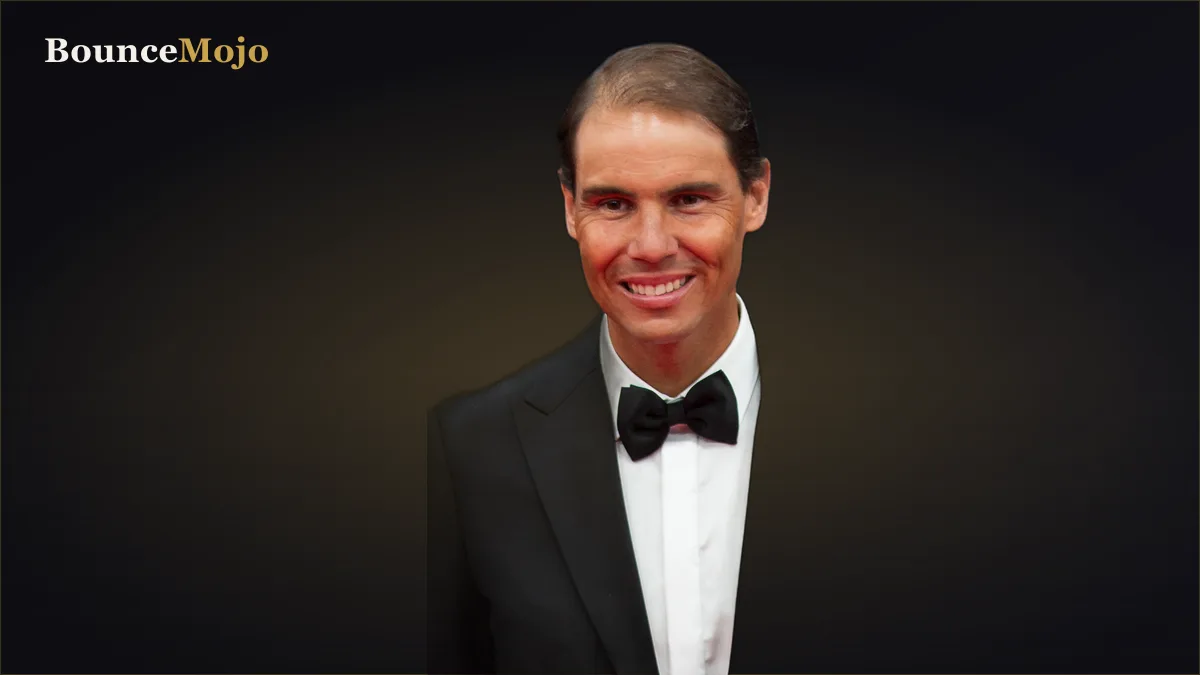
The image is a muscled, tireless bull: the man who ran down every ball and never seemed to break. It is almost exactly wrong. Rafael Nadal was one of the most injury-plagued great players in history, and he was a nervous, superstitious perfectionist off the court whose ferocity worked as armour. The warrior act was not a metaphor. It was survival.
Manacor: The Town He Never Left
Nadal was born in 1986 in Manacor, a modest town on the Spanish island of Mallorca, into a close-knit, family-centred world a long way from the glamour of the pro tour.
The Nadals were a prominent local family and sport ran in their blood; one uncle played professional football, and young Rafa grew up surrounded by relatives, tradition and the sea. The decisive fact is that he never left. Even at the height of his fame, Manacor stayed his home, his anchor and his identity.
That rootedness explains the character everyone remarks on. His humility and his refusal to behave like a superstar came from a place where showing off was frowned upon and family came first. He stayed grounded because his world never let him float away. His wife Maria Francisca and his extended family remained his centre of gravity through two decades of global fame.
Toni Nadal Gave Him the Worst Rackets on Purpose
His game and his character were shaped above all by one man: his uncle Toni Nadal, who coached him from childhood with a famously uncompromising method.
Toni made the boy sweep the courts, carry his own bags, and never make excuses. He deliberately pushed Rafa harder than the other kids, refusing to let talent curdle into entitlement. In training he would hand his nephew the worst rackets and the worst balls, tell him the umpires and the weather would always favour the opponent, and deny him any excuse for losing. Toni, who is right-handed, also encouraged the naturally right-handed Rafa to play left-handed, sensing the advantage it would give him on court.
It was tough love bordering on harsh, sometimes almost cruel, and it produced a champion with no sense of entitlement and an almost supernatural tolerance for adversity. Rafa later said the toughness prepared him for a career in which nothing ever came easily.
2005: Nineteen, on Debut, and Already King of Clay
As a teenager Nadal burst onto the tour with a physical, spin-heavy game built for slow red dirt. He won the French Open in 2005 at 19, on his debut, and established himself immediately as clay’s new king. A kid from Mallorca was beating the best players in the world almost overnight.
The same explosive style, all torque and effort, was already grinding down his knees. Greatness and fragility arrived together, which is the whole story in miniature.
He would go on to win 14 French Open titles, more than any player has won any single major, and 22 Grand Slams overall, alongside a career Grand Slam, Olympic gold, and Davis Cup glory with Spain. The Paris record may be the most untouchable mark in the sport: fourteen titles at one major, on a surface where a single bad day ends everything, sustained across nearly two decades. Players build entire Hall of Fame careers on a fraction of what Nadal did on clay alone. The tournament built a statue of him outside the grounds while he was still playing.
He was never alone in that era. Roger Federer was his greatest rival and, remarkably, his close friend; their contrasting styles, grace against grit, produced the most beloved rivalry in tennis, and they wept together at Federer’s farewell. His matches against Novak Djokovic were among the most punishing ever played. A coach who refused to spoil him and two rivals who refused to let him rest made the player.
What the Fourteen Titles Cost Him
Every one of those trophies was paid for in pain.
Nadal battled a rare chronic foot condition along with knee, hip and abdominal injuries that repeatedly threatened to end his career. He played through pain that required injections and left him limping. He missed long stretches and was written off again and again, only to return. His body was the price of his style.
Consider how many times the tennis world declared him finished. After each major injury the obituaries came: too broken, too old, too worn down. Each time he came back to win another major, sometimes against the very players who were supposed to have replaced him. He did not have a healthier body than his rivals. He had a higher tolerance for pain and a deeper refusal to accept the ending everyone else had written for him.
The Timeout Complaints and the Injection Debate
His career is unusually clean, which is part of the appeal, but a few arguments do follow him.
The injury-timeout complaints. Some opponents and critics argued that his frequent medical timeouts and slow, ritualistic between-point routines amounted to gamesmanship. Supporters saw a man genuinely managing chronic pain and nerves.
The clay-heavy legacy. A handful of critics claim his greatness is inflated by clay dominance, though his titles on grass and hard courts, plus his career Grand Slam, largely answer that.
The pain-injection debate. His willingness to compete on painkilling injections prompted real discussion about athlete health and the limits of playing hurt. To fans it only deepened the legend.
Nerves and superstition. The elaborate on-court rituals and bottle-arranging drew gentle mockery, and revealed the anxious perfectionist behind the fearless image.
He Built the Academy in Manacor, Not Somewhere Glamorous
Nadal poured his fame back into the island that produced him, building the Rafa Nadal Academy in his hometown: a real, lasting business that keeps earning and mentoring long after his playing days. It is a cornerstone of the fortune that ranks him high on our richest tennis players list, and his full net worth breakdown shows how the rest of it fits together.
The academy is more than a business. Young players from around the world now learn the game where Rafa learned it, absorbing not just technique but the values Toni drilled into him decades earlier. He did not cash out his fame; he reinvested it into the sport and the community that made him, which happens also to keep earning.
That is the shape of the whole life. The invincible bull the world admired was never invincible: he was a nervous, humble kid from Mallorca competing through chronic pain, built by an uncle’s tough love, who reached the very top without ever losing himself or his hometown. He turned suffering into 22 major titles and never once forgot where he came from.
Shop Rafael Nadal on Amazon
Books, audiobooks, merch and more, handpicked for fans.
As an Amazon Associate we earn from qualifying purchases.
Frequently Asked Questions
Where did Rafael Nadal grow up?+
Nadal grew up in Manacor, a town on the Spanish island of Mallorca. He has lived there his whole life and built his tennis academy in his hometown.
Who coached Rafael Nadal?+
Nadal was coached from childhood by his uncle, Toni Nadal, whose famously tough, demanding methods shaped Rafa's relentless, humble style for most of his career.
How many Grand Slam titles did Rafael Nadal win?+
Nadal won 22 Grand Slam singles titles, including his record 14 French Opens, ranking him among the greatest players of all time alongside Federer and Djokovic.
Did injuries affect Rafael Nadal's career?+
Yes. Nadal battled chronic injuries throughout his career, including a rare foot condition and knee, hip, and abdominal problems. Playing through constant pain became a defining feature of his greatness.
Want the money side of the story?
Read Rafael Nadal's Full Net Worth Breakdown →Shop Rafael Nadal on Amazon
Books, audiobooks, merch and more, handpicked for fans.
As an Amazon Associate we earn from qualifying purchases.