Justin Verlander Biography: The Ace Who Refused to Get Old
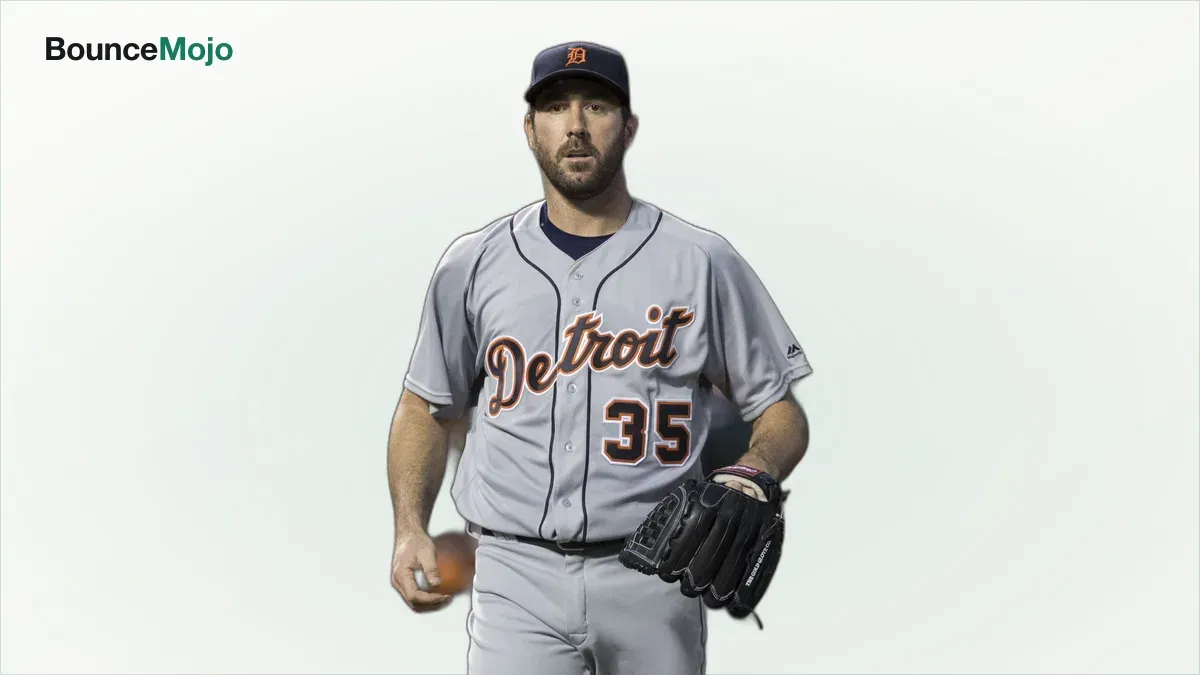
The cleanest way to read Justin Verlander’s career is backwards, because the ending is the part that shouldn’t have happened. Work from the elbow, and everything before it stops looking like a straight line and starts looking like preparation.
2020: The Elbow Goes at 37
Shortly after reaching the top of the sport, Verlander’s elbow gave out. In 2020 he underwent Tommy John surgery and missed most of two seasons.
For a pitcher already in his late 30s, that timeline is usually a career obituary. Two decades of throwing hard had finally come due, and the reasonable assumption across baseball was that this was the end. Verlander had a championship, a trophy case, a famous marriage, and no obligation to do anything else.
The Cy Young He Won on a Rebuilt Arm
He rehabbed for the better part of two years, rebuilt his mechanics, and came back to win another Cy Young Award in 2022, his third.
Almost nobody does this. Most pitchers who blow out an elbow in their late 30s simply retire, and the ones who try rarely return to elite form. Verlander’s recovery worked for a reason that predates the surgery by fifteen years: he is famous among teammates for a relentless preparation and conditioning routine, the unglamorous work behind the highlight-reel fastball. That foundation is what his rebuilt arm was rebuilt on. The comeback wasn’t luck. It was method, and it was paid for years in advance.
His wife, Kate Upton, whom he married in Italy in 2017, was his partner through the surgery and the recovery, one of the toughest professional stretches of his life.
Houston, With Seconds Left on the Deadline Clock
Everything he was defending in 2020 he had only just won, and he nearly didn’t get the chance.
The late-2017 deadline trade that sent Verlander from Detroit to Houston was finalized in the final seconds before the deadline, a chaotic negotiation that landed him with a contender just as his Detroit tenure was winding down. Consider what accepting it required. Verlander had spent his entire career in Detroit, the franchise that drafted and developed him, in a city that adored him. Leaving meant admitting his best chance at a title was somewhere else.
In Houston he was reborn: more velocity, sharper breaking pitches, teammates who helped him finally reach the mountaintop. He won World Series titles with the Houston Astros, the championship that had eluded him for a decade in Detroit. Sometimes the biggest turning point in a life comes down to a phone call beating a clock, and the fame from that arc built the fortune his net worth breakdown lays out.
The Houston era carries an asterisk he has had to answer for. Verlander was a member of the teams caught in the 2017 sign-stealing controversy. He has said he was unaware of the scheme, but the scandal cast a shadow over that championship era for the entire roster.
Before That: The Slump Everyone Read as Decline
The reason the trade mattered is that by the mid-2010s a lot of people had stopped expecting anything from him.
Verlander went through a real professional slump in Detroit. His velocity and results dipped, critics openly argued he was finished, and his big contract got described as an albatross. It stung, and he has spoken about the doubt that crept in. He answered it with adjustments rather than excuses, refining his mechanics and conditioning until he had reinvented himself, then demolished the narrative in Houston.
That was the first time he was written off. It would not be the last, and the pattern of the response never changed.
2011: The Season That Set the Bar
The slump only registered as a fall because of how high the bar was.
Verlander’s 2011 was one of the greatest seasons by any pitcher in modern history. He won 24 games, led the league in nearly every major category, and took home both the Cy Young Award and the AL MVP, a rare double for a pitcher. In Detroit he was the face of the franchise, a workhorse who logged huge innings and anchored playoff runs with a city’s baseball hopes on his right arm.
That workload became its own argument. Some analysts contended the heavy usage in Detroit contributed to the wear that eventually required elbow surgery, reviving the perennial debate about how hard a valuable arm should be pushed.
Manakin-Sabot: Where the Arm Came From
Verlander was born in 1983 and raised in Manakin-Sabot, Virginia, a small community outside Richmond. His father, Richard, worked in telecommunications, and his parents recognized early that their son had a special arm.
There is a well-known story from his youth: the velocity was so raw and hard to control that Richard and Kathy Verlander took him to a specialized pitching coach to refine his mechanics. The arm was a gift; the command had to be built. That early lesson, that even freakish talent needs relentless refinement, would define his entire approach to the game.
He wasn’t a top recruit out of high school and ended up at Old Dominion University rather than a baseball powerhouse, which lit a competitive fire that never went out. At ODU he became a strikeout machine and shot up draft boards. In 2004 the Detroit Tigers took him second overall; by 2006 he was in the majors winning AL Rookie of the Year and helping drag a downtrodden franchise back to the World Series. He threw his first career no-hitter in 2007.
Why “Natural” Was Always the Wrong Word
Read forwards, Verlander looks blessed: golden arm, celebrity marriage, trophies everywhere, three Cy Youngs, an MVP, multiple no-hitters, World Series rings, a lock for the Hall of Fame. His high-profile marriage put a private competitor’s personal life under a microscope, and every new contract in his late 30s drew skeptics asking whether a pitcher that old could still be elite.
Read backwards, the word “natural” falls apart. The label undersells the obsession, and it erases the two occasions when the sport had already buried him. He beat a midcareer slump, then beat a career-ending injury, then beat the calendar, and that longevity is what put him among the top earners on our richest baseball players list and the broader richest athletes ranking. He never pretended any of it came easy; he talks openly about the work, the doubt and the grind.
The full picture of the fortune all that stubbornness built lives in his net worth breakdown. It is a fitting ending for a pitcher who treated “impossible” as a challenge rather than a conclusion.
Shop Justin Verlander on Amazon
Books, audiobooks, merch and more, handpicked for fans.
As an Amazon Associate we earn from qualifying purchases.
Frequently Asked Questions
Did Justin Verlander have Tommy John surgery?+
Yes. Verlander underwent Tommy John elbow surgery in 2020 and missed most of two seasons before returning to win another Cy Young Award in 2022.
How many Cy Young Awards has Justin Verlander won?+
Verlander has won three Cy Young Awards and the 2011 American League MVP, making him one of the most decorated pitchers of his generation.
Has Justin Verlander won a World Series?+
Yes. Verlander won World Series titles with the Houston Astros, finally capturing the championship that had long eluded him.
Where did Justin Verlander grow up?+
Verlander grew up in Manakin-Sabot, Virginia, and pitched at Old Dominion University before the Detroit Tigers drafted him second overall in 2004.
Who is Justin Verlander married to?+
Verlander is married to supermodel Kate Upton. The couple wed in Italy in 2017 and have a daughter together.
Want the money side of the story?
Read Justin Verlander's Full Net Worth Breakdown →Shop Justin Verlander on Amazon
Books, audiobooks, merch and more, handpicked for fans.
As an Amazon Associate we earn from qualifying purchases.