Justin Rose Biography: The Boy Wonder Who Survived 21 Missed Cuts
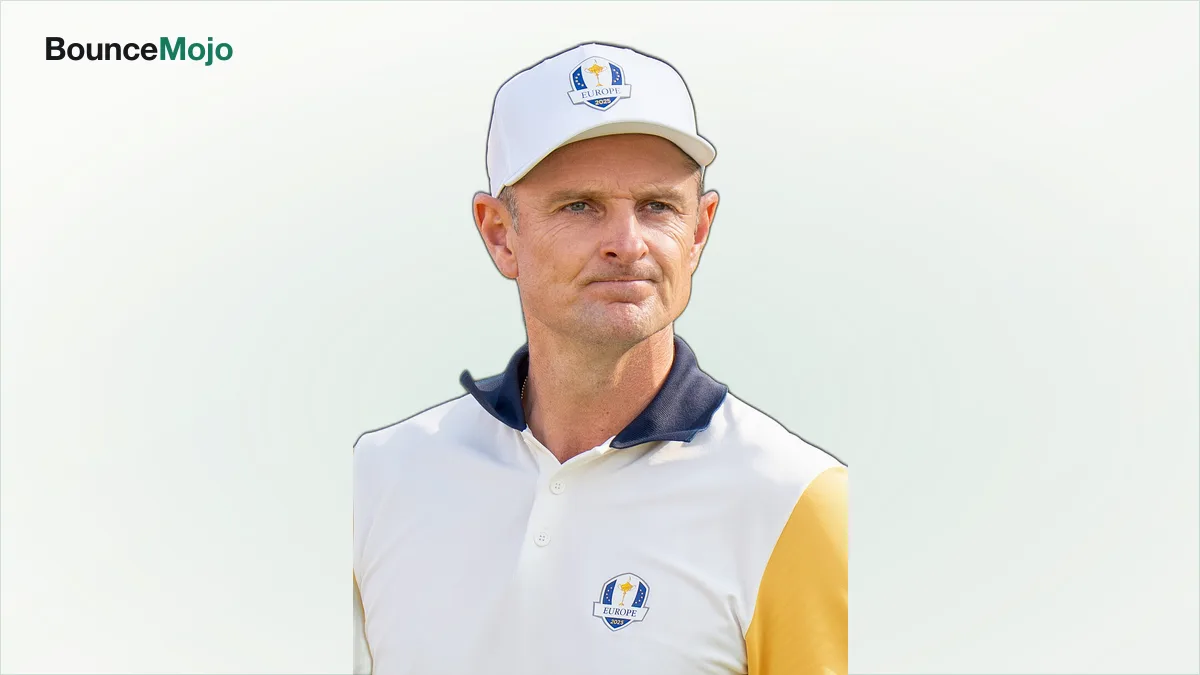
Most people remember Justin Rose as the smiling major champion who won Olympic gold. The truth is his career nearly ended before it began.
Here’s what most people miss: the same teenager who became a national hero at the 1998 Open then missed 21 cuts in a row as a pro, a failure that would have broken almost anyone.
The Myth vs. The Reality
The myth is golden: Justin Rose, the gifted English star who won a U.S. Open, took Olympic gold, and reached world No. 1 with a smile and a smooth swing.
The reality has a brutal middle chapter.
Here’s the deal: before any of the glory, Rose endured one of the most public humblings in golf history. After becoming a teenage sensation, he turned pro and missed the cut in 21 straight tournaments. The boy wonder looked like a bust.
The champion the world admires was forged in that failure, not spared from it.
You might be wondering: how does a kid go from national hero to 21 missed cuts to major champion? To understand that, you have to start with a father and a golf-mad family.
The World That Made Justin Rose
Rose was born in 1980 in Johannesburg, South Africa, and moved to England as a young child, growing up in the golf-rich culture of the Home Counties.
His father, Ken Rose, was the central figure. Ken coached his son from the beginning, nurturing a natural talent and instilling both technique and temperament. Golf was the family’s shared world.
Now: English golf in the 1990s was hungry for a homegrown star to follow the great generations before. When a fresh-faced teenager announced himself on the biggest stage, the country adopted him instantly.
That hunger cut both ways. The same public that lifted Rose up as a 17-year-old was quick to question him when the pro results didn’t follow, and the British press can be brutal with a fallen hero. A teenager who had been celebrated on the front pages suddenly became a cautionary tale, a reminder of how fast adulation curdles into doubt. Handling that whiplash, from national darling to punchline, before he was even 20, demanded a maturity most people never have to summon.
Think about it: a South African-born boy became England’s great golfing hope, coached by a devoted father, carrying a nation’s expectations before he could legally drink. That pressure shaped everything that followed.
The Crucible: Early Life and the Climb
The Environment That Shaped Him
Rose grew up immersed in the game under his father’s guidance. Ken was more than a coach. He was a mentor and best friend, and their bond became the emotional core of Justin’s story.
Let that land. This wasn’t a domineering tennis-parent dynamic. It was a loving partnership between father and son built around a shared passion.
That foundation produced a prodigy. As a teenage amateur, Rose showed the poise and ball-striking of a player far beyond his years, setting up the moment that would change his life.
Here’s the truth: the fairy-tale beginning was about to collide with harsh reality.
The Catalyst
At the 1998 Open Championship, the 17-year-old amateur Rose finished a stunning fourth, holing a dramatic chip on the 72nd hole that sent Britain into raptures. He was a hero overnight.
Then he turned professional the very next day. And the dream imploded.
Rose missed the cut in 21 consecutive events. The prodigy became a punchline. The pressure was crushing, the doubt everywhere.
It gets better, though, because how Rose responded to that humiliation, refusing to quit through the darkest stretch of his career, would define the champion he became. And the person who held him together would later break his heart.
The Key Players
No golfer’s story is a solo act, and Rose’s runs through a handful of vital people.
Ken Rose. His father, coach, and closest confidant. Ken guided Justin through the fairy-tale start and the 21 missed cuts alike, never wavering. His influence is stamped on everything Rose achieved.
Kate Rose, his wife. Justin’s partner and the co-founder of their charitable foundation. She became his anchor through a long career, and together they built a life focused on family and giving back.
His swing coaches. Rose worked with respected instructors, including a spell with Sean Foley, refining a game that had to be rebuilt after his disastrous rookie year. Those relationships helped turn raw talent into a durable, world-class player.
His English peers. Players like Lee Westwood and Luke Donald shared his era and his Ryder Cup teams, part of the wider richest golfers story of English talent that dominated a generation.
By the way, one of these relationships carried a heartbreak that would test Rose to his core. His father Ken died of leukemia in 2002, a devastating loss for the young golfer just as he was fighting his way back.
The Turning Point
The Pinnacle
Rose’s climb from the wreckage of his rookie year was long and steady, and it peaked with a run of achievements few golfers ever match.
In 2013, he won the U.S. Open at Merion, becoming the first Englishman to win it in 43 years. Three years later, he took Olympic gold in Rio in 2016, the first golf gold in 112 years. He reached world No. 1 and won the 2018 FedEx Cup and its $10 million bonus. As his own net worth breakdown shows, those trophies built a serious fortune.
The Price
Here’s the kicker: the man who shared the dream never saw it fully realized.
Ken Rose died in 2002, years before his son’s greatest triumphs. The father who coached him from boyhood, who stood by him through the 21 missed cuts, was gone before the U.S. Open, the Olympic gold, and the world No. 1 ranking.
Every great moment of Rose’s career carried that absence. The price of his success was that his most important person wasn’t there to witness the payoff. And it left Rose carrying his father’s legacy through every trophy that followed.
The Unvarnished Truth
Rose’s flaws are the human, relatable kind.
The 21 missed cuts revealed a fragility that could have swallowed him. He has spoken about the crushing weight of expectation and the self-doubt that came with such a public failure so young. He was not immune to pressure. He learned to manage it.
Now: his career also had fallow stretches, seasons where his form dipped and the wins dried up. Rose was never the most dominant player of his era, and he had to grind for everything after the fairy-tale start.
He also tinkered relentlessly with his game, changing swing coaches, equipment, and even putting methods over the years in search of small edges. That restlessness kept him competitive deep into his career, but it occasionally cost him rhythm and consistency, the double edge of a perfectionist who was never quite satisfied. Rose’s willingness to overhaul what was working spoke to both his ambition and his refusal to coast on the fairy-tale story of his youth.
The most honest thing about Rose is how openly he has carried his father’s memory and his own early failure. He never rewrote history to pretend the 21 missed cuts didn’t happen. He treats them as the foundation of who he became.
Controversies and Criticisms
Rose’s career has been notably free of scandal, but not of debate.
The “underachiever” question. With his talent and longevity, some argued Rose should have won more than one major. The critique was that a player of his ability underdelivered at the biggest events.
The relentless comparisons. As part of a golden English generation, Rose was constantly measured against peers, and his single major left him open to the same “nearly-man” framing that dogged some contemporaries, even though he had the trophies they lacked.
The globe-trotting tax base. Like many pros, Rose based himself in tax-friendly locations, a common practice that occasionally drew low-level criticism, though nothing that seriously dented his reputation as one of the game’s genuine good guys.
The consistency-versus-peaks debate. Some observers argued Rose was a model of steady excellence but rarely a dominant force, a golfer who accumulated results without terrorizing fields the way the very greatest do. His defenders pointed to the sheer breadth of his résumé, a major, an Olympic gold, a FedEx Cup, and world No. 1, as proof that quiet consistency at the highest level is its own kind of greatness.
The Ryder Cup passion questions. Rose was a fierce and reliable Ryder Cup competitor for Europe, yet even there the intensity of the American and continental rivalries occasionally invited scrutiny of every star’s form and pairings. Rose largely rose above it, remaining one of the more respected and drama-free figures in the team room.
What We Can Learn From Justin Rose
Navigating Hard Times
The first lesson is about failure: a catastrophic start is not the end of the story. Rose missed 21 cuts in a row and still became a major champion, Olympic gold medalist, and world No. 1. How you begin doesn’t determine how you finish.
But here’s the truth his career makes plain: resilience compounds. By refusing to quit through the worst stretch imaginable, Rose gave himself the years he needed to build both a great record and one of the bigger fortunes on our richest golfers list.
The Success Blueprint
If you want the replicable part, it’s this: rebuild after failure rather than fleeing it. Rose reworked his game, kept believing, and grinded through the lean years until the breakthroughs came.
That’s transferable. The lesson isn’t “be a teenage prodigy.” It’s “when everything falls apart, put your head down and rebuild.” Patience and persistence turned a punchline into a champion.
Becoming Better
The deepest lesson is about honoring the people who shaped you. Rose carried his late father’s memory through every triumph and built a foundation with his wife to give other children a start.
In other words, he turned love and loss into purpose. The prodigy coached by his dad grew into a man who paid that gift forward, which is the most moving thread in his whole story.
Final Verdict
Justin Rose is one of the finest and most likable golfers of his generation, and “likable” is earned here, not given. A U.S. Open champion, an Olympic gold medalist, a former world No. 1, all built on a comeback from one of the worst starts golf has ever seen.
And here’s the twist that reframes everything: the teenage hero who nearly washed out with 21 straight missed cuts became a champion, but the father who made it all possible never lived to see the glory. The full picture of the fortune that career produced lives in his net worth breakdown, and it tells a story of resilience, loss, and redemption: the boy wonder who refused to break, and honored the man who believed in him first.
Shop Justin Rose on Amazon
Books, audiobooks, merch and more, handpicked for fans.
As an Amazon Associate we earn from qualifying purchases.
Frequently Asked Questions
Why is Justin Rose famous?+
Rose is famous for finishing fourth at the 1998 Open as a 17-year-old amateur, then winning the 2013 U.S. Open, 2016 Olympic gold, and reaching world No. 1.
How many cuts did Justin Rose miss to start his career?+
Rose famously missed the cut in 21 consecutive events after turning professional in 1998, a brutal humbling that he eventually overcame to become a major champion.
What did Justin Rose win at the Olympics?+
Rose won the gold medal at the 2016 Rio Olympics, the first Olympic golf gold in 112 years after the sport returned to the Games.
When did Justin Rose win a major?+
Rose won the 2013 U.S. Open at Merion, becoming the first Englishman to win the championship in 43 years, a defining moment of his career.
Where is Justin Rose from?+
Rose was born in Johannesburg, South Africa in 1980 and raised in England, representing his adopted country throughout his professional career.
Want the money side of the story?
Read Justin Rose's Full Net Worth Breakdown →Shop Justin Rose on Amazon
Books, audiobooks, merch and more, handpicked for fans.
As an Amazon Associate we earn from qualifying purchases.