Quinton 'Rampage' Jackson Biography: The Memphis Kid Who Howled
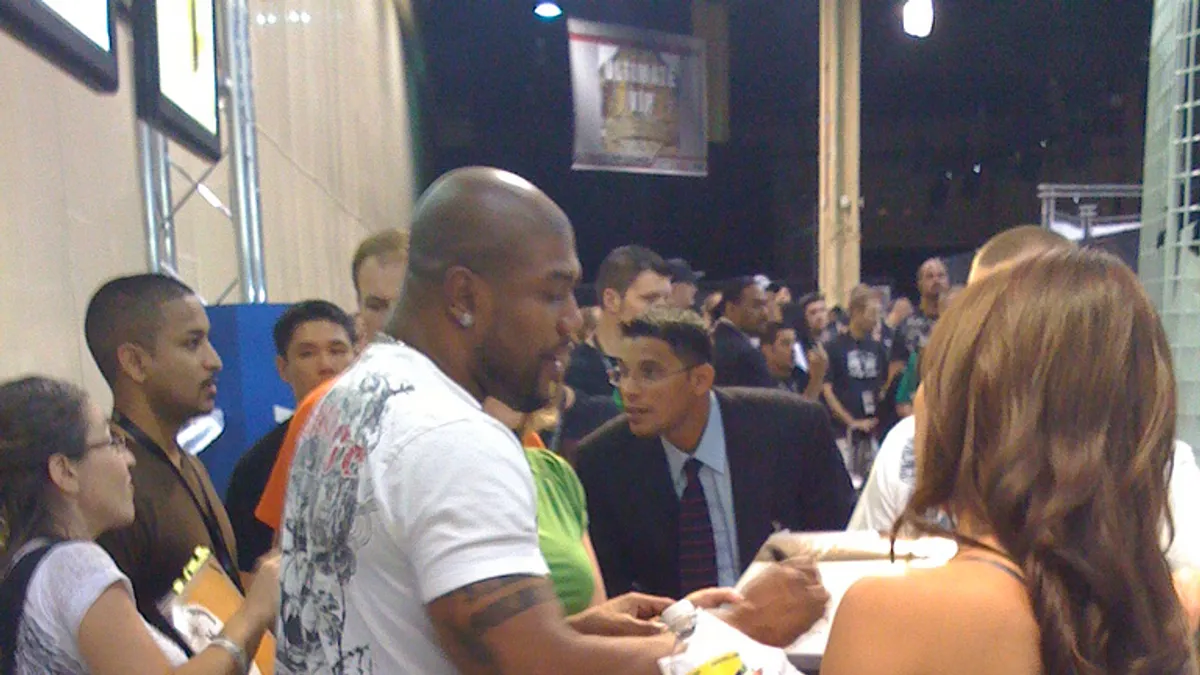
Most people know Quinton Jackson from the howl, the chain, and the knockouts. That picture is too small. The real story is how a kid from a rough corner of Memphis turned raw survival instinct into two careers at once.
Here’s what most people miss: Jackson didn’t just fight his way to a title. He built a character so vivid that Hollywood cast him in a blockbuster, making him one of the few MMA fighters to earn in the cage and on the screen at the same time.
The Myth vs. The Reality
The myth is loud and larger than life. “Rampage” Jackson: the howling wild man with the chain around his neck who bodyslammed opponents into oblivion. A force of nature. All power, all persona.
The reality is more grounded.
Here’s the deal: beneath the character was a skilled wrestler with real technique, a fighter who used a strong base and heavy hands to dismantle elite competition across two continents. The persona sold the show. The wrestling won the fights.
And the “invincible showman” framing hides the human underneath. Jackson came from a hard childhood, carried real struggles into his fame, and faced setbacks that tested him well beyond the cage. The character was armor as much as marketing.
You might be wondering: how does a kid from a rough part of Memphis end up a world champion and a movie star? To understand that, you have to understand the world he survived.
The World That Made Quinton Jackson
Jackson grew up in Memphis, Tennessee, in an environment that demanded toughness early.
He was born in 1978 and had a difficult childhood. By his own account, he was drawn into street fights young, and his father, who struggled with addiction, disappeared from his life when Jackson was around ten. Survival meant learning to fight, and Memphis gave him plenty of practice.
Now: the way out came through sport. Jackson channeled that raw toughness into wrestling at Raleigh Egypt High School, where he earned All-State honors. Wrestling gave a chaotic upbringing structure, and it planted the foundation for everything that followed. When MMA emerged as a viable path, a wrestler with Jackson’s power and presence was exactly what the young sport was hungry for.
He arrived just as MMA was globalizing, with Japan’s PRIDE promotion offering big stages and bigger paychecks to fighters who could perform. Jackson could perform better than almost anyone. But first he had to make it out of the regional circuit.
The Crucible: Early Life and the Climb
The Environment That Shaped Him
Jackson’s foundation was wrestling, and his fuel was a childhood that left him with plenty to fight for.
After high school, he considered professional wrestling before choosing to keep developing his amateur wrestling background. That decision mattered. It gave him a real athletic base rather than just a persona, and when he discovered MMA and saw other wrestlers succeed, he had the tools to compete immediately.
Here’s the truth: the “Rampage” character that fans loved was built on top of genuine ability. Jackson wasn’t a showman pretending to fight. He was a legitimate wrestler who wrapped his skill in a persona that made people pay attention.
There is a detail here that says everything about his path. Jackson has spoken about how, as a young man in Memphis, fighting was survival before it was ever a sport. He was in street fights, he sold drugs for a time, and he carried the instability of an absent father. Wrestling was the first thing that gave that chaos a shape and a goal, and it pointed him toward a life that his neighborhood alone might never have offered.
The Catalyst
The turning point came when Jackson reached PRIDE in Japan.
He had built an early record on regional promotions like King of the Cage before earning a shot on the sport’s biggest international stage. In PRIDE, he fought the world’s best light heavyweights, developed a brutal rivalry with Wanderlei Silva, and became a genuine star in a country that embraced MMA as major entertainment. The bodyslams, the walk-outs, the persona, all of it crystallized in Japan.
The PRIDE era also gave the world the moments that made him unforgettable. When Ricardo Arona locked him in a triangle choke, Jackson answered by hoisting Arona overhead and slamming him unconscious into the canvas, a highlight replayed for years and a perfect distillation of the “Rampage” brand: raw power, theatrical timing, and a refusal to lose gracefully. Fans did not just watch Jackson fight. They waited to see what he would do.
Then came the moment that changed his American career. Jackson signed with the UFC in 2007 and knocked out Chuck Liddell to claim the Light Heavyweight Championship, a single night that made him champion and, by his own account, earned him more than five million dollars.
It gets better, and then it gets complicated. The title run set up his Hollywood leap, and the people around him shaped both the rise and the strain that came with it.
The Key Players
No legend rises alone, and Jackson’s story runs through a handful of defining figures.
Wanderlei Silva. His fiercest PRIDE-era rival. Their fights were among the most violent and memorable of the era, and the rivalry helped define Jackson’s early stardom.
Chuck Liddell. The man he knocked out to win the UFC title. That victory was the biggest night of Jackson’s career and the payday that reshaped his finances.
Dan Henderson. The opponent Jackson beat to unify the UFC and PRIDE light heavyweight belts, cementing his place atop the division.
His father. Absent for years during Jackson’s childhood, his return to Jackson’s life in 2003 was a significant personal chapter, a reminder that the fighter’s toughest battles weren’t always in the cage.
Think about it: every one of these figures reflects the same theme in Jackson’s story, the collision between the fearsome public character and the complicated man behind it. He carried both into everything he did.
The Turning Point
The Pinnacle
From his PRIDE stardom to his UFC title, Jackson reached heights few fighters touch.
He won the UFC Light Heavyweight Championship by knocking out Chuck Liddell, then unified it with a decision over Dan Henderson, holding the belt as one of the sport’s marquee attractions. His fights sold pay-per-views. His persona sold everything else. As his own net worth story lays out, his biggest night reportedly brought a payday north of five million dollars.
Then came the crossover almost no fighter manages. Hollywood cast Jackson as B.A. Baracus in the 2010 film adaptation of The A-Team, a major studio release. He stepped from the cage onto a blockbuster set, becoming one of the rare MMA fighters to build a genuine acting career while still competing. For a stretch, he was a champion and a movie star at once.
The Price
Here’s the kicker: living as a character has a cost.
Splitting his focus between fighting and film complicated his career. Some of his later fights lacked the ferocity of his prime, and his commitments outside the cage created friction with promoters. He later fought in Bellator, winning a tournament championship, but the singular fury of his PRIDE and early UFC years proved hard to sustain across two demanding industries.
The price of the crossover was written in that divided attention. Being both a fighter and an entertainer stretched him thin, and the “Rampage” persona that opened doors also boxed him into a role he had to keep performing. Which brings us to the harder truths behind the character.
The Unvarnished Truth
Jackson’s story isn’t a clean highlight reel, and the fuller picture is more human.
He carried the weight of a hard childhood into his fame, and he has been candid about the personal struggles that came with it. His career included public disputes with promoters, periods of frustration, and fights that fell short of his early standard. The wild energy that made him a star sometimes spilled into controversy outside the cage.
Now: none of that erases what he achieved, and judging him harshly misses the fuller picture. A man who survived a rough upbringing and willed himself into a world champion and a movie star doesn’t do it without scars. Jackson’s struggles were part of the same intensity that made him great, not separate from it.
The most honest thing you can say about Jackson is this: the character that made him unforgettable was armor built over real pain, and both the strength and the strain came from the same place.
Controversies and Criticisms
For a beloved figure, Jackson faced real scrutiny.
Disputes with promoters. His relationships with the UFC and other promotions were sometimes contentious, leading to public friction and contract battles.
Divided focus. Critics argued his acting ambitions pulled attention from his fighting, contributing to inconsistent performances in his later years.
Personal struggles. Jackson has spoken about difficult periods off camera, and some incidents outside the cage drew criticism during his career.
Late-career decline. As with many fighters, questions arose about how long he should continue as his results grew uneven, a common but real criticism of a fading star.
What We Can Learn From Quinton Jackson
Navigating Hard Times
The first lesson is about turning survival into strength. Jackson’s childhood could have swallowed him. Instead, he channeled that toughness into wrestling, then fighting, then fame. The very hardship that shaped him became the fuel behind the persona.
Here’s the truth his story makes plain: the character you build to protect yourself can also become your greatest asset, if you learn to use it rather than hide behind it. Jackson turned “Rampage” into a career, and that reinvention is the heart of his story.
The Success Blueprint
If you want the replicable part, it’s this: Jackson combined a real foundation, wrestling, with an unforgettable persona, and then leveraged fame in one field to open doors in another. He didn’t just win fights. He built a brand vivid enough to land in a Hollywood blockbuster.
That’s transferable. Master a genuine skill, wrap it in a personality people remember, and use the platform to reach into new industries. Jackson’s crossover fame widened his earning window far beyond the cage, and as our richest MMA fighters ranking shows, that reach still holds value.
Becoming Better
The deepest lesson is about authenticity under pressure. Jackson was always, unmistakably, himself, loud, raw, and real, and that authenticity is exactly what audiences connected with, in the cage and on screen.
In other words, the thing that makes you different is often the thing that makes you valuable. Jackson never sanded down his edges to fit in, and that refusal is what made “Rampage” a name people still remember.
Final Verdict
Quinton “Rampage” Jackson is one of the most colorful and accomplished figures in MMA history, and “colorful” carries real weight, because his personality was as central to his success as his fists. He was a PRIDE icon, a UFC champion, and a genuine crossover star who proved a fighter could conquer two industries at once.
And here’s the twist that reframes everything: the character that made him unforgettable was built on a hard childhood and real struggle, and the same intensity that fueled his rise also complicated his path. Yet the door he walked through, from a rough Memphis block to a world title and a blockbuster set, stayed open because he never stopped being himself. The full picture of what that career was worth lives in his net worth breakdown, but the money was never the whole story. Jackson’s real legacy is proof that a vivid, authentic self can carry you further than talent alone.
Shop Quinton Jackson on Amazon
Books, audiobooks, merch and more, handpicked for fans.
As an Amazon Associate we earn from qualifying purchases.
Frequently Asked Questions
Where did Quinton Jackson grow up?+
Quinton 'Rampage' Jackson was born on June 20, 1978, in Memphis, Tennessee, where he had a difficult childhood marked by street fights and an absent father.
How did Rampage Jackson get into MMA?+
Jackson wrestled at Raleigh Egypt High School, earning All-State honors, then discovered MMA after seeing other amateur wrestlers succeed. He built an early record on the regional circuit before reaching PRIDE.
What made Rampage famous in PRIDE?+
Jackson became a star in Japan's PRIDE Fighting Championships in the early 2000s, fighting the world's best light heavyweights and building his wild 'Rampage' persona.
How did Rampage Jackson become UFC champion?+
In 2007, Jackson joined the UFC and won the Light Heavyweight Championship by knocking out Chuck Liddell, later unifying the belt with a win over Dan Henderson.
What movie did Rampage Jackson star in?+
Jackson played B.A. Baracus in the 2010 film 'The A-Team,' becoming one of MMA's most successful crossover actors alongside his fighting career.
Want the money side of the story?
Read Quinton Jackson's Full Net Worth Breakdown →Shop Quinton Jackson on Amazon
Books, audiobooks, merch and more, handpicked for fans.
As an Amazon Associate we earn from qualifying purchases.