Peter Sagan Biography: The Raw Truth Behind Cycling's Great Showman
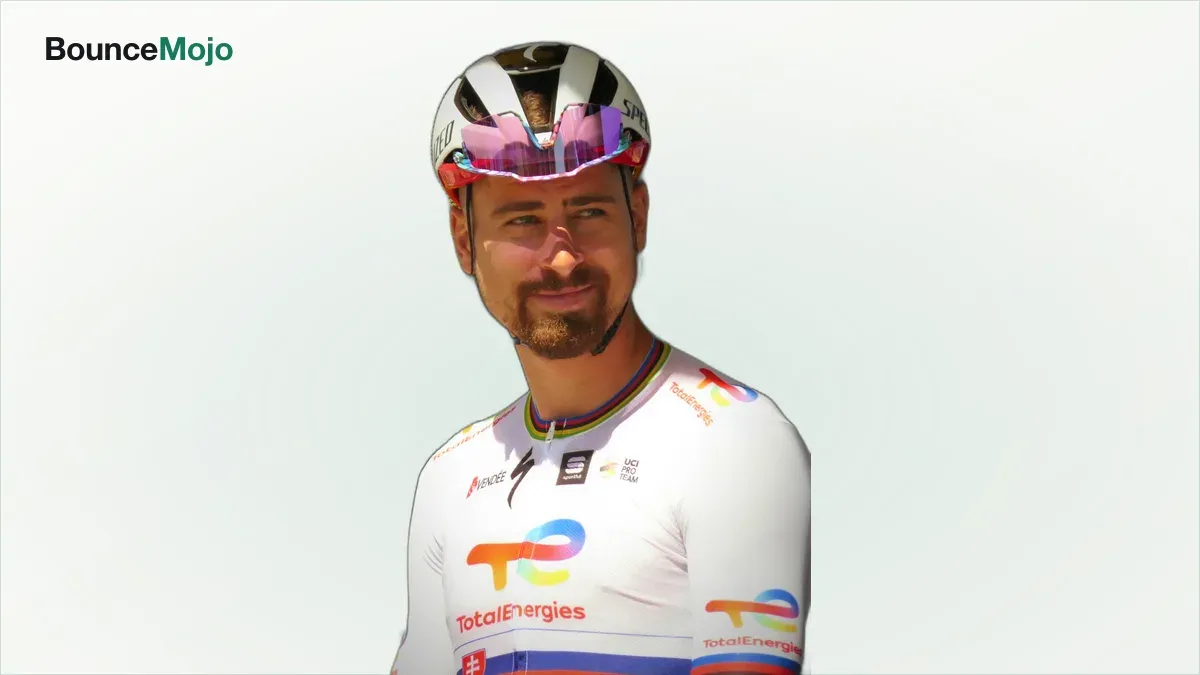
Everybody remembers the wheelies and the green jerseys. Almost nobody remembers the little grocery store in the Slovak mountains where it all began.
Here’s what most people miss: cycling’s great showman came from a modest, working-class family in a country that barely existed when he was born.
The Myth vs. The Reality
The myth is a natural entertainer. Peter Sagan, the cool, grinning showman who pops wheelies at the finish line, cracks jokes at press conferences and makes the brutal sport of cycling look like a playground.
That version is real. It’s also only the surface.
Here’s the truth: the relaxed, fun-loving image hides one of the most complete and hardworking bike riders of his generation. Sagan’s showmanship wasn’t a substitute for substance, it sat on top of elite bike-handling, ferocious versatility and a work ethic forged in a hard, unglamorous environment. The clowning was the marketing. The engine underneath was deadly serious.
Think about it. We love the idea of the effortless entertainer because it’s charming. But Sagan didn’t win three straight world titles and seven green jerseys by being funny. He won them by being one of the toughest, most adaptable racers alive, able to sprint, climb short hills, and survive the cobbles of the hardest classics.
Now, that combination of joy and grit came from somewhere specific: a working-class family in a newly independent nation, where outdoor toughness was just part of life. Which raises the question: what kind of upbringing produces a rider like this?
The World That Made Peter Sagan
To understand Sagan, you have to understand the Slovakia he came up in.
He was born on January 26, 1990, in Žilina, a town in the rugged, mountainous northwest of Slovakia. His timing was historic: Czechoslovakia split into the Czech Republic and Slovakia in 1993, so Sagan grew up in a brand-new country still finding its feet after the communist era. His parents were part of that working-class world, running a small grocery store to make ends meet.
The environment shaped him. Žilina sits amid harsh winters and rough terrain, a place where outdoor pursuits and physical toughness were part of daily life. This wasn’t a cycling superpower like Belgium or France, with deep infrastructure and tradition. It was a hardscrabble corner of Central Europe where a talented kid had to make his own way.
Here’s the deal: Sagan was one of several siblings, and the household was competitive and active. His older brother Juraj, born just over a year before him, became his first rival and constant companion. The two brothers pushed each other outdoors, on bikes, on adventures, in a childhood built around movement.
But Sagan didn’t start on the road, where his fame would come. He started in the dirt.
The Crucible: Early Life and the Climb
The environment that shaped him
Two forces shaped young Peter Sagan: a competitive brother and an off-road apprenticeship.
Juraj was the measuring stick. Older, and initially bigger, he set the bar that Peter chased, the two of them racing and riding together constantly. That sibling rivalry is one of the oldest engines in sport, and it drove Peter to keep pace with someone a step ahead.
The other force was the terrain and the discipline. Sagan started competitive cycling around age nine with a local Žilina club, but crucially, he came up through mountain biking and cyclo-cross, not the road. Those off-road disciplines demand extraordinary bike-handling, balance, and comfort on technical, unpredictable ground.
You might be wondering: why does that matter for a future road star? Because it gave him a skill set most road pros never develop. Sagan could handle a bike in ways his rivals couldn’t, descending, cornering, and staying upright in chaos. The wheelies and the flashy control weren’t just for show. They were the residue of a childhood spent racing in the dirt.
By his teens, Sagan was a junior mountain-biking champion, already marked as a rare talent. The raw material was undeniable.
The catalyst
The catalyst was his jump to the road, and it was immediate and electric.
Sagan turned professional on the road at 19 with the Liquigas team, and he announced himself almost instantly. As a young pro, he won stages against established stars, attacking with a fearlessness and flair that made veterans look flat-footed. He wasn’t easing into the sport. He was seizing it.
Here’s the kicker: he arrived with a complete package that road cycling rarely sees. He could out-sprint pure sprinters on tough finishes, survive climbs that dropped other fast men, and handle his bike better than anyone in the peloton. That versatility made him nearly impossible to game-plan against.
The kid from the Žilina grocery store was about to become the most dominant one-day and classification rider of his era. But dominance in cycling comes with a grind few outsiders understand.
The Key Players
No life this big is a solo act, and Sagan’s is full of essential figures.
Start with Juraj Sagan, his older brother, first rival, and lifelong teammate. Juraj became a professional cyclist too and rode alongside Peter for much of his career, a rare and enduring bond in a sport built on shifting teams. He was the constant, the family in the peloton.
Then there’s Oleg Tinkov, the flamboyant Russian businessman who owned the Tinkoff team Sagan rode for in the mid-2010s. Their relationship was colorful and sometimes contentious, but Tinkov’s willingness to pay and promote helped elevate Sagan’s profile and earnings.
There’s Specialized, the American bike brand whose long partnership with Sagan went beyond sponsorship into a genuine business relationship. And there’s his home nation, Slovakia, which adopted him as its greatest sporting hero and gave his brand a patriotic dimension.
And of course there were his rivals across the classics and the green-jersey battles, the men whose presence forced him to keep evolving.
Now: with his brother beside him, big-money teams behind him, and a whole nation cheering, Sagan had everything he needed to rule the sport. And for three years, he did. But the reign came with real cost and controversy.
The Turning Point
The pinnacle
The pinnacle came in a stunning three-year run from 2015 to 2017.
Sagan won the UCI World Road Race Championship three years in a row, an unprecedented feat in the modern era. No rider had ever won the rainbow jersey three consecutive times at the elite level. That alone secured his place among the sport’s greats.
Layer on the green jerseys. Sagan won the Tour de France points classification a record seven times, dominating the competition for the sport’s most consistent, all-round fast rider. Add major one-day classics and stage wins across the biggest races, and the picture is of a rider who was, for the better part of a decade, the most feared and most watched man in the peloton.
Here’s the truth: he didn’t just win. He made cycling watchable to people who’d never cared about it, which is a kind of victory prize money can’t measure.
The price
But the years at the top exacted a toll, and one moment nearly derailed everything.
Cycling is a sport of relentless suffering, three-week grand tours, brutal classics, constant travel, and the ever-present risk of crashes. Sagan carried the weight of being the sport’s biggest star and its highest-paid rider, expected to entertain and to win at once, season after grinding season.
Then there was 2017. Sagan was disqualified from the Tour de France after a controversial crash involving sprinter Mark Cavendish, a decision that stunned the cycling world and briefly cast him as a villain. The ruling was later widely disputed, and many felt he’d been treated unfairly, but the incident showed how quickly the sport’s beloved showman could become its lightning rod.
The joy was real. So was the exhaustion of carrying a sport, and the risk that came with racing at its razor’s edge.
The Unvarnished Truth
Sagan is adored, but his story isn’t without flaws, and honesty serves it better.
His showmanship, so beloved by fans, occasionally read as immaturity or arrogance to critics. Early in his career, a podium-ceremony incident where he behaved inappropriately toward a hostess drew justified criticism, and he apologized. The same free-spirited persona that made him magnetic could also get him into trouble.
There’s also an honest debate about his ceiling. For all his brilliance in one-day races and the green-jersey competition, Sagan never won a grand tour and rarely challenged for the biggest three-week overall titles. Some argue that a rider of his gifts might have achieved even more with a narrower focus. Others counter that his versatility and entertainment value were their own kind of greatness.
Here’s what’s easy to miss: the very personality that made him rich and famous also made him a target. When you turn yourself into the sport’s showman, every misstep becomes a headline. Sagan’s greatest asset and his biggest vulnerability were the same trait.
None of that dims the palmares. It just makes the man more real than the highlight reel.
Controversies and Criticisms
Sagan’s career had genuine controversy, and it’s worth naming clearly.
The most famous was the 2017 Tour de France disqualification after the crash with Mark Cavendish. Race officials ruled Sagan responsible and threw him out, a decision that split the cycling world and was later seen by many as harsh or mistaken. For a rider so central to the sport’s appeal, being expelled from its biggest race was a shocking low.
Earlier, there was the podium-hostess incident that drew criticism for disrespect, and which he apologized for. It was a young man’s mistake that followed him for a while.
And there’s the fair, ongoing debate about legacy. Was Sagan an all-time great limited only by the era’s specialists, or a supremely talented entertainer who could have won even more with sharper focus? The honest answer sits in between, and knowledgeable fans argue the balance.
So what does a life like this actually teach the rest of us? A surprising amount.
What We Can Learn From Peter Sagan
Navigating hard times
Sagan’s real lesson is about bouncing back with your personality intact.
The 2017 disqualification could have soured or hardened him. Instead, he kept racing, kept winning, and kept smiling, refusing to let one bitter, disputed ruling change who he was. He absorbed the injustice and moved forward without losing the joy that defined him.
In other words: when you’re treated unfairly, the strongest response is often to keep being yourself and keep delivering.
The success blueprint
The blueprint here is about turning a rare skill set into a brand.
Sagan’s off-road roots gave him bike-handling nobody could match, and instead of hiding it, he made it his signature, the wheelies, the flair, the control. That combination of genuine, uncommon ability and visible showmanship is what made him worth so much in a sport that rarely pays big.
Want the fuller picture of how that translated into wealth? The full net worth breakdown shows how a Slovak grocer’s son became cycling’s richest showman at around $50 million. And to see where he ranks among the biggest fortunes in Olympic sport, the richest Olympians list puts it in context.
The deeper takeaway is about differentiation. In any crowded field, being excellent isn’t always enough, being excellent and unmistakable is what gets rewarded. Sagan didn’t just ride better. He rode in a way that made people want to watch. If you can pair real skill with genuine character, you become worth far more than your results alone.
Which brings us to the final reckoning on the man.
Final Verdict
Peter Sagan is going to be remembered for the wheelies, and that undersells him badly.
Most people will file him under “cycling’s fun guy,” the showman who popped tricks at the finish. A smaller, smarter group will remember the fuller truth: a working-class kid from a Slovak grocery store, forged in mountain biking and driven by an older brother, who became one of the most complete and dominant riders of his generation, three world titles, seven green jerseys, and a wall of classics.
Here’s the bottom line: the personality made him famous and rich, but the substance underneath is what made him a legend. He didn’t just entertain a niche sport. He grew it, pulling in fans who’d never watched a bike race, and he did it while beating the best riders in the world.
He is one of the richest cyclists in history. He is also proof that character and craft, together, are worth more than either alone. And in the long run, that combination, the showman who could genuinely deliver, is the version worth remembering.
Shop Peter Sagan on Amazon
Books, audiobooks, merch and more, handpicked for fans.
As an Amazon Associate we earn from qualifying purchases.
Frequently Asked Questions
Where did Peter Sagan grow up?+
Sagan grew up in Žilina, in the mountainous northwest of Slovakia, where his working-class family ran a small grocery store in the years after Czechoslovakia split apart.
How did Peter Sagan start cycling?+
Sagan began on a mountain bike and in cyclo-cross, joining a local Žilina cycling club around age nine and racing off-road before switching to the road, where he turned professional at 19.
Who is Juraj Sagan?+
Juraj Sagan is Peter's older brother, born about 13 months earlier, who also became a professional cyclist and rode as Peter's teammate for much of his career.
What are Peter Sagan's biggest achievements?+
Sagan won three consecutive World Championships (2015 to 2017) and a record seven Tour de France green jerseys, making him one of the most decorated one-day and classification riders in cycling history.
Why is Peter Sagan so popular?+
Beyond his results, Sagan is loved for his showmanship and personality, wheelies, jokes and a relaxed charisma that made him a crossover star in a traditionally low-profile sport.
Want the money side of the story?
Read Peter Sagan's Full Net Worth Breakdown →Shop Peter Sagan on Amazon
Books, audiobooks, merch and more, handpicked for fans.
As an Amazon Associate we earn from qualifying purchases.