Patrick Reed Biography: The Outsider Who Became Captain America
Most golf fans know Patrick Reed as the villain in a red shirt, the man who never met a controversy he couldn’t attract. That cartoon skips the lonelier truth underneath.
Here’s what most people miss: long before the boos, Reed was a kid so driven and so isolated that he burned bridges with almost everyone who got close, including his own family. The chip on his shoulder is real, and it came from somewhere.
The Myth vs. The Reality
The myth is simple. Patrick Reed: the cheat, the loner, the guy the crowd loves to hate, all scowl and controversy.
The reality is more complicated, and more human.
Here’s the deal: Reed genuinely is one of the most polarizing figures the sport has produced. Rules disputes, a bitter family estrangement, a jump to LIV that many saw as chasing money over legacy. The controversies are not invented. But the same man is also a ferocious competitor who willed himself to a Masters title and match-play greatness through sheer stubbornness.
And the “he only cares about money” framing misses the psychology. Reed has spent his whole life being the outsider, doubted by teammates, distanced from family, jeered by galleries. He turned that isolation into fuel.
You might be wondering: how does a talented kid end up so alone at the top of his sport? To understand that, you have to understand the world that shaped him.
The World That Made Patrick Reed
Reed was born in San Antonio, Texas, in 1990 and grew up largely in Baton Rouge, Louisiana.
He came up in the golf-mad American South, a region that produces tour pros the way other places produce quarterbacks. This was a world of junior tournaments, travel teams and relentless competition, where a talented young player could measure himself against the best kids in the country by his teens.
Now: Reed was very good, very early. He was a junior standout who committed fully to the game, the kind of prospect college programs chase hard. Golf was not a hobby. It was his identity from a young age.
That single-minded devotion built the competitor. It also built the isolation. When your whole self is wrapped in beating other people, relationships tend to fray, and Reed’s soon would.
The Southern golf pipeline gave him his talent and his fire. But it was college that gave him his first great controversy, and his reputation.
The Crucible: Early Life and the Climb
The Environment That Shaped Him
Reed arrived at the University of Georgia as a blue-chip recruit, exactly the kind of player expected to lead a powerhouse program. It did not last. He left Georgia amid reports of conduct issues and friction with teammates, a departure that set a pattern.
He transferred to Augusta State, and on the course it worked spectacularly. Reed helped the Jaguars win back-to-back NCAA team championships, proving his talent was every bit as advertised.
Here’s the truth: the wins came with whispers. Former teammates aired accusations about his behavior and honesty, stories that trailed him into his professional career. Whatever the full truth, the pattern was set early: brilliant results, and a locker room that didn’t embrace him.
The Catalyst
Reed turned pro in 2011 with nothing guaranteed. No sponsor’s exemptions handed to him, no easy path. He ground through Monday qualifiers and mini-tours, a brutal apprenticeship that suited his temperament.
It gets better: he won fast. By 2013 and 2014 he was collecting PGA Tour titles, and he famously declared himself a top-five player in the world before he’d truly earned the label, a boast that drew ridicule and defined his brash public image.
That swagger was about to meet its perfect stage. The Ryder Cup was coming, and it would turn Patrick Reed into a character the whole golf world would recognize.
The Key Players
No career this combustible unfolds alone, and Reed’s is full of defining figures.
Justine Reed. His wife has been the central figure of his career, serving for years as his caddie and his most fierce public defender. She became a lightning rod herself, but she was also the stability at the center of his turbulent life.
His estranged family. The most painful relationships in Reed’s story are the broken ones. He has been publicly estranged from his parents and sister for years, a rift that reportedly saw his family barred from his 2014 Ryder Cup celebrations. The wound has never fully healed.
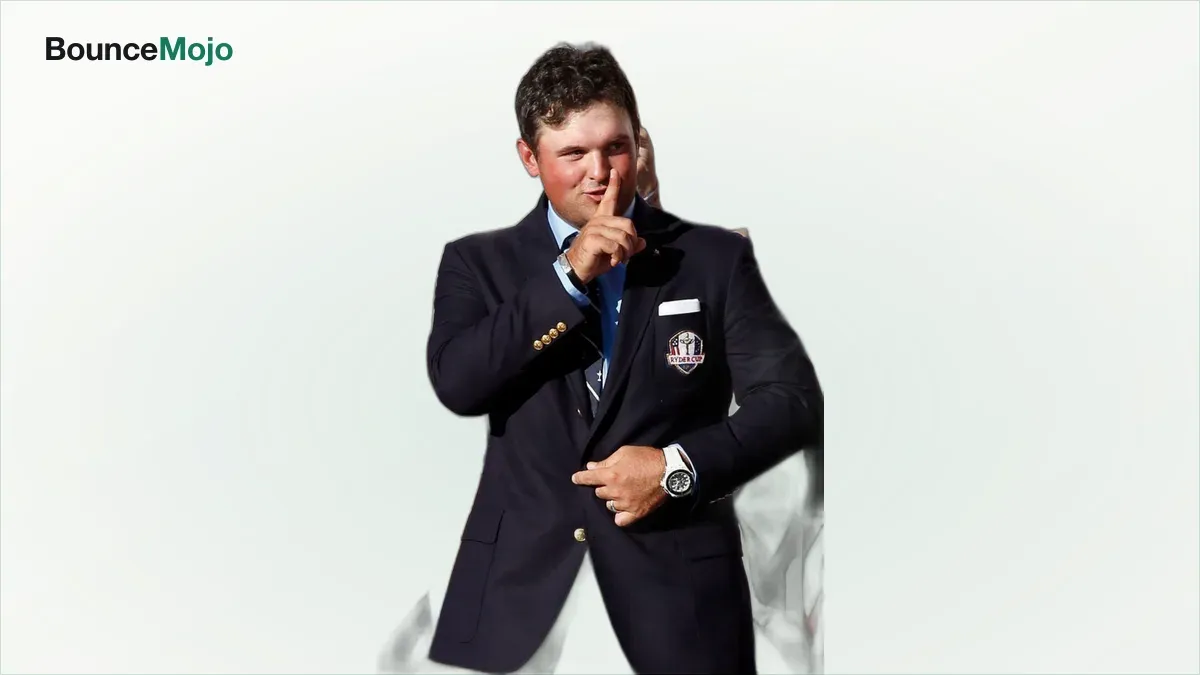
His Ryder Cup rivals and partners. On the international stage, Reed thrived on confrontation, feeding off European crowds and famously shushing the gallery. Those moments made his name.
Greg Norman. As the frontman of LIV Golf, Norman was the figure who signed Reed into the breakaway league, cementing the next chapter of his career.
Think about it: nearly every key relationship in Reed’s life carried tension, love and conflict tangled together. That friction was the engine of his story.
The Turning Point
The Pinnacle
Reed’s mountaintop came at Augusta National in April 2018.
Playing in front of galleries that were far from universally on his side, Reed led the Masters and refused to fold. He held off Rickie Fowler and a charging Jordan Spieth down the stretch, sealing the green jacket and his first major. For one Sunday, the noise stopped and only the golf remained. As his own net worth story shows, that single win did more for his brand than any other result in his career.
The Price
Here’s the kicker: the very traits that made Reed a champion also made him an outcast.
His combative style and his history of controversy meant that even his greatest triumph came without the warm embrace other champions enjoy. He won the biggest tournament in golf, yet the celebration was shadowed by his estrangement from family and his frosty standing with peers.
The price of being Patrick Reed was loneliness at the summit. Which brings us to the more vulnerable side of the story.
The Unvarnished Truth
Reed is not an easy man to defend, and he’d probably tell you he doesn’t care to be defended.
He has been at the center of multiple rules controversies, most notably an incident where he was seen improving his lie in a bunker, drawing accusations that damaged his reputation further. He has feuded publicly, sued critics, and leaned into his role as golf’s antagonist.
Now: none of that erases the pain underneath. A man estranged from his own parents and sister, jeered by crowds, doubted by teammates since college, is carrying something heavy. The armor is real because the wounds are real.
Reed has rarely sought sympathy, which is part of why he gets so little. He answers criticism with more defiance, not vulnerability. He has built a life around proving people wrong rather than winning them over.
You might be wondering: does he ever regret the way it all played out? He rarely says so publicly. He has chosen the fighter’s path, and fighters don’t often admit the cost.
The most honest thing you can say is this: Reed’s greatest strength and his greatest flaw are the same thing, an unbending refusal to bend for anyone.
Controversies and Criticisms
For all the wins, Reed has collected controversies at a remarkable rate.
The college accusations. Reports from former Georgia teammates about his conduct and honesty followed him from his amateur days into the pros.
The bunker incident. A widely replayed clip appeared to show Reed improving his lie in the sand, reviving old questions about his integrity.
The family estrangement. His public rift with his parents and sister, played out partly in the media, remains one of the most uncomfortable stories in modern golf.
The LIV move. His decision to join LIV Golf in 2022 for a reported nine-figure guarantee drew fierce criticism from those who saw it as choosing money over the traditional game.
What We Can Learn From Patrick Reed
Navigating Hard Times
The first lesson is about resilience under hostility: Reed has spent a career being doubted and disliked, and he kept winning anyway. Whatever you think of him, his ability to perform under boos rather than cheers is rare.
But here’s the truth his story makes plain: that resilience came at a cost he may still be paying. Turning yourself into a fortress keeps out pain, and it keeps out people too.
The Success Blueprint
If you want the replicable part, it’s this: Reed backed himself completely, even when almost no one else did. He declared himself elite before the results fully justified it, then went out and made the claim true.
That self-belief is transferable, within reason. The lesson isn’t to be abrasive. It’s to bet on your own talent hard enough that you’re willing to grind through mini-tours and Monday qualifiers to prove it, the same drive that later powered his climb up our richest golfers ranking.
Becoming Better
The deepest lesson is a cautionary one about connection. Reed achieved almost everything a golfer can want, a major, Ryder Cup glory, a fortune, and yet the estrangements and feuds hang over all of it.
In other words, winning is not the same as being at peace. Reed’s story is a reminder that the relationships you burn on the way up are the ones you miss at the top.
Final Verdict
Patrick Reed is one of the most divisive figures golf has ever produced, and “divisive” is doing a lot of work in that sentence. He is a Masters champion, a Ryder Cup force, a self-made grinder who willed himself to the top, and also a man trailed by controversy and estranged from those closest to him.
And here’s the twist that reframes everything: the outsider who couldn’t win over the golf world made a fortune by refusing to play its game, walking away from the establishment for a guarantee most players could only dream of. The full mechanics of that money live in his net worth breakdown, and they show a man who, love him or hate him, always played by his own math.
Reed’s story is not a comfortable one. It’s the tale of a fierce, gifted, wounded competitor who chose the fight over the friendship every single time. Read it closely if you’ve ever been the outsider, and wondered what winning alone actually costs.
Shop Patrick Reed on Amazon
Books, audiobooks, merch and more, handpicked for fans.
As an Amazon Associate we earn from qualifying purchases.
Frequently Asked Questions
Where did Patrick Reed grow up?+
Patrick Reed was born in San Antonio, Texas, in 1990 and grew up in Baton Rouge, Louisiana, where he became a standout junior golfer before his college years.
What happened with Patrick Reed at college?+
Reed's college career was turbulent. He left the University of Georgia and transferred to Augusta State, where he won two NCAA team titles, but persistent accusations from teammates about his conduct followed him for years.
Is Patrick Reed estranged from his family?+
Yes. Reed has been publicly estranged from his parents and sister for years, a rift that became painfully visible when his family was reportedly barred from his 2014 Ryder Cup celebrations.
What is Patrick Reed's biggest win?+
His biggest win is the 2018 Masters, where he held off Rickie Fowler and Jordan Spieth at Augusta National to claim the green jacket and his first major championship.
Why did Patrick Reed join LIV Golf?+
Reed joined LIV Golf in 2022 for a reported nine-figure guarantee, trading the PGA Tour's uncertainty for locked-in money, a move that deepened his reputation as golf's great contrarian.
Want the money side of the story?
Read Patrick Reed's Full Net Worth Breakdown →Shop Patrick Reed on Amazon
Books, audiobooks, merch and more, handpicked for fans.
As an Amazon Associate we earn from qualifying purchases.