Novak Djokovic Biography: The Boy Who Trained Through Bombs to GOAT
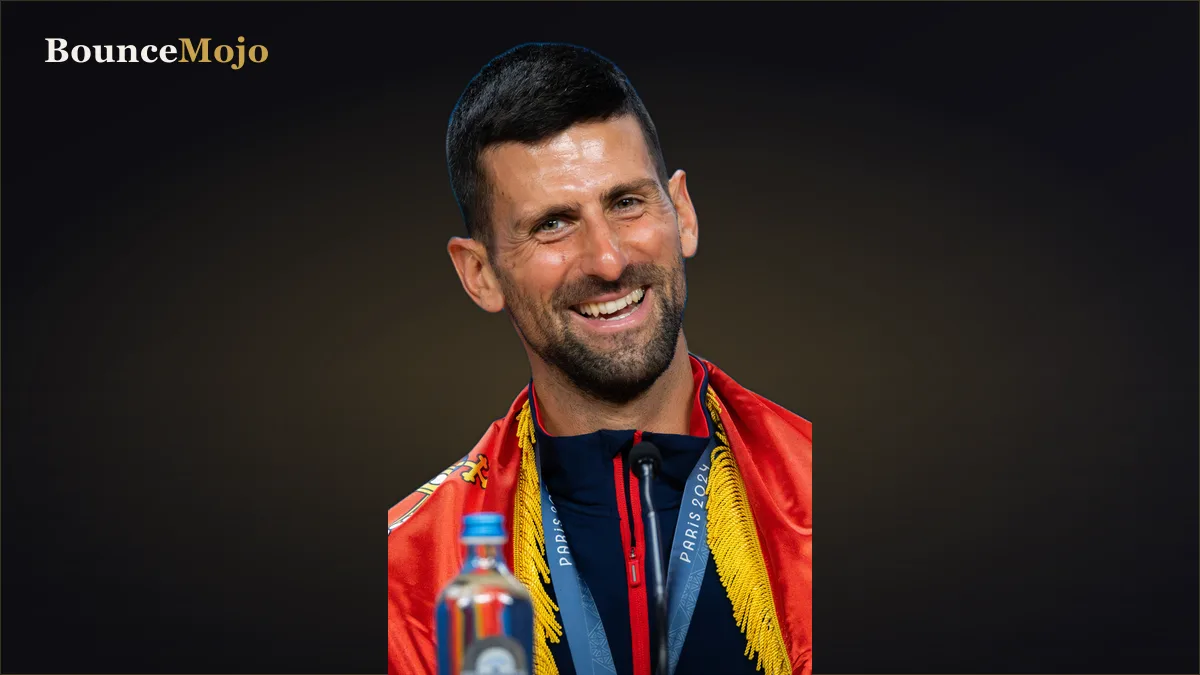
By the numbers, Novak Djokovic is the most successful player in the history of men’s tennis. He has more Grand Slam singles titles than any man who has ever played, more weeks at world No. 1 than anyone, and he completed feats, like holding all four majors at once, that neither Roger Federer nor Rafael Nadal ever managed.
He is also, by some distance, the least loved of the three. Understanding why requires four things: a drained swimming pool in Belgrade, a doctor’s appointment, an era that already had two kings in it, and a week in an Australian detention hotel.
Belgrade, 1999: Practising in a Drained Swimming Pool
Djokovic was born in 1987 in Belgrade, then part of Yugoslavia, a country about to tear itself apart.
He grew up through the wars and sanctions of the 1990s, culminating in the 1999 NATO bombing of Belgrade. As a boy he practised wherever he could, including a drained swimming pool converted into a court, because it was one of the few safe places to hit balls. Food was scarce. Sirens were normal. Ambition, in that setting, was close to an act of defiance.
His gift had been spotted absurdly early. At six he was noticed by the respected Serbian coach Jelena Gencic, who declared him a future champion and began shaping both his game and his mind. What followed was a decade of obsessive training in a country with almost no tennis infrastructure and a war-shattered economy. His parents scraped together money and called in favours, borrowing against a future nobody could guarantee. There was no safety net beneath any of it, only the conviction, planted by Gencic and his family, that he was meant to be the best.
That is where the mental toughness came from. Djokovic did not learn to focus in a quiet academy; he learned it amid chaos, and it never left him. The popular framing of him as a machine gets the output right and the origin exactly backwards. The machine was assembled out of survival.
None of this is a case for romanticising hardship. War and scarcity are nothing to wish for. The point is narrower and stranger: adversity, once survived, can be converted into a strength that others simply do not have. Djokovic took the fear and instability of his childhood and turned it into a competitive resolve that never cracked in the biggest moments. The scar became the armour.
The Doctor’s Visit That Rebuilt His Career
For all of that, the single most important event in his career happened off the court, in a doctor’s office.
Early on, Djokovic struggled with mysterious breathing problems and mid-match collapses. Then he discovered a gluten intolerance and overhauled his diet, going gluten-free and largely plant-based. His stamina, recovery, and consistency all leapt at once, and he began beating Federer and Nadal regularly rather than occasionally.
It is not much of a stretch to say one health discovery turned a very good player into the greatest of all time. But the discovery is not really the lesson; the response to it is. Djokovic changed his diet, his fitness, his serve, and his mindset in pursuit of edges his rivals were not chasing. Each marginal gain compounded, over years, into all-time greatness and the durable fortune that ranks him high on our richest tennis players list.
Third Into a Two-Man Era
He arrived third. That fact governs everything about how his career was received.
Federer and Nadal were established legends when Djokovic broke through, and for years he lost the biggest matches to them. Fans adored Federer and respected Nadal, and cast Djokovic as the villain who spoiled the party. He did not inherit an empty throne; he had to pry it away from two men in their prime, in front of crowds that loved them and often rooted against him.
That is the context that turns his record from great to almost unbelievable. He was the best in a generation that happened to contain two other men with a legitimate claim to being the best ever, and every one of his records was won in the hardest possible era, against the toughest possible opposition. His fortune, detailed in his net worth breakdown, grew alongside a resume nobody has matched.
Those rivals were not just obstacles either. By refusing to make room, Federer and Nadal forced him to become the most complete player the sport has produced. Other figures shaped him too: Jelena Gencic, who found him at six; his wife Jelena Djokovic, co-founder of the Novak Djokovic Foundation and the driving force behind his charitable work in Serbia; and his parents, whose sacrifices during the war years are woven into his identity as a fighter.
Deported From Australia, and the Other Fights
Djokovic’s career has drawn genuine controversy, more than either of his great rivals.
The Australian deportation. In 2022 he was detained and deported from Australia over his unvaccinated COVID-19 status, barring him from a tournament he had dominated. The saga became a global flashpoint, hero to some and cautionary tale to others.
Health and science scepticism. His unconventional views on wellness, water, and vaccines have drawn criticism from parts of the scientific community, even as his dietary discipline is widely admired.
The 2020 default. At the US Open he was defaulted for accidentally hitting a line judge with a ball, a costly and embarrassing exit from a major he was favoured to win.
The perpetual outsider. Critics have called him abrasive or attention-seeking. Supporters see a proud man from a country that felt overlooked, fighting for respect he was rarely granted freely.
The Winner Who Never Got the Crowd
Here is the loneliness at the centre of the most decorated career in men’s tennis: Djokovic won more than anyone and was loved less than either man he beat.
He spent his career as the interruption to a romance the sport preferred, booed in stadiums that adored his rivals, craving affection he rarely received. An athlete who needed the crowd’s approval would have wilted under all that. Djokovic instead learned to feed off it, sometimes cupping his ear to the boos, and decided early that his own standards rather than the audience’s would govern how hard he pushed.
That is the part of his story that outlasts the record book. His fortune, detailed in his net worth breakdown, rewards the trophies. What is rarer is the rest of it: the resilience to compete while your city is bombed, the willingness to rebuild everything over a diagnosis, and the self-belief to become the best in history while much of the world cheered for someone else. The boy who trained through the bombs did not just survive. He conquered, on his own terms.
Shop Novak Djokovic on Amazon
Books, audiobooks, merch and more, handpicked for fans.
As an Amazon Associate we earn from qualifying purchases.
Frequently Asked Questions
Where did Novak Djokovic grow up?+
Djokovic grew up in Belgrade, Serbia, during the 1990s. He trained through the NATO bombing of Yugoslavia in 1999, sometimes practicing in a converted swimming pool because it was the only available court.
How many Grand Slam titles has Novak Djokovic won?+
Djokovic holds the all-time record for men's Grand Slam singles titles, surpassing rivals Roger Federer and Rafael Nadal, and has spent a record number of weeks ranked world No. 1.
Why was Novak Djokovic deported from Australia?+
In 2022, Djokovic was deported from Australia over his unvaccinated COVID-19 status, which barred him from the Australian Open. The saga made global headlines and divided public opinion.
Who coached Novak Djokovic as a child?+
Djokovic was first spotted and coached by Jelena Gencic, a respected Serbian coach who recognized his talent at age six and became a formative early mentor.
Is Novak Djokovic vegan?+
Djokovic follows a plant-based, gluten-free diet that he credits with transforming his career after he discovered a gluten intolerance. His dietary discipline is central to his longevity.
Want the money side of the story?
Read Novak Djokovic's Full Net Worth Breakdown →Shop Novak Djokovic on Amazon
Books, audiobooks, merch and more, handpicked for fans.
As an Amazon Associate we earn from qualifying purchases.