Niki Lauda Biography: The Legend Who Came Back From the Fire
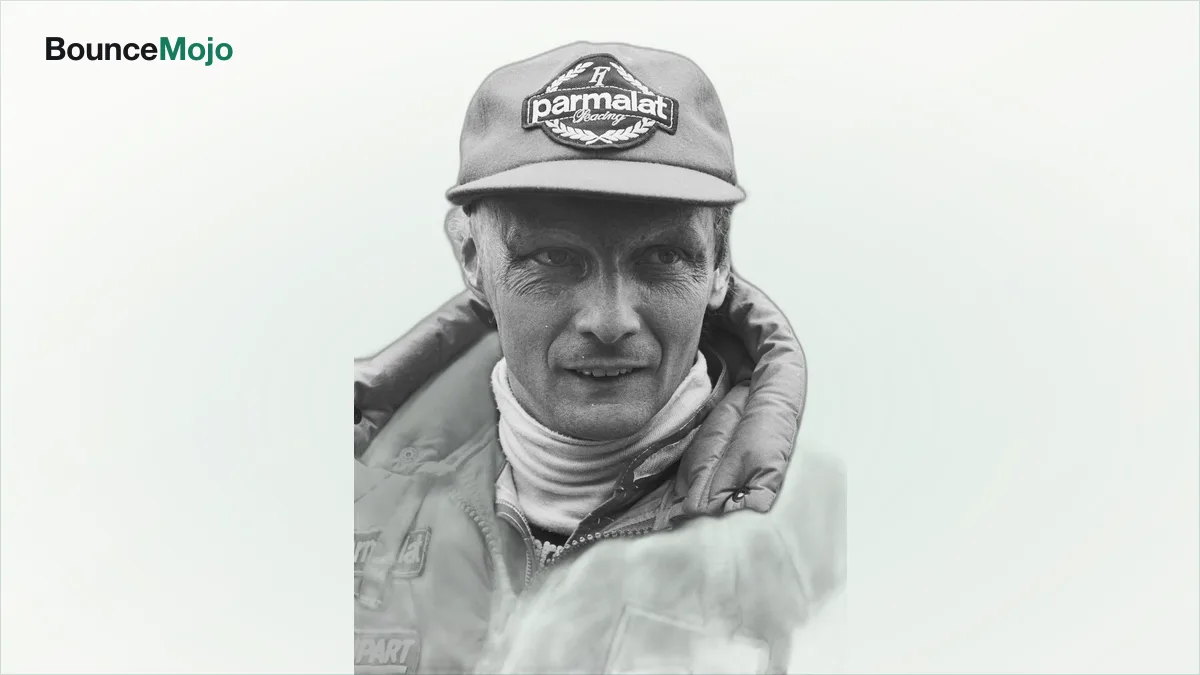
The Nürburgring, 1976
At the 1976 German Grand Prix, Niki Lauda crashed heavily and his Ferrari burst into flames. Trapped in the burning car and inhaling toxic fumes, he suffered severe burns to his head and serious damage to his lungs. His injuries were grave enough that a priest administered last rites. By every reasonable expectation, his career and his life were over.
Six weeks later, his burns still raw, he climbed back into a Formula 1 car and raced for the championship. It is an act of courage almost without parallel in sport, and it is the reason most people know his name.
It is also the part of his story that hides the rest of him. The return was not a miracle of temperament that arrived from nowhere. It came from a young man who had already bet his entire future on himself once, years earlier, when nobody was watching and nobody would fund him.
The Loan Against His Own Life Insurance
Lauda was born on February 22, 1949, in Vienna, into a prosperous Austrian family with a background in business and paper manufacturing. The expectation was clear: he would take his place in the family’s respectable commercial world. Motor racing was considered no career for a young man of his standing.
The era gave the family a real argument. Lauda came up when Formula 1 was breathtakingly dangerous, an age before modern safety, when drivers were regularly killed. Choosing that world was not simply a career decision; it was a decision to accept mortal risk, which his family found difficult to accept.
They withheld their money to discourage him. He went and found his own, funding his early career through loans and famously borrowing against a life insurance policy to buy his way into competitive drives. He was not a rich kid dabbling. He was a young man with debts to repay and no safety net, and that pressure sharpened him: he approached racing with an analytical, businesslike precision unusual for the era, treating the car as a machine to be understood and optimised rather than something to be driven on instinct.
The method worked. He rose through the junior formulae into Formula 1 on merit and self-belief rather than family backing, and his pace and technical feedback eventually earned him a seat at Ferrari.
Enzo Ferrari gave him the machinery, and the relationship was demanding and at times fraught, but it was productive. Lauda helped develop the cars, gave famously blunt feedback, and delivered. In 1975 he won his first Formula 1 World Championship, vindicating every risk he had taken and every doubt raised at home. His success was never about flamboyance. It was cold, calculating precision, a willingness to tell engineers hard truths, and a relentless focus on making the car faster.
Then came the Nürburgring, one year later.
The Race He Refused to Finish, and the Two Titles That Followed
Not everything about the comeback was celebrated. The speed of his return was itself controversial: some admired the courage, others questioned the risk of putting a body in that condition back into a car.
The 1976 season had one more decision in it. In appalling conditions at the Japanese Grand Prix, Lauda withdrew from the race, judging it too dangerous. The withdrawal cost him the title and drew criticism as well as respect, and he always insisted he had made the right call for his own safety. That was the character in miniature — the same analytical honesty that made him valuable to engineers, applied to himself, in public, at the worst possible cost.
His rival that year, James Hunt, was also his friend off the track. The contrast between them, Lauda the disciplined analyst and Hunt the charismatic playboy, produced one of the most famous rivalries in sport, later immortalised on film.
He answered the doubters the only way that settles anything. He won the world championship again in 1977 with Ferrari, and a third time in 1984 with McLaren. The crash had not broken him.
Airlines, Mercedes, and a Lung Transplant
The bluntness that made him a difficult, uncompromising figure in a garage turned out to be an asset in business. After racing, Lauda built airlines — a brutal, high-risk, fiercely competitive industry in which not every venture ran smoothly. He navigated the ups and downs of it over many years, and his willingness to keep building after setbacks set him apart. Decades later he partnered with Toto Wolff at Mercedes, helping build a dominant Formula 1 team in the final chapter of his career.
The full net worth breakdown shows how a racing legend turned all of that into a $200 million fortune, and the richest race car drivers list puts it against the sport’s other great fortunes.
Underneath the second career, the fire was still charging him. The 1976 crash left Lauda with lasting scarring and, more seriously, permanent damage to his lungs and health. He carried the physical marks for decades. In later years the health struggles connected to the crash returned, and in 2018 he underwent a lung transplant. The comeback had been heroic; the toll of it was quietly borne, largely out of public view, for the rest of his life.
May 20, 2019: What the Fire Left Behind
Niki Lauda died on May 20, 2019, aged 70.
Most people file him under “the man who came back from the fire,” and that is fair as far as it goes. The fuller account is of a young Austrian who defied a wealthy family, gambled everything on himself, mastered his sport through cold precision, survived what should have killed him, and then built airlines and helped reshape a Formula 1 team.
The pattern repeats too clearly to be luck. Given last rites, he returned to the cockpit within weeks and won again. Out of racing, he rebuilt himself as an entrepreneur. Knocked back in business, he built again. Facing serious illness late in life, his determination did not waver. His greatest strength and his greatest vulnerability were the same trait: a relentless, analytical determination that made him a champion and an entrepreneur, and that also carried him into a mortally dangerous sport and kept him going long after his body had paid a heavy price.
The racing made him famous. The recovery, over and over, is what made him a legend, and it is the version worth remembering.
Shop Niki Lauda on Amazon
Books, audiobooks, merch and more, handpicked for fans.
As an Amazon Associate we earn from qualifying purchases.
Frequently Asked Questions
What happened in Niki Lauda's 1976 crash?+
At the 1976 German Grand Prix at the Nürburgring, Lauda crashed and his car burst into flames. He suffered severe burns and lung damage from inhaling toxic fumes, was given last rites, yet astonishingly returned to racing just six weeks later.
Where did Niki Lauda grow up?+
Lauda was born on February 22, 1949, in Vienna, Austria, into a wealthy business family. He defied his family's wishes that he pursue business rather than motor racing, even taking out a loan against a life insurance policy to fund his early career.
How many F1 championships did Niki Lauda win?+
Lauda won the Formula 1 World Championship three times, in 1975 and 1977 with Ferrari and in 1984 with McLaren, cementing his place among the greatest drivers in the sport's history.
When did Niki Lauda die?+
Niki Lauda died on May 20, 2019, aged 70. He had endured lasting health problems linked to his 1976 crash and underwent a lung transplant in 2018. He is remembered as one of motorsport's most respected figures.
Want the money side of the story?
Read Niki Lauda's Full Net Worth Breakdown →Shop Niki Lauda on Amazon
Books, audiobooks, merch and more, handpicked for fans.
As an Amazon Associate we earn from qualifying purchases.