Nick Faldo Biography: The Perfectionist Who Rebuilt Himself to Win
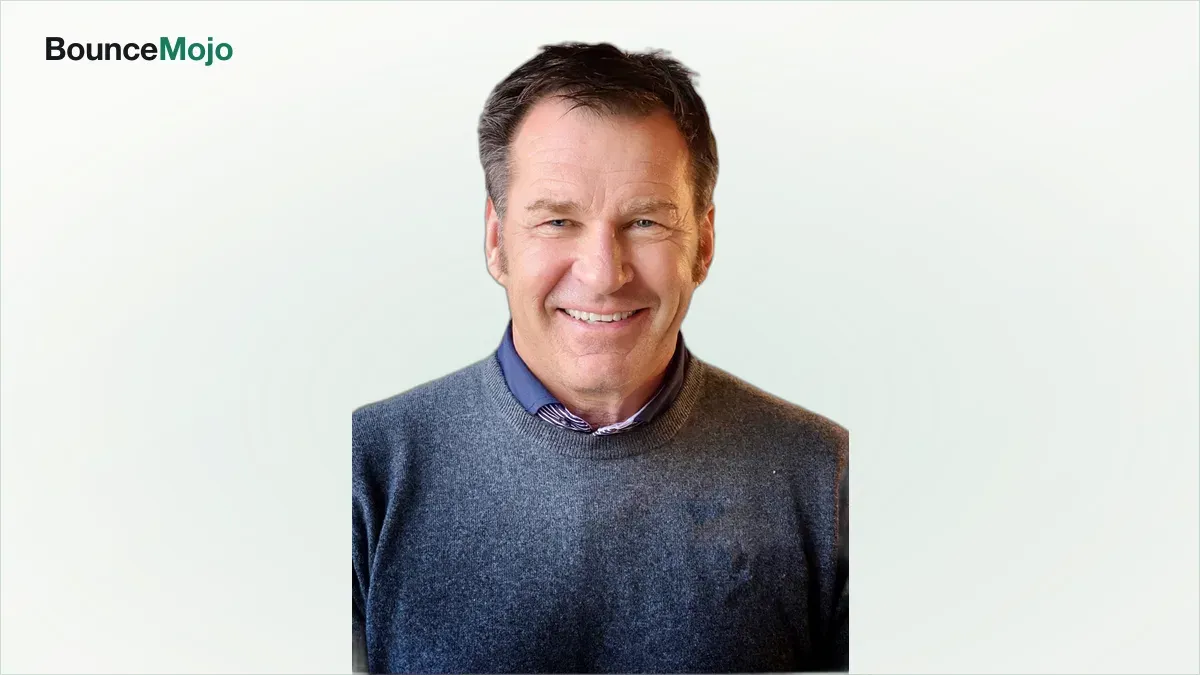
Nick Faldo did something no sane golfer would attempt. At the very top of the game, he tore his winning swing to pieces on purpose.
Here’s what most people miss: that ice-cold obsession, the thing that made him hard to love, was exactly the thing that made him great. Faldo didn’t chase perfection as a slogan. He chased it as a way of life.
The Myth vs. The Reality
The myth of Nick Faldo is that he was a cold, robotic, joyless machine. Efficient, ruthless, impossible to warm to.
Here’s the truth: the coldness was a choice, and it worked.
Faldo decided early that being liked and being the best were not the same goal, and he chose the best. He built a fortress of focus around himself, sacrificing friendships, warmth, and popularity for total commitment to golf. The result was six major championships and a reputation as the finest closer of his era.
The public saw a man without emotion. The reality was a fiercely emotional perfectionist who channeled everything into a single-minded pursuit, and paid a heavy personal price for it.
You might be wondering: what makes someone that obsessive? It started, oddly, in front of a television.
The World That Made Nick Faldo
To understand Faldo, you have to understand how unlikely his path was, and how late it began.
British golf in the 1970s had produced few modern global champions. The idea of an Englishman dominating the majors, winning green jackets and Claret Jugs, felt distant. And Faldo didn’t grow up with a club in his hands.
He was born in 1957 in Welwyn Garden City, an only child in a modest family. He was a good all-round athlete, tall and coordinated, but golf wasn’t his first love. He didn’t seriously pick up the game until he was 14.
Now: here’s the spark. In 1971, he watched Jack Nicklaus at the Masters on television and was mesmerized by the beauty and precision of it. He asked his parents for lessons.
Think about it. Most major champions are swinging clubs before they can read. Faldo found his obsession in his teens, from a TV screen, and then made up for lost time with a work rate that bordered on fanatical.
That obsession would soon demand the biggest gamble of his life.
The Crucible: Early Life and the Climb
The environment that shaped him
Once Faldo found golf, nothing else mattered. He threw himself into practice with a single-mindedness that unsettled people even then. He’d hit balls for hours, alone, chasing a feeling of perfection most players never bother to seek.
He turned professional in 1976 and rose quickly, becoming a top British player and a Ryder Cup regular through the late 1970s and early 1980s. By most measures, he’d already made it.
But here’s the kicker: “already made it” wasn’t enough for Faldo. He looked at his own game, the game that had won tournaments and earned him a fine living, and decided it wasn’t good enough to win majors when the heat was highest.
The catalyst
So he did the unthinkable. In the mid-1980s, at the height of his powers, Faldo teamed with coach David Leadbetter and spent roughly two years completely rebuilding his golf swing.
His results collapsed during the overhaul. Critics mocked him. He lost tournaments a player of his ability should have won. He was, by choice, worse for a while, betting everything that the new, more reliable swing would hold up when it mattered most.
The bet paid off in the most dramatic way imaginable. And it announced the arrival of a champion.
The Key Players
No one climbs alone, and Faldo’s cast shaped his legend.
David Leadbetter was the most important. The swing coach who helped Faldo dismantle and rebuild his technique became the partner in the defining gamble of his career. Without Leadbetter, there is no six-major Faldo.
Then there were the rivals, above all Greg Norman. The charismatic Australian was, in many ways, Faldo’s opposite: flashy, beloved, and prone to heartbreak on Sundays. Their careers collided famously, and Norman became the foil against whom Faldo’s cold efficiency shone brightest.
Here’s the deal: Faldo didn’t collect friends on tour. He collected trophies. His relentless focus cost him warmth with peers, but it forged him into the man who was there at the finish when others cracked.
Later, in his second life, broadcast partners and the CBS team became his new colleagues, and a very different, funnier, more relaxed Faldo emerged, one few had seen during his playing days.
Now the swing was rebuilt, the rivals were in place, and the majors were waiting.
The Turning Point
The pinnacle
Faldo’s rebuilt swing turned him into the best pressure golfer in the world.
He won his first Open Championship in 1987 at Muirfield, famously making 18 straight pars on the final day to grind out the title, the pure expression of his patient, mistake-free method. Then came the majors in a flood: the Masters in 1989 and 1990, back to back, The Open again in 1990 and 1992, and a sixth major, the 1996 Masters.
That 1996 Masters is his masterpiece. Trailing Greg Norman by six shots entering the final round, Faldo played ice-cold, flawless golf while Norman collapsed. Faldo overturned the deficit and won by five, one of the most dramatic final-round swings in major history. As Norman fell apart, Faldo simply kept executing.
And then came the moment that reframed his whole cold image. As the round ended, Faldo embraced a devastated Norman and told him not to let anyone get to him. The most ruthless closer in golf showed real compassion to the man he’d just crushed. It was a reminder that the ice was a competitive tool, not the whole man underneath.
Six majors. Three green jackets, three Claret Jugs. A knighthood in 2009. He’d made himself, from a late start and a torn-down swing, into one of the greatest golfers Europe ever produced.
The price
But here’s what that greatness cost him.
Faldo’s obsession consumed his personal life. His pursuit of golfing perfection strained his relationships and marriages, a toll he has acknowledged openly over the years. The single-mindedness that won majors made him, by his own admission, a difficult person to be close to during his prime.
He paid in solitude. He paid in a public image as cold and unlikeable, a reputation that stuck to him for decades. He paid in the friendships and warmth he traded away for focus. The very thing that made him a champion made him lonely at the top.
Which brings up the criticisms that trailed his career.
The Unvarnished Truth
Let’s be honest about the harder edges of Nick Faldo.
He could be self-absorbed and abrasive. Fellow players didn’t always warm to him. His intensity sometimes read as arrogance, and his focus on himself sometimes came at others’ expense. He wasn’t a natural team man in the way some of his Ryder Cup peers were, even as he compiled a strong record.
Here’s the vulnerable truth: Faldo has admitted his obsession hurt the people around him. He chose golf over balance, again and again, and the personal cost was real. This wasn’t a man who found it easy to be a great champion and a great friend at once.
That honesty is part of what makes his story compelling. He doesn’t pretend the trade-offs weren’t steep. He knows what perfectionism took from him.
Still, his career and second act drew their share of pointed criticism.
Controversies and Criticisms
The knocks on Faldo were mostly about personality and, later, the microphone.
As a player, he was criticized as cold, selfish, and hard to like, the flip side of the discipline that made him great. His frosty relationships with peers were well documented, and his intensity sometimes tipped into behavior that rubbed people the wrong way.
As a broadcaster, opinions split. Many admired his sharp analysis and dry wit. Others found him prone to rambling, self-referential stories or occasional gaffes on air. His long CBS run was successful and lucrative, but it wasn’t universally beloved.
There were also public chapters of his personal life, divorces and relationships, that drew tabloid attention over the years, the kind of scrutiny that follows any sporting great.
But the criticisms never dented the core achievement. So what does a life this driven actually teach?
What We Can Learn From Nick Faldo
Navigating hard times
When his good swing wasn’t good enough, Faldo tore it down. That’s the whole lesson.
Most people cling to what’s working, even when they know it won’t take them where they want to go. Faldo did the opposite. He accepted short-term failure, public ridicule, and lost tournaments in exchange for long-term greatness. He was willing to be worse before he could be best.
Here’s the truth: real improvement often requires getting temporarily worse. Faldo understood that trade at a level almost no one does, and he had the nerve to live it out on the biggest stages in the sport.
The success blueprint
Want to know the best part? His blueprint is about reinvention, not just talent.
Commit fully. Reinvent yourself before you’re forced to. Then, when one career ends, build another, as he did moving from champion to broadcaster to course designer. Faldo turned a playing legend into a diversified, decades-long fortune, which you can trace in his full net worth breakdown.
The philosophical takeaway is a hard one. Greatness has a price, and Faldo paid it knowingly. The lesson isn’t to copy his sacrifices blindly, but to be honest, as he is, about what your ambitions will cost, and to decide with open eyes whether they’re worth it.
Final Verdict
Sir Nick Faldo’s story rewards a second look.
Strip away the cold-fish caricature, and you find a late starter who fell in love with golf from a TV screen, then out-worked and out-focused everyone, rebuilt his swing at his peak in the riskiest gamble in the sport, and won six majors as the ultimate Sunday closer. Then he did it again in a second career, becoming the voice of golf and a successful course designer.
He is proof that obsession can build legends, that reinvention beats comfort, and that the willingness to get worse on purpose is one of the rarest and most powerful traits a competitor can have.
For anyone who wants the full picture of that mindset, his own book, Faldo: In Search of Perfection, lays out the obsessive pursuit of greatness in his own words. It’s a fitting document from a man who chased perfection harder than almost anyone golf has ever seen.
Shop Nick Faldo on Amazon
Books, audiobooks, merch and more, handpicked for fans.
As an Amazon Associate we earn from qualifying purchases.
Frequently Asked Questions
Where was Nick Faldo born and raised?+
Nick was born in Welwyn Garden City, Hertfordshire, England, on July 18, 1957, an only child in a modest family, and didn't take up golf seriously until his teens.
What inspired Nick Faldo to play golf?+
As a teenager he watched Jack Nicklaus on television at the 1971 Masters and was so captivated that he asked for golf lessons, a late start for a future six-time major winner.
Why did Nick Faldo rebuild his swing?+
At the peak of his career he felt his swing wouldn't hold up under major-championship pressure, so he spent two years rebuilding it with coach David Leadbetter, then won six majors afterward.
How many majors did Nick Faldo win?+
He won six majors: the Masters in 1989, 1990, and 1996, and The Open Championship in 1987, 1990, and 1992.
What did Nick Faldo do after retiring?+
He became the lead golf analyst for CBS Sports, built Faldo Design as a course architect, launched the Faldo Series for juniors, and was knighted in 2009.
Want the money side of the story?
Read Nick Faldo's Full Net Worth Breakdown →Shop Nick Faldo on Amazon
Books, audiobooks, merch and more, handpicked for fans.
As an Amazon Associate we earn from qualifying purchases.