Nate Diaz Biography: The Stockton Kid Who Never Sold Out
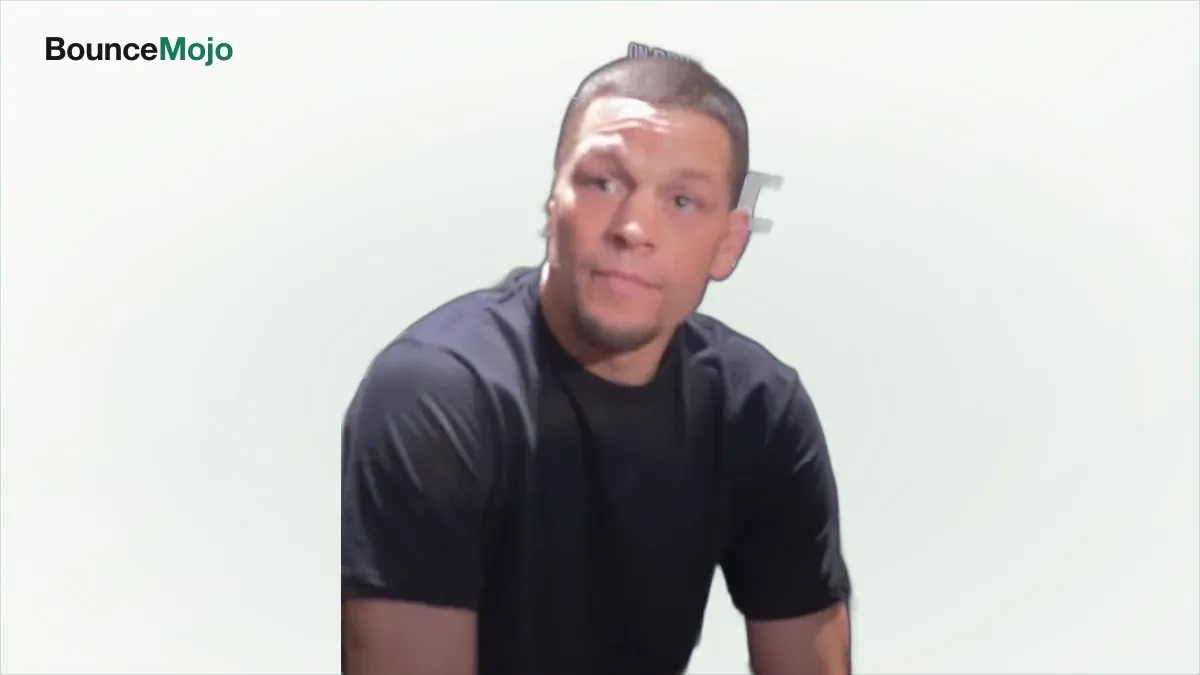
Most fans know Nate Diaz for two things: the middle fingers and the McGregor upset. Both are real. Both are only the surface.
Here’s what most people miss: the man who became a millionaire star by refusing to change spent nearly a decade fighting for scraps, in his brother’s shadow, before the world finally caught up to who he’d always been.
The Myth vs. The Reality
The myth is loud. Nate Diaz: the Stockton bad boy, all middle fingers and “I’m not surprised, motherf***ers,” a brawler who got lucky against McGregor.
The reality is quieter and tougher.
Here’s the deal: Diaz isn’t a brawler who got lucky. He’s a technically gifted, endurance-freak martial artist with a black belt in Brazilian jiu-jitsu and cardio that breaks opponents in the later rounds. The tough-guy image is real, but underneath it is a disciplined athlete who trains triathlons for fun.
And the “overnight star” framing misses the years of grind. Diaz didn’t appear from nowhere in 2016. He’d been in the UFC since 2007, fighting hard, getting underpaid, and building the exact toughness that let him seize the moment when it finally came. The upset wasn’t luck. It was a decade of preparation meeting one open door.
You might be wondering: how does a kid from Stockton end up as one of the most beloved fighters alive? To understand that, you have to understand the city that made him.
The World That Made Nate Diaz
Diaz came up in Stockton, California, a place that doesn’t hand out anything for free.
Stockton is a working-class city in California’s Central Valley, one that has struggled with crime and economic hardship for decades. It’s not Hollywood. It’s not Silicon Valley. It’s a hard town that breeds hard people, and the Diaz brothers wear it like a badge. The “Stockton slap” and the middle-finger salute aren’t gimmicks. They’re the aesthetic of a place that taught them to never back down.
Now: this was also the world of early MMA, a sport still fighting for legitimacy when Nate was growing up. There were no guarantees that fighting could be a career. The Diaz family bet on it anyway, because in Stockton, you take the fight that’s in front of you.
That collision, a rough Central Valley city meeting a young and hungry sport, is the backdrop for everything Diaz became. He didn’t inherit privilege. He inherited toughness, and he made it his brand.
But before any of that, there was an older brother showing him the way.
The Crucible: Early Life and the Climb
The Environment That Shaped Him
Nate grew up following his older brother Nick everywhere. Nick Diaz was the trailblazer, the first to take up martial arts, the first to fight professionally, the first to prove a Stockton kid could make it.
Nate absorbed all of it, the jiu-jitsu, the triathlon-level conditioning, the refusal to respect authority for its own sake. He turned pro young and cut his teeth on the regional circuit, fighting for small purses in small venues. This was the grind, the unglamorous years when a fighter earns almost nothing and gets punched for the privilege.
Here’s the truth: those hard years built the engine. The famous Diaz cardio, the ability to fight harder in the fifth round than the first, came from a lifestyle of relentless endurance training that most fighters simply won’t endure.
The Catalyst
The turning point that launched his UFC career came in 2007, when Diaz won season five of The Ultimate Fighter. The reality-show victory earned him a UFC contract and a national platform.
But here’s the kicker: the real catalyst came nine years later. In March 2016, McGregor’s opponent fell out, and Diaz took the fight on just 11 days’ notice, moving up in weight to face the sport’s biggest star. He submitted McGregor in the second round. The world lost its mind. Overnight, the grinder became a headliner, and everything changed. That single fight set up the biggest paydays of his life.
The Key Players
No fighter’s story is a solo act, and Diaz’s is defined by the people around him.
Nick Diaz. His older brother is the foundation of everything. Nick introduced Nate to fighting, to jiu-jitsu, to the endurance lifestyle, and to the anti-establishment attitude that became their shared trademark. They remain lifelong training partners and business partners. To understand Nate, you have to understand that he’s forever half of a brotherhood.
Cesar Gracie. The famed jiu-jitsu coach mentored both Diaz brothers, honing the ground game that made Nate a genuine black-belt threat rather than just a boxer with attitude.
Conor McGregor. The Irishman is the rival who made Diaz rich. Their two 2016 fights were the biggest of both men’s careers to that point, a rivalry that lifted Diaz from mid-card to millionaire. The chemistry between them, mutual respect wrapped in genuine dislike, produced box-office magic.
Jorge Masvidal. Their 2019 “BMF” title fight at Madison Square Garden was a celebration of two fan-favorite fighters, further cementing Diaz’s cult status.
Think about it: every one of these relationships shaped Diaz’s identity or his fortune. But the most important tension in his career wasn’t with any opponent. It was with his own employer.
The Turning Point
The Pinnacle
Diaz’s peak was that 2016 stretch, the McGregor fights and the stardom they created.
The first fight, the upset submission, made him a household name. The rematch, though he lost a close decision, came with pay-per-view points that reportedly earned him millions, transforming his finances. Suddenly the fighter who’d spent years underpaid was one of the biggest draws in the sport. He’d headline the first-ever “BMF” title fight against Jorge Masvidal in 2019 at a sold-out Madison Square Garden. As his own net worth story lays out, these were the nights that built his fortune.
The Price
Here’s the kicker: stardom didn’t make Diaz comfortable. It made him a target of his own frustrations.
He fought only sporadically at his peak, often sidelined by contract disputes and his refusal to fight for what he considered too little money. The prime years of his drawing power were spent partly in limbo, arguing with the UFC rather than cashing in on every possible payday. The pinnacle brought fame and money, but also a running battle over his worth, one that defined the second half of his career.
The Unvarnished Truth
Diaz was never a saint, and he’d be the last person to claim otherwise.
He was combative outside the cage as well as in it, involved in brawls and altercations, unfiltered in interviews, and openly contemptuous of authority he didn’t respect. His cannabis advocacy, once controversial in the sport, drew fines and testing complications early on. He walked away from money over principle, sometimes to his own financial detriment.
Now: none of this makes him a villain. It makes him consistent. Diaz’s entire appeal is that he does not perform for anyone. The same stubbornness that got him into disputes is the exact quality fans adore. He’s the rare star who never learned to code-switch for corporate approval, and never wanted to.
The most honest thing you can say about him is this: his greatest strength and his biggest complication are the same trait. He refuses to fake it, for money, for fame, for anyone.
Controversies and Criticisms
Diaz spent his career at odds with the establishment, and it made headlines.
The UFC pay battles. Diaz repeatedly clashed with the promotion over money, sitting out long stretches and publicly criticizing his pay. Critics called him difficult. Supporters called him one of the few fighters brave enough to demand his worth.
The cannabis advocacy. In an era when marijuana was banned in the sport, Diaz was an open advocate, once vaping CBD at a post-fight press conference. It drew scrutiny then, but he was ahead of a shift the sport eventually made.
Off-cage incidents. Diaz was involved in several public altercations over the years, reinforcing a bad-boy image that thrilled fans and worried sponsors in equal measure.
The Jake Paul crossover. His 2023 move into professional boxing against a YouTuber-turned-fighter drew criticism from purists who felt it was a spectacle, though it paid handsomely and kept him relevant.
The New Orleans incident. In 2023, Diaz was involved in a widely publicized street altercation that led to a warrant, later resolved. It reinforced the bad-boy narrative that had followed him for years. To his fans, it was simply Diaz being Diaz: unfiltered, unafraid, and unwilling to play the polished celebrity game. To his critics, it was proof he never fully outran the Stockton streets that made him. Both readings, in their way, are true.
What We Can Learn From Nate Diaz
Navigating Hard Times
The first lesson is about patience. Diaz spent nearly a decade underpaid and overlooked before his moment came. He didn’t quit, didn’t change, and was ready when the door finally opened.
But here’s the truth the grind makes plain: preparation is what turns luck into a fortune. When McGregor’s opponent dropped out, dozens of fighters could have taken that fight. Diaz was the one whose lifestyle, cardio, and toughness let him actually win it. The break was random. The readiness was earned.
The Success Blueprint
If you want the replicable part, it’s this: authenticity is a competitive advantage. Diaz never softened himself for sponsors or executives, and that realness is exactly what made him a cult hero worth millions.
That’s transferable. In a world of manufactured images, being genuinely, unmistakably yourself can be the most valuable brand of all. His refusal to sell out put him on the same marketable tier as fellow fan favorites like Eddie Alvarez, and his placement among the sport’s earners on our richest MMA fighters ranking tells the financial half of the story.
Becoming Better
The deepest lesson is about knowing your worth and defending it. Diaz walked away from money repeatedly rather than accept less than he believed he deserved. It cost him some paydays. It also earned him respect no paycheck could buy.
In other words, sometimes the most powerful negotiating move is being genuinely willing to walk away. Diaz proved that a fighter with leverage and principles can rewrite his own value.
And there’s a quieter lesson underneath it: build a life outside the thing that made you famous. Diaz poured himself into triathlons, jiu-jitsu, and his businesses, so his identity was never fully hostage to fighting. When he sat out contract disputes, he wasn’t lost. He was training, competing, and building. That independence gave him the freedom to say no, because fighting was never the only thing he had.
Final Verdict
Nate Diaz is one of the most beloved figures in modern MMA, and “beloved” matters more here than “champion,” because Diaz never won a UFC title and it barely dents his legacy. He became a legend by being exactly himself, in a sport and a world that constantly pressure people to be something else.
And here’s the truth that reframes everything: the man dismissed as a brawler who got lucky is actually a disciplined, principled athlete who bet on his own authenticity and won. The middle fingers were never the whole story. Underneath them was a Stockton kid who out-worked, out-lasted, and out-realed everyone around him. The full mechanics of the fortune he built are in his net worth breakdown, and where he ranks among the sport’s earners lives on our richest MMA fighters list.
If you want to understand why fans love fighters, study Diaz. Not the upset. The refusal to ever be anyone but himself.
Shop Nate Diaz on Amazon
Books, audiobooks, merch and more, handpicked for fans.
As an Amazon Associate we earn from qualifying purchases.
Frequently Asked Questions
Where did Nate Diaz grow up?+
Nate Diaz grew up in Stockton, California, a tough working-class city in the state's Central Valley that shaped his no-nonsense fighting identity and his 'Stockton slap.'
Who is Nate Diaz's brother?+
Nate's older brother is Nick Diaz, a former Strikeforce welterweight champion and UFC star who introduced Nate to fighting and remains his lifelong mentor and training partner.
How did Nate Diaz become famous?+
Diaz became a global star in March 2016 when he submitted Conor McGregor on 11 days' notice, one of the biggest upsets in UFC history, then headlined a blockbuster rematch.
Did Nate Diaz win The Ultimate Fighter?+
Yes. Diaz won season five of The Ultimate Fighter in 2007, which launched his UFC career after years fighting on the regional circuit.
What is Nate Diaz known for outside fighting?+
Diaz is known for his endurance lifestyle (triathlons and jiu-jitsu), his cannabis advocacy, and his fiercely authentic, anti-establishment persona that made him a cult hero.
Want the money side of the story?
Read Nate Diaz's Full Net Worth Breakdown →Shop Nate Diaz on Amazon
Books, audiobooks, merch and more, handpicked for fans.
As an Amazon Associate we earn from qualifying purchases.