Naomi Osaka Biography: The Quiet Champion Who Redefined Athletes
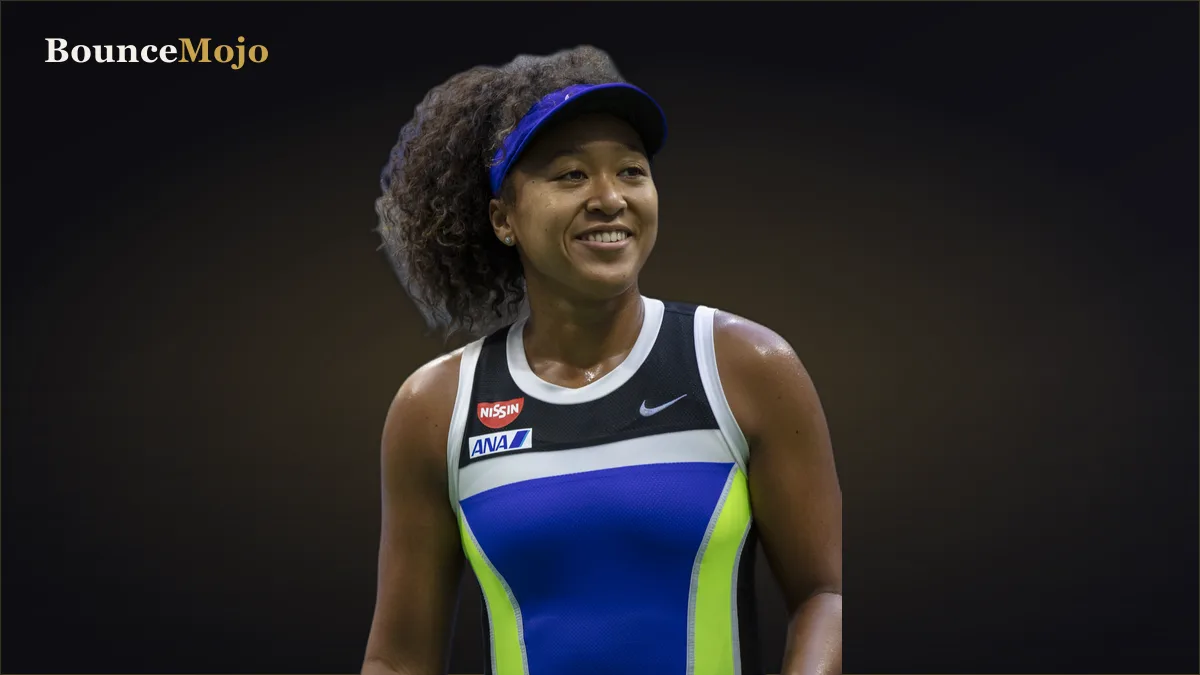
Most people know Naomi Osaka as the shy champion who beat Serena and then walked away from a Grand Slam. Both halves of that story miss what actually happened.
Here’s what most people miss: the quietest star in tennis may have changed the sport more than any trophy she lifted, by refusing to play a game everyone else accepted.
The Myth vs. The Reality
The myth is simple. Naomi Osaka: prodigy, four majors, then the fragile star who couldn’t handle the pressure and vanished. A cautionary tale about talent buckling under the spotlight.
The reality is almost the opposite.
Here’s the deal: Osaka didn’t buckle. She made a calculated, deliberate choice to protect herself in an industry that treats athletes as content first and humans second. What looked like weakness was one of the most self-aware acts any modern athlete has pulled off.
And the “shy” label misses her too. Off the court she is guarded, yes. But she wore seven masks at the 2020 US Open, each bearing the name of a Black victim of violence, and dared the world to look away. That is not timidity. That is a person who picks her moments and means them.
You might be wondering: how does a kid born in Japan and raised in America end up carrying all of that? To understand it, you have to understand where she came from.
The World That Made Naomi Osaka
Osaka was born in 1997 into a world that didn’t have a tidy box for her, and never would.
Her father, Leonard Francois, came from Jacmel, Haiti. Her mother, Tamaki Osaka, came from Hokkaido, Japan. Naomi and her older sister, Mari, grew up between cultures, born in Osaka, Japan, then moved to the United States as small children, first to Long Island, later to Florida. She spoke halting Japanese, lived American, and looked like neither the typical Japanese star nor the typical American one.
Now: tennis in the late 2000s was still a sport of country clubs and clear national identities. Osaka belonged to everyone and no one. She represented Japan on tour while living in the States, a decision that drew endless commentary and, at times, uncomfortable questions about who she “really” was.
That in-between existence is the backdrop for everything. She wasn’t confused about her identity. The world was confused about how to file her. And that gap, between who she was and how she was seen, would define her career on and off the court.
But before the majors and the masks, there was a father with a plan and two daughters on a public court.
The Crucible: Early Life and the Climb
The Environment That Shaped Her
Leonard Francois had an idea, and he borrowed it openly.
He watched Richard Williams turn Venus and Serena into champions on the public courts of Compton, and he decided to do the same with his own daughters. He wasn’t a tennis expert. He taught himself from books and videos, then put rackets in Naomi’s and Mari’s hands and drilled them relentlessly on hard public courts in Florida.
Money was tight. The family poured what it had into the girls’ training, betting everything on a long-shot dream. There was no elite academy pedigree, no famous coach at first. Just a father’s conviction and two kids grinding out repetitions.
Here’s the truth: that homemade, all-in upbringing built a player with an enormous, fearless game and, underneath it, a sensitive kid who felt the weight of the family’s sacrifice every time she stepped on court.
The Catalyst
The breakthrough came at the 2018 US Open, and it was the strangest kind of triumph.
Osaka, just 20, beat Serena Williams, her childhood idol, in the final. It should have been pure joy. Instead the match dissolved into chaos, with Williams in a furious dispute with the chair umpire and the crowd booing. When Osaka won, she pulled her visor over her face and cried, then apologized to the fans for the way it ended.
Think about it: she had just won her first Grand Slam, beaten her hero, and she spent the trophy ceremony saying sorry. That single scene tells you everything about the pressure she carried and the empathy that ran underneath the wins.
It gets more complicated from here. Because the fame that arrived next would test her in ways no opponent ever could.
The Key Players
No champion rises alone, and Osaka’s circle shaped both her game and her sense of self.
Leonard Francois. Her father and first coach, the man who dreamed the whole thing up and taught himself tennis to build it. His belief was the foundation.
Tamaki Osaka. Her mother, who worked to keep the family afloat during the lean training years and whose Japanese heritage anchored Naomi’s identity and national allegiance.
Mari Osaka. Her older sister and lifelong training partner. They chased the same dream side by side, and Mari’s presence gave Naomi a built-in rival and ally through the grind.
Serena Williams. Not a mentor in the usual sense, but an idol and a benchmark. Beating her in that 2018 final was both the making of Osaka and the source of a bittersweet memory she’s spoken about ever since.
Sascha Bajin and later coaches. The team that refined her raw power into a Grand Slam game, sharpening the fearless baseline hitting that overwhelmed opponents.
In other words, every relationship in her orbit was a version of the same theme: people who believed in the talent, and a young woman quietly deciding what to do with it. That decision came to a head at her peak.
The Turning Point
The Pinnacle
By 2021, Osaka had it all on paper.
Four Grand Slam titles. The world No. 1 ranking. A spot as the highest-paid female athlete on the planet, out-earning rivals through a wall of blue-chip endorsements. At the 2020 US Open she’d won while wearing masks honoring Black victims of violence, fusing athletic dominance with a moral stand watched by millions. The full scope of the fortune she built is laid out in her net worth story.
She was, by every external measure, on top of the world.
The Price
Here’s the kicker: the top of the world was crushing her.
At the 2021 French Open, Osaka announced she would skip the mandatory post-match press conferences to protect her mental health. The tournament fined her and threatened further penalties. Rather than fight it publicly, she withdrew from the tournament entirely, then from Wimbledon, and revealed she had struggled with depression and anxiety for years.
The backlash was immediate and loud. Some called her fragile, entitled, unprofessional. But the conversation shifted fast, and a generation of athletes suddenly had permission to admit the same struggles. The pinnacle came with a price, and paying it openly is what made her more than a champion. Which brings us to the parts of her story the highlight reels skip.
The Unvarnished Truth
Osaka is not a flawless icon, and she’d be the first to say so.
She has been candid about anxiety, self-doubt, and the crippling pressure of expectation. Her results dipped sharply after 2021 as she wrestled with motivation and form. Some tournaments she looked lost, a former No. 1 struggling to string wins together, and the tennis media didn’t always handle it with grace.
Now: none of that makes her a disappointment. It makes her human in a sport that rewards machines. She has admitted to not loving the constant travel, to questioning whether she even wanted the life she’d built. Those are honest confessions from someone the world assumed had everything figured out.
The most truthful thing about Osaka is this: her greatest strength and her greatest vulnerability are the same trait. Sensitivity. It makes her a compelling, empathetic public figure, and it makes the brutal grind of pro tennis harder for her than for the stone-faced competitors around her.
Controversies and Criticisms
Osaka spent years at the center of debates far bigger than tennis.
The press-conference stand. Her 2021 decision split the sports world. Critics argued that media access is part of the job and that fines were fair. Supporters saw a young woman drawing a healthy boundary in a system that had none. Both sides were still arguing when the culture had already moved her way.
The national identity question. As a Japanese-Haitian-American representing Japan, Osaka faced constant, sometimes intrusive scrutiny about her allegiance and identity. She handled it with more patience than the questions deserved.
The activism. Wearing the seven masks at the 2020 US Open drew praise and, from some corners, complaints that sport should stay out of politics. She didn’t flinch, and the moment aged well.
The comeback questions. After motherhood and her breaks from the tour, every loss reignited debates about whether she could return to the top. That pressure, the demand that she keep proving herself, is exactly the machinery her 2021 stand was pushing back against.
What We Can Learn From Naomi Osaka
Navigating Hard Times
The first lesson is about boundaries: protecting yourself is not quitting. Osaka walked away from a Grand Slam to guard her mental health and took a wave of criticism for it. Then the world caught up.
But here’s the truth underneath: real strength sometimes looks like stepping back. She showed millions of people that success without well-being is a bad trade, and that saying “not like this” can be braver than pushing through.
The Success Blueprint
If you want the replicable part, it’s this: Osaka built value around who she is, not just what she wins. Her calm, principled identity made her the most bankable woman in sports even in seasons she didn’t dominate. That’s transferable. Authenticity, consistently expressed, can be worth more than raw output. It’s the same fame-into-fortune move that placed her high on our richest tennis players ranking.
Becoming Better
The deepest lesson is about self-knowledge. Osaka knew her limits before the world did, and she honored them publicly at real cost. Most people ignore their warning signs until they break. She didn’t.
In other words, understanding yourself, and acting on that understanding even when it’s unpopular, is its own kind of championship. That self-awareness is the thread running through her whole story.
Final Verdict
Naomi Osaka is one of the most important athletes of her generation, and “important” is carrying more weight there than “great,” though she is that too. She won four majors and topped the money lists, but her lasting mark is bigger than tennis.
She made it acceptable for athletes to be human. She fused excellence with advocacy without asking permission. And she proved that a guarded, sensitive person could stand at the very top of a brutal sport and reshape it in her own image, then step back on her own terms.
Her tennis legacy is still being written, and the business empire behind it, the endorsements, the media company, the equity stakes, keeps compounding whether or not she’s on tour. The full mechanics of that fortune live in her net worth breakdown. For where she ranks among the sport’s wealthiest, see our richest tennis players list. However her comeback ends, the quiet champion already changed the game.
Shop Naomi Osaka on Amazon
Books, audiobooks, merch and more, handpicked for fans.
As an Amazon Associate we earn from qualifying purchases.
Frequently Asked Questions
Where was Naomi Osaka born?+
Naomi Osaka was born on October 16, 1997, in Chuo-ku, Osaka, Japan, to a Haitian father, Leonard Francois, and a Japanese mother, Tamaki Osaka. The family moved to the United States when she was young so she and her sister Mari could train.
Why did Naomi Osaka withdraw from the 2021 French Open?+
Osaka withdrew from the 2021 French Open after she was fined for skipping mandatory press conferences, citing struggles with depression and anxiety. She later withdrew from Wimbledon too, sparking a global conversation about athlete mental health.
How many Grand Slam titles has Naomi Osaka won?+
Osaka has won four Grand Slam singles titles: the 2018 and 2020 US Opens and the 2019 and 2021 Australian Opens. She beat her idol Serena Williams in that first US Open final at age 20.
Who did Naomi Osaka beat to win her first Grand Slam?+
She beat Serena Williams in the 2018 US Open final, the very player she had idolized growing up. The match was overshadowed by a heated umpire dispute involving Williams, and a tearful Osaka apologized to the crowd.
What is Naomi Osaka known for off the court?+
Beyond tennis, Osaka is known for speaking out on mental health and racial justice. She wore masks bearing the names of Black victims of violence at the 2020 US Open and became a leading voice for athlete well-being.
Want the money side of the story?
Read Naomi Osaka's Full Net Worth Breakdown →Shop Naomi Osaka on Amazon
Books, audiobooks, merch and more, handpicked for fans.
As an Amazon Associate we earn from qualifying purchases.