Mohamed Salah Biography: The Egyptian King's Five-Hour Ride
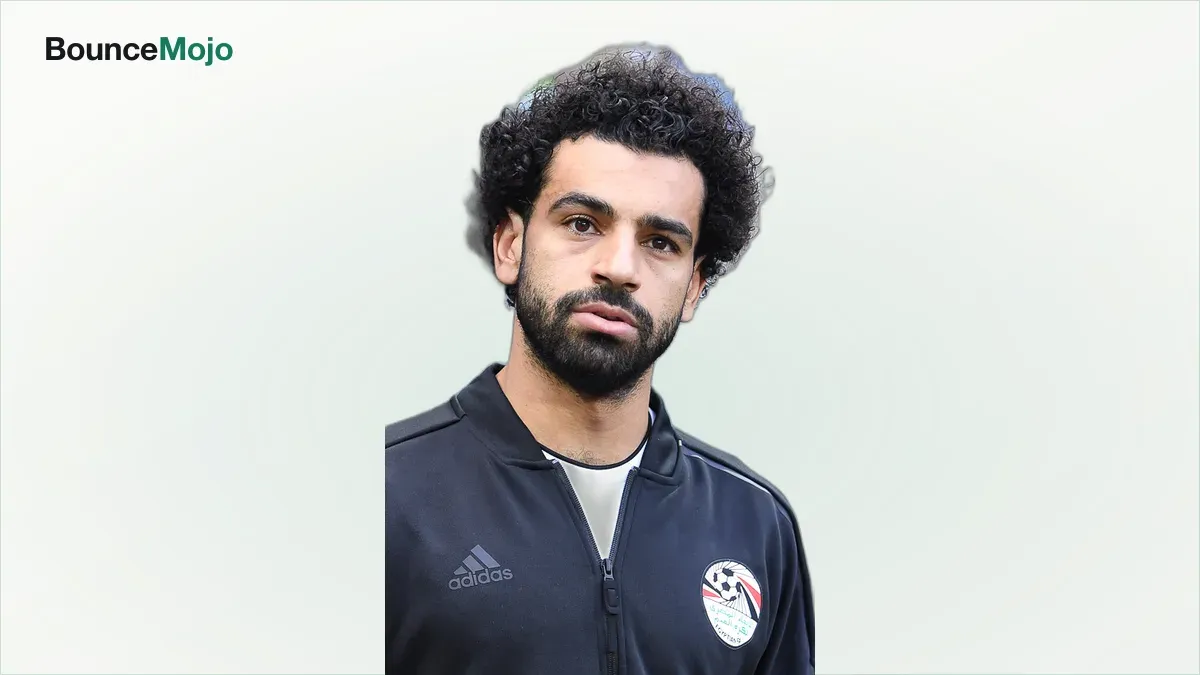
A Premier League Golden Boot winner, a Champions League champion, a national hero to hundreds of millions: Mohamed Salah is one of the best forwards on the planet.
Here’s what most people miss: to chase this dream, a teenage Salah rode buses for five hours a day, in each direction, just to reach training.
The Myth vs. The Reality
The myth of Mohamed Salah is a smiling, effortless goal machine, the joyful Egyptian King who lights up Anfield.
Here’s the truth: that smile was earned through years of grind most fans can’t imagine.
Strip away the glory and you find a kid from a village where opportunity was almost nonexistent, who sacrificed his education, his childhood, and comfort itself just to get to a training pitch. You find a young player written off in England, dumped to Italy, and forced to rebuild from the ground up. The ease people see now was bought with punishing effort.
Now: most fans know the Liverpool version. The record-breaking seasons, the Champions League, the adulation. They don’t see the four-bus commute, the exhaustion, or the Chelsea career that looked dead in the water.
To understand Mohamed Salah, you have to go back to a dusty village in the Nile Delta. And to a journey that started before dawn.
The World That Made Mohamed Salah
Nagrig, Egypt. A small village in the Basyoun district of the Nile Delta, where most people live in poverty and dreams of professional football feel like fantasy.
That’s where Mohamed Salah Hamed Mahrous Ghaly was born on June 15, 1992, into an ordinary middle-class family. His father Salah Ghaly worked hard to support them. Football wasn’t a career plan in Nagrig, it was an escape, and a long shot at that.
Think about it: the nearest serious football lay hours away in Cairo, a world apart from a Delta village. For most talented kids there, distance alone ended the dream.
Salah idolized Ronaldo, Zinedine Zidane, and Francesco Totti, watching them on television and imagining a life that seemed impossible from where he stood. He wasn’t a strong student, which worried his parents, but football was the only thing that held his attention. He started out playing for local youth teams, Ittihad Basyoun and Othmason Tanta, before a scout spotted him.
Here’s the deal: that scout had actually come to watch a different boy. Salah caught his eye by accident. In 2006, at 14, he joined the youth setup of Cairo club Al Mokawloon.
But joining a Cairo club when you live hours away in a village creates a problem most people never face.
The Crucible: Early Life and the Climb
The environment that shaped him
The commute nearly broke him.
Still only 14, Salah traveled around five hours each way to reach training in Cairo, transferring four or five buses in each direction. He left home before dawn and returned late at night, exhausted, day after day. He frequently missed school to make the journey, sacrificing his education for a shot that had no guarantee of paying off.
Most teenagers would have quit. The physical toll alone, the endless hours on rattling buses, the lost sleep, the missed classes, would have crushed the dream. Salah kept going.
That daily grind forged something in him: a hunger and a discipline that would define his entire career. He wasn’t the biggest or the strongest. But nobody was going to outwork the kid who rode five hours to train.
The catalyst
Salah’s talent finally earned him a senior debut at Al Mokawloon in 2010. Two years later, a Swiss club called Basel took a chance on him.
In Switzerland, he won two league titles and announced himself to Europe. In 2014, the big move came: Chelsea paid a reported £11 million for the young Egyptian.
You might be wondering: how does a Champions League winner nearly flame out at his first big club?
Here’s the kicker: Chelsea was a disaster. Under Jose Mourinho, Salah barely played, buried on the bench, an afterthought. He was loaned out to Fiorentina and then Roma, seemingly discarded by English football before he’d even started. The dream that survived a five-hour commute now looked like it might die in London.
The Key Players
Salah’s revival ran through the people who believed in him when others didn’t.
Roma gave him the platform to rebuild, signing him permanently and letting him play with freedom. In Italy he rediscovered his goals and his confidence, transforming from a rejected Chelsea squad player back into a genuine star.
Then came the manager who unlocked him completely: Jurgen Klopp at Liverpool. Klopp signed Salah in 2017 and built an attacking system that turned him into one of the deadliest forwards on earth. Alongside Sadio Mane and Roberto Firmino, Salah formed a front three that terrorized Europe and delivered the trophies that had eluded Liverpool for decades.
And behind it all was his family, his wife Magi and his children, the anchor that kept a global superstar grounded in the values of Nagrig.
But the real turning point wasn’t just the goals. It was what those goals meant to millions of people who saw themselves in him.
The Turning Point
The pinnacle
Salah exploded at Liverpool. In his debut season he shattered the Premier League scoring record for a 38-game campaign, winning the Golden Boot and sweeping individual awards. He won the Champions League in 2019, then the Premier League title in 2020, ending Liverpool’s 30-year wait for a league crown.
He became, quite simply, one of the best players in the world.
The price
But something bigger happened alongside the trophies. Salah became a symbol.
Across the Arab world and Africa, he became the most beloved athlete alive, the Egyptian King. In a Western world where Muslims often faced suspicion, here was a proudly Muslim superstar celebrated by hundreds of millions, a figure who reportedly softened attitudes and inspired an entire generation. That role brought immense pressure. Every match, every goal, carried the weight of a region’s pride.
Here’s the truth: with that adoration came a burden most footballers never carry. Salah wasn’t just playing for himself or his club. He was carrying the hopes of an entire people, and that is a heavy thing to shoulder every single week.
That weight, and how he handled it, reveals the real measure of the man.
The Unvarnished Truth
Let’s be honest about the man. Salah is intensely private, controlled, and at times has clashed with those around him.
He is fiercely protective of his family and his image, keeping much of his life away from the cameras. He has had tensions over commercial and image rights, including a well-documented legal dispute with the Egyptian Football Association over sponsorship. And there have been moments of visible frustration, most famously his devastated reaction to injury in the 2018 Champions League final.
His competitiveness can read as coldness. He wants goals, records, and wins with a single-mindedness that occasionally strains relationships.
Now: the honest read is that the same intensity that made a village boy ride five hours to training is the intensity that makes him occasionally difficult. You don’t get the relentless winner without the sharp edges.
And that intensity has occasionally spilled into controversy.
Controversies and Criticisms
For a player so beloved, Salah has faced his share of disputes.
The most public was his legal battle with the Egyptian Football Association over image and sponsorship rights, a clash that pitted the national hero against his own federation. It revealed a steely, businesslike side to a player usually portrayed as purely humble and joyful.
He has also drawn criticism at times for his performances with the Egyptian national team, where he has carried enormous expectation but fallen short of the ultimate prizes, including painful near-misses at the Africa Cup of Nations. Some critics have questioned whether he delivers for country as reliably as he does for club.
And his prolonged contract negotiations with Liverpool, as he pushed to become the club’s top earner, drew scrutiny from those who felt a beloved figure was playing hardball.
Strip away the noise, though, and there are real lessons in how Salah turned impossible circumstances into greatness. That’s where this gets useful.
What We Can Learn From Mohamed Salah
Navigating hard times
The lesson of the five-hour commute is that obstacles are not always signs to stop.
Salah faced a barrier, distance, poverty, exhaustion, that would have ended most dreams. He simply refused to let it. When the path to what you want is brutally hard, the difference between those who make it and those who don’t is often just the willingness to keep showing up when quitting would be easier.
The success blueprint
Now: Salah’s blueprint is resilience plus reinvention.
Written off at Chelsea, he didn’t sulk or fade away. He went to Italy, rebuilt his game, and came back better. The takeaway is that a failure at one club, one job, one attempt, is data, not destiny. Salah’s whole career is proof that a setback in the wrong environment says nothing about your ceiling in the right one.
It gets better: he applied the same discipline to his money. Salah negotiated to become his club’s top earner, built a marketing empire across an entire region, and diversified into property, the full story of which you can read in his net worth breakdown. The hunger that drove the buses drove the business.
Becoming better
The deepest lesson is about never forgetting where you came from.
Salah has poured millions back into Nagrig, funding schools and hospitals in the village that made him. He carries his roots with pride, and that connection is a huge part of why he’s so beloved. Success didn’t distance him from his people, it bound him closer to them.
Which leaves one question worth answering plainly.
Final Verdict
Mohamed Salah is one of the finest forwards of his generation, and it says everything about him that his impact off the pitch may outlast even his goals.
The Golden Boots. The Champions League. The way a boy from a poor Delta village became a symbol of pride for hundreds of millions. All of it real, all of it earned on rattling buses before dawn.
He sits comfortably among the richest soccer players today, a global icon and a national hero. For a kid from Nagrig who rode five hours to chase an impossible dream, “the Egyptian King” isn’t a nickname. It’s a promise kept.
Shop Mohamed Salah on Amazon
Books, audiobooks, merch and more, handpicked for fans.
As an Amazon Associate we earn from qualifying purchases.
Frequently Asked Questions
Where is Mohamed Salah from?+
Mohamed Salah was born on June 15, 1992, in Nagrig, a village in the Basyoun district of Egypt's Nile Delta, where most residents live in poverty. He has since funded a school, a hospital, and other projects in his hometown.
How far did Mohamed Salah travel to train as a boy?+
As a teenager, Salah commuted around five hours each way to train in Cairo, often transferring four or five buses in each direction and frequently missing school to make the journey.
Was Mohamed Salah a failure at Chelsea?+
Salah struggled at Chelsea after joining in 2014, getting limited playing time under Jose Mourinho. He was loaned to Fiorentina and then Roma, where he rebuilt his career before his transformation at Liverpool.
Why is Mohamed Salah called the Egyptian King?+
Salah earned the nickname 'the Egyptian King' after becoming a national hero and one of the most beloved athletes in the Arab world and Africa, thanks to his Liverpool goals and his impact off the pitch.
What charity work does Mohamed Salah do?+
Salah donates heavily to his hometown of Nagrig and across Egypt, funding schools, hospitals, and community projects, and is widely regarded as one of the most generous and respected figures in world football.
Want the money side of the story?
Read Mohamed Salah's Full Net Worth Breakdown →Shop Mohamed Salah on Amazon
Books, audiobooks, merch and more, handpicked for fans.
As an Amazon Associate we earn from qualifying purchases.