Mick Foley Biography: The Hardcore Legend Who Wrote His Way Out
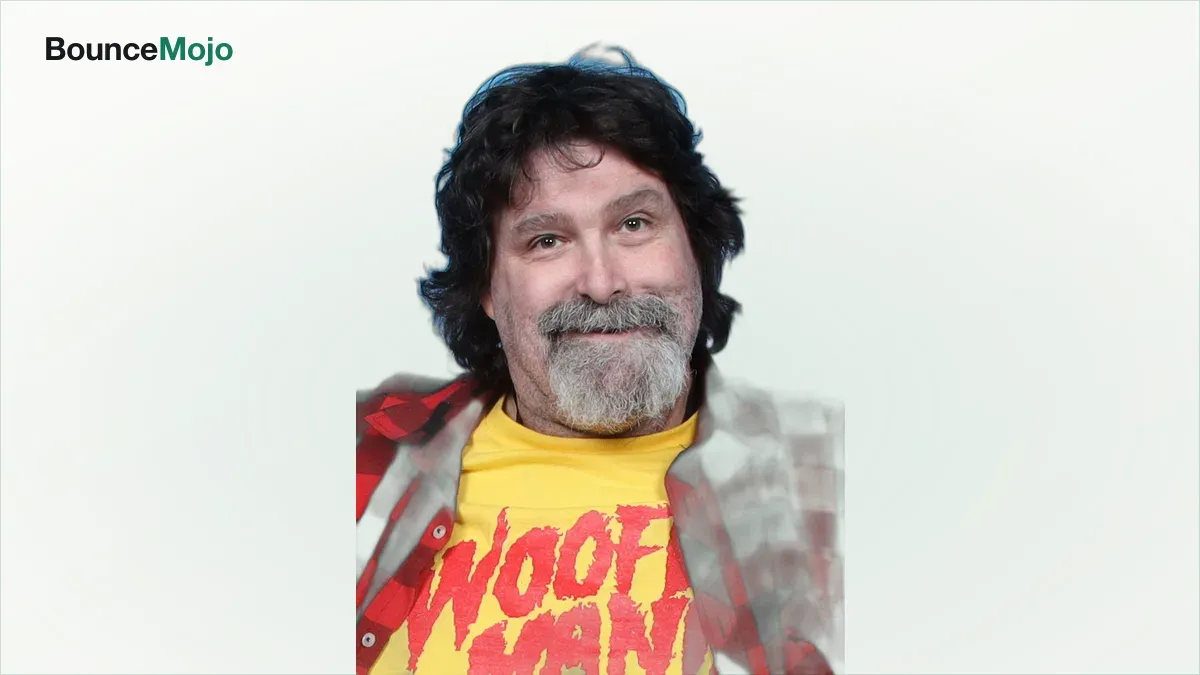
Everybody remembers the fall off the cage. Almost nobody remembers what he did with the years the falls left him.
Here’s what most people miss: the man who took the most punishment in wrestling history built his fortune on the safest work imaginable.
The Myth vs. The Reality
The myth is a body flying off a 16-foot steel cage and crashing through a table. Mick Foley, the Hardcore Legend, the man who felt no pain, who gave up teeth and an ear for the crowd.
That version is real. It is also completely misleading.
Here’s the truth: the guy famous for the most reckless matches in history is, off camera, one of the gentlest, most thoughtful people the business ever produced. A devoted family man. A voracious reader. A charity volunteer. A genuinely funny stand-up comedian. The violence was a performance. The tenderness was the person.
You might be wondering: how do those two things fit in one man? That contradiction is the entire story. Foley understood something most wrestlers never did. The body is temporary, but the mind and the story last. He punished his body to build a platform, then used the platform to build a life that his injuries couldn’t take away.
But to understand that mind, you have to go back to a bookish kid on Long Island who fell in love with pain as theater.
The World That Made Mick Foley
Michael Francis Foley was born June 7, 1965, in Bloomington, Indiana, and grew up in Setauket on Long Island, New York.
This matters, because Foley was not a natural-born tough guy. He was a bright, imaginative kid from a comfortable suburban family, an honors student who wrestled in high school and college and idolized the wildest performers in the business. He came of age watching the territorial wrestling of the 1970s and 80s, mesmerized less by the champions than by the brawlers who bled.
Think about it: while other kids wanted to be Hulk Hogan, Foley wanted to be the guy taking the beating and telling the story with his body. He famously made a backyard wrestling video as a young man and drove hours to sit in the front row of matches.
Now: that combination of a sharp, literary mind and a fascination with hardcore violence is the key to everything. Foley wasn’t chasing pain for its own sake. He was chasing the reaction, the drama, the narrative. He was a storyteller who happened to use a steel chair as his pen.
Which is exactly how a suburban honor student became a death-match legend.
The Crucible: Early Life and the Climb
The environment that shaped him
Foley broke into wrestling the hardest way possible: from the absolute bottom, in the bloodiest corners of the business.
He worked the independent scene, then made his name in the hardcore world, brawling in ECW and traveling to Japan to take part in brutal death matches with barbed wire, thumbtacks, and explosions. This is where he built the reputation and the scar tissue. He lost part of an ear in a match in Germany when it got caught in the ropes.
Here’s the deal: most wrestlers protect their bodies. Foley spent his early career systematically destroying his, because that was the niche where an undersized, non-chiseled guy could stand out.
The catalyst
The catalyst was his mentor, the legendary Terry Funk, who took Foley under his wing and taught him the art of the hardcore match, how to make violence mean something.
Then came the WWF, and the masterstroke. Foley didn’t arrive as one character. He became three. Mankind, a tormented, mask-wearing loner. Cactus Jack, the unhinged hardcore brawler from his indie days. And Dude Love, a groovy 1970s lover-man fantasy. Three personas, three markets, one man.
You might be wondering: why fracture yourself like that? Because it multiplied him. Each character had its own fans, its own merchandise, its own storylines. Foley turned a single career into three.
But all three roads led to one cage, and one night that would define him forever, and cost him more than he ever let on.
The Key Players
No wrestling life is a solo act, and Foley’s is populated by giants.
Start with Terry Funk, the mentor. Funk was the grizzled hardcore legend who validated Foley’s style, tagged with him, and taught him how to survive, and sell, the punishment. Foley has called him one of the most important figures in his career.
Then there’s The Undertaker, the rival on the other side of the most famous match of Foley’s life. Their 1998 Hell in a Cell was a genuine collaboration in controlled chaos, and it made them both legends.
There’s Dwayne “The Rock” Johnson, his tag partner in the beloved comedy duo the Rock ‘n’ Sock Connection. Their backstage segments were some of the Attitude Era’s biggest hits, and they showed off Foley’s comedic timing years before he took it to a stage.
And there’s Vince McMahon, the boss whose on-screen feud with Foley, and whose willingness to let Foley write his own way to the top, shaped his WWF run.
Now: with the personas, the mentor, and the platform in place, Foley reached the top of the mountain in the most brutal way imaginable. And the price he paid is still visible on his body today.
The Turning Point
The pinnacle
The pinnacle of Foley’s fame arrived at King of the Ring in June 1998, in the Hell in a Cell match against The Undertaker.
It became legend within minutes. The Undertaker threw Foley off the top of the 16-foot cage, sending him crashing through the Spanish announce table. Foley, dazed and hurt, insisted on continuing. Later, he was chokeslammed through the roof of the cage itself, and a chair fell on his face, knocking out a tooth that ended up in his nostril. He finished the match. It is one of the most replayed, most talked-about matches in wrestling history.
Here’s the truth: that night made Foley immortal. It also proved his whole thesis, that a smart, tough everyman could become a legend through sheer will and storytelling rather than movie-star looks.
And it set up the payoff. Months later, he won the WWF Championship as Mankind, a title victory so beloved it famously helped WWF beat WCW in the ratings war on the night it aired.
The price
But every one of those falls came with a bill, and Foley paid it in his body.
Years of hardcore matches left him with a broken record of injuries: the missing ear, lost teeth, a shoulder that dislocates, chronic pain, and the accumulated damage of a thousand unprotected bumps. He retired from full-time wrestling relatively young, in the early 2000s, because his body simply couldn’t sustain the style that made him.
It gets deeper than the physical, though. Foley has been candid that the toll wasn’t only on his joints and teeth. The lifestyle and the punishment carry a psychological weight, and part of his turn toward writing and family was a conscious choice to build a life beyond the ring before the ring took everything.
Which is exactly where the most surprising chapter of his story begins.
The Unvarnished Truth
Foley’s great vulnerability is the flip side of his greatest strength: he was willing to hurt himself, maybe too willing.
He has admitted that his hardcore style, while it made him famous, was not sustainable and left lasting damage. There is a real question, one Foley himself has wrestled with, about how much a performer should sacrifice his long-term health for a moment of glory. The Hell in a Cell match looks spectacular. It also could have killed him.
Here’s what’s easy to miss: Foley isn’t a reckless daredevil at heart. He’s a cautious, thoughtful person who chose a violent path because it was the only lane where he could shine. That tension, a gentle man doing brutal things, is the defining flaw and gift of his career.
He’s also been open about the emotional aftermath, the aches that never leave, the memory concerns that come with the territory, and the difficulty of walking away from the applause. His pivot to writing and comedy wasn’t just business. It was survival.
None of that has shielded him from criticism, though, some of it aimed at the very matches fans love most.
Controversies and Criticisms
For a beloved figure, Foley has drawn real debate, most of it about the style itself.
The loudest criticism is that his hardcore matches glorified dangerous, unsustainable violence and influenced a generation of backyard wrestlers to hurt themselves imitating him. Foley has publicly discouraged fans from copying his stunts, aware that his legend has a genuinely dangerous shadow.
There’s also debate about the toll on his own health and whether the sport, and Foley himself, pushed too far. The tooth-in-the-nostril image is iconic, but it is also a snapshot of a man being seriously injured for entertainment.
More recently, Foley has been outspoken on political and social issues, including stepping back from certain WWE ties over disagreements. Depending on where you sit, that’s principled or polarizing, and it has drawn its share of pushback. He has never been shy about using his platform for causes he believes in, including advocacy for abuse survivors.
So what does a man this contradictory, this tough and this thoughtful, actually teach the rest of us? More than almost anyone in his business.
What We Can Learn From Mick Foley
Navigating hard times
Foley’s story is a lesson in building an exit before you need one.
He knew his style would end his body early. Instead of pretending otherwise, he spent his active years developing skills that didn’t depend on being able to take a bump: writing, storytelling, comedy. When the injuries forced him out, he didn’t fall off a financial cliff. He simply shifted lanes.
In other words: the time to build your next career is while your current one is still working. Foley did exactly that, and it made his retirement a beginning instead of an ending.
The success blueprint
The blueprint here is about leverage, using a body-punishing platform to launch a mind-driven one.
Foley converted wrestling fame into a number-one best-selling book, then a whole publishing catalog, then a comedy career. The full net worth breakdown shows how those royalties and tours built an estimated $10 million fortune that his injuries can’t erode, and the richest wrestlers list shows where that puts him among the sport’s biggest earners.
The deeper takeaway is about knowing your real strength. Foley’s body made him famous, but his mind made him rich and free. He figured out which asset would last and invested everything in it.
Which brings us to the final word on the Hardcore Legend.
Final Verdict
Mick Foley is going to be remembered for the fall off the cage, and that’s a shame, because it’s the least interesting thing about him.
The real story is a bookish Long Island honor student who loved wrestling so much he was willing to destroy his body for it, who split himself into three characters to conquer an industry, who took the most famous beating in the sport’s history, and who then had the wisdom to write his way to a second, safer, richer life.
Here’s the bottom line: the man who felt no pain felt plenty of it. He just made sure the pain bought him something permanent. The books, the comedy, the family, the fortune, all of it came from a mind that never got chokeslammed.
He bled for the crowd. Then he wrote himself free. And of the two, the writing is the part worth remembering.
If you want the man in his own words, his 1999 memoir Have a Nice Day: A Tale of Blood and Sweatsocks is the place to start. He wrote it longhand, it hit number one on the New York Times list, and it remains one of the funniest, most honest books any athlete has ever produced.
Shop Mick Foley on Amazon
Books, audiobooks, merch and more, handpicked for fans.
As an Amazon Associate we earn from qualifying purchases.
Frequently Asked Questions
What is Mick Foley's real name?+
His real name is Michael Francis Foley, born June 7, 1965, in Bloomington, Indiana, and raised in Setauket on Long Island, New York.
What are Mick Foley's three personas?+
Foley wrestled as three distinct characters: the deranged Mankind, the psychotic hardcore brawler Cactus Jack, and the groovy 1970s throwback Dude Love.
What happened in the 1998 Hell in a Cell match?+
In one of wrestling's most famous matches, The Undertaker threw Foley off the top of the cell through the announce table, then later chokeslammed him through the roof of the cage. Foley survived and finished the match.
Is Mick Foley really a best-selling author?+
Yes. His 1999 memoir 'Have a Nice Day' hit number one on the New York Times best-seller list. He has since written more memoirs, novels, and children's books.
Why is Mick Foley considered so unusual for a wrestler?+
Foley combined an extremely brutal in-ring style with a gentle, thoughtful, family-first personality and a genuine writing talent, a rare mix of hardcore violence and literary intelligence.
Want the money side of the story?
Read Mick Foley's Full Net Worth Breakdown →Shop Mick Foley on Amazon
Books, audiobooks, merch and more, handpicked for fans.
As an Amazon Associate we earn from qualifying purchases.