Michael Schumacher Biography: Making Formula 1's Greatest Champion
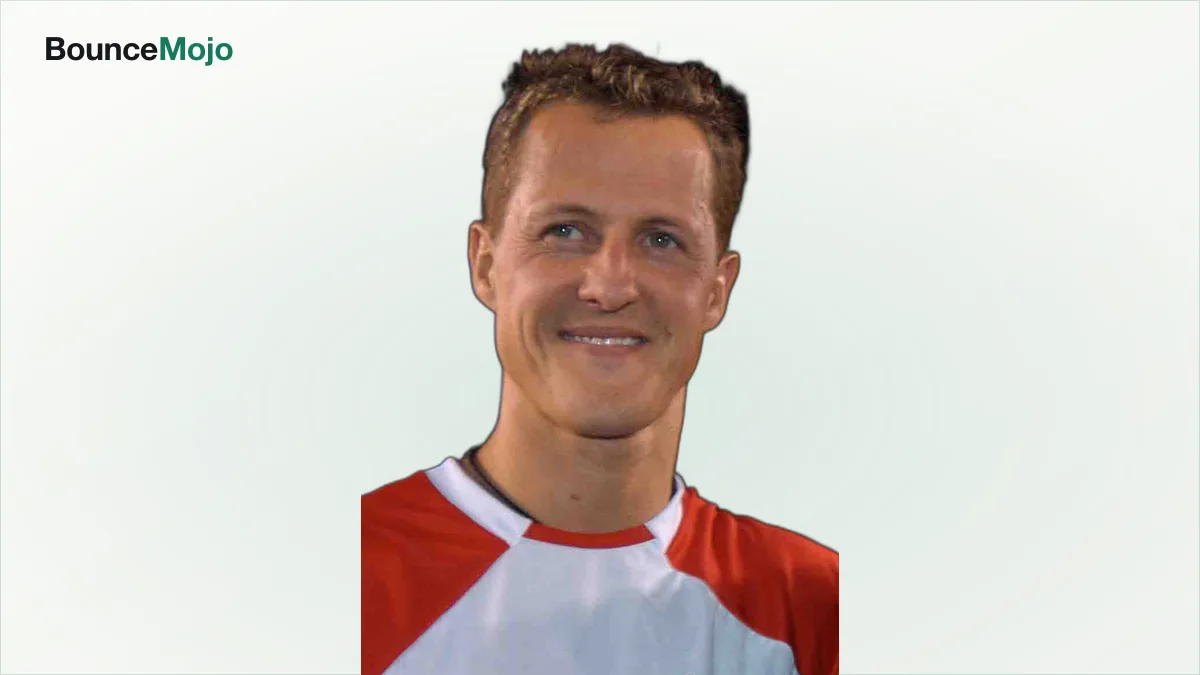
Formula 1 is the most expensive sport on earth, and its most successful driver could not afford to waste a lap.
Scarcity Was the Training Method: Kerpen, 1969
The standard version of Michael Schumacher is a machine: the ice-cold German precision instrument, engineered to win, racking up championships with clinical inevitability. Seven titles, ninety-plus grand prix victories, a driver supposedly born without nerves.
That version is real. It is also wildly incomplete, because it makes his greatness sound preordained.
He was born on January 3, 1969, and raised near Cologne in western Germany. His father, Rolf, was a bricklayer who ran a local kart track; his mother, Elisabeth, helped operate the track’s canteen. This was not a wealthy motorsport family. It was a working household that happened to live and breathe karting because of where the father worked.
Michael was on karts almost as soon as he could walk, at the very track his father maintained. When money was tight — and it usually was — he raced on secondhand tires and borrowed equipment.
Here is the part that matters more than the sentiment. Because the family couldn’t fund a lavish campaign, every session had to teach him something. He literally could not afford to waste laps, and that economy of effort hardened into a lifelong habit. German motorsport in that era had no shortage of enthusiasm, but a kid from his background couldn’t buy his way up the ladder. Talent had to be undeniable to attract the sponsors who fund the next rung, so speed became the only currency he had.
Scarcity didn’t slow him down. It taught him to extract more from a lap than his better-funded rivals, which is precisely what made him irresistible to the people who could open doors. By his teens he was winning German and European karting honors and local backers were stepping in, because the return on that talent was so obvious. By his early twenties he had climbed through German Formula Three and into sports car racing with Mercedes, a program that polished a raw talent into a professional.
Spa, 1991: Seventh on the Grid in a Car He’d Barely Sat In
The Jordan team needed a last-minute stand-in for the Belgian Grand Prix and gave the seat to a little-known German.
Schumacher qualified seventh on a track he had barely learned. The paddock took immediate notice. Within days Benetton had maneuvered him into their car, and his full-time Formula 1 career had begun almost overnight.
He didn’t just take the opportunity, he detonated it. Backed by the Mercedes program and his own ferocious preparation, he adapted faster than anyone expected. By 1992 he had his first grand prix win — again at Spa, the circuit where it all started.
Choosing a Broken Ferrari, and Winning Five Straight
Schumacher won two titles with Benetton, in 1994 and 1995. Then he made the decision that defines his career, and it was not the obvious one: he joined a struggling Ferrari that hadn’t won a drivers’ championship in decades.
Two people made that bet work. Jean Todt, the team principal who lured him to Maranello and built an organization around him, in a partnership part professional and part deeply personal. And Ross Brawn, the technical genius whose strategy and car development turned a struggling team into a title-winning machine, race after race.
The breakthrough came in 2000, and then the floodgates opened. From 2000 to 2004 Schumacher won five consecutive World Championships, an unprecedented run. He ended his career with seven titles and more than 90 grand prix wins, numbers that redefined what was possible in the sport and set records that stood for years.
His boldest move, in other words, wasn’t chasing the best car. It was rebuilding a broken one and betting on the people around him. The full net worth breakdown shows how seven titles became an estimated $600 million fortune, and the richest race car drivers list puts that in context against the sport’s other big earners.
Adelaide 1994, Jerez 1997: The Case Against Him
The same will that won the titles is what his critics have never forgiven.
Two incidents sit at the center of it. The 1994 collision with Damon Hill in Adelaide decided that year’s championship. The 1997 clash with Jacques Villeneuve saw officials rule against him and strip his championship points for the season. Both fed a narrative that he would do whatever it took to win, and to many they crossed the line between hard racing and unfair tactics. There were smaller flashpoints too: a controversial qualifying incident at Monaco late in his career, and team-orders episodes at Ferrari that upset purists who felt the racing had been engineered rather than earned.
He raced at the absolute limit of what the rules and etiquette of the sport would tolerate, and occasionally beyond it. Schumacher, for his part, largely let the results answer the criticism.
There is a second, fairer argument. Some hold that the Ferrari dominance owed as much to Brawn’s strategy and Ferrari’s resources as to Schumacher’s driving. His supporters counter that he was the constant at the center of it, the driver who rebuilt a broken team by force of will. Both things can be true: he had an exceptional machine, and he was the exceptional man who made it win.
What is hard to miss is that his greatest strength and his most criticized trait were the same thing. The absolute refusal to accept defeat that delivered seven titles is what pushed him into his ugliest moments. It also made him a harder figure to warm to than his more flamboyant rivals — he let the driving, not the personality, do the talking.
Where He Started Did Not Decide How Far He Went
Most people file Schumacher under “seven world titles” and the Ferrari dynasty. The closer look is harder and more human: a working-class kid from Kerpen who reached the summit of the most expensive sport on earth on talent and effort rather than money, dominated an era, divided opinion with his ruthlessness, and built a family life he deliberately kept out of the spotlight.
Corinna, his wife, was the steady center of that private life. In December 2013 a skiing accident in the French Alps ended his public life, and since then his family, led by Corinna, has protected his privacy with the same resolve he once brought to the track. That wish deserves respect, and this account stays where the facts are: on the extraordinary career he built.
The records made him a legend. The discipline behind them — learned on a kart track his father maintained, on secondhand tires, on laps that had to count — is what made him singular.
Shop Michael Schumacher on Amazon
Books, audiobooks, merch and more, handpicked for fans.
As an Amazon Associate we earn from qualifying purchases.
Frequently Asked Questions
How did Michael Schumacher start racing?+
Schumacher started in karting as a young child at his father's track in Kerpen, near Cologne in western Germany. His family had limited money, so he raced on a tight budget, relying on borrowed and secondhand equipment before sponsors began to notice his obvious talent.
How many Formula 1 titles did Michael Schumacher win?+
Schumacher won seven Formula 1 World Championships, two with Benetton in 1994 and 1995 and five consecutively with Ferrari from 2000 to 2004, making him one of the most successful drivers in the sport's history.
What happened to Michael Schumacher?+
In December 2013, Schumacher suffered a serious head injury in a skiing accident in the French Alps. Since then his family has kept his condition strictly private, and out of respect they have asked the public not to speculate about his health.
Who is Michael Schumacher's family?+
Schumacher is married to Corinna, and the couple have two children, Gina-Maria and Mick. Mick followed his father into motorsport and has raced professionally, keeping the Schumacher name active in racing.
Want the money side of the story?
Read Michael Schumacher's Full Net Worth Breakdown →Shop Michael Schumacher on Amazon
Books, audiobooks, merch and more, handpicked for fans.
As an Amazon Associate we earn from qualifying purchases.