Michael Chang Biography: The Teen Who Beat Lendl on Cramping Legs
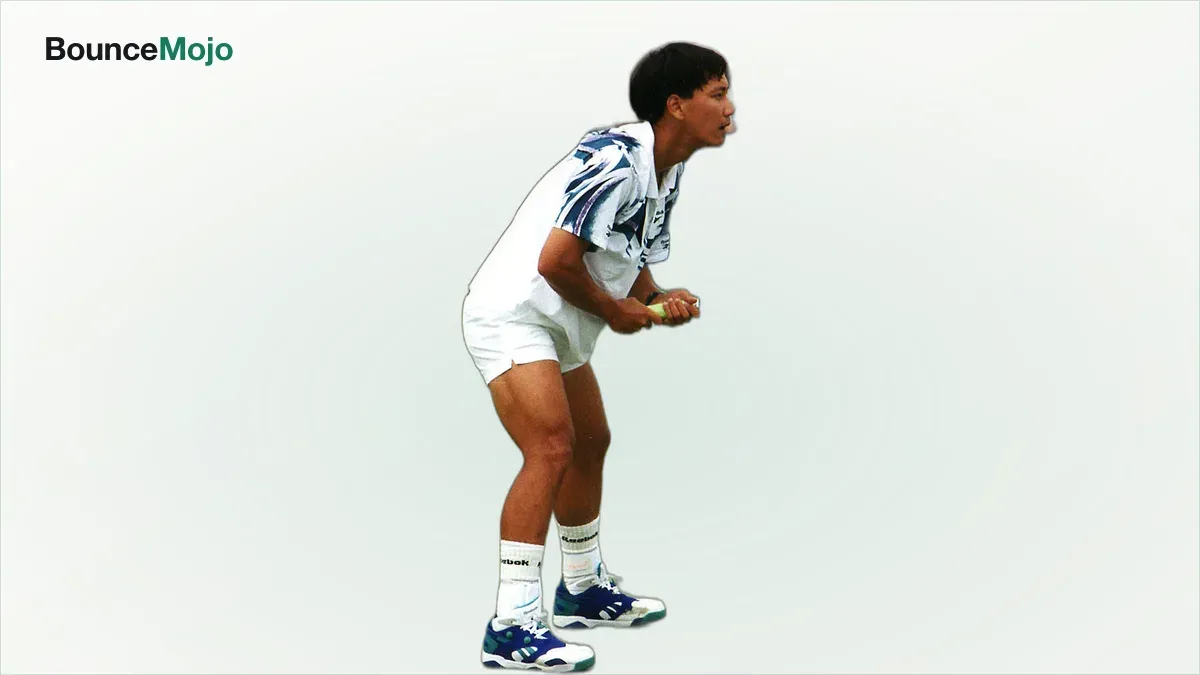
Most people remember Michael Chang for one impossible afternoon in Paris. The full story is about far more than a single match played on cramping legs.
Here’s what most people miss: the smallest man in the draw beat the best player in the world through sheer refusal to quit, and that refusal defined everything that came after.
The Myth vs. The Reality
The myth is a single highlight: Michael Chang, a teenager, beating Ivan Lendl at the French Open while cramping, then celebrating a miracle. A feel-good clip, roll credits.
The reality runs deeper.
Here’s the deal: that one match made Chang a legend, but it also nearly buried the rest of his story. He was not a one-hit wonder. He won 34 titles, reached world No. 2, and stayed near the top of a brutal era for well over a decade, all while being one of the smaller players on tour.
And the “he only won one Slam” narrative? It ignores that he reached three more major finals in an age crowded with all-time greats.
You might be wondering: how does a small teenager beat the number one player in the world? To understand that, you have to understand where he came from.
The World That Made Michael Chang
Chang was born in 1972 in Hoboken, New Jersey, to Taiwanese immigrant parents, and grew up mostly in California.
American men’s tennis in the late 1980s was entering a golden age, with a wave of young talent about to reshape the sport. But no American man had won the French Open in decades, and the clay of Paris was considered hostile territory for the American game.
Now: into that landscape walked a slight, quick, deeply competitive teenager raised on discipline, faith, and family. Chang would become the unlikeliest of French Open champions, a boy who could not overpower anyone and had to win with legs, brain, and heart instead.
Think about it: an American kid, small even by the standards of his peers, conquering the one surface Americans feared most. That collision is the backdrop for everything Chang became.
The Crucible: Early Life and the Climb
The Environment That Shaped Him
Chang’s upbringing was defined by a close, hardworking immigrant family and a strong Christian faith that would anchor his whole life and career. His parents emphasized education, discipline, and effort, and his older brother Carl was involved in his tennis journey.
He was a prodigy, turning professional at 15 and quickly showing that his speed and tenacity could offset his lack of size and raw power. What he lacked in inches he made up for in relentless retrieving and mental toughness.
Let that land. He was competing with grown men at 15 and beating them with will as much as skill.
Here’s the truth: the values instilled at home, humility, faith, and grit, were not separate from his tennis. They were the engine of it.
The Catalyst
Everything changed at the 1989 French Open. Aged 17, Chang faced world No. 1 Ivan Lendl in the fourth round and fell behind two sets to love. Then his body began to betray him.
Cramping severely, barely able to move, Chang did the unthinkable. He kept fighting, mixing up his tactics, even serving underarm to steal a point and rattle Lendl, and somehow won the match. He went on to win the whole tournament, the youngest man ever to do so.
It gets better, but the shadow was long. That title made him famous forever, yet it also set an impossibly high bar. The rest of his career would be measured against one afternoon, and against three of the greatest players of his generation.
The Key Players
No champion rises alone, and Chang’s story turns on a handful of crucial figures.
The Chang family. His parents and his brother Carl, who coached and supported him, formed the foundation of his career and his faith. Family was never far from the center of his story.
Ivan Lendl. The world No. 1 Chang toppled in Paris in 1989, the opponent whose defeat launched the legend.
Pete Sampras and Andre Agassi. His American contemporaries, both of whom won more majors and, in the process, kept Chang from adding to his single Slam. Their rivalry defined the American game of the 1990s.
Kei Nishikori. The Japanese star Chang would later coach, forming a partnership that gave him a celebrated second career and helped break new ground for Asian tennis.
By the way, every one of these relationships points at the same theme: a man who turned relationships, faith, and expertise into a life in tennis that outlasted his playing days. That second act began once his own career wound down.
The Turning Point
The Pinnacle
Chang’s peak was that one historic run in Paris, but his career was a long, consistent climb.
He won the 1989 French Open, then spent the next decade as a fixture near the top of the game, winning 34 ATP titles and reaching world No. 2. He made three more Grand Slam finals, at the Australian Open, the French Open again, and the US Open, but lost each to a dominant rival of the era. As his own net worth story lays out, that consistency and fame built a comfortable fortune.
One major, three more finals, and more than a decade of elite tennis wrung from a body no one thought big enough.
The Price
Here’s the kicker: the very thing that made him great, his relentless, physical style, also capped his ceiling.
Chang won by outrunning and outlasting opponents, but against the biggest servers and hardest hitters of his era, effort alone was not always enough. He never quite had the weapons to overpower the very best on the biggest stages, which is why three more major finals slipped away.
The pinnacle came with a real limit. And what he did once his playing days ended, reinventing himself entirely, would prove just as impressive.
The Unvarnished Truth
Chang was famously clean-cut, but he was no meek presence on court.
He was fiercely, sometimes ruthlessly competitive, willing to do anything within the rules to win, including tactics like that underarm serve that some opponents found provocative. His intensity could be startling in someone so soft-spoken off the court.
Now: none of that makes him a villain. It reveals a fighter who refused to accept his physical disadvantages as destiny. The gentle, faith-driven man and the merciless competitor were the same person.
The most honest thing about Chang is that his greatest strength, an unbreakable will, was also the source of his limits. He could out-fight almost anyone, but fighting could only take a small man so far in an era of giants.
Controversies and Criticisms
Chang’s career was remarkably free of scandal, and his criticisms were mostly tactical or philosophical.
The underarm serve. His famous tactic against Lendl divided opinion, some calling it genius, others gamesmanship. History mostly remembers it as brilliant improvisation under duress.
Style over stardom. Critics sometimes argued Chang’s grinding, defensive game lacked the flair of his flashier rivals, a fair point that missed how effective it was.
One-Slam wonder talk. Some reduced his career to that single French Open, an unfair framing for a player who stayed elite for over a decade.
Outspoken faith. Chang’s public devotion to his Christian faith drew occasional criticism from those who felt he mixed sport and religion, though most respected his sincerity.
What We Can Learn From Michael Chang
Navigating Hard Times
The first lesson is about turning disadvantage into fuel: being smaller, weaker, or overlooked does not have to define your ceiling. Chang was outsized by nearly every rival and still beat the best in the world through effort and intelligence.
But here’s the truth that Paris made plain: refusing to quit, even when your body is failing, can produce the impossible. Chang was cramping and beaten by every logical measure, and he won anyway.
The Success Blueprint
If you want the replicable part, it’s this: Chang maximized limited physical gifts through preparation, tactics, and relentless competitiveness. He out-thought and out-worked players who were bigger and stronger.
That’s transferable. The lesson isn’t “be the most talented.” It’s “when you can’t overpower the competition, out-prepare and out-last them.” That approach made him a Grand Slam champion and, later, a wealthy and respected figure on our richest tennis players ranking.
Becoming Better
The deepest lesson is about reinvention and service. When his playing career ended, Chang did not fade away. He became an elite coach, guiding Kei Nishikori to a Grand Slam final, and poured himself into charitable and faith-based work.
In other words, he understood that a career has more than one chapter. The teenager who shocked the world grew into a mentor who lifted others, which is the quiet triumph at the heart of his story.
Final Verdict
Michael Chang is one of the most inspiring figures in modern tennis, and “inspiring” fits better than “dominant,” because dominance was never really within reach for a player his size. He won a major, reached three more finals, and stayed elite for a decade against some of the greatest players of all time.
And here’s the twist that reframes everything: the man remembered for one miracle in Paris built a whole life of quiet excellence around it, first as a fighter, then as a coach and mentor. The full picture of the fortune he built, on court and off, lives in his net worth breakdown, and it fits him perfectly: a small kid who beat the world through sheer will, then spent the rest of his life passing that lesson on.
Chang never needed to be the biggest or the most decorated of his generation. He just needed to be the most relentless, the most disciplined, and the most human, which is exactly why that afternoon in Paris still resonates decades later.
Shop Michael Chang on Amazon
Books, audiobooks, merch and more, handpicked for fans.
As an Amazon Associate we earn from qualifying purchases.
Frequently Asked Questions
Where did Michael Chang grow up?+
Chang was born in Hoboken, New Jersey, to Taiwanese immigrant parents and grew up largely in California. His family was central to his development and his faith.
Why is Michael Chang's 1989 French Open famous?+
At 17, Chang became the youngest man ever to win the French Open, beating world No. 1 Ivan Lendl in a five-set match while cramping so badly he served underarm at one point.
How many Grand Slams did Michael Chang win?+
Chang won one Grand Slam singles title, the 1989 French Open, though he reached three more major finals and won 34 ATP titles across a long career.
Who did Michael Chang coach?+
After retiring, Chang coached Japanese star Kei Nishikori, helping him reach the 2014 US Open final and a career-high ranking inside the top five.
What is Michael Chang known for off the court?+
Chang is known for his devout Christian faith and the Chang Family Foundation, a charitable organization he runs supporting community and youth programs.
Want the money side of the story?
Read Michael Chang's Full Net Worth Breakdown →Shop Michael Chang on Amazon
Books, audiobooks, merch and more, handpicked for fans.
As an Amazon Associate we earn from qualifying purchases.