Michael Bisping Biography: The One-Eyed Champion Who Never Quit
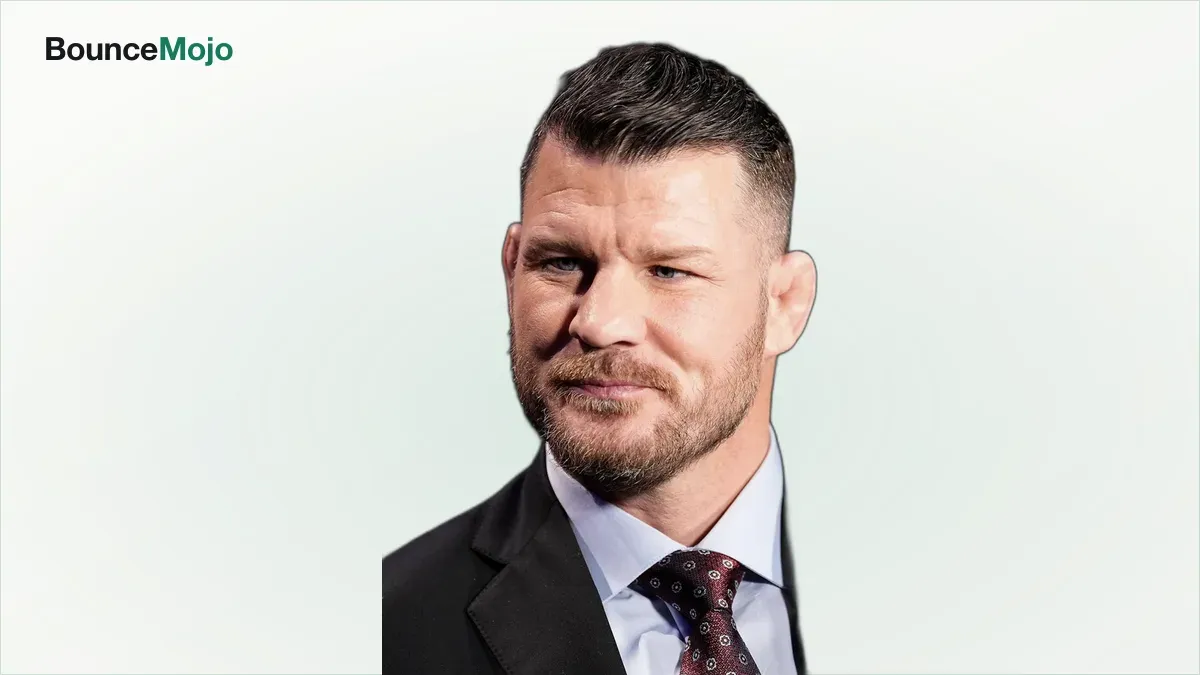
Most people know Michael Bisping as the loud British guy on UFC broadcasts. That version leaves out the part where he won a world title he had no business winning.
Here’s what most people miss: Bisping spent years fighting at the highest level while effectively blind in one eye, and he told almost no one until it was over.
The Myth vs. The Reality
The myth is simple. Michael Bisping: brash, mouthy, a solid fighter who talked more than he won and finally got lucky with one big knockout.
The reality is far tougher.
Here’s the truth: Bisping was one of the most durable, consistent fighters of his era, a man who stayed elite for a decade despite fighting half-blind for a chunk of it. The trash talk was real, but it hid an athlete of unusual grit and intelligence.
The “got lucky” line misses everything. Bisping put himself in position for a decade so that when the one chance came, on days of notice, against a champion, he could take it.
You might be wondering: how does a kid from a Lancashire town end up making British MMA history? To understand that, you have to understand where he came from.
The World That Made Michael Bisping
Bisping came up as British MMA barely existed.
He was born in 1979 on a British military base in Cyprus and raised in Clitheroe, Lancashire. He started martial arts young, training jujutsu as a boy, and grew up in a working-class northern England where fighting was as much a part of life as a way out of it.
Think about it: in the early 2000s, there was no clear path from a British gym to UFC glory. The UFC was an American product. The UK had no champion, no blueprint, no promise that a fighter from Lancashire could ever reach the top.
Bisping arrived as that was starting to change. The UFC was expanding internationally and hunting for stars in new markets. Britain needed a face for the sport. Bisping, loud and marketable and genuinely talented, became it.
That timing made him a pioneer. He wasn’t following a path. He was cutting one for every British fighter who came after.
But first he had to get noticed, and that came on television.
The Crucible: Early Life and the Climb
The Environment That Shaped Him
Bisping’s toughness was forged in northern England, where he trained across disciplines and fought on the regional circuit before the sport had money in it.
He was a fighter and a family man early, marrying young and starting a family, which added pressure and purpose. That grounded, working-class foundation shaped a competitor who treated fighting as a job to be done, not a spotlight to be chased for its own sake.
Here’s the deal: Bisping didn’t come from wealth or connections. He came from graft, and it showed in a style built on volume, conditioning, and relentless pressure.
His early fights weren’t glamorous. He fought on small shows in the UK for little money, building a record and a name in a country where MMA barely registered. There was no clear ladder to climb, no roadmap for a British fighter to reach the UFC. Bisping simply kept winning and kept talking, making himself impossible to ignore in a scene that had no stars yet. That mix of skill and self-promotion, unusual for a fighter from a quiet Lancashire town, is what eventually put him on the sport’s radar.
The Catalyst for Breakout
The catalyst was The Ultimate Fighter. In 2006, Bisping won the reality-competition show to earn his UFC contract, the door most British fighters of the era never got near.
He made the most of it. Over the next decade, Bisping became a top-ten mainstay, always in big fights, always in the conversation, always just short of the belt.
It gets better, and worse, in the same breath: somewhere in those years, Bisping suffered a detached retina that left him effectively blind in one eye. Most fighters would have retired. He kept going, adapting his style and hiding the severity of the injury from opponents and the public alike.
That secret set up the most improbable night of his career.
The Key Players
Every fighter is defined by rivals, and Bisping had several.
The longest was Dan Henderson. Henderson knocked Bisping out cold in 2009 with one of the most famous punches in UFC history, then beat him again in a razor-thin rematch years later. That rivalry followed Bisping for a decade and became part of his story.
There was Luke Rockhold, who beat Bisping the first time they fought, then lost the title to him in the rematch that made history. And there was Georges St-Pierre, the returning legend Bisping faced in his final title defense.
Here’s the kicker: Bisping lost plenty of these marquee matchups. But he kept coming back, kept staying relevant, and turned every rivalry into another reason fans couldn’t look away.
Those years of persistence set up the pinnacle nobody saw coming.
The Turning Point
The Pinnacle
June 4, 2016. Bisping took a middleweight title shot against champion Luke Rockhold on roughly two weeks’ notice, a massive underdog.
He knocked Rockhold out in the first round.
In that moment, Bisping became the first British fighter to win a UFC championship, the payoff for a decade of grinding at the top without the belt. He’d done it half-blind, on short notice, against a man who had beaten him before. It’s one of the great underdog stories in MMA history.
The Price of Admission
The cost was written on his body.
Bisping fought with a compromised eye for years, and the physical toll of a long, high-level career was severe. Not long after his championship run, he lost his final fights and retired, later having the damaged eye removed.
You might be wondering: was the title worth the eye? Bisping has said the belt was the goal of his life. But the price was real, a permanent, physical reminder of what he gave to win.
That sacrifice makes the second act he built all the more remarkable.
The Unvarnished Truth
Bisping’s persona could rub people the wrong way, and he knew it.
He was one of the sport’s great villains for years, a fighter fans loved to hate for his relentless trash talk and cocky style. Some of it crossed lines, and Bisping has admitted he wasn’t always likable in his fighting days.
He also kept a serious injury hidden to keep competing, a decision that raised safety questions in hindsight. Fighting at the top level with vision in only one eye was dangerous, and he did it anyway because retirement wasn’t an option he’d accept.
In other words, the brash exterior was partly armor. Underneath was a driven competitor willing to risk his health to chase a dream most people thought was out of reach.
That drive is exactly what carried into his controversies and his comeback as a broadcaster.
Controversies and Criticisms
Bisping’s career had its share of friction.
The trash talk drew criticism throughout, with rivals and fans accusing him of crossing personal lines. His long rivalry with Dan Henderson included bad blood that ran for years. And his decision to fight while effectively blind in one eye drew scrutiny once the full story came out, raising fair questions about how it was allowed to continue.
There were also the losses, plenty of them in big spots, that fed a narrative he’d never be more than a gatekeeper. He spent years hearing he’d never win the belt.
There was also a failed drug test late in his career, which Bisping disputed and which came as he was already winding down. It was a rare blemish on an otherwise clean record, and it barely dented a reputation built on toughness and honesty.
But compared with the legal and disciplinary troubles surrounding some names near the top of our richest MMA fighters rankings, Bisping’s controversies were relatively tame, mostly about attitude rather than conduct outside the cage. For a fighter who spent a decade as the sport’s chief villain, he walked away remarkably well regarded, proof that a genuine personality and a real willingness to fight anyone can win over even the fans who once booed you.
And every doubter only made his eventual triumph sweeter.
What We Can Learn From Michael Bisping
Navigating Hard Times
Bisping’s career is a lesson in refusing to quit.
He lost big fights. He fought half-blind. He heard for a decade that he’d never win a title. Instead of folding, he stayed in position, stayed relevant, and was ready when his impossible chance finally came.
Here’s the deal: opportunity often arrives on short notice. Bisping won because he’d spent ten years making sure he’d be ready when it did.
There’s a deeper point here about staying relevant. Plenty of fighters get one shot, miss it, and vanish. Bisping missed several title chances and kept himself in the mix anyway, through personality, activity, and the willingness to fight anyone. When most people would have accepted the “never a champion” label, he stayed loud, stayed booked, and stayed one phone call away from a title shot. That refusal to fade into the background is exactly why he was the man the UFC called when Rockhold needed a replacement opponent.
The Success Blueprint
Bisping’s blueprint is about building a second asset while you still have the first.
For years, he was the most quotable fighter in his division. That voice, that personality, became the foundation of his broadcasting and podcast career the moment he retired. He didn’t scramble to reinvent himself. He’d already built the brand. You can see how that paid off in his full net worth breakdown.
Becoming Better
The deeper lesson is turning a liability into a legacy.
The eye injury that ended his fighting career could have defined him as a cautionary tale. Instead, Bisping made his story one of resilience, then leveraged his hard-won fame into a durable, diversified career. He took the worst thing that happened to him and built forward from it.
So what’s the final verdict on Bisping?
Final Verdict
Michael Bisping is one of the great overachievers in UFC history.
He pioneered British MMA, spent a decade at the top through injuries and heartbreak, and then, half-blind and on short notice, won a world title as a heavy underdog. He gave an eye for that belt. Then he built a second career, on broadcasting, acting, and podcasting, that keeps his name and his bank account healthy long after the fighting stopped. Few fighters have ever squeezed more out of their gifts, or turned their limitations into more of an advantage.
Here’s the part that gets overlooked: Bisping’s second act may end up bigger than his first. As a fighter, he was a very good champion in a stacked era. As a broadcaster and personality, he’s become one of the most recognizable voices in the entire sport, heard by millions who never watched him compete. The eye he lost bought a title. The voice he built bought a career that could outlast everything he did in the cage.
The champion who fought half-blind never needed both eyes to see where he was going.
For the money side of that story, see his full net worth breakdown, and for how he ranks among the sport’s earners, our richest MMA fighters list.
Shop Michael Bisping on Amazon
Books, audiobooks, merch and more, handpicked for fans.
As an Amazon Associate we earn from qualifying purchases.
Frequently Asked Questions
Where was Michael Bisping born?+
Michael Bisping was born on February 28, 1979, in Nicosia, Cyprus, on a British military base, and was raised in Clitheroe, Lancashire, in northern England.
How did Michael Bisping win his UFC title?+
Bisping won the UFC middleweight championship in June 2016, stepping in on short notice as a heavy underdog and knocking out Luke Rockhold in the first round to become the first British UFC champion.
Did Michael Bisping fight with one eye?+
Effectively, yes. Bisping suffered a detached retina during his career that left him legally blind in one eye. He kept fighting, and later competing for and winning the title, while hiding the severity of the injury.
What does Michael Bisping do now?+
Bisping works as a UFC color commentator and analyst, appears in films, and co-hosts the Believe You Me podcast, turning his outspoken personality into a lasting media career.
Is Michael Bisping in the UFC Hall of Fame?+
Yes. Bisping was inducted into the UFC Hall of Fame, honoring his record as the first British UFC champion and one of the promotion's most enduring competitors.
Want the money side of the story?
Read Michael Bisping's Full Net Worth Breakdown →Shop Michael Bisping on Amazon
Books, audiobooks, merch and more, handpicked for fans.
As an Amazon Associate we earn from qualifying purchases.