Mesut Ozil Biography: The German Dream That Ended in Exile
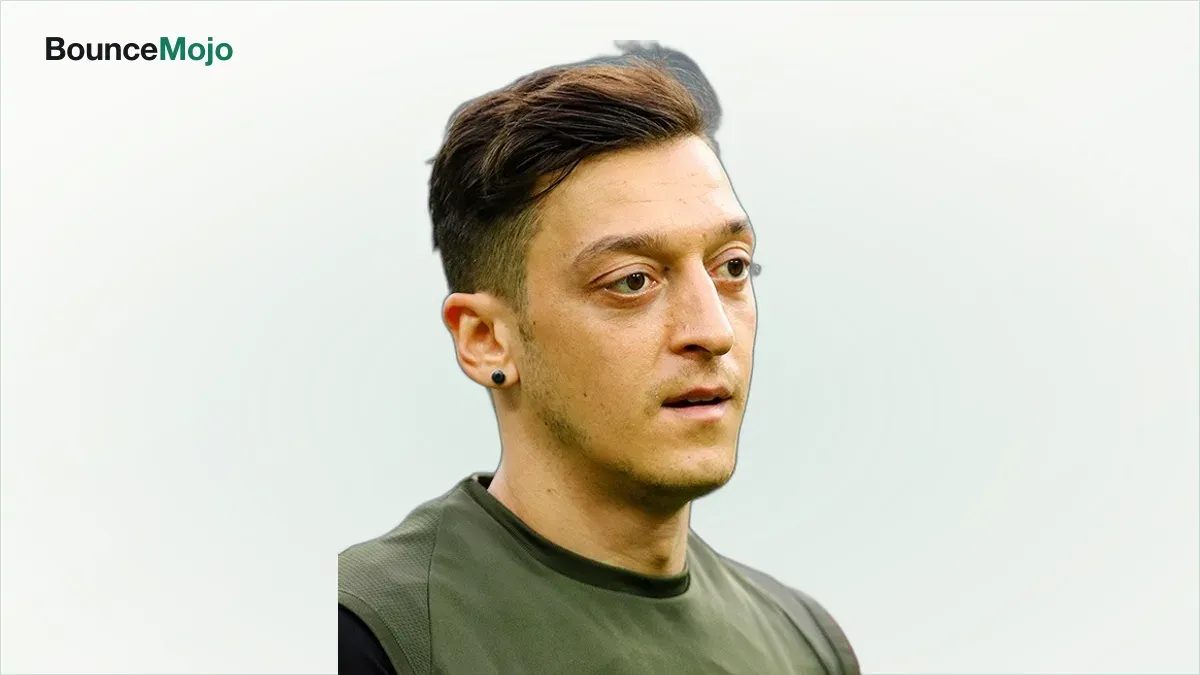
Most people know Mesut Ozil as the silky playmaker who won the World Cup with Germany. That image hides a story about identity, belonging, and a painful exit.
Here’s what most people miss: the man once held up as the perfect symbol of German integration ended his international career feeling like a stranger in the country he’d represented.
The Myth vs. The Reality
The myth is smooth. Mesut Ozil: the effortless artist, the assist king, the poster boy for a modern, multicultural Germany that had learned to embrace the children of its immigrants.
The reality is a story about the limits of that embrace.
Here’s the deal: Ozil was one of the finest creative midfielders of his era, a World Cup winner whose vision reshaped how Germany attacked. But he was also a man caught between two nations, celebrated as German in victory and questioned as Turkish in defeat.
And the “symbol of integration” framing hides the pain underneath. When Germany fell short and controversy hit, the same establishment that had used Ozil as proof of a united nation turned on him. He learned, painfully, that acceptance can be conditional.
You might be wondering: how does a national hero end up feeling like an outsider? To understand that, you have to understand where he came from.
The World That Made Mesut Ozil
Ozil was born in 1988 in Gelsenkirchen, an industrial city in Germany’s Ruhr valley, into a Turkish immigrant family.
His grandfather had come to West Germany as a “Gastarbeiter,” a guest worker, from Zonguldak in Turkey, part of the wave of laborers who helped rebuild the postwar economy. His father worked as a metalworker. The family was working-class, Muslim, and rooted in a community of Turkish-Germans who often lived between two cultures.
Now: that in-between world shaped everything. Ozil learned football on a caged concrete pitch called the “Monkey Cage” in his neighborhood, a rough, fast, unforgiving surface that sharpened his close control. He grew up as both German and Turkish, holding two identities that would one day collide on the national stage.
This was a Germany still working out what it meant to be German. As the children of guest workers came of age, footballers like Ozil became symbols of a country trying to define a modern, diverse identity.
But before the symbolism, there was a talented kid grinding on a caged pitch.
The Crucible: Early Life and the Climb
The Environment That Shaped Him
Ozil’s gifts showed early in Gelsenkirchen. The caged pitches of the Ruhr produced a generation of technical players, and Ozil was among the best of them, a slight, elegant playmaker with rare vision.
He came through the youth system at hometown club Schalke 04, then moved to Werder Bremen in 2008, aged 19, where he broke out as a creative force. The path from a working-class immigrant neighborhood to the Bundesliga was steep, and Ozil climbed it on talent and quiet determination.
Here’s the truth: that background gave him both his game and his later heartbreak. The dual identity that made him a symbol of the new Germany is the same identity that would be turned against him. His roots were his making and, eventually, his wound.
The Catalyst
The turning point was the 2010 World Cup in South Africa. Ozil, given the chance to play for Germany or Turkey, chose Germany. At the tournament he was a revelation, orchestrating a thrilling young German side.
Real Madrid signed him for around €15 million. He starred in Spain, then moved to Arsenal in 2013 as the most expensive German player ever. But the defining moment came in 2014, when Germany won the World Cup in Brazil with Ozil as a key creator. He was, in that moment, a national hero and the face of a proud, diverse country.
It gets better, and then it gets darker. Four years later, a single photograph would unravel that whole story. That’s where the fall began.
The Key Players
No one’s story unfolds alone, and Ozil’s is shaped by the people around him.
His family. His Turkish immigrant parents and grandfather gave Ozil his roots, his faith, and the dual identity that defined his life. His relationship with his father, once also his manager, later became strained.
Joachim Low. The Germany manager who built the attacking team around Ozil’s creativity, giving him the platform that made him a World Cup winner and a national symbol.
Recep Tayyip Erdogan. The Turkish president whose 2018 photo with Ozil sparked the controversy that ended his international career, and who later served as best man at Ozil’s wedding, deepening the political storm around him.
Amine Gulse. The Swedish-Turkish actress and former Miss Turkey who became Ozil’s wife, a steady presence through his most turbulent years.
Think about it: each of these figures is tied to the tension between Ozil’s German and Turkish identities. That tension exploded at the peak of his fame.
The Turning Point
The Pinnacle
Ozil’s mountaintop was the 2014 World Cup.
As Germany swept to the title in Brazil, Ozil was central to their creative play, a magician who unlocked defenses with a single pass. He was already a Real Madrid and Arsenal star. Now he was a world champion, celebrated at home as living proof that Germany’s immigrant sons could carry the nation to glory. His club wealth, detailed in his net worth breakdown, grew alongside his fame.
For a few years, Ozil embodied a hopeful story: a Turkish-German kid from a caged pitch who reached the very top and made a diverse Germany proud.
The Price
Here’s the kicker: the higher he rose as a symbol, the harder the fall when the mood turned.
In 2018, Ozil and teammate Ilkay Gundogan were photographed with President Erdogan. In Germany, the image drew fierce criticism, questions about his loyalty, his politics, his identity. When Germany crashed out of the 2018 World Cup, Ozil was singled out for blame. The hero became a scapegoat almost overnight.
The pinnacle had brought glory and riches. The price was a brutal lesson about how quickly a nation’s embrace can turn cold. Which brings us to the raw truth beneath it.
The Unvarnished Truth
Ozil’s story is less about personal vice and more about a painful reckoning with belonging.
He retired from the German national team in 2018 with a searing statement: he felt he was seen as “German when we win, and an immigrant when we lose.” It was a raw admission that the acceptance he’d been offered was conditional, tied to success and silence.
Now: opinions on the affair are divided, and Ozil made real missteps. Posing with a divisive political leader was always going to provoke a reaction, and critics argued he handled the fallout poorly. His later political stances, including outspoken comments on the persecution of Uyghur Muslims in China, drew both praise and controversy, and reportedly cost him commercially in some markets.
But the honest read is that Ozil put his finger on something real. A man who had done everything asked of him, chosen Germany, won a World Cup, been paraded as a symbol, still found that his belonging had limits. His candor about that experience was uncomfortable precisely because it was true for many who watched him.
Controversies and Criticisms
Ozil’s later career was defined by flashpoints on and off the pitch.
The Erdogan photo. The 2018 image with the Turkish president ignited a national debate in Germany about loyalty and identity, and became the trigger for his international retirement.
The Arsenal freeze-out. In his final Arsenal seasons, Ozil was frozen out of the squad while still earning around £350,000 a week. Critics debated whether he was underperforming or being unfairly sidelined, and the saga became a symbol of football’s bloated wages.
Political outspokenness. Ozil’s public criticism of China’s treatment of Uyghur Muslims drew admiration from some and backlash from others, reportedly affecting his commercial standing in China.
The identity debate. More broadly, Ozil became a lightning rod in Germany’s arguments about immigration and integration, a role thrust upon him that he never fully chose.
What We Can Learn From Mesut Ozil
Navigating Hard Times
The first lesson is about belonging: acceptance built only on success is fragile. Ozil learned that being celebrated as a symbol felt very different from being valued as a person. When results turned, the symbol was discarded.
But here’s the truth his story makes plain: sometimes the hardest test isn’t losing a game, it’s being made to feel you don’t belong. Ozil’s willingness to name that experience, rather than hide it, gave voice to many who had felt the same.
The Success Blueprint
If you want the replicable part, it’s this: turn a big moment into lasting security. Ozil used his World Cup breakout to earn a Real Madrid move, then locked in a guaranteed peak contract at Arsenal, and diversified early into esports. Those choices built a fortune that survived his rocky exit, one that ranks him among the names on our richest soccer players list.
That’s transferable. The lesson is to convert your best moments into structures that protect you, guaranteed income, new ventures, so that a later downturn can’t wipe you out.
Becoming Better
The deepest lesson is about staying true to yourself. Ozil could have stayed quiet to protect his image and his earnings. Instead, he spoke openly about identity, discrimination, and causes he believed in, even when it cost him.
In other words, integrity sometimes has a price, and it’s worth paying. Ozil’s later years show a man choosing his voice over easy approval. You may not agree with every stance, but the willingness to stand for something, at real cost, is its own kind of courage.
Final Verdict
Mesut Ozil is one of the most gifted playmakers of his generation, and one of its most poignant figures. He won a World Cup, dazzled at Real Madrid and Arsenal, and became a symbol of a modern, diverse Germany, before that same symbolism turned into a burden he couldn’t carry.
And here’s the twist that reframes everything: the dual identity that made him a hero, the Turkish-German kid from a Gelsenkirchen cage who reached the summit, is the exact thing that got him cast out. He was celebrated for what he represented and then punished for it. His story is proof that being a symbol is a double-edged gift.
Ozil’s fortune, laid out in his net worth breakdown, rewards a career of elite wages and smart, guaranteed contracts. But his story rewards something deeper: a look at identity, belonging, and the courage to speak when it would be easier to stay silent. He remains a reminder that acceptance should never be conditional, and that the most talented among us can still be made to feel like outsiders in their own home.
Shop Mesut Ozil on Amazon
Books, audiobooks, merch and more, handpicked for fans.
As an Amazon Associate we earn from qualifying purchases.
Frequently Asked Questions
Where did Mesut Ozil grow up?+
Ozil grew up in Gelsenkirchen, an industrial city in Germany's Ruhr region. He was the son of Turkish immigrants and learned football on a caged concrete pitch in a working-class neighborhood.
Did Mesut Ozil win the World Cup?+
Yes. Ozil was a key creative player in Germany's 2014 World Cup win in Brazil, one of the defining achievements of his career.
Why did Mesut Ozil retire from Germany?+
In 2018, after being blamed for Germany's poor World Cup and criticized over a photo with Turkish President Erdogan, Ozil retired from international football, saying he was treated as German when winning and an immigrant when losing.
Who did Mesut Ozil marry?+
Ozil married Amine Gulse, a Swedish-Turkish actress and former Miss Turkey. Turkish President Recep Tayyip Erdogan served as best man at their 2019 wedding.
Which clubs did Mesut Ozil play for?+
Ozil played for Schalke 04, Werder Bremen, Real Madrid, Arsenal, Fenerbahce, and Basaksehir across a career spanning Germany, Spain, England, and Turkey.
Want the money side of the story?
Read Mesut Ozil's Full Net Worth Breakdown →Shop Mesut Ozil on Amazon
Books, audiobooks, merch and more, handpicked for fans.
As an Amazon Associate we earn from qualifying purchases.