BounceMojo
Biography

Max Verstappen Biography: The Prodigy Raised to Race
Updated Jul 11, 2026
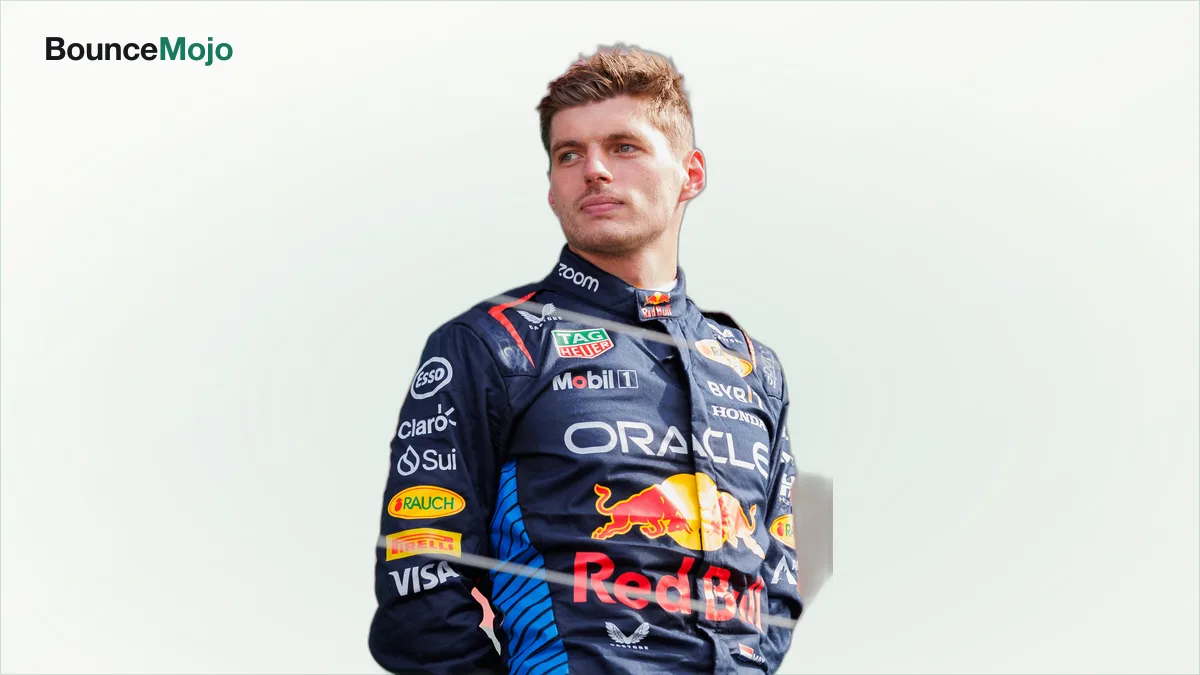
Max Verstappen
Photo: Wikimedia Commons / CC BY 2.0

Everybody remembers the teenager who won on his Red Bull debut. Almost nobody remembers the small boy already strapped into a kart, being pushed harder than any child should be.

Here’s what most people miss: the thing that made Max Verstappen’s childhood so relentless is the exact thing that made him unbeatable once he reached Formula 1.

In this story, you’ll discover:

  • The motorsport bloodline that put a steering wheel in his hands before school did
  • The ex-F1 father whose demanding coaching became both fuel and pressure
  • The single car-racing season that catapulted a karting kid into F1
  • The debut win that made him the youngest race winner in history
  • Why a driver this young already rewrote the sport’s record books
  • What lies on the far side of all those wins

The talent is the myth. The upbringing is the story. Let’s get into it.

The Myth vs. The Reality

The myth is simple. Max Verstappen, the natural, born with a steering wheel in his hands, winning almost by instinct. A prodigy so gifted the results were inevitable.

That version is real. It’s also wildly incomplete.

Here’s the truth: Verstappen’s talent was forged, not just gifted. He was the son of a former F1 driver who devoted his own second career to building his boy into a champion, drilling him relentlessly through years of European karting. The “natural” was actually a kid who logged an extraordinary number of laps under intense, sometimes unforgiving instruction.

Think about it. We love a story of effortless genius because it lets us skip the hard part. But Verstappen’s rise wasn’t luck. It was a childhood engineered around racing, with a father who accepted nothing less than total commitment.

Now, that upbringing didn’t come from nowhere. It came from a specific family and a specific sport that ran in his blood. Which raises the question: what kind of household produces a Formula 1 driver before the child is even a teenager?

The World That Made Max Verstappen

To understand Verstappen, you have to understand that he was born into motorsport, not introduced to it.

He arrived on September 30, 1997, in Hasselt, Belgium. His father, Jos Verstappen, was a Formula 1 driver himself, and his mother, Sophie Kumpen, was a highly successful kart racer. Racing wasn’t a hobby in the Verstappen house. It was the family trade, the topic at the dinner table, the reason for every weekend trip across Europe.

The era mattered too. Verstappen came up as junior motorsport was becoming an intensely professional pipeline, where a kid with the right talent, funding and guidance could be groomed for Formula 1 from childhood. Karting had become a serious proving ground, and the Verstappen name opened doors and set expectations.

Here’s the deal: with two racing parents, Max didn’t have to discover the sport. It was handed to him early, and the bar was set impossibly high from the start.

But being born into racing is not the same as being ready for it. And the way his father closed that gap is where the real story starts.

The Crucible: Early Life and the Climb

The environment that shaped him

Two things defined young Max Verstappen: a kart and a coach who happened to be his dad.

From a very young age, Max was karting, and his father Jos took charge of his development personally. Max has spoken about how demanding those years were, the long drives, the relentless standards, the father who would not tolerate excuses. It was an upbringing built almost entirely around going faster.

That intensity forged something rare. While other kids balanced racing with a normal childhood, Verstappen was accumulating an enormous depth of experience and a mindset that treated winning as the baseline, not the goal.

You might be wondering: how does that kind of pressure not break a child? For many it would. But in Verstappen’s case, the racecraft, the composure under pressure, and the sheer competitive hunger it produced became the foundation of everything that followed. He wasn’t fighting the pressure. He was being shaped by it.

By his mid-teens he was dominating European karting, and it was clear he was destined for cars.

The catalyst

The catalyst was a leap almost no one attempts: skipping straight to the top.

In 2014, Verstappen moved into single-seater cars for the first time, racing in European Formula 3. He was stunningly fast almost immediately, winning race after race in his rookie season. That performance did something extraordinary: it convinced Red Bull, through its motorsport advisor Helmut Marko, to sign him and fast-track him toward Formula 1.

Here’s the kicker: after just that one season in cars, Verstappen was placed in an F1 seat with Toro Rosso for 2015. He made his debut at 17, the youngest driver in the history of the sport, so young that the rules on the minimum age for a super licence were later changed partly because of him.

The karting kid had leapfrogged an entire junior career. And he was only getting started.

The Key Players

No rise this fast is a solo act, and Verstappen was surrounded by people who shaped his path.

Start with Jos Verstappen, his father. A former F1 driver himself, Jos poured his experience and ambition into his son, acting as coach, mechanic, manager and taskmaster through the karting years. Their bond was intense and, at times, publicly fraught, but it built the driver Max became.

Then there’s Helmut Marko, the Red Bull advisor who took the gamble of signing a teenager and pushing him straight into F1. Marko’s belief, and Red Bull’s willingness to bet on youth, gave Verstappen a platform years ahead of schedule.

And there’s Christian Horner, the Red Bull Racing team principal who oversaw his promotion to the senior team, where Verstappen would deliver on the promise almost immediately.

There was also his mother, Sophie Kumpen, herself a gifted racer, whose talent runs visibly through her son’s driving instincts.

Now: put a prodigy alongside people willing to bet big on him, and history can happen fast. Verstappen was about to prove it.

The Turning Point

The pinnacle

The pinnacle arrived almost immediately, and it stunned the sport.

For 2016, Red Bull promoted Verstappen to its senior team mid-season. On his very first race for Red Bull Racing, at the Spanish Grand Prix, he won, becoming the youngest race winner in Formula 1 history at 18. It was the kind of debut that turns a promising teenager into a global star overnight.

From there, Verstappen kept climbing, growing from a fast, aggressive young driver into a complete racer capable of winning championships. He built a reputation for fearless overtaking, ruthless racecraft and an ability to extract everything from a car, and he became the face of Red Bull’s success and one of the biggest names in the sport.

Here’s the truth: he reached the top of Formula 1 faster than almost anyone before him, and the records kept falling as he matured.

The price

But the same intensity that produced the prodigy came with pressure few outsiders see.

Verstappen grew up under enormous scrutiny, carrying the weight of expectation from a young age. The demanding relationship with his father, the constant spotlight, and the ruthless nature of top-level motorsport meant there was little room for an ordinary childhood or an easy path.

There were early controversies too, aggressive on-track incidents and clashes with rivals that drew criticism as he learned where the limits were. The gift of racing so young came with the challenge of growing up in public, with millions watching every mistake.

He’d spent his whole life preparing to be a Formula 1 driver. The hardest part was learning to carry the pressure that came with actually being one.

The Unvarnished Truth

Verstappen is a phenomenal talent, but pretending his story is pure fairy tale does it a disservice.

His upbringing was intense to a degree many would question, a childhood organized almost entirely around competition. His early F1 years featured hard, sometimes reckless racing that unsettled rivals and stewards alike. And the pressure of being labeled a generational talent from childhood is a weight most people never have to carry.

There’s also the reality of how much his path depended on resources and connections. Being born to an F1 driver, with the funding and access that made an elite karting career possible, gave Verstappen a launchpad most talented kids never get. His genius is real, but so is the head start.

Here’s what’s easy to miss: his greatest strength and his greatest challenge were the same thing. The all-consuming focus on racing that made him unbeatable also meant a childhood defined almost entirely by the sport. The gift and the pressure were inseparable.

None of that dims the achievement. But it does explain how a driver became so complete so young.

Controversies and Criticisms

Verstappen’s career has carried its share of controversy, and it’s worth being honest about it.

In his early seasons, his uncompromising, sometimes aggressive driving drew criticism and led to clashes with fellow drivers and race stewards. Some argued the young Verstappen took too many risks; he argued he was simply racing hard. Over time, that fire was channelled into a more calculated, still ferociously competitive style.

His fierce title battles, particularly against Lewis Hamilton, produced some of the tensest, most debated moments in modern F1, dividing fans and pundits over racing standards and fairness. Rivalries this intense inevitably spark controversy.

There’s also the fairer debate about privilege. Critics note that his path was paved by a famous racing father and the resources to pursue elite karting from childhood. Verstappen’s talent is undeniable, but so is the support system that let it flourish, something most gifted young racers can only dream of.

So what does a life like this actually teach the rest of us? More than the highlight reel suggests.

What We Can Learn From Max Verstappen

Verstappen’s real lesson is about carrying pressure without letting it crush you.

From childhood he lived under expectation that would flatten most people, the famous surname, the demanding coaching, the global spotlight before he could even drive legally on the road. Rather than buckle, he turned that pressure into fuel, using the weight of expectation as motivation instead of a burden.

In other words: the talent got him noticed, but the mental resilience is what let him deliver on it under the harshest scrutiny in sport.

The success blueprint

The blueprint here is about depth of preparation meeting the right opportunity.

Verstappen didn’t arrive ready by accident. Years of relentless karting gave him a foundation so deep that when Red Bull handed him a chance most would call premature, he was ready to seize it. He’d done the work long before the opportunity came.

Want the fuller picture of how that translated into wealth? The full net worth breakdown shows how his championships became a nine-figure fortune built on a huge Red Bull contract and his own brand. And to see how he ranks among the sport’s biggest earners, the richest race car drivers list puts it in context.

The deeper takeaway is about readiness. Verstappen proved that opportunity favors those who have already put in the work. When his chance came absurdly early, the years of preparation meant he didn’t waste it.

Which brings us to the final reckoning on the driver.

Final Verdict

Max Verstappen is going to be remembered as a driver who arrived early and stayed at the top.

Most people will file him under “youngest ever,” the teenage debutant, the prodigy who won on his Red Bull bow. A smarter group will remember something harder: a boy raised inside the sport by a demanding ex-F1 father, drilled through relentless karting years, who carried impossible expectation from childhood and turned it into sustained dominance.

Here’s the bottom line: the talent made him famous. The preparation and mental strength made him a champion. Few drivers in history have combined natural speed with this depth of grounding, and fewer still have delivered on it so young.

He is one of the most successful drivers of his generation. He is also proof that behind every “natural” is an enormous, often invisible amount of work. And in the long run, that harder, more human story is the version worth remembering.

📖Check out Max Verstappen's biography on AmazonRead it here →

Shop Max Verstappen on Amazon

Books, audiobooks, merch and more, handpicked for fans.

As an Amazon Associate we earn from qualifying purchases.

Frequently Asked Questions

Where did Max Verstappen grow up?+

Verstappen was born in Hasselt, Belgium, on September 30, 1997, and grew up steeped in motorsport, the son of former F1 driver Jos Verstappen and champion karter Sophie Kumpen, spending much of his childhood at kart tracks across Europe.

Who is Max Verstappen's father?+

His father is Jos Verstappen, a former Formula 1 driver who became Max's demanding mentor, personally coaching and pushing him through his karting years in a relationship Max has described as intense but formative.

How old was Max Verstappen when he started in Formula 1?+

Verstappen made his F1 debut in 2015 at just 17 years old, the youngest driver in the sport's history, after only a single season in car racing, prompting a later rule change on the minimum age for a super licence.

When did Max Verstappen win his first F1 race?+

He won his first Grand Prix in 2016 on his debut for Red Bull Racing at the Spanish Grand Prix, aged 18, becoming the youngest race winner in Formula 1 history.

What nationality is Max Verstappen?+

Verstappen races under a Dutch licence and is identified as Dutch, though he was born in Belgium to a Dutch father and a Belgian mother and grew up between the two countries.

Want the money side of the story?

Read Max Verstappen's Full Net Worth Breakdown →
📖Check out Max Verstappen's biography on AmazonRead it here →

Shop Max Verstappen on Amazon

Books, audiobooks, merch and more, handpicked for fans.

As an Amazon Associate we earn from qualifying purchases.

Sources