Mark Henry Biography: Olympian Turned World's Strongest Man
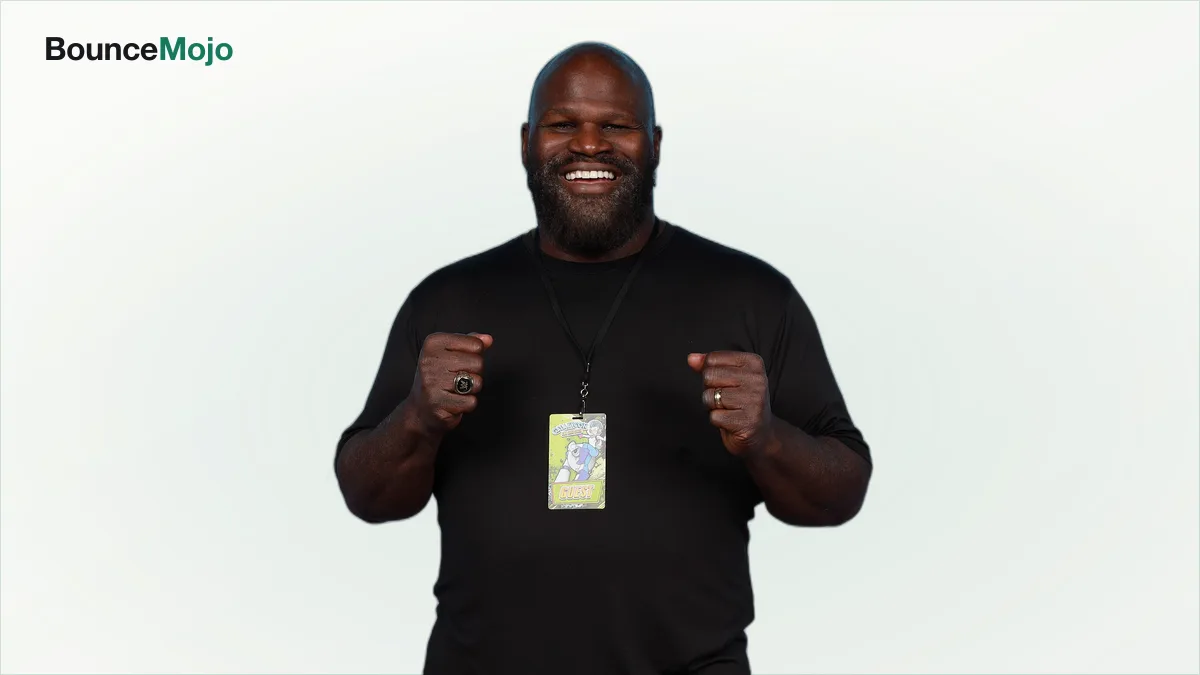
Mark Henry was called The World’s Strongest Man, and unlike most wrestling nicknames, this one was earned in real competition. He is one of the strongest athletes the sport has ever known.
Here’s what most people miss: before wrestling made him famous, Henry was an Olympic weightlifter and a record-setting powerlifter. The strength was never an act. It was the whole foundation.
The Myth vs. The Reality
The myth is that Mark Henry was a lumbering big man, a strongman novelty who happened to wrestle.
Here’s the truth: he was a genuine Olympic athlete and one of the most credible powerhouses in wrestling history.
The reality is that Henry’s strength was scientifically verified long before he ever cut a promo. He set powerlifting records that still command respect. He competed in two Olympic Games. When WWE billed him as “The World’s Strongest Man,” it was drawing on real, documented achievement, not marketing fiction. And in the ring, he eventually proved he was far more than a strongman: he became a compelling, emotional performer and a world champion.
What makes Henry different is that his foundation was completely real. In an industry built on illusion, his physical dominance was a matter of record.
And to understand that, you have to go back to a young man in Texas whose strength was obvious from the start.
The World That Made Mark Henry
Mark Jerrold Henry was born on June 12, 1971, in Silsbee, Texas. He was an enormous, powerful child, drawn to feats of strength from a young age.
Picture it: a Texas kid so strong that lifting became his obvious calling.
Here’s the deal: Henry did not waste his gifts. He threw himself into powerlifting and weightlifting, dominating competitions and setting national records as a teenager and young man. His raw power was the kind that comes along rarely, and he trained it into elite, competitive form. By his early twenties, he was representing the United States on the world’s biggest athletic stage.
The 1990s were a golden era for American strength sports, and Henry emerged as one of its brightest talents. He competed as a two-time Olympic weightlifter, in 1992 and 1996, and won major powerlifting and strongman honors, including the Arnold Strongman Classic. He had, by any measure, one of the strongest bodies on the planet.
But raw strength alone does not pay for a lifetime. Henry needed a stage that could turn his power into a career.
The Crucible: Early Life and the Climb
The Environment That Shaped Him
Henry’s formative world was competitive strength sports, a demanding, unglamorous arena that rewards discipline and raw talent in equal measure. Powerlifting and Olympic weightlifting are brutal, precise pursuits with little money and enormous physical cost.
That environment forged a serious, hardworking athlete. Henry did not come up chasing fame. He came up chasing personal records and national titles, mastering a craft most people never attempt.
Now: WWE came calling in the mid-1990s, drawn to his unmatched strength and his Olympic credentials. The company signed him to a long-term deal, betting that his legitimate power could be turned into a marketable character. Henry made the leap from Olympic platform to wrestling ring.
The Catalyst for Breakout
The early WWE years were rocky. Henry’s strength was obvious, but finding the right character and role took time. For a stretch, he was underused, a physical marvel without a clear direction.
But here’s the truth: his patience eventually paid off enormously.
Consider the arc. For years, Henry was a reliable powerhouse without a defining moment. Then, in 2011, everything clicked. He unleashed the Hall of Pain, a menacing, dominant heel run that showcased not just his strength but his emotional depth as a performer. He won the World Heavyweight Championship and delivered some of the most memorable moments of his career. The Olympic strongman had become a genuine main-event star, decades into his journey.
And that late-career peak set up an even more valuable second act.
The Key Players
Henry’s story runs through the environments and figures that shaped him.
The strength-sports world that made him a champion lifter is the foundation of everything. Those grueling competitions built the body and the discipline that carried him.
Then there is the WWE machine, which employed him for decades and eventually gave him the platform for his Hall of Pain triumph and his 2018 Hall of Fame induction. That company was his professional home for most of his adult life.
You might be wondering about his role among his peers.
Henry became a respected locker-room veteran and mentor, known for his leadership and his genuine care for younger talent. That reputation is a big reason he transitioned so smoothly into coaching and scouting.
Those relationships shaped him. And the most valuable chapter came after his in-ring career ended.
The Turning Point
The Pinnacle of Achievement
Henry’s in-ring peak was the Hall of Pain and his World Heavyweight Championship, a run that proved he was a complete performer, not just a strongman. It was the achievement his whole career had been building toward.
It gets better: in 2018 he was inducted into the WWE Hall of Fame, a formal recognition of his long and respected career. The Olympic lifter from Texas had become a celebrated wrestling legend.
For a man whose greatness took years to fully arrive in wrestling, it was deep vindication.
The Price of Admission
But the road had its costs.
Here’s the kicker: Henry spent years as an underutilized talent before his breakthrough, a frustrating stretch for an athlete of his caliber. He had to be patient while others rose faster.
The price was also physical. Decades of elite strength training and wrestling took a toll on his body, and he carried the wear of a lifetime spent lifting extraordinary weight. Retirement from active competition became a necessity, not just a choice.
He met each challenge with the same steadiness that defined him, and his response to the end of his in-ring career reveals the smartest part of his story.
The Unvarnished Truth
Henry has been candid about the harder parts of his journey.
He has spoken about the years he spent waiting for his moment in WWE, acknowledging the frustration of being underused despite his obvious gifts. That honesty humanizes a man often seen only as an unstoppable force.
He has also been open about the physical toll of his dual career in strength sports and wrestling, refusing to pretend the punishment was easy. He treats his body’s limits with respect rather than denial.
Think about it: that self-awareness is grounding. Henry does not sell an image of effortless dominance. He talks like a disciplined athlete who worked for decades, waited for his chance, and made the most of it when it finally came.
His long career has drawn its share of debate, though.
Controversies and Criticisms
Henry’s career has been notably clean, but not without discussion.
Some critics argued for years that WWE wasted his potential, keeping him in the mid-card long after his ability warranted a bigger role. The delayed push became a common lament among fans who saw his talent early.
Others debated whether a strength-based performer could carry main-event storylines, a question his acclaimed Hall of Pain run answered emphatically. He proved the doubters wrong.
Here’s the deal: Henry has handled it all with class and perspective. He rarely airs grievances, focusing instead on gratitude for his long career and his ongoing role in the business. In an industry full of drama, he has been a steadying, respected presence.
His own words reveal the mindset behind that steadiness.
Quote Analysis and Literary Breakdown
Henry speaks with the calm authority of a veteran, and his words reward attention.
On his strength, he has consistently framed it as something earned through relentless training, not just genetic luck. It reveals an athlete who respects hard work above all.
On his late-career breakthrough, he has spoken about patience and persistence, about staying ready until his moment arrived. It captures the discipline that defines his story.
On giving back, he has talked about the importance of supporting young athletes and Olympic weightlifters, of using his platform to lift others. It grounds his success in generosity rather than ego.
Read together, the quotes show a patient, generous professional who treated his extraordinary gifts as a responsibility and his career as a long game worth waiting for.
There is a clear lesson in that.
What We Can Learn From Mark Henry
Navigating Hard Times
Henry’s life teaches patience and reinvention. He waited years for his wrestling breakthrough and then, when his in-ring days ended, reinvented himself as a broadcaster, coach and scout. He never treated a setback as the end.
His lesson is that real skill creates second acts. Because his expertise was genuine, he could keep finding new ways to contribute and earn long after his last match. Authentic knowledge is durable.
The Success Blueprint
The professional lesson is about building on real credentials. Henry made his name on verified Olympic and powerlifting achievement, which gave his entire career a credibility no gimmick could match. It is why he sits among the solid earners on our richest wrestlers list.
The financial lesson is longevity and reinvention. He earned across strength sports, wrestling and media over decades, a spread that mirrors the smartest earners on our richest athletes list.
Becoming Better
The deepest lesson from Mark Henry is about the value of genuine mastery. In a business full of manufactured images, he built everything on real, documented achievement, and that authenticity carried him through underuse, into a world title, into the Hall of Fame, and into a respected second career. He proved that when your foundation is real, patience pays and reinvention is always possible. There is real wisdom in a man who let his genuine strength, of body and character, do the talking.
That authenticity points to a clear final take.
Final Verdict
Mark Henry’s story is about the power of real achievement. From a Texas powerlifting prodigy and two-time Olympian to a WWE World Champion, Hall of Famer and mentor, he built a career on strength that was genuinely, verifiably his own.
He set records. He competed in the Olympics. He waited patiently for his wrestling breakthrough and delivered a career-defining run when it came. And he reinvented himself into a valued veteran when his in-ring days ended.
What lingers is his authenticity. Henry proved that a foundation of real achievement can carry a person through frustration, into greatness, and beyond it into a lasting career. The World’s Strongest Man earned that title before he ever wrestled, and he honored it for decades.
His story is a reminder that genuine skill is the most durable asset of all. Mark Henry was strong in every sense, and his fortune, in body, character and career, was built on things that were simply, verifiably true. That is a blueprint anyone can follow, though few possess the genuine gifts and the patience he brought to it.
Shop Mark Henry on Amazon
Books, audiobooks, merch and more, handpicked for fans.
As an Amazon Associate we earn from qualifying purchases.
Frequently Asked Questions
What is Mark Henry's real name?+
Mark Henry was born Mark Jerrold Henry on June 12, 1971, in Silsbee, Texas. He is known in wrestling as The World's Strongest Man.
Was Mark Henry an Olympian?+
Yes. Mark Henry was a two-time Olympic weightlifter for the United States, competing in 1992 and 1996, and an elite powerlifter.
What was Mark Henry's Hall of Pain?+
The Hall of Pain was Mark Henry's acclaimed 2011 heel run, during which he won the World Heavyweight Championship in the finest stretch of his wrestling career.
Is Mark Henry in the WWE Hall of Fame?+
Yes. Mark Henry was inducted into the WWE Hall of Fame in 2018, honoring his long and respected career.
What does Mark Henry do now?+
Henry has worked in commentary, coaching and talent scouting, and he supports United States Olympic weightlifting through charitable efforts.
Want the money side of the story?
Read Mark Henry's Full Net Worth Breakdown →Shop Mark Henry on Amazon
Books, audiobooks, merch and more, handpicked for fans.
As an Amazon Associate we earn from qualifying purchases.