Mario Andretti Biography: The Immigrant Kid Who Conquered Racing
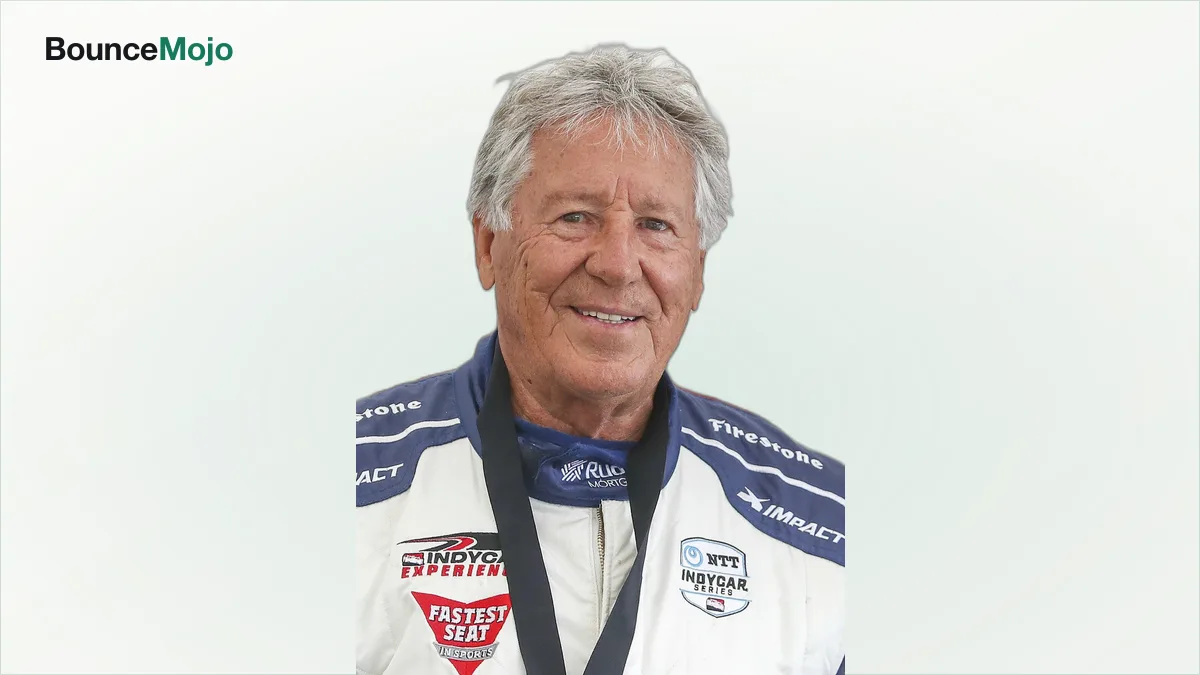
Everybody remembers the checkered flags. Almost nobody remembers the refugee kid in a displaced-persons camp who had never seen a proper racetrack.
Here’s what most people miss: the thing that could have crushed Mario Andretti as a boy, being uprooted from everything he knew, is the exact thing that gave him the hunger to conquer an entire sport.
The Myth vs. The Reality
The myth is a clean one. Mario Andretti, the natural, the man who could win in anything with an engine, gliding from Formula 1 grids to Indianapolis to Daytona as if borders and disciplines didn’t exist.
That version is real. It’s also wildly incomplete.
Here’s the truth: the “born winner” story erases the most important part. Andretti was a war-displaced child from a corner of Europe that changed countries around him, a boy who spent years in a refugee camp before his family arrived in America with almost nothing. The effortless champion was actually an immigrant teenager who barely spoke English, chasing a dream most people around him thought was insane.
Think about it. We love a story of pure talent because it feels like magic. But Andretti’s greatness wasn’t handed to him. It was clawed out of dirt tracks and long odds by a kid who had already survived losing his homeland.
Now, that drive didn’t come from nowhere. It came from a specific place, a specific era, and a specific pair of twins who refused to let go of a shared obsession.
The World That Made Mario Andretti
To understand Andretti, you have to understand the Europe he was born into and the America he chose.
He was born on February 28, 1940, in Montona, in the Istrian region, then part of Italy. World War II and the redrawing of borders that followed turned his family into refugees. For years they lived in a displaced-persons camp, waiting for a way out. It was about as far from a life of glamour and fast cars as a childhood could be.
But the era mattered too. Postwar Italy was mad for motor racing, and the legend of drivers like Alberto Ascari filtered down even to boys with no money and no prospects. Mario and his twin brother Aldo fell in love with the sport from a distance, tinkering and dreaming long before either of them touched a real race car.
Here’s the deal: in 1955, the family emigrated to the United States and settled in Nazareth, Pennsylvania, near a half-mile dirt oval. For two car-obsessed teenage brothers, it was paradise. The dream that had felt impossible in a refugee camp suddenly had a track just down the road.
But turning that dream into a career would take more than passion. And the cost would land hardest on the brother who shared it.
The Crucible: Early Life and the Climb
The environment that shaped him
Two things defined the young Andretti twins: displacement and devotion.
Arriving in Pennsylvania as immigrants, Mario and Aldo threw themselves into local dirt-track racing, often without their father’s blessing at first. They built and shared cars, learning the craft the hard way on rough ovals against older, more experienced drivers. Every lap was self-taught, every dollar hard-earned.
Then came the blow that split the twins’ paths. Aldo suffered serious racing injuries that eventually ended his competitive career, a devastating reminder of how dangerous the sport was in that era. Picture it: two brothers who had survived a refugee camp together, now separated by the very dream they’d shared, one carrying it forward for both of them.
You might be wondering: how does a self-taught immigrant kid climb from dirt ovals to the pinnacle of world motorsport? The answer is relentless versatility. Andretti didn’t specialize. He raced anything he could get into, sprint cars, midgets, stock cars, and used every ride to prove he belonged. He wasn’t fighting for one championship. He was building a reputation that would eventually open every door in racing.
By the mid-1960s, the kid from Nazareth had made it to the top rungs of American racing. The refugee had found the one arena where his hunger was an advantage.
The catalyst
The catalyst was the sheer breadth of his early success.
While many drivers picked a lane, Andretti refused. He won on ovals and road courses, in open-wheel cars and stock cars, and that range made him impossible to ignore. In 1967 he won the Daytona 500, one of NASCAR’s crown jewels, proving he could beat the stock-car specialists at their own game.
Here’s the kicker: that versatility became his signature and his ticket to the world stage. Team owners and sponsors saw a driver who could win anywhere, and that opened the path to Indianapolis and, eventually, to Europe and Formula 1.
The immigrant kid was about to do something no driver had ever done, or has done since. But the biggest prizes were still ahead of him.
The Key Players
No career this large is a solo act, and Andretti was surrounded by people who shaped his path.
Start with Aldo Andretti, his twin. Aldo shared the original dream and the earliest races, and though injuries ended his own career, the bond between the brothers ran through Mario’s entire life. In many ways Mario carried the dream for both of them.
Then there’s Colin Chapman, the brilliant, demanding founder of Lotus. Chapman’s cars were fast and innovative, and it was in a Lotus that Andretti won his Formula 1 world title. The partnership put Andretti at the front of Grand Prix racing at its most competitive.
And there’s Michael Andretti, his son, who followed him into the sport and became an IndyCar champion and team owner in his own right. Through Michael, and later grandson Marco, Mario’s legacy became a living dynasty rather than a closed chapter.
Now: surround yourself with a devoted family and the right machinery, and you can achieve the historic. Andretti was about to do exactly that.
The Turning Point
The pinnacle
The pinnacle came in 1978, on the Grand Prix circuits of the world.
Andretti had already conquered American racing, winning the Indianapolis 500 in 1969 and multiple national championships. But the Formula 1 World Championship was the summit of global motorsport, and in 1978, driving the ground-effect Lotus for Colin Chapman, he claimed it. An Italian-born American had won the world title against the best drivers on earth.
Think about the sweep of it: the Daytona 500 in 1967, the Indianapolis 500 in 1969, and the F1 World Championship in 1978. No other driver in history has won all three. Andretti didn’t just master a series. He mastered the entire sport, across continents and disciplines.
Here’s the truth: he became the most versatile champion racing has ever produced, and he did it as a man who arrived in America unable to speak the language.
The price
Because greatness in that era came at a brutal, ever-present cost.
Racing in the 1960s and 1970s was extraordinarily dangerous. Andretti competed in an age when fatal accidents were common and safety was primitive by modern standards. He lost friends and rivals to the sport, and his own brother’s career was cut short by injury. Every triumph was shadowed by risk that today’s drivers can scarcely imagine.
There was also the toll of a career with no off-season. For decades, Andretti crisscrossed the globe, racing in multiple series at once, living out of suitcases and race trailers. The versatility that made him great also meant a life spent almost entirely on the road, away from the Pennsylvania home he loved.
He’d chased greatness across three continents. The price was a life measured in flights, risk and time away from family.
The Unvarnished Truth
Andretti’s story is triumphant, but it is not without hard edges.
Indianapolis, the race that made him a star in 1969, also became a source of frustration. For all his dominance, he won the Indy 500 only once, and the track seemed to slip away from him again and again in later years, a rare gap in an otherwise complete résumé. Fans and writers still debate the “Andretti curse” at the Speedway.
There’s also the loneliness of being first. Being the only driver to conquer F1, Indy and Daytona means having no true peer, no one who walked exactly the same path. Andretti’s greatness set him apart in a way that few can fully relate to.
Here’s what’s easy to miss: his greatest strength, his refusal to specialize, also meant he never fully dominated any single series the way a specialist might. He chose range over singular focus, and that choice, while it built an unmatched legacy, came with its own trade-offs.
None of that dims the achievement. If anything, it makes the completeness of his record more remarkable.
Controversies and Criticisms
Andretti’s career was long and largely admired, but it was not free of debate.
Some critics of the ground-effect Lotus era argued that the cars, as much as the drivers, decided the 1978 championship. Andretti’s response was on the track: he won in the machinery available to him, against the same rivals, and no one has taken the title from the record books.
There’s also the perennial Indianapolis question. Only one win at the Brickyard, from a driver of his stature, invited endless second-guessing about strategy, luck and reliability. Andretti has always framed it plainly, as the cruel mathematics of the world’s most unpredictable race.
And as with any dynasty, there are those who question how much the family name has opened doors for later Andrettis. Mario’s answer has always been that the name gets you a seat, but only results keep you in it.
So what does a life like this actually teach the rest of us? A great deal.
What We Can Learn From Mario Andretti
Navigating hard times
Andretti’s real lesson is about turning displacement into drive.
He began life as a refugee, stripped of his homeland, arriving in a new country with nothing but a shared dream and a willingness to work. Rather than let that instability define him, he used the hunger it created as fuel, self-teaching his way from dirt ovals to the summit of world motorsport.
In other words: the hardest starting point can become the deepest well of motivation, if you refuse to see it as a limit.
The success blueprint
The blueprint here is about range over specialty.
Andretti didn’t pick a single series and defend it. He raced everything, won everywhere, and made his versatility the whole point. That breadth turned him into a name that transcended any one championship and gave him commercial and competitive appeal that a specialist could never match.
Want the fuller picture of how that translated into wealth? The full net worth breakdown shows how a five-decade career, a winery and a racing dynasty became an estimated $80 million fortune. And to see how he ranks among the sport’s biggest earners, the richest race car drivers list puts it in context.
The deeper takeaway is about legacy. Andretti didn’t just build a career. He built a name that his sons and grandson carried forward, turning a single immigrant’s dream into a dynasty. The best legacies aren’t the trophies you win. They’re the doors you open for the people who come after you.
Which brings us to the final reckoning on the man.
Final Verdict
Mario Andretti is going to be remembered as the most complete driver who ever lived.
Most people will file him under “F1 world champion” or “Indy 500 winner,” the headline achievements. A smaller, smarter group will remember something rarer: a war-displaced boy who arrived in America with nothing, taught himself to race on dirt, and went on to win the three biggest prizes in motorsport, a feat no one else has ever matched.
Here’s the bottom line: the versatility made him famous, but the name made him immortal. By passing his passion to Michael and Marco, Andretti turned a personal triumph into a living dynasty that still races today.
He is the only driver to win the Indy 500, the Daytona 500 and the Formula 1 World Championship. He is also proof that where you start does not decide where you finish. And in the long run, that story, the immigrant who conquered everything, is the version worth remembering.
Shop Mario Andretti on Amazon
Books, audiobooks, merch and more, handpicked for fans.
As an Amazon Associate we earn from qualifying purchases.
Frequently Asked Questions
Where was Mario Andretti born?+
Andretti was born on February 28, 1940, in Montona, Istria, then part of Italy and today in Croatia. His family was displaced after World War II and spent years in a refugee camp before emigrating to the United States in 1955.
Does Mario Andretti have a twin brother?+
Yes. Mario has a twin brother, Aldo Andretti, who also raced, though Aldo's career was cut short by serious injuries. The two grew up sharing an obsession with cars in postwar Italy.
What did Mario Andretti win?+
Andretti won the 1978 Formula 1 World Championship, the 1969 Indianapolis 500 and the 1967 Daytona 500, and remains the only driver to capture all three. He also won multiple IndyCar national titles across his career.
When did Mario Andretti retire from racing?+
Andretti retired from full-time IndyCar competition in 1994 after a career spanning more than three decades, though he continued to appear as an ambassador and ride-along driver for years afterward.
Who are the other racing Andrettis?+
The Andretti racing family includes Mario's son Michael Andretti, an IndyCar champion and team owner, and grandson Marco Andretti, making the surname one of the most storied dynasties in motorsport.
Want the money side of the story?
Read Mario Andretti's Full Net Worth Breakdown →Shop Mario Andretti on Amazon
Books, audiobooks, merch and more, handpicked for fans.
As an Amazon Associate we earn from qualifying purchases.