Luke Donald Biography: The Precision Master Without Power
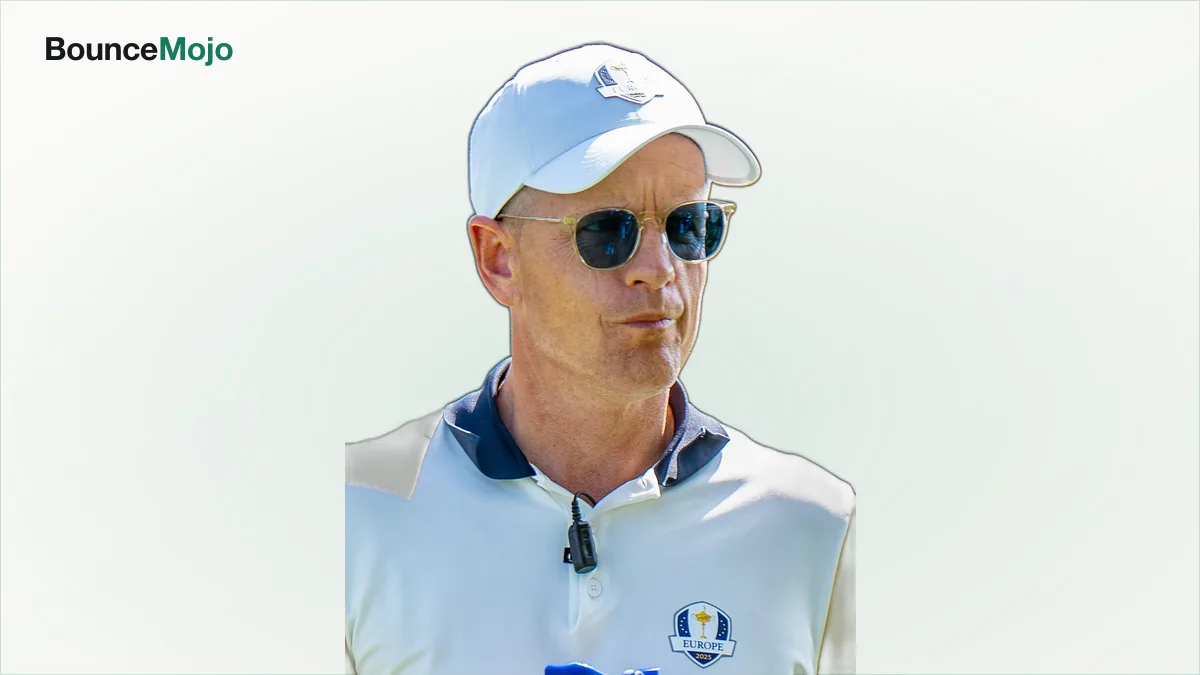
Most people remember Luke Donald as the golfer who reached No. 1 without ever hitting it far. The truth behind that is one of the smartest careers the sport has ever seen.
Here’s what most people miss: Donald didn’t reach the top despite being a short hitter. He reached it because he built his entire game around beating the golfers who could out-drive him.
The Myth vs. The Reality
The myth is dismissive: Luke Donald, the short hitter, the guy who was somehow No. 1 without the firepower to belong there.
The reality flips that on its head.
Here’s the deal: in a sport that was becoming obsessed with distance, Donald proved that precision could still rule. He reached world No. 1 by being the best in the world at the parts of golf that decide most tournaments, the approach shots, the chips, the putts.
The lack of raw power wasn’t a weakness he overcame. It was the reason he perfected everything else.
You might be wondering: how does a golfer with modest distance become the best player alive? To understand that, you have to go back to a college campus in Illinois.
The World That Made Luke Donald
Donald was born in 1977 in Hemel Hempstead, England, and came up as a talented amateur in a country producing a strong crop of players.
But the making of Donald happened in America. He crossed the Atlantic to attend Northwestern University near Chicago, an unusual path for a top English prospect, and it shaped everything, his game, his home, and his outlook.
Now: American college golf in the late 1990s was a fiercely competitive proving ground. Donald thrived there, winning the NCAA individual title and sharpening the short game that would become his signature.
The Northwestern years did more than polish his golf. Away from the traditional English pathway to the pro ranks, Donald matured on his own terms, earning a degree in art theory and practice and developing interests, in painting, in wine, that would shape the cultured, understated image he carried through his career. He was never the loudest man in the room. That American college environment let a naturally reserved player build confidence while keeping the low-key temperament that defined him.
Think about it: a reserved English kid built his foundation on U.S. college fairways, then made the Chicago area his adult home. That transatlantic identity ran through his whole career.
The Crucible: Early Life and the Climb
The Environment That Shaped Him
Donald was never going to overpower golf courses, and he knew it early. So he leaned into control. His iron play was pinpoint, his chipping was among the best on tour, and his putting was elite.
Let that land. While others chased length, Donald obsessed over the scoring zone, the 120 yards and in where tournaments are actually won.
He turned pro in 2001 and climbed steadily, winning on both the PGA Tour and in Europe. He wasn’t a flashy phenom. He was a grinder with a surgeon’s touch, improving year over year.
Here’s the truth: that patient, skill-first approach was building toward something historic.
The Catalyst
The breakthrough came in 2011. That season, Donald did something almost no one has ever done: he topped both the PGA Tour and European Tour money lists in the same year and reached world No. 1.
It was total dominance, achieved not with power but with relentless precision and the coolest short game in the sport.
It gets better, though, because even at the summit, one prize kept eluding him. And how Donald eventually reshaped his legacy, years after his ranking slipped, would surprise the golf world.
The Key Players
No golfer’s story is a solo act, and Donald’s runs through several key figures.
His Northwestern coaches and teammates. The American college system polished his game and gave him the competitive foundation that carried him to the top. That environment was the launchpad for everything.
Diane Donald, his wife. Donald built a stable family life in the Chicago area, and that grounding helped him navigate the pressures of elite golf and the disappointments that came with it.
His European golf peers. Players like Lee Westwood, Justin Rose, and Graeme McDowell were both rivals and teammates, sharing an era of English and Irish success and the Ryder Cup camaraderie that would later define Donald’s second act. Their intertwined careers are part of the wider richest golfers story.
Team Europe. As captain, Donald’s most important relationship became the one with his players, the group he would lead to Ryder Cup glory.
By the way, every one of these relationships points at the same theme: Donald was at his best as part of a system, whether a college program or a Ryder Cup team. That set up the finest chapter of his career.
The Turning Point
The Pinnacle
Donald’s peak as a player was that 2011 season, world No. 1 and the money-list double, a run of sustained excellence built entirely on precision. As his net worth breakdown details, that stretch cemented the endorsements and reputation that anchor his fortune.
But his career had a second pinnacle few saw coming.
In 2023, Donald captained Team Europe to a commanding Ryder Cup victory in Rome, then was retained to lead the side again. That leadership role gave his career a triumphant new dimension, arguably eclipsing his individual peak in the public imagination.
The Price
Here’s the kicker: the one trophy Donald never won was a major.
For all his precision and his time at No. 1, the four biggest individual titles in golf stayed out of reach. He had chances and strong finishes, but never closed one out.
The near-misses stung. Donald contended at majors and put himself in position more than once, but the killer instinct that served him in regular events never quite translated to closing out one of the four biggest weeks. Whether it was nerves, the punishing setups favoring bigger hitters, or simple bad luck, the result was the same: a former world No. 1 with a blank space where a major should be.
That gap became the standard critique of his career. And it left an open question that his captaincy would ultimately help answer: could a golfer be counted among the greats without a major on the shelf? The way Donald responded, by pivoting to leadership, reframed the entire debate.
The Unvarnished Truth
Donald’s flaws were subtle, the kind that come with his particular style.
His lack of distance, an asset in how it forced him to perfect everything else, was also a genuine ceiling. As courses got longer and the sport tilted toward power, Donald’s path to the very top narrowed, and his ranking eventually fell away from its 2011 heights.
Now: some questioned whether a more aggressive game might have delivered the major that eluded him. Donald mostly rejected that, staying true to the precise, controlled style that had made him No. 1 in the first place.
He also carried the weight of expectation that comes with reaching No. 1. Once a player sits atop the world, every subsequent result is measured against that summit, and Donald’s inability to sustain the ranking or convert it into a major invited a steady drip of “what happened?” commentary. It’s a harsh reality of elite sport: the higher you climb, the further the fall appears, even when the career underneath remains genuinely excellent. Donald handled that scrutiny with the same composure he showed over a four-foot putt.
The most honest thing about Donald is that he never tried to be someone he wasn’t. He didn’t chase distance to fit a trend. He doubled down on his strengths, and when his playing peak passed, he found a new way to matter.
Controversies and Criticisms
Donald’s career was relatively free of scandal, but not of debate.
The “no major” question. The most persistent criticism was the missing major. For a former world No. 1, it fueled arguments about whether his peak was truly elite or a product of a weaker-than-usual moment at the top.
The distance debate. As golf became a bombers’ game, some argued Donald’s style was a relic, and that his time at No. 1 belonged to a bygone era. Others saw it as proof that skill should still count for more than raw power.
The captaincy pressure. Taking the Ryder Cup captaincy put Donald under intense scrutiny. Had Europe lost, the criticism would have been fierce. Instead, the Rome victory silenced the doubters and rewrote his story.
The “boring” label. Donald’s calm, understated persona, an asset in the pressure cooker of tour golf, led some to dismiss him as bland or lacking the charisma of flashier stars. It was an unfair knock on a man whose quiet intensity masked a fierce competitor, but it dogged his public image for years and arguably cost him some of the endorsement spotlight that went to louder personalities.
The peak-era question. Because Donald’s spell at world No. 1 came during a brief window when no single player dominated, some critics argued his reign benefited from a leaderless moment rather than reflecting true supremacy. Supporters pointed out that reaching No. 1 in any era requires beating the best in the world week after week, which Donald did.
What We Can Learn From Luke Donald
Navigating Hard Times
The first lesson is about limitations: you don’t have to be the biggest or strongest to reach the top. Donald was one of the shortest hitters ever to rule golf, and he did it by relentlessly maximizing what he had.
But here’s the truth his career makes plain: when one door closes, build another. As his playing peak faded, Donald reinvented himself as a leader, which kept him relevant and among the wealthiest names on our richest golfers list.
The Success Blueprint
If you want the replicable part, it’s this: master the fundamentals that decide outcomes. Donald obsessed over the scoring zone while others chased highlight-reel distance, and it made him No. 1.
That’s transferable. The lesson isn’t “be short off the tee.” It’s “identify the skills that actually win, and become the best in the world at them.” Precision beat power, and it paid.
Becoming Better
The deepest lesson is about reinvention with integrity. Donald never abandoned who he was to chase a trend. When his playing career waned, he found a second calling in leadership, and did it brilliantly.
In other words, he grew without pretending to be someone else. The quiet craftsman became a winning captain, proving there’s more than one way to leave a mark on the game.
Final Verdict
Luke Donald is one of the smartest golfers the sport has ever produced, and “smartest” fits him better than “longest” ever could. A former world No. 1, a rare money-list double winner, and a triumphant Ryder Cup captain, all achieved through finesse rather than force.
And here’s the twist that reframes everything: the golfer once dismissed as too short to belong at the top wrote his most celebrated chapter after his playing peak, leading Europe to glory when it mattered most. The full picture of the fortune behind that career lives in his net worth breakdown, and it makes one thing clear: in a game obsessed with power, Luke Donald proved precision could win it all.
Shop Luke Donald on Amazon
Books, audiobooks, merch and more, handpicked for fans.
As an Amazon Associate we earn from qualifying purchases.
Frequently Asked Questions
Why is Luke Donald famous?+
Donald is famous for reaching world No. 1 in 2011 as one of golf's shortest hitters, and later for captaining Europe to a decisive Ryder Cup victory in 2023.
Where did Luke Donald go to college?+
Donald attended Northwestern University in Illinois, where he became an NCAA individual champion before turning professional in 2001.
Did Luke Donald win a major?+
No. Despite reaching world No. 1 and posting strong finishes, Donald never won a major championship, one of the few gaps in an otherwise elite résumé.
What made Luke Donald so good?+
Donald relied on an elite short game and putting rather than distance, mastering the parts of golf that don't require power to reach the top of the world rankings.
Is Luke Donald a good Ryder Cup captain?+
Yes. Donald led Team Europe to a dominant Ryder Cup win in Rome in 2023 and was retained as captain, widely praised for his calm, detailed leadership.
Want the money side of the story?
Read Luke Donald's Full Net Worth Breakdown →Shop Luke Donald on Amazon
Books, audiobooks, merch and more, handpicked for fans.
As an Amazon Associate we earn from qualifying purchases.