Louis Oosthuizen Biography: The Farm Boy Who Became King Louis
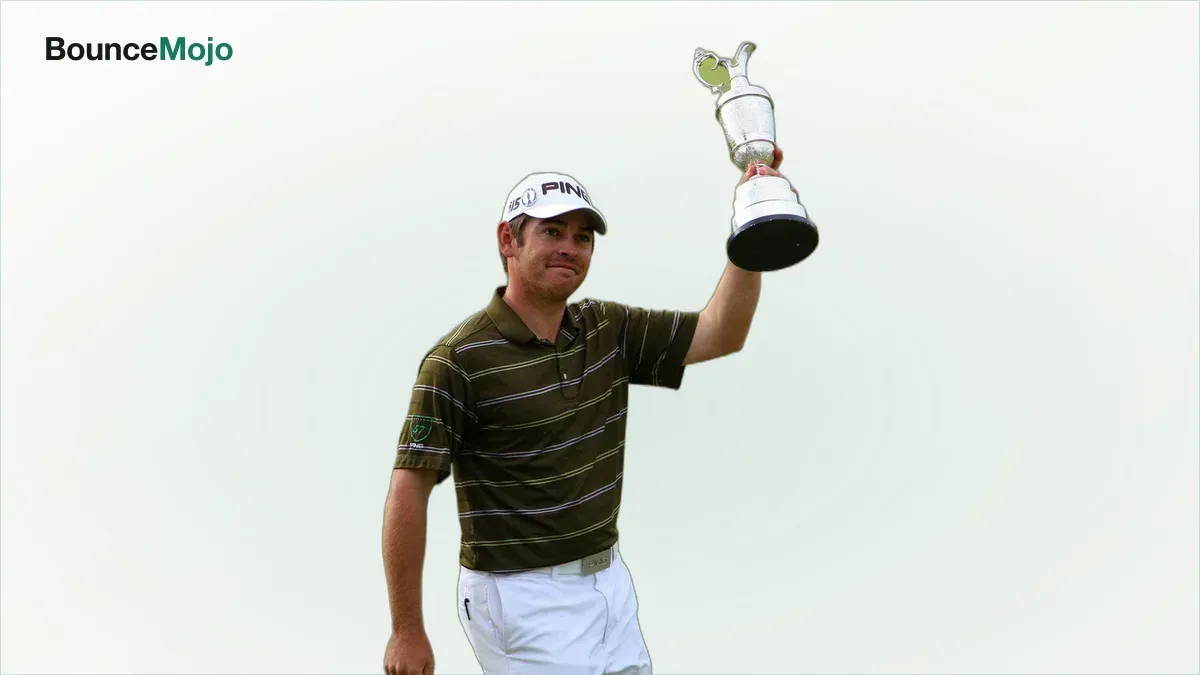
Most people know Louis Oosthuizen as the smooth-swinging South African who won the Open. What they forget is how far he traveled to get there, and how cruelly the game teased him after.
Here’s what most people miss: the man crowned “King Louis” for a dominant major victory would go on to finish runner-up in all four majors, one of the most bittersweet records golf has ever produced.
The Myth vs. The Reality
The myth is smooth. Louis Oosthuizen: the effortless swing, the calm South African who glided to an Open title at the home of golf.
The reality is grittier and more poignant.
Here’s the deal: that beautiful, relaxed swing was forged on a farm by a kid with almost nothing, and it carried him to one glorious peak followed by years of agonizing near-misses. Oosthuizen is, in many ways, golf’s great “what if,” a player of the highest class who kept finishing one shot, one putt, one break short of more glory.
And the calm exterior hides real competitive pain. To finish second in all four majors is not a comfort. It is a slow, repeated heartbreak that would have crushed a lesser character.
You might be wondering: how does a farm boy from small-town South Africa end up winning the Open and haunting the majors? To understand that, you have to understand where he came from.
The World That Made Louis Oosthuizen
Lodewicus Theodorus “Louis” Oosthuizen was born in 1982 and raised on a farm in Mossel Bay, on South Africa’s southern coast. The family was not wealthy. This was a rural, working-class upbringing, far from the manicured privilege usually associated with golf.
Young Louis fell in love with the game early, hitting balls around the farm, but a career in professional golf seemed like a distant dream for a boy of modest means.
Now: South Africa has a proud golf tradition, from Gary Player to Ernie Els, and that lineage of great champions gave a talented young South African something to aim at, and, crucially, a champion willing to help.
Think about it: a poor farm kid with a natural swing and no clear path forward. In another era, that talent might have gone nowhere. But South African golf had built a system to catch players exactly like him, and it changed his life.
The Crucible: Early Life and the Climb
The Environment That Shaped Him
The farm shaped Oosthuizen’s character: humble, hardworking, grounded, and calm under pressure. He learned the value of a dollar and never lost the down-to-earth manner that fans and peers came to love.
Here’s the truth: talent alone might not have been enough. What rescued his career was the Ernie Els and Fancourt Foundation, which identified gifted but underprivileged young South African golfers and gave them coaching, equipment, and opportunity. Oosthuizen was one of its earliest success stories.
That support let him develop his gorgeous, repeatable swing under proper guidance. He turned professional in the early 2000s and slowly climbed the European Tour ranks, showing flashes of brilliance without yet breaking through at the highest level.
The Catalyst
For years, Oosthuizen was a solid tour pro, a good player who hadn’t yet announced himself on the biggest stage.
Then came St Andrews, July 2010.
Let that land. At the Open Championship on golf’s most sacred ground, Oosthuizen played the week of his life. He led wire-to-wire and won by a stunning seven strokes, using a small red dot on his glove as a focus cue to stay calm and present. South African fans dubbed him “King Louis.” A farm boy had conquered the home of golf.
It gets better, and then it gets cruel. Because that triumph announced a world-class talent, and yet the majors that followed would tease and torment him for more than a decade.
The Key Players
No one climbs alone, and Oosthuizen’s story is full of the people who lifted him.
Ernie Els. The South African legend whose foundation identified and supported the young Oosthuizen. Els’s investment in gifted underprivileged kids gave Louis the path his family could never have afforded. Els is both mentor figure and inspiration.
Nel-Mare Oosthuizen. His wife and steady partner through the highs of victory and the lows of near-misses. Family kept him grounded through it all.
His coaching team. The mentors who introduced the “red dot” focus technique and helped refine one of the sweetest swings in golf, central to his 2010 breakthrough.
Sergio Garcia and the LIV contingent. Later in his career, fellow major champions and LIV Golf teammates with whom he shared the controversial but lucrative next chapter of his career.
By the way, notice the theme: a champion’s charity opened the door, a family kept him steady, and coaches unlocked his gift. All of it set up one perfect week, and a long run of heartbreak.
The Turning Point
The Pinnacle
Oosthuizen’s peak was that magical week at St Andrews.
His 2010 Open Championship win by seven shots at the home of golf remains one of the most dominant major performances of its era, transforming him from journeyman into major champion. As his net worth breakdown details, that victory anchored a fortune estimated near $40 million and opened doors to appearance fees and endorsements worldwide.
He also became a fixture in team golf, representing the International team in the Presidents Cup and thrilling fans with his ball-striking.
The Price
Here’s the kicker: the pinnacle was followed by a uniquely painful stretch.
Oosthuizen went on to finish runner-up in all four major championships, plus numerous other close calls. He lost a Masters playoff, came up short at U.S. Opens, PGA Championships, and Opens, again and again arriving at the door of greatness only to be turned away.
The price of being that good, that consistently, without winning more, was a career defined partly by what slipped away. For a player of his class, the near-misses were a heavy burden to carry, borne with remarkable grace.
The Unvarnished Truth
Oosthuizen’s story has few scandals, but it has real vulnerability.
His great “flaw,” if it can be called that, was an inability to convert his many major chances into more titles. Some critics wondered whether he lacked the ruthless closing instinct of the very greatest players. Others saw simple bad luck and brutal margins.
Now: injuries also dogged him at times, and the physical toll of a long career on a demanding schedule was real. He managed it with the same calm he showed on the course.
The most honest thing about Oosthuizen is how he carried the disappointment. He never made excuses, never lost his humility, and never stopped competing. To keep coming back after so many near-misses, still smiling, still grounded, revealed a quiet strength that trophies alone can’t measure.
Controversies and Criticisms
Oosthuizen’s career was largely clean, but a few debates followed him.
The LIV Golf move. His decision to join LIV Golf drew criticism from those who viewed the breakaway league as harmful to the sport. Oosthuizen defended the choice on grounds of financial security and family, a sensitive subject that divided fans and players alike.
The one-major question. Critics sometimes framed his career as underachievement, given his obvious class and his many near-misses. Fairer observers saw a player undone by the thinnest of margins in the toughest events.
Injury interruptions. Physical setbacks at times limited his schedule and form, fueling occasional questions about his durability.
The closing debate. His inability to win a second major despite countless chances became a recurring talking point, though it always sat alongside genuine respect for his talent.
The “wasted talent” framing. Because his ball-striking was so admired, some observers framed his career as a missed opportunity, arguing a player that pure should have won more. It was a backhanded compliment, praising his ability while lamenting his results. Fairer voices pointed out that major championships turn on razor-thin margins, and that finishing second so often is itself proof of sustained excellence, not failure.
Team golf loyalties. As a stalwart of the International team in the Presidents Cup, Oosthuizen occasionally found himself on the losing side of a competition long dominated by the Americans, and questions about the International team’s structure and heart sometimes swept him up, unfairly, given his consistent personal contributions.
What We Can Learn From Louis Oosthuizen
Navigating Hard Times
The first lesson is about resilience in the face of repeated disappointment. Oosthuizen finished second in all four majors and kept showing up, kept competing, kept his dignity. Most people would have been broken by that. He wasn’t.
But here’s the truth his story makes plain: your character is revealed not by how you handle winning, but by how you handle almost winning, over and over, and refusing to let it turn you bitter.
Think about the mental toll for a moment. To lead or contend at a major, feel the trophy within reach, and then watch it slip away is one of the cruelest experiences in sport. To do it in all four majors is almost beyond comprehension. Yet Oosthuizen kept teeing it up, kept giving himself chances, kept his humor and his humility. That refusal to let disappointment harden into resentment is a quieter kind of greatness, and arguably a harder one than winning itself.
The Success Blueprint
If you want the replicable part, it’s this: seize the one big chance when it comes, and let it work for you for years.
Oosthuizen won a single major and turned it into lasting status, appearance fees, and endorsement value, then secured his future with a shrewd LIV move. That maximizing instinct is exactly why he sits among the wealthy names on our richest golfers list, and among the richest athletes his story shows how far one great week can carry you.
Here’s the part worth remembering. Big breaks are rare, and most people get only a handful in a lifetime. What separates those who build lasting security from those who don’t is often what they do after the break, not the break itself. Oosthuizen treated his 2010 Open as a foundation to build on rather than a peak to coast down from. He stayed relevant, stayed marketable, and eventually made the hard, unglamorous financial decision that locked in his family’s future. One great week opened the door. Everything he did afterward is what actually built the house.
Becoming Better
The deepest lesson is about knowing what matters most. Oosthuizen never lost the humble, grounded values of his farm upbringing. When the chance came to secure his family’s future, he took it, prioritizing security and the people he loved over the endless chase for more glory.
In other words, he defined success on his own terms. The farm boy who became King Louis never forgot where he came from, and he built a life, not just a trophy cabinet.
Final Verdict
Louis Oosthuizen is one of the most talented and, in a way, most poignant figures of his golfing generation. One glorious Open title, a wire-to-wire masterpiece at St Andrews, and a runner-up finish in every major that speaks to just how good he really was.
And here’s the twist that reframes everything: the man remembered for a dominant victory is, in truth, defined even more by grace in defeat, by finishing second so many times and never letting it diminish him. The full picture of the fortune he built, from that one perfect week to his LIV security, lives in his net worth breakdown. His story proves that greatness isn’t only measured in trophies. Sometimes it’s measured in how you carry yourself when the trophy slips away, again and again, and you keep swinging anyway.
Shop Louis Oosthuizen on Amazon
Books, audiobooks, merch and more, handpicked for fans.
As an Amazon Associate we earn from qualifying purchases.
Frequently Asked Questions
Who is Louis Oosthuizen?+
Louis Oosthuizen is a South African professional golfer and 2010 Open champion, known for his smooth swing, his nickname 'King Louis,' and a remarkable run of runner-up finishes in golf's major championships.
Where did Louis Oosthuizen grow up?+
Oosthuizen grew up on a farm in Mossel Bay, South Africa, in a humble, working family. His talent was spotted early and supported through the Ernie Els and Fancourt Foundation for gifted young golfers.
What is Louis Oosthuizen's biggest achievement?+
His biggest achievement is winning the 2010 Open Championship at St Andrews, which he claimed wire-to-wire by seven strokes, earning the nickname 'King Louis' from South African fans.
Why is Louis Oosthuizen known for near-misses?+
Oosthuizen holds the rare distinction of finishing runner-up in all four major championships, along with numerous other close calls, one of the most bittersweet records in the sport.
Did Louis Oosthuizen have a swing thought written on his glove?+
Yes. During his 2010 Open win, Oosthuizen famously had a red dot on his glove as a focus cue, a mental technique from his coaching team that helped him stay present under pressure.
Want the money side of the story?
Read Louis Oosthuizen's Full Net Worth Breakdown →Shop Louis Oosthuizen on Amazon
Books, audiobooks, merch and more, handpicked for fans.
As an Amazon Associate we earn from qualifying purchases.