Lionel Messi Biography: Small Boy Turned Greatest of All Time
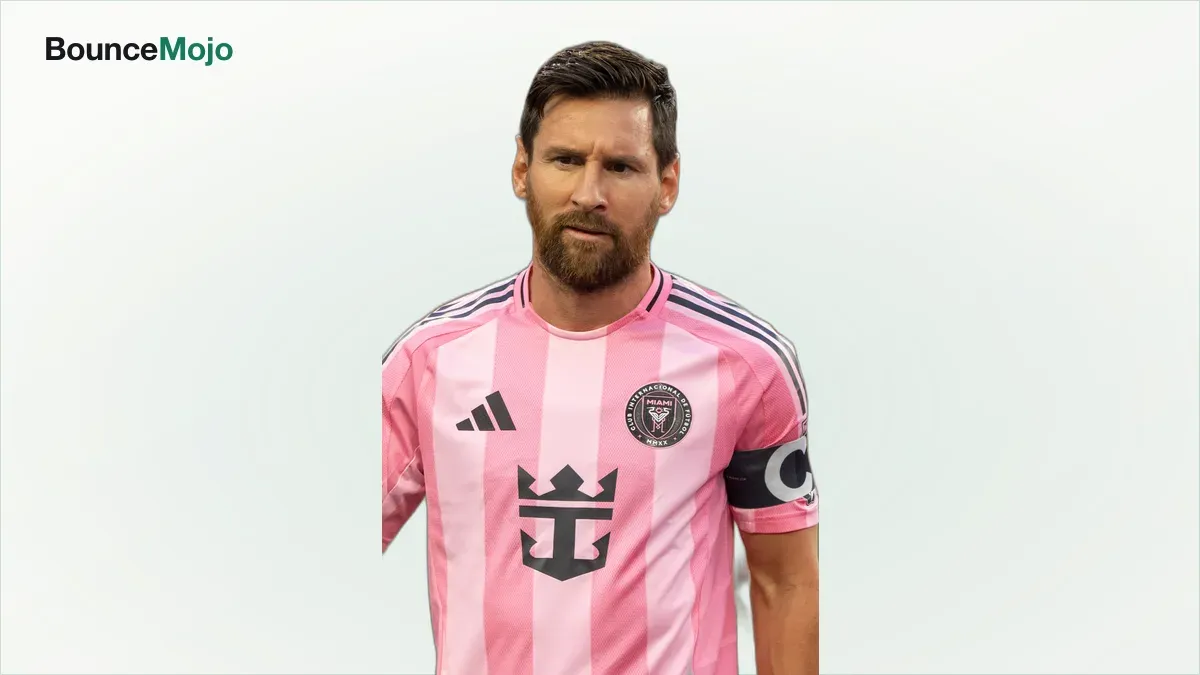
The most consequential contract in modern football was reportedly written on a paper napkin.
The Napkin, Barcelona, 2000
In 2000, Barcelona invited a 13-year-old Argentine for a trial and were stunned by what they saw. To close the deal before anyone else could, a club director reportedly wrote the offer down on a paper napkin: the club would sign the boy and pay for his medical treatment if his family relocated to Spain.
That second clause is the whole story. Barcelona was not just buying a prospect. It was funding a prescription.
Because the boy on the other side of that table had a body that had stopped cooperating, a family that could not afford to fix it, and a home country whose clubs had already declined to try.
Rosario: A Steel Factory, a Magnet Workshop, and $1,000 a Month
Messi was born in 1987 in Rosario, Argentina, a football-obsessed city in a football-obsessed nation still chasing the ghost of Diego Maradona.
His father, Jorge, worked in a steel factory; his mother, Celia, in a workshop making magnets. Money was tight, the family was close, and football was everywhere. He started at local club Newell’s Old Boys, where he was already a phenomenon, a boy who could dribble past entire teams.
Then, at around 10, doctors diagnosed him with a growth hormone deficiency. Without treatment he might not grow past five feet. The treatment cost roughly $1,000 a month and involved nightly injections into his legs. His family couldn’t sustain it. Argentine clubs wouldn’t cover it.
That is the part the “gifted natural” version of Messi erases. Talent was never going to be enough on its own. Someone had to bet real money on a boy who might never grow — and Argentina in the 1990s exported its brilliant players to Europe precisely because that was where the money and the biggest stages were. A poor, tiny, sick boy in Rosario had almost no chance of getting the care and the platform he needed without a European club taking an enormous gamble.
La Masia Raised Him, and His Mother Went Home
So the family, or much of it, uprooted and moved to a foreign country for one small boy’s dream.
Messi thrived at Barcelona’s famed La Masia academy. The early years in Spain, though, were lonely. His mother and siblings eventually returned to Argentina, homesick, leaving Lionel and his father behind.
Jorge Messi became his manager and constant companion, the man who stayed. Their bond anchored his early career and still guides his business decisions. The club did the rest of the raising: La Masia gave him a footballing philosophy and a family of teammates, from Xavi to Andrés Iniesta, who would win everything alongside him. Pep Guardiola later built arguably the greatest club team in history around him, unlocking a version of Messi that dominated the sport and won multiple Champions League titles. Antonela Roccuzzo, his wife and childhood sweetheart from Rosario, remained the link back to the ordinary life he left at 13.
Two figures shaped him from a distance rather than up close. Maradona’s ghost set the impossible standard for an Argentine number 10, and Cristiano Ronaldo became the rival who pushed him for nearly two decades.
The calm people admire in Messi grew here, in a foreign city, under a microscope, far from his mother. He learned young that the only thing he could control was the ball at his feet.
Eight Ballon d’Ors, Four Lost Finals, and One Night in Qatar
At Barcelona, Messi became the club’s all-time leading scorer and won four Champions League titles, ten La Liga titles, and a record eight Ballon d’Or awards, more than any player in history. He redefined what a small, deep-lying forward could do, scoring and creating at a rate the sport had never seen.
For his country, the ledger read very differently for a very long time.
He lost four major finals with Argentina. He was accused of caring less for the national team than for Barcelona, of being brilliant in Catalonia and ordinary in blue and white. Every failure was laid at his feet. He wept openly after defeats, and the criticism cut deep enough that he briefly retired from international football before being coaxed back.
Then, in Qatar, he lifted the 2022 World Cup, dragging Argentina through a dramatic final against France. It was the crown his career had been missing, and it took him until his mid-thirties to get it.
The club he loved could not keep him either. In 2021, a debt-crippled Barcelona was unable to register his contract under La Liga’s financial rules, and Messi left in tears. As his own net worth story explains, that global standing turned him into one of football’s wealthiest figures — but the exit itself was not his choice.
The Tax Case, the Wages, and the Saudi Question
Messi is not a flawless saint, and treating him as one misses the man.
The hardest fact on the record is legal: Messi and his father were convicted of tax fraud in Spain over image-rights income, receiving suspended sentences and heavy fines. Messi said he trusted his father and advisors with such matters.
His enormous wages at Barcelona became a flashpoint during the club’s financial collapse, with some fans blaming their scale for part of the crisis. His move to Inter Miami raised a different debate: he turned down a colossal Saudi offer to go to Miami, but also took on a role as a tourism ambassador for Saudi Arabia, and critics questioned a lucrative deal structure chosen over sporting glory in Europe. Compare his path to the pure-business route of David Beckham, his Miami co-owner, and the modern footballer’s balancing act comes into focus.
Then there is the criticism that isn’t really a scandal at all. He is intensely private, sometimes to the point of appearing distant, and his quietness has been read as a lack of leadership. Much of that traces to the shy, homesick boy who learned to protect himself by staying quiet. When you leave home at 13 and grow up under a microscope, guardedness is armor.
The most honest thing you can say about Messi is that his greatest strength — an almost monastic focus on football itself — is also what made the public struggle to know the man behind it.
What the Quiet Was Actually For
Messi is, by the most common measure, the greatest footballer of all time, and the most improbable one. He wasn’t tall, wasn’t loud, wasn’t blessed with a body built for the sport.
The replicable part of him is not the genius. It’s the mastery through repetition: endless touches, endless practice, a refusal to let his stature limit his skill until his disadvantages stopped mattering. That’s transferable in a way that “be a genius” never is. His brilliance placed him alongside rivals like Cristiano Ronaldo at the summit of the sport, and you can see where that put him financially on our richest soccer players list.
The other lesson is harder. He was written off as a choker for his country, again and again, for more than a decade — and kept coming back until he won. The world’s verdict on you is not final unless you accept it.
Eight Ballon d’Ors, a World Cup, a fortune approaching a billion dollars, and he spent most of his career being told he wasn’t enough. Too small. Too quiet. Not a winner for Argentina. He answered all of it with the ball rather than with words. The full mechanics of the fortune he built live in his net worth breakdown, but the ending that matters is the simpler one: the boy who couldn’t grow became the biggest figure the game has ever known.
Shop Lionel Messi on Amazon
Books, audiobooks, merch and more, handpicked for fans.
As an Amazon Associate we earn from qualifying purchases.
Frequently Asked Questions
What was Lionel Messi's growth condition?+
As a child Messi was diagnosed with a growth hormone deficiency. The treatment was expensive, and when Argentine clubs wouldn't fund it, Barcelona agreed to pay for it if he moved to Spain, reportedly sealing the deal on a paper napkin.
How many Ballon d'Or awards has Messi won?+
Messi has won a record eight Ballon d'Or awards, more than any player in history, across a career spanning Barcelona, Paris Saint-Germain and Inter Miami.
Did Lionel Messi win the World Cup?+
Yes. After years of near-misses and heartbreak with Argentina, Messi finally won the 2022 World Cup in Qatar, the crowning achievement of his career and the trophy that had eluded his idol Diego Maradona's successors for decades.
Why did Messi leave Barcelona?+
Messi left Barcelona in 2021 not by choice but because the club, crippled by debt, could not register his new contract under La Liga's financial rules. He joined Paris Saint-Germain before later moving to Inter Miami.
Want the money side of the story?
Read Lionel Messi's Full Net Worth Breakdown →Shop Lionel Messi on Amazon
Books, audiobooks, merch and more, handpicked for fans.
As an Amazon Associate we earn from qualifying purchases.