Lindsay Davenport Biography: The Quiet Giant Who Kept Reaching No. 1
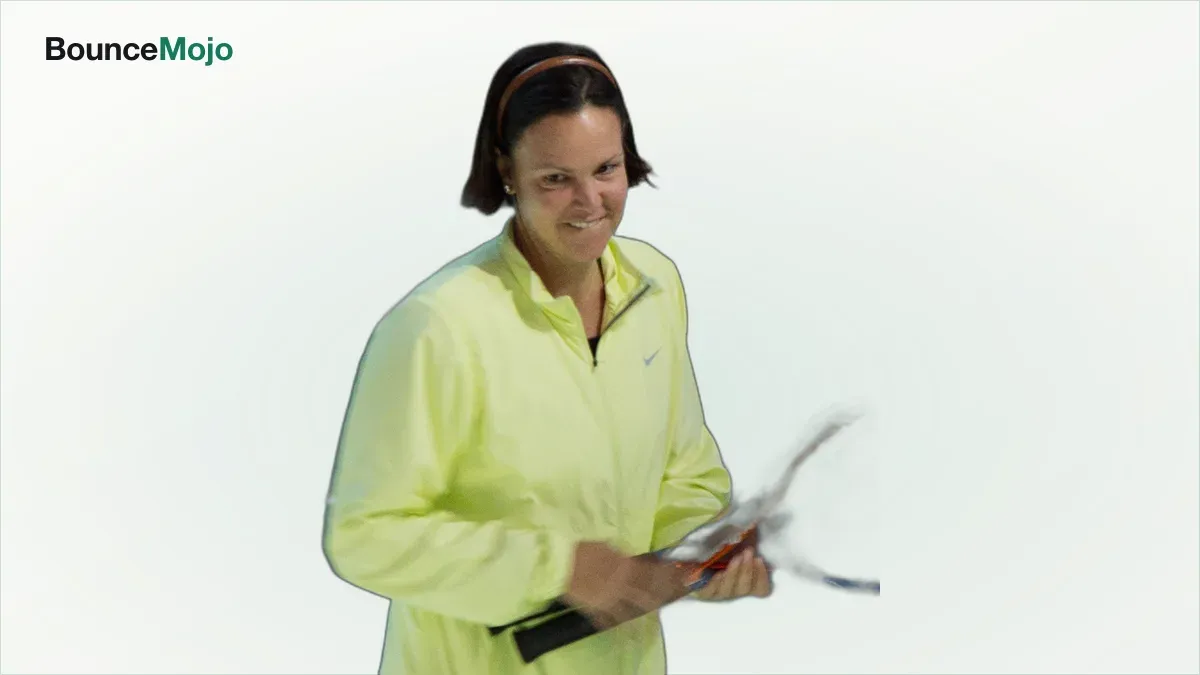
Most people remember Lindsay Davenport as a great player who never made much noise. That silence hid one of the most remarkable careers of her generation.
Here’s what most fans miss: the very traits that kept her out of the headlines were the same ones that kept dragging her back to No. 1.
The Myth vs. The Reality
The myth is that Lindsay Davenport was a talented but bland player, good, never legendary, easy to overlook. People saw the results but rarely felt the drama, so the story of her greatness never quite got told the way it deserved.
Here’s the truth: she was a three-time major champion, an Olympic gold medalist, and a four-time year-end No. 1 who dominated stretches of an incredibly deep era.
The reason people underrate her is simple. She did not create drama. She did not tank matches or feud loudly. She just kept winning, then went home. In a sport that rewards spectacle, her consistency was its own kind of greatness, and it was easy to miss precisely because it was so steady.
You might be wondering: how does a shy kid become that relentless?
The World That Made Lindsay Davenport
Davenport came up in 1990s women’s tennis, one of the deepest and most competitive eras the sport has ever seen.
She had to beat legends to win anything. Steffi Graf, Monica Seles, Martina Hingis, the Williams sisters, and a young Venus and Serena all shared her prime years. There were no easy titles and no soft draws. To lift a Grand Slam trophy, she often had to get past several future Hall of Famers in a single fortnight, a gauntlet that would have overwhelmed a less resilient competitor.
Now: American tennis was booming, and the pressure on homegrown stars was intense. Fans wanted personalities and champions. Davenport offered the second in full but rarely the first, which made her a slightly awkward fit for an era hungry for showmanship.
That backdrop, a golden generation and a spotlight she never quite wanted, shaped everything about how she competed.
Think about it: to win three majors in that field, she had to beat multiple all-time greats on her way through nearly every draw. There were no easy titles in her era, and no soft weeks. The players she edged out for her Grand Slam trophies were legends in their own right, which makes her three majors and four year-end No. 1 finishes even more remarkable than the record book suggests.
The Crucible: Early Life and the Climb
The Environment That Shaped Her
Lindsay Davenport was born in 1976 in Palos Verdes, California, into a sporting family. Her father, Wink Davenport, was a former Olympic volleyball player, so elite athletics was in her blood.
Here’s the deal: she grew up tall, fast, and gifted, but also self-conscious. Standing 6 ft 2 in as a teenager made her stand out in ways she did not always welcome. Early in her career, questions about her fitness and her size stung, and she carried real doubts about her body and her place in the game.
But that height was also a weapon. It gave her a huge serve and flat, heavy groundstrokes that few could handle when she found her rhythm. Coaches saw it before she did. What she needed was not more talent but more belief, and the movement to match her power. Once she trimmed down, sharpened her footwork, and trusted her game, the awkward tall girl became one of the most feared ball-strikers in the world.
Here’s the deal: she was never handed anything. Davenport built her game through work, adding fitness and court coverage that people assumed a player her size could never have. The insecurity that could have sunk her became the reason she out-prepared everyone.
The Catalyst
The turning point came at the 1996 Atlanta Olympics.
Think about it: a 20-year-old who still doubted herself walked away with the Olympic singles gold medal. That validation changed her. It proved she belonged at the very top, not just among the contenders.
From there, the majors followed: the 1998 US Open, 1999 Wimbledon, and 2000 Australian Open. The insecure kid had become a champion, and the best was still coming.
Here’s the truth about that breakthrough: it unlocked something in her. For years she had questioned whether she truly belonged at the top, worried she was merely good rather than great. Winning Olympic gold, and then a first Grand Slam, silenced those doubts and gave her the belief to dominate. The tall, self-conscious teenager who once shrank from attention had become one of the most powerful and reliable players in the world, and she was only getting started.
The Key Players
Davenport’s career was defined by the giants around her.
She battled Martina Hingis, Venus Williams, and Serena Williams in an era where every final felt like a war. Those rivalries did not diminish her. They sharpened her, forcing her to add power, movement, and resilience.
Here’s the kicker: her most important partner came off the court. She married Jon Leach, a former college tennis star, and he became her steady anchor through the second half of her career and beyond.
Robert Van’t Hof, her longtime coach, helped shape the powerful, efficient game that carried her to the top and refined it over years of partnership. That kind of steady, trusted guidance suited a player who thrived on stability rather than drama.
Coaches and mentors helped refine her game, but it was that stable home life that quietly powered one of the most surprising chapters of her career. Because what she did after starting a family stunned everyone.
The Turning Point
The Pinnacle
Davenport’s peak was a masterclass in consistency. She finished four separate seasons as the world’s year-end No. 1, an achievement that requires excellence over months, not just a hot fortnight.
She racked up more than 50 singles titles and stayed near the top of the rankings for the better part of a decade. She also won three Grand Slam doubles titles, proving her all-court excellence extended beyond singles. In a field stacked with legends, she was often the steadiest hand in the room.
Here’s the truth: her greatness was cumulative. She rarely produced the single unforgettable highlight that defines a flashier star. Instead she produced season after season of elite results, the kind of sustained excellence that only reveals its full weight when you add it all up at the end.
The Price
But there was a cost. She played with lingering doubts about how she was perceived, and injuries chipped at her later years. The relentless grind of an era with no weak opponents took a physical toll.
And her calm demeanor, so valuable on court, meant she rarely got the credit her results deserved. She won quietly and was underrated loudly.
The Unvarnished Truth
Davenport was open about her early insecurities in a way few champions are.
She spoke honestly about struggling with her weight and her confidence as a young player, and about the sting of being defined by her size. That vulnerability made her relatable, even as she was crushing opponents.
Now: what makes her remarkable is that she did not let those doubts win. She turned self-consciousness into work ethic and quiet self-belief. And then she did something almost no one saw coming.
Controversies and Criticisms
Davenport is one of the least controversial stars in tennis history, which itself drew a strange kind of criticism.
Some observers called her too passive, too low-energy, lacking the fire of her rivals. Others argued she never quite maximized a game that, at full power, could overwhelm anyone. Those critiques followed her throughout her career.
You might be wondering: was any of it fair? Then came 2004 and 2005. After marriage and the start of a family, Davenport returned to the tour and climbed back to world No. 1 in her late 20s, silencing anyone who doubted her drive. The “passive” champion had one of the great comebacks of her generation, finishing 2004 and 2005 ranked at the very top of the game. So much for a lack of fire.
Words That Reveal Her
Davenport’s own words carry the same quiet honesty as her career.
She once reflected that she never expected to become No. 1 in the world, that she saw herself as a good player rather than a great one for much of her early career. Read that from a four-time year-end No. 1, and it tells you everything about her humility. She undersold herself constantly, then went out and beat the best.
Here’s the truth in that mindset: low expectations became a strange kind of freedom. Because she never assumed she belonged at the top, she out-worked the players who did. She spoke often about being surprised by her own success, and that surprise kept her hungry and grounded.
You might be wondering how a self-described “overachiever” won three majors and an Olympic gold. The answer is in her steadiness. She did not chase the spotlight or the drama. She simply prepared, competed, and let consistency do what flash never could. Her words reveal a champion who won precisely because she never believed the hype, including her own.
What We Can Learn From Lindsay Davenport
Navigating Hard Times
Her lesson is quiet resilience. She faced doubts about her body, her personality, and her ceiling, and she answered every one of them with sustained work rather than noise.
When she stumbled, she did not implode. She adjusted, recommitted, and came back stronger, even after stepping away for motherhood. The comeback to No. 1 in her late 20s, with a young family at home, is the clearest proof. Most players fade after having children. Davenport peaked again. She showed that a setback, or even a life change, does not have to end your best chapter.
The Success Blueprint
Here’s the blueprint: consistency beats spectacle. Davenport was not always the flashiest player on court, but she was reliably excellent for a decade, and that steadiness stacked up into a Hall of Fame career.
She also built for the future, moving smoothly into broadcasting and coaching so her life in tennis would continue long after her last match. She never bet everything on a single season or a single trophy.
The final lesson is the one people miss most.
Final Verdict
Lindsay Davenport may be the most underrated great in women’s tennis. Three majors, an Olympic gold, and four year-end No. 1 finishes are the résumé of a legend, even if she never sought the legend’s spotlight.
Her story proves that you do not need drama to be dominant, and that quiet confidence can outlast louder talent. She won on her own terms, then built a lasting second act on those same terms.
For anyone who values substance over noise, Davenport is the champion to study. She showed that the steadiest player in the room is often the one still standing at the end.
And that may be the most useful lesson of all. In a sport, and a world, that rewards the loudest voices and the flashiest moments, Davenport won by being reliable, humble, and relentlessly prepared. She never needed to convince anyone she was great. She just kept proving it, quietly, until the numbers left no argument. The tall, shy kid from California outlasted an entire golden generation, and she did it entirely on her own terms.
Shop Lindsay Davenport on Amazon
Books, audiobooks, merch and more, handpicked for fans.
As an Amazon Associate we earn from qualifying purchases.
Frequently Asked Questions
Where did Lindsay Davenport grow up?+
She grew up in Southern California, born in Palos Verdes in 1976 to an athletic family. Her father was a former Olympic volleyball player, and sport ran deep in her upbringing.
How tall is Lindsay Davenport?+
She stands 6 ft 2 in (1.89 m), unusually tall for a tennis player, which gave her a powerful serve and flat, penetrating groundstrokes but also fueled early insecurities.
What did Lindsay Davenport win?+
She won three Grand Slam singles titles, an Olympic gold medal in singles at the 1996 Atlanta Games, and reached world No. 1, finishing several seasons as the top-ranked player.
Why was Lindsay Davenport underrated?+
Her calm, low-drama style and reserved personality meant she rarely grabbed headlines, so her sustained excellence at the very top of the game was often overlooked next to flashier rivals.
What does Lindsay Davenport do now?+
She is a tennis broadcaster and coach, analyzing matches for major networks and mentoring top American players while raising her family.
Want the money side of the story?
Read Lindsay Davenport's Full Net Worth Breakdown →Shop Lindsay Davenport on Amazon
Books, audiobooks, merch and more, handpicked for fans.
As an Amazon Associate we earn from qualifying purchases.