Lee Westwood Biography: The Best Golfer Who Never Won a Major
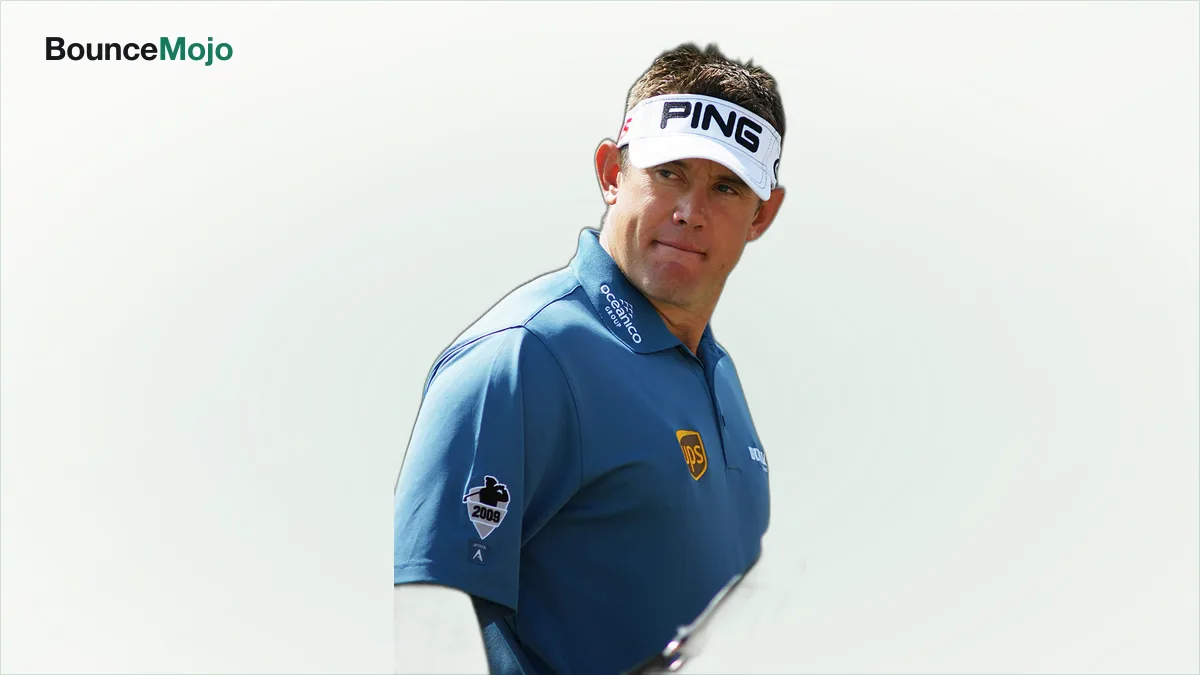
Most people remember Lee Westwood as the golfer who kept knocking on the door of greatness. The truth is more complicated, and more admirable, than that.
Here’s what most people miss: Westwood became one of the richest and most respected players in the game precisely because he never let the missing major define him.
The Myth vs. The Reality
The myth is simple and a little cruel: Lee Westwood, the golfer who couldn’t win the big one. The nearly-man. The talent who came up short when it mattered most.
The reality is far richer.
Here’s the deal: Westwood is one of only a handful of players to reach world No. 1, and he did it in an era stacked with Tiger Woods, Phil Mickelson, and a wave of young stars. He tops the all-time European Tour money list. He played in a record-tying number of Ryder Cups. That is not the record of a failure.
The major that got away is real. But it sits next to a career most professionals would trade almost anything for.
You might be wondering: how does a kid from a small English town end up ruling the golf world for even a week? To understand that, you have to go back to Worksop.
The World That Made Lee Westwood
Westwood was born in 1973 in Worksop, Nottinghamshire, a working-class corner of England better known for coal and cricket than golf.
This wasn’t a country-club upbringing. Golf in England in the 1980s was still shaking off its stuffy image, and a talented kid from the Midlands had to earn every rung. Westwood came up through the amateur ranks the hard way, on public courses and regional competitions.
Now: the timing mattered. He turned pro in 1993, just as European golf was producing a golden generation and just before Tiger Woods would redefine the sport’s ceiling. Westwood would spend his entire career measured against that impossible new standard.
Think about it: he chose the toughest possible era to try to become the best. That backdrop shaped everything, the rivalries, the pressure, and the majors that slipped away.
The Crucible: Early Life and the Climb
The Environment That Shaped Him
Westwood learned the game as a teenager and improved fast, showing the ball-striking talent that would later be his trademark. He was never the flashiest athlete or the longest hitter. What set him apart was control, a repeatable swing, and a temperament suited to the grind of tour golf.
Let that land. He wasn’t a prodigy handed everything. He was a craftsman who built his game piece by piece.
By his mid-20s, Westwood was winning across Europe and Asia, announcing himself as one of the continent’s brightest hopes. The wins piled up. The world ranking climbed.
His breakthrough win came at the 1996 Volvo Scandinavian Masters, and from there the trajectory pointed straight up. He won across continents, from Europe to Asia to the United States, and by 2000 he had topped the European Tour’s Order of Merit, the season-long money title, ending a long stretch of dominance by more established stars. He looked like the golfer who would carry European hopes into the new century.
Here’s the truth: the rise looked unstoppable, right up until it stopped.
The Catalyst
Around 2001 and 2002, something broke. Westwood’s form collapsed. His swing deserted him, his confidence cratered, and by 2003 he had fallen out of the world’s top 250, a stunning drop for a player who had been near the summit.
For many pros, that’s the end. A slump that deep in your late 20s often means fading into journeyman status.
It gets better, though, because what Westwood did next would define him more than any single tournament. He refused to quit, went back to basics, and started the long climb back up. And where that climb ended would shock everyone who had written him off.
The Key Players
No golfer rebuilds alone, and Westwood’s story runs through a few key figures.
Chubby Chandler. For much of his career, Westwood was managed by the influential agent Chubby Chandler, whose ISM stable helped shape the commercial side of his career and connect him to the wider world of elite golf.
His family. Westwood’s father, John, introduced him to the game and remained a steadying presence. Golf was a family affair, and that grounding helped him weather the slump years without walking away.
Tiger Woods. Not a mentor but a measuring stick. Westwood spent his prime chasing Woods, and the ultimate proof of his comeback was ending Tiger’s long run at world No. 1 in 2010. Their careers were forever linked as the ranking’s fortunes shifted, a rivalry that mirrors the wider richest golfers story of who ruled which era.
His Ryder Cup teammates. In team golf, Westwood found a stage where he consistently delivered, forming partnerships and a leadership role that outlasted his individual peak.
By the way, every one of these relationships points at the same theme: a player who was better inside a supportive circle than as a lone hero. That mattered when the biggest individual prizes kept slipping away.
The Turning Point
The Pinnacle
Westwood’s peak was that comeback. After bottoming out in 2003, he rebuilt his game and stormed back up the rankings through the late 2000s.
The summit came in 2010, when he reached world No. 1, ending Tiger Woods’ dominant reign. For a player who had fallen out of the top 250 just seven years earlier, it was one of the great resurrections in golf. As his own net worth breakdown shows, that sustained excellence also made him the all-time European Tour money leader.
The Price
Here’s the kicker: the one thing that summit never delivered was a major.
Westwood came agonizingly close, again and again. Runner-up finishes, third places, final-round leads that slipped away at Augusta, the Open, and the U.S. Open. He had more top-three major finishes than most champions ever manage, without ever getting his hands on a trophy.
That is the price he paid for competing in the Tiger era at the highest level. And it left a question that would follow him for the rest of his career: would he ever be judged a great, or just a nearly-man? His answer, years later, came from an unexpected and controversial direction.
The Unvarnished Truth
Westwood’s flaws were the ordinary human kind, and he was honest about them.
He has spoken openly about the mental toll of the majors that got away, about the pressure of final rounds and the weight of expectation. He is not a golfer who hides behind clichés. When he played poorly, he said so.
Now: some critics questioned whether he wanted it badly enough, whether a more ruthless streak might have converted one of those near-misses into a win. Westwood mostly shrugged that off, pointing to the length and consistency of his career as the real measure.
He also had the streaky-putter’s curse. For much of his career, Westwood was widely regarded as one of the finest ball-strikers in the world, tee to green, yet his putting could betray him at the worst moments. In a sport where majors are so often decided on the greens, that single weakness may have been the difference between a great career and a legendary one. Westwood tried numerous fixes over the years, from grip changes to different putters, an honest, sometimes public search for the missing piece.
The most honest thing about Westwood is that he made peace with the gap in his résumé. He never pretended the missing major didn’t sting. He just refused to let it erase everything else he built.
Controversies and Criticisms
Westwood’s later career put him at the center of golf’s biggest fight.
The LIV Golf move. In 2022, Westwood joined the Saudi-backed LIV Golf league, giving up his membership on the traditional tours. The decision drew heavy criticism, tied to questions about the source of the money and the fracturing of the sport. Westwood defended it as a business choice at the tail end of his career.
The “no major” narrative. For two decades, Westwood faced the same relentless storyline. Some felt it unfairly diminished a great career. Others saw it as the fair price of never closing the deal.
The Ryder Cup captaincy question. His LIV move complicated his path to a future European Ryder Cup captaincy, a role many felt his record had earned. That tension became part of the wider debate over how the golf establishment would treat LIV defectors.
The world ranking freeze-out. Because LIV Golf events did not award official world ranking points, Westwood and his fellow defectors saw their rankings tumble regardless of how they played, effectively locking them out of major championship qualification routes. Critics used the slide as evidence the LIV move damaged their competitive standing, while Westwood argued the ranking system itself had become unfair to an entire tour of players.
The generational role model debate. As one of the most experienced and respected figures in the game, Westwood faced criticism that his decision sent the wrong message to younger players weighing loyalty against money. He countered that every professional has the right to earn from their career as they see fit, a stance that divided fans and fellow pros alike.
What We Can Learn From Lee Westwood
Navigating Hard Times
The first lesson is about slumps: how far you fall doesn’t decide how the story ends. Westwood dropped out of the world’s top 250 and could have faded away. Instead he rebuilt and climbed all the way back to No. 1. A collapse is not a conclusion.
But here’s the truth his career makes plain: consistency outlasts brilliance. Westwood wasn’t the most gifted player of his era, yet he was near the top of it for longer than almost anyone, which put him among the wealthiest names on our richest golfers list.
The Success Blueprint
If you want the replicable part, it’s this: Westwood won by controlling what he could control. A repeatable swing, a level head, and relentless showing up. He didn’t rely on one magic season.
That’s transferable. The lesson isn’t “wait for a hot streak.” It’s “build a system so solid it produces results year after year, even without the fireworks.” That approach made him rich and respected.
Becoming Better
The deepest lesson is about defining success on your own terms. The world defined Westwood by the major he never won. He chose to define himself by the career he actually had, one of longevity, resilience, and remarkable consistency.
In other words, he refused to let a single missing trophy poison a lifetime of achievement. That quiet self-acceptance may be the most useful thing about his whole story.
Final Verdict
Lee Westwood is one of the finest golfers of his generation, and “finest” matters more here than “champion,” though he came close to being both. A former world No. 1, the all-time European Tour money leader, and a Ryder Cup stalwart, all built the hard way from a working-class start.
And here’s the twist that reframes everything: the man remembered for the majors he lost quietly won the longer game, staying elite for decades and cashing in one final time when younger players had already retired. The full picture of that fortune lives in his net worth breakdown, and it tells a simple truth: the golfer who never won the big one won almost everything else that matters.
Shop Lee Westwood on Amazon
Books, audiobooks, merch and more, handpicked for fans.
As an Amazon Associate we earn from qualifying purchases.
Frequently Asked Questions
Why is Lee Westwood famous?+
Westwood is famous for being one of golf's finest players, a former world No. 1 and the all-time European Tour money leader, yet one who never won a major championship despite dozens of chances.
How many majors did Lee Westwood win?+
None. Westwood recorded numerous top-three finishes in majors and led several going into the final round, but never closed one out, making him one of the great nearly-men in golf history.
When was Lee Westwood world No. 1?+
Westwood first reached world No. 1 in 2010, ending Tiger Woods' long reign at the top and completing a remarkable comeback from a career slump earlier in the decade.
Did Lee Westwood join LIV Golf?+
Yes. Westwood joined LIV Golf in 2022, giving up his membership on the traditional tours and drawing criticism, but banking significant guaranteed money late in his career.
Where is Lee Westwood from?+
Westwood was born in Worksop, Nottinghamshire, England in 1973, and learned the game as a teenager before turning professional in 1993.
Want the money side of the story?
Read Lee Westwood's Full Net Worth Breakdown →Shop Lee Westwood on Amazon
Books, audiobooks, merch and more, handpicked for fans.
As an Amazon Associate we earn from qualifying purchases.