Lee Trevino Biography: The Raw Truth Behind the Merry Mex
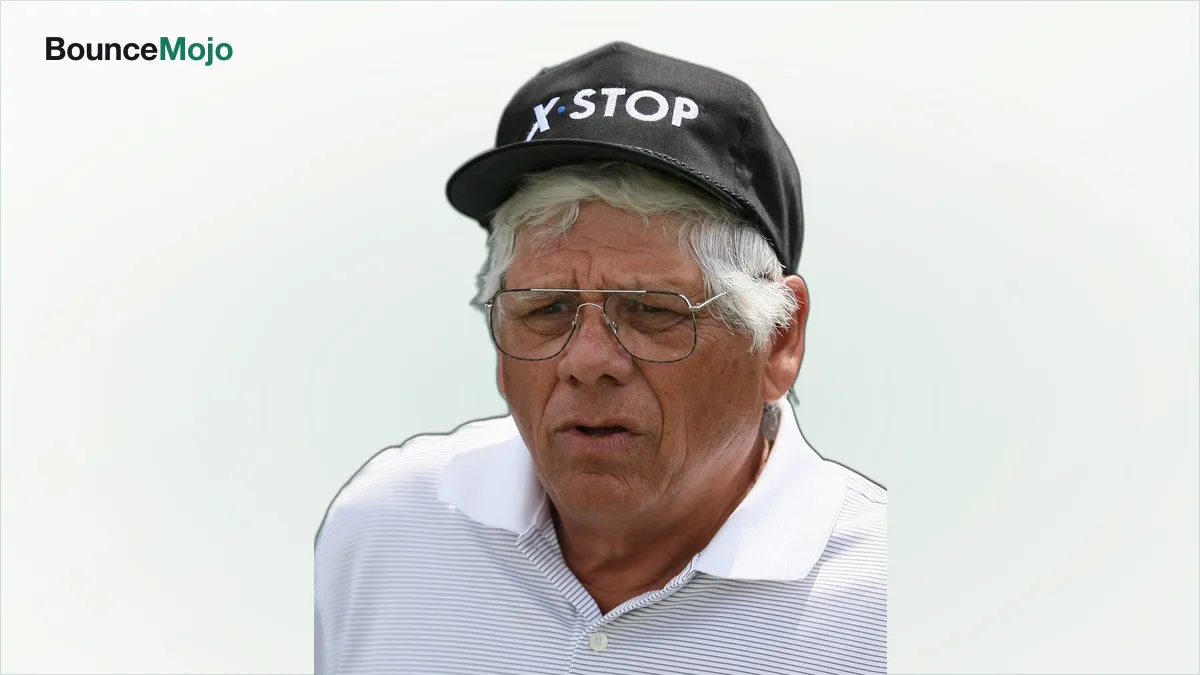
The jokes, the fast talk, the swing that looked all wrong yet worked every time. That’s the Lee Trevino golf fans adored.
Here’s what most people miss: the constant humor was armor, built over a childhood so poor most people can’t imagine it. The laughter hid a fighter.
The Myth vs. The Reality
The myth is easy. Lee Trevino is the funny one, the Merry Mex, the wisecracking showman who made golf look like a comedy routine.
The reality is far tougher.
Here’s the truth: behind every joke was a man who grew up in a four-room house with no running water, no electricity, and no father. The humor was survival, a way to disarm a country-club world that never expected someone like him to walk in the front door, let alone win. Trevino laughed because he had learned early that the alternative was worse.
Now think about how the golf world first met him. Most fans point to the 1968 U.S. Open, where a total unknown beat the field. What they may not realize is the odds he’d already beaten just to be standing there.
Those odds started in the cotton fields.
The World That Made Lee Trevino
Lee Buck Trevino was born on December 1, 1939, in Dallas, Texas, into poverty that would define him. His family lived in four rooms with no plumbing and no electricity. His mother, Juanita, worked as a housekeeper. His grandfather, Joe, dug graves for a living.
He never knew his father, who left when Lee was small.
This was Dallas in the 1940s, a hard, segregated place for a poor Mexican American boy. Trevino started working the cotton fields at age five. School came second to survival, and he left formal education early to help support the family.
But there was a golf course nearby, and that changed everything. An uncle gave him a few balls and an old club. Trevino was hooked.
Here’s the kicker: the boy who couldn’t afford lessons would build a swing so unusual that trained professionals laughed at it, right up until it started beating them.
The Crucible: Early Life and the Climb
The environment that shaped him
Golf became Trevino’s escape and his obsession. He caddied at the Dallas Athletic Club and snuck onto nearby courses to practice, learning entirely by feel and repetition.
With no coach to correct him, he developed a swing that broke every rule: a wide stance, a closed clubface, and a flat, baseball-style move through the ball. By traditional standards he did everything wrong. Somehow it produced one of the most reliable ball flights the game has ever seen, a low, controlled fade that could thread any fairway.
He hustled for money games to survive, once famously playing with a taped-up soda bottle instead of a club. Poverty made him fearless. When you grow up with nothing, a missed putt doesn’t scare you.
The catalyst
At 17, Trevino enlisted in the Marine Corps, serving four years as a machine gunner. The discipline sharpened him, and the base golf tournaments gave him competition.
After his discharge in 1960, he chased the pro game in the only way open to him: through public courses, money matches, and grinding qualifiers. He turned pro and clawed his way toward the tour.
Then came 1968. At Oak Hill, a virtual unknown named Lee Trevino won the U.S. Open, becoming the first player to shoot all four rounds under par in the event. The country-club world had a new star, and he didn’t look, sound, or swing like any champion before him.
Want to know how he handled sharing an era with golf’s greatest names? He didn’t blink.
The Key Players
You cannot tell the Lee Trevino story without a few names.
Jack Nicklaus is the first. Trevino tangled with the Golden Bear repeatedly, and famously beat him in playoffs and down the stretch at majors, including a legendary 1971 U.S. Open playoff win. Trevino refused to be intimidated by the best player alive, and his willingness to needle and joke with Nicklaus became part of golf lore. The two became lasting friends.
Arnold Palmer and the giants of that generation are the second. Trevino arrived in an era stacked with legends, and he beat them not with pedigree but with grit and a swing nobody could copy.
Claudia, his wife, is the third, the steady presence off the course through the ups, the injuries, and the long years of travel that a golf life demands.
Here’s the deal: everything Trevino built was about to be tested by a bolt of lightning, literally.
The Turning Point: Triumph and Its Hidden Cost
The pinnacle
Start with the triumph, because it was enormous for a man who started with nothing.
After that 1968 U.S. Open breakthrough, Trevino became one of the dominant players of his time. He won six major championships: the U.S. Open in 1968 and 1971, the Open Championship in 1971 and 1972, and the PGA Championship in 1974 and 1984. He collected 29 PGA Tour titles in all.
He beat the best, charmed the galleries, and became a beloved global figure. For a kid who once picked cotton, standing on the 18th green at the home of golf as champion was a triumph almost beyond words.
The price
Now the cost, and it struck without warning.
At the 1975 Western Open near Chicago, Trevino was struck by lightning as he sat beside the green during a storm. The strike injured his spine. He required surgery to remove a damaged disk, and back problems dogged him for the rest of his career.
The injury robbed him of some of his prime years and forced him to fight through pain to keep competing. A body that had carried him from the cotton fields to golf’s summit was now working against him.
You might be wondering how a man keeps his sense of humor after all that. The answer reveals the toughness under the comedy.
The Unvarnished Truth
Let’s not sand off the hard parts.
Trevino’s relentless hustle and outsider chip meant he sometimes clashed with the golf establishment. He was blunt, he could be prickly, and he didn’t always play the diplomat. He famously skipped certain events and spoke his mind in ways that ruffled the buttoned-up world he’d broken into.
Money worried him deeply, a lifelong scar from growing up poor. He has spoken openly about the fear of losing it all, a fear that drove him to keep working long after most champions retire.
Here’s the truth: the constant joking was partly a shield. Trevino used humor to control the room and keep the world at a distance, a habit forged by a childhood where he was always the outsider looking in.
That same drive, though, is exactly what made his second act possible.
Controversies and Criticisms
For all his popularity, Trevino wasn’t universally beloved by the golf hierarchy.
Some in the establishment found his showmanship undignified for a sport that prized quiet tradition. Trevino talked during rounds, joked with fans, and refused to conform, which rubbed purists the wrong way.
He also had tension with certain events and organizers over the years, sometimes tied to appearance money and scheduling. And his outspoken nature meant he occasionally landed in the news for what he said rather than how he played.
But most of the criticism amounts to this: he was too loud, too different, too self-made for a sport used to privilege. In hindsight, those are the exact traits that made him a hero to millions who had never seen themselves in a golfer before.
Here’s the thing though: none of it dents the legacy. Because Trevino changed who golf was for.
What We Can Learn From Lee Trevino
Navigating the darkness
When you start with nothing, you learn that fear is a luxury.
Trevino turned poverty into fuel. No father, no money, no coach, and he still became one of the greatest players alive. The lesson isn’t “work hard.” It’s that a lack of options can become a strange kind of freedom, because a man with nothing to lose plays without fear.
He survived a lightning strike, chronic back pain, and an establishment that didn’t want him, and he answered all of it with a smile and another win.
The success blueprint
Now the part that built the fortune.
Trevino never relied on one income. He won on tour, then dominated the Senior Tour, then earned as a broadcaster, teacher, and pitchman. He made his personality an asset and kept working into his later years. That refusal to coast is why he ranks among the richest golfers of his generation. The full money breakdown lives in our Lee Trevino net worth analysis, and you can see where he sits among the richest athletes overall.
In other words, the man who grew up with nothing made sure he’d never have nothing again.
Becoming better
The deepest lesson is about self-belief. Trevino was told his swing was wrong, his background was wrong, his manner was wrong. He trusted himself anyway and rewrote what a champion could look like.
So what’s the final word on the Merry Mex?
Final Verdict
Lee Trevino is one of the most important figures golf has ever produced, and not only for the trophies.
On the course, he was a six-time major champion who beat the greatest players of his era with a swing nobody could teach. Off it, he broke barriers, opening the game to people who had never seen themselves in it, and he turned a childhood of poverty into a lasting fortune through sheer will and charisma.
Here’s the bottom line: the clown act was never the whole story. Behind every joke was a self-made fighter who refused to be counted out.
Trevino’s life is the ultimate proof that talent plus grit can beat privilege every time. Anyone who dismisses him as just the funny golfer has missed the toughest, most inspiring story in the game.
Shop Lee Trevino on Amazon
Books, audiobooks, merch and more, handpicked for fans.
As an Amazon Associate we earn from qualifying purchases.
Frequently Asked Questions
Where did Lee Trevino grow up?+
Lee Buck Trevino was born on December 1, 1939, in Dallas, Texas, and raised in a four-room house with no running water or electricity by his mother and gravedigger grandfather.
How did Lee Trevino learn golf?+
He was almost entirely self-taught, working as a caddie and sneaking onto Dallas courses to practice an unorthodox swing that traditional pros openly doubted.
How many majors did Lee Trevino win?+
He won six major championships: two U.S. Opens (1968, 1971), two Open Championships (1971, 1972), and two PGA Championships (1974, 1984).
Was Lee Trevino struck by lightning?+
Yes. He was struck by lightning at the 1975 Western Open near Chicago, injuring his back so badly that he needed surgery and battled the effects for years.
What is Lee Trevino's nickname?+
He is known as the 'Merry Mex', a nod to his Mexican American heritage and his constant joking and showmanship on the course.
Want the money side of the story?
Read Lee Trevino's Full Net Worth Breakdown →Shop Lee Trevino on Amazon
Books, audiobooks, merch and more, handpicked for fans.
As an Amazon Associate we earn from qualifying purchases.