Kylian Mbappe Biography: The Bondy Kid Who Rewired French Football
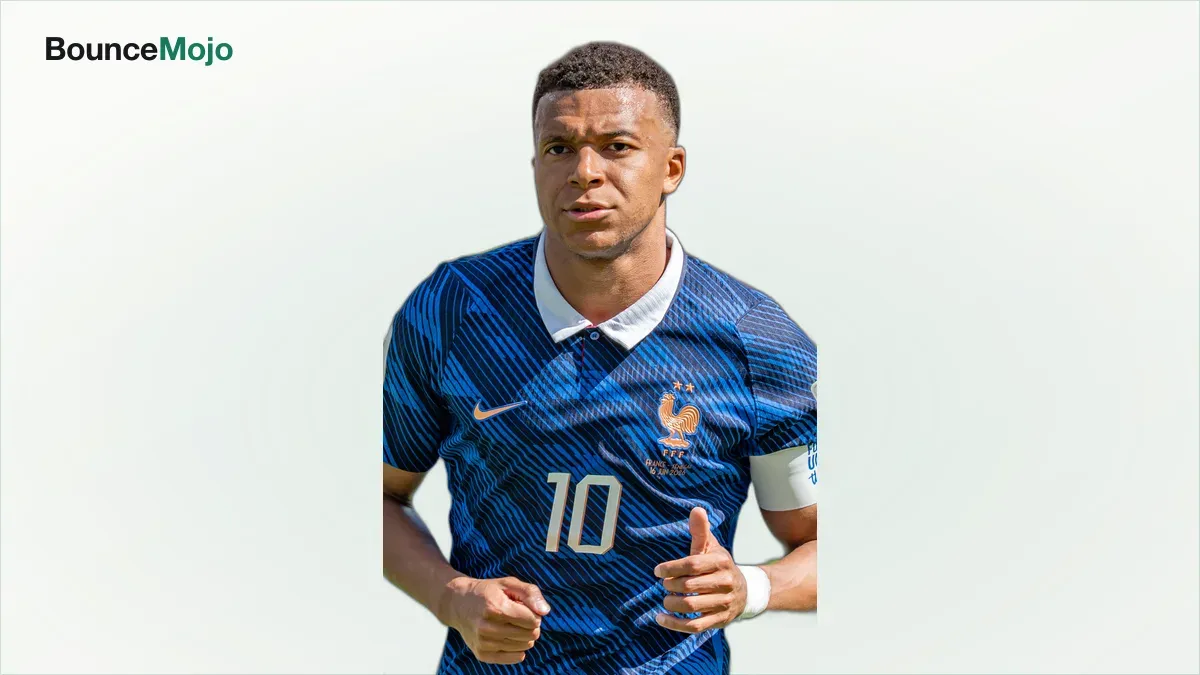
When Kylian Mbappe sat down to stare Paris Saint-Germain and Real Madrid out of a decision, the person across the table from those clubs was often his mother.
That is the detail the highlight reels leave out. Everyone knows the fastest man in football. Fewer notice that the whole career has been run like a closely held family business, deliberately, since he was a child.
His Mother Runs the Negotiations
Fayza Lamari is a former professional handball player. She took the lead on her son’s business affairs and contract negotiations and kept the decisions inside the family rather than handing them to an outside super-agent. Through every standoff with PSG and every round of the Real Madrid saga, she was frequently the one in the room.
His father, Wilfried, was a coach at AS Bondy and his son’s first coach. He supplied the technical foundation and the discipline, and the traits that keep Kylian grounded in public trace straight back to that training pitch.
So while other kids learned the game on instinct, Kylian grew up inside it, absorbing tactics at the dinner table and treating elite sport as the family trade. That is the difference between the myth and the record. The myth says a once-in-a-generation athlete glided from a Paris suburb to World Cup glory as though it were destiny. The talent was real. So was the plan behind it, and almost nothing was left to chance.
Bondy Is Not a Place the World Watches
He was born in 1998, the year France won its first World Cup on home soil, and grew up in Bondy, a working-class commune in the Seine-Saint-Denis department northeast of Paris.
The region has become one of the greatest talent factories in world football, producing star after star from immigrant and working-class families. The estates breed a particular kind of player: quick, streetwise, hungry, sharpened on hard pitches in tight games against older kids. Bondy was a place people escaped from if they could, and football was one of the few clear exits. Everyone knew it, which gave the local game an intensity you do not find in comfortable suburbs.
He started at AS Bondy at six. Teammates and coaches remember a boy who was not only gifted but obsessed, watching matches endlessly, mimicking Cristiano Ronaldo, whose posters covered his room and whose relentless professionalism he has openly chased ever since, demanding more of himself than anyone demanded of him.
At 11 or 12 he passed through trials and entered Clairefontaine, the national training center that shaped much of France’s golden generation. Scouts across Europe already knew his name, and Real Madrid, the club he loved as a boy, hosted him for a visit as a preteen.
The talent was never the question. The question was navigating a maze of clubs all desperate to sign him, because a wrong move early can stall even the brightest career.
Sixteen at Monaco, Nineteen With a World Cup
The breakthrough came at Monaco. He made his senior debut at 16 and exploded into the 2016-17 season, tearing through defences with a speed and coolness that stunned seasoned professionals. Monaco won the French league and reached the Champions League semi-finals, a teenager scoring against Europe’s best.
In 2017 he joined Paris Saint-Germain, first on loan, then in a deal that made him one of the most expensive teenagers in history. He was going home to Paris as a superstar before he had turned 19.
Then Russia. At the 2018 World Cup he terrorized defences, scored a stunning double against Argentina in the last 16, and netted in the final against Croatia. France won it all, and Mbappe became the first teenager to score in a World Cup final since Pele six decades earlier. Didier Deschamps had trusted a teenager with a starting role and built a team around his pace, and the faith made a champion at 19.
Four years later, in the 2022 final against Argentina, he did something rarer still: a hat-trick in a World Cup final, dragging France back from the brink before they lost on penalties. Even in defeat it cemented him among the greatest big-game players of his era. At club level he became PSG’s all-time leading scorer and a serial Ligue 1 top scorer.
He had also been labelled the next great French star before playing a senior match, and had to deliver on that hype in front of a country that expected everything. That is not effortless. It is a weight most teenagers would buckle under.
The 2022 Extension, and Then He Left Anyway
For years his contract situation dominated European football. Every decision became a national event, debated on front pages, with no move, no comment and no injury going unexamined.
He flirted with Real Madrid, then signed a lucrative PSG extension in 2022 that reportedly gave him enormous influence over club decisions, then eventually left anyway, departing on a free transfer to Real Madrid in 2024. Critics accused him of putting personal power above the club. His long, public standoffs over contracts, image rights and control frustrated fans and executives alike. Some saw a young man protecting his interests; others saw a player holding a giant club hostage to his own timeline.
None of that makes him a villain, and it is not separate from how he was raised. It is the same instinct his family instilled, take control of your own career and never let anyone else dictate your value, scaled up to the biggest clubs in the world until it produced drama.
The Image-Rights Standoff With the French Federation
The same principle put him on the wrong side of his own national federation.
Mbappe has clashed with the French Football Federation over image rights, at one point declining to take part in sponsor activities he disagreed with. His argument was that players should control how their image is used. Sponsors and officials did not always agree.
Those fights were not ego. They were strategy, and they follow directly from understanding early that a modern athlete is a business.
The Armband and the “Too Much Power” Argument
As his influence grew, some commentators argued he had accumulated more control than any player should hold over a club and a national setup. Supporters countered that he was simply the most valuable asset in the building and deserved a say.
Named France captain, he has faced scrutiny over his leadership during tournament setbacks, the flip side of being handed responsibility young. He has also drawn criticism for occasional friction with teammates and coaches over his role and his freedom on the pitch. He wants the ball, the responsibility and the spotlight, and that hunger can rub against team structures.
The honest summary is that his greatest strength and his most divisive trait are the same: an absolute refusal to be managed by anyone but himself and his family.
He Did Not Just Escape the Estate
The replicable part of this story is not “have a mother who was a professional athlete.” It is that he and his family refused to outsource the big decisions, so a rare gift was never wasted on the wrong club, the wrong deal or the wrong advisor. Keep the inner circle small and aligned, and put people around you whose interest is your long-term one. That discipline is what separates a lasting career from a flash in the pan, and it is what puts him among the elite on our richest soccer players ranking.
Talent gets you noticed. Control is what lets you keep the value you create, and that single idea explains almost every decision he has made off the pitch. The full mechanics of the fortune live in his net worth breakdown, and they tell the real story: the fastest player on the pitch has been just as fast off it, building an empire while most of his peers were still learning to negotiate a boot deal.
The Bondy kid turned himself into a business that could outlast his legs. A player this deliberate, this early, is rarely done surprising you.
Shop Kylian Mbappe on Amazon
Books, audiobooks, merch and more, handpicked for fans.
As an Amazon Associate we earn from qualifying purchases.
Frequently Asked Questions
Where did Kylian Mbappe grow up?+
Kylian Mbappe grew up in Bondy, a working-class suburb northeast of Paris. His father Wilfried coached at the local club AS Bondy, and Kylian played there from age six before joining the famous Clairefontaine academy.
How old was Mbappe when he won the World Cup?+
Mbappe was just 19 when France won the 2018 World Cup in Russia. He scored in the final against Croatia, becoming the first teenager to score in a World Cup final since Pele in 1958.
Why did Kylian Mbappe leave PSG?+
After years of contract drama, Mbappe left Paris Saint-Germain on a free transfer to Real Madrid in 2024, fulfilling a childhood dream of playing for the club he supported as a boy.
Who manages Kylian Mbappe's career?+
Mbappe's affairs are run largely by his family, especially his mother Fayza Lamari, a former handball player who handles his business and contract negotiations rather than a traditional super-agent.
Want the money side of the story?
Read Kylian Mbappe's Full Net Worth Breakdown →Shop Kylian Mbappe on Amazon
Books, audiobooks, merch and more, handpicked for fans.
As an Amazon Associate we earn from qualifying purchases.