Kyle Busch Biography: The Making of NASCAR's 'Rowdy' Villain
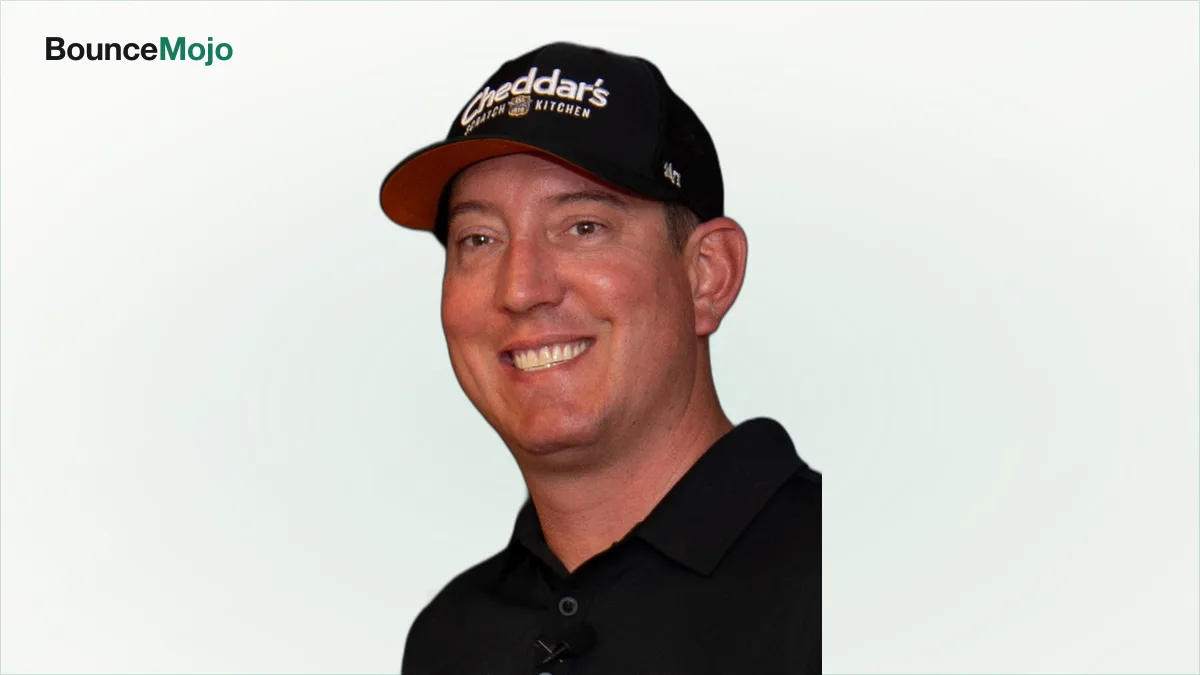
Everybody remembers the celebrations and the confrontations. Almost nobody remembers the Las Vegas kid who learned to race in his father’s garage before he could legally drive on the street.
Here’s what most people miss: the same fearless aggression that made Kyle Busch NASCAR’s most hated driver is the exact thing that made him one of its greatest winners.
The Myth vs. The Reality
The myth is simple. Kyle Busch, the arrogant hotshot, the villain in the black hat, winning everywhere and rubbing everyone’s nose in it. A driver you either love or love to hate, with no middle ground.
That version is real. It’s also incomplete.
Here’s the truth: underneath the villain persona is a relentlessly hard-working racer from a modest Las Vegas family, a kid who learned car craft from his father and his older brother, and a businessman who turned every ounce of that notoriety into a brand. The “cocky kid” story ignores how much grind and skill it takes to become the winningest driver across NASCAR’s national divisions.
Think about it. We like the villain because it’s a clean story. But Busch’s edge wasn’t attitude. It was talent married to obsession, forged in a family that lived and breathed racing.
Now, that family didn’t produce a champion by accident. It took a specific place, a specific set of parents, and an older brother who blazed the trail first.
The World That Made Kyle Busch
To understand Busch, you have to understand the Las Vegas racing family he came up in.
He was born on May 2, 1985, the younger son of Tom and Gaye Busch. This wasn’t a wealthy motorsport dynasty. His father worked on cars and fostered a household where racing was the family language. Kyle’s older brother, Kurt, was already chasing a stock-car career, and Kyle grew up in his shadow and his slipstream, learning the craft early.
The era mattered too. Busch came of age as NASCAR was booming into a national sport with big television deals and big money, when a talented young driver could realistically dream of turning wheel time into a fortune. The pipeline from local tracks to the national series was widening, and Las Vegas produced two brothers ready to climb it.
Here’s the deal: with a father who understood engines and a brother already racing at a high level, Kyle had a built-in apprenticeship most kids could only dream of. He was competitive in local and regional cars while still a teenager.
But talent that raw needs the right team to become a champion. And finding it took Busch a few hard lessons first.
The Crucible: Early Life and the Climb
The environment that shaped him
Two things defined young Kyle Busch: an obsession with winning and a family that made racing normal.
He was a prodigy. As a teenager he was already competing in NASCAR’s development and touring series, showing the raw speed that would define his career. He was so young and so fast that NASCAR briefly had to grapple with just how early to let him race at the top levels.
That early success came with friction. Busch’s blunt, uncompromising personality rubbed veterans the wrong way, and he developed a reputation as brash before he’d fully proven himself. For a kid climbing fast, that meant winning respect the hard way, one result at a time.
You might be wondering: how does a driver that divisive become so successful? The answer is that Busch never softened his edges to please people. He channeled the friction into fuel. The doubters and the boos became motivation, and the aggression that made him unpopular also made him nearly impossible to beat when the car was right.
By his early twenties he was a full-time Cup driver, winning races and announcing himself as a generational talent.
The catalyst
The catalyst was landing at Joe Gibbs Racing.
After beginning his Cup career with Hendrick Motorsports, Busch moved to Joe Gibbs Racing, one of the sport’s premier organizations. The pairing was combustible in the best way. Gibbs gave Busch elite equipment, and Busch gave Gibbs a driver who could win in anything, at any level, on almost any weekend.
Here’s the kicker: at JGR, Busch became a machine across all three national series, piling up wins in Cup, Xfinity and Trucks until he owned the all-time record for combined national-series victories. He wasn’t just a Cup driver. He was the sport’s most complete winner.
The kid from Las Vegas had found the team that fit his talent. But his defining triumph would come only after a defining setback.
The Key Players
No career this big is a solo act, and Busch was surrounded by people who shaped his path.
Start with Kurt Busch, his older brother and the family trailblazer. Kurt reached the Cup Series first and won the 2004 championship, proving a Busch from Las Vegas could conquer NASCAR. Kyle followed the road his brother paved, and the two became one of the sport’s most notable sibling stories.
Then there’s Joe Gibbs, the Hall of Fame NFL coach turned team owner, who gave Busch the platform and the equipment to win championships. Their partnership defined the most successful stretch of Busch’s career.
And there’s Samantha Busch, his wife and business partner. She helped turn the “Rowdy” persona into a family of brands and a charitable foundation, becoming central to the business side of Kyle’s life.
There was also Richard Childress, who later brought Busch into his organization, keeping him in front-line equipment as his career matured.
Now: surround yourself with a trailblazing brother, an elite team and a business-minded partner, and raw talent becomes an empire. Busch was about to prove it, and his toughest test came first.
The Turning Point
The pinnacle
The pinnacle came in 2015, and it arrived through adversity.
Early that season, Busch suffered a serious crash that broke his leg and foot, sidelining him for the opening stretch of the year. Most drivers would have written the season off. Busch instead mounted one of the great comebacks in NASCAR history, winning multiple races after his return, qualifying for the championship, and taking his first Cup Series title.
Then he did it again. In 2019 he won a second Cup championship, cementing his place among the sport’s elite and confirming that his first title was no fluke.
Across his career the totals became staggering: two Cup titles and a record number of national-series wins, spread across Cup, Xfinity and Trucks. Few drivers in history have won as broadly.
Here’s the truth: he became one of the winningest drivers ever, and the crowd still booed. And he learned to make that pay.
The price
Because the same intensity that won the titles made Busch a lightning rod.
For years he was cast as NASCAR’s chief villain, jeered by fans, criticized for on-track incidents and post-race outbursts. The pressure of that constant scrutiny was real, and Busch has acknowledged the toll of racing under a spotlight that was often hostile.
There were on-track feuds and penalties along the way, the kind of friction that comes with a driver who refuses to back down. The reputation preceded him into every garage. That was the price of his no-apologies approach, and Busch decided to own it rather than fight it.
He’d spent his life being told he was too aggressive, too brash. Instead of shrinking, he built a brand on exactly that. The villain edge became the business plan.
The Unvarnished Truth
Busch is not a universally beloved figure, and pretending otherwise misses the point of his story.
He clashed with rivals. He drew penalties and criticism for aggressive moves and heated reactions. For years he was the driver opposing fans most wanted to see lose, and he did little to soften that image.
There’s also the weight of expectation that came with his talent. Being that good that young invited comparisons and scrutiny that would have crushed a less driven competitor, and it took maturity to carry it.
Here’s what’s easy to miss: his greatest strength and his biggest liability were the same trait. The uncompromising aggression that made him nearly unbeatable also made him the sport’s favorite villain. The gift and the grief were one thing.
None of that dims the wins. But it does explain why his business instincts, turning notoriety into a brand, are as impressive as his driving.
Controversies and Criticisms
Busch’s career carried genuine controversy, and it’s worth being honest about it.
His aggressive style produced on-track incidents and rivalries that drew fines and public criticism over the years. His blunt, sometimes prickly demeanor in interviews and after races reinforced the villain reputation and kept him at the center of fan debate.
Some critics argued his attitude overshadowed his talent, that he made himself harder to root for than he needed to be. Others countered that the very intensity fans criticized was inseparable from the greatness they were watching.
Busch has rarely apologized for who he is. He’s leaned into the persona, and while that cost him popularity in some quarters, it built a fan base and a brand that a more polished driver might never have had.
So what does a life like this actually teach the rest of us? A lot, and not the lessons you’d expect.
What We Can Learn From Kyle Busch
Navigating hard times
Busch’s real lesson is about turning hostility into fuel.
When fans booed and critics piled on, he didn’t beg for approval. He used the friction as motivation and let his results do the arguing. When a broken leg threatened his season, he came back and won a championship anyway.
In other words: he refused to let other people’s opinions set his ceiling. He decided what he was worth and went and proved it.
The success blueprint
The blueprint here is about owning your edge and building on it.
Busch was told his aggression made him a villain. Instead of neutering it, he built championships and a brand around exactly that persona, from Rowdy Energy to a merchandise line. He didn’t apologize for who he was. He monetized it.
Want the fuller picture of how that translated into wealth? The full net worth breakdown shows how two titles and a record win total became an $80 million business built on team ownership and consumer brands. And to see how he ranks among the sport’s biggest fortunes, the richest race car drivers list puts it in context.
The deeper takeaway is about authenticity. Busch proved you don’t have to be everyone’s favorite to be one of the best, and that the traits people criticize can be the very ones that make you valuable. The key is refusing to pretend to be someone else.
Which brings us to the final reckoning on the man.
Final Verdict
Kyle Busch is going to be remembered as NASCAR’s great villain, and that sells him short.
Most people will file him under “the driver everyone loves to hate.” A smaller, smarter group will remember something harder to argue with: a Las Vegas kid from a racing family who became the winningest driver across NASCAR’s national divisions, won two Cup titles including one after breaking his leg, and built a family business empire off the very persona that drew the boos.
Here’s the bottom line: the boos made him famous. The winning made him great, and the brand-building made him rich. He turned being disliked into a competitive and commercial advantage almost no one else could pull off.
He is one of the most successful drivers in NASCAR history. He is also proof that you can win on your own terms, refuse to apologize, and build something lasting out of the noise. And in the long run, that unapologetic story is the version worth remembering.
Shop Kyle Busch on Amazon
Books, audiobooks, merch and more, handpicked for fans.
As an Amazon Associate we earn from qualifying purchases.
Frequently Asked Questions
Where did Kyle Busch grow up?+
Busch grew up in Las Vegas, Nevada, the youngest son of Tom and Gaye Busch, in a racing family where his father built engines and his older brother Kurt was already chasing a stock-car career.
How is Kyle Busch related to Kurt Busch?+
Kyle is the younger brother of Kurt Busch, the 2004 NASCAR Cup Series champion. The two grew up racing together in Las Vegas and both reached the top level of NASCAR.
How many NASCAR championships has Kyle Busch won?+
Busch has won two NASCAR Cup Series championships, in 2015 and 2019, along with a record number of wins across NASCAR's Cup, Xfinity and Truck series.
Why is Kyle Busch called 'Rowdy'?+
The nickname 'Rowdy' nods to a character from the film Days of Thunder and fits Busch's aggressive, no-apologies driving style, which made him one of the sport's most polarizing figures.
Who is Kyle Busch married to?+
Busch is married to Samantha Busch, his business partner and co-founder of the family's brands and charitable foundation. The couple have been open about their fertility journey through the Bundle of Joy Fund.
Want the money side of the story?
Read Kyle Busch's Full Net Worth Breakdown →Shop Kyle Busch on Amazon
Books, audiobooks, merch and more, handpicked for fans.
As an Amazon Associate we earn from qualifying purchases.