Kimi Räikkönen Biography: The True Story of Formula 1's Iceman
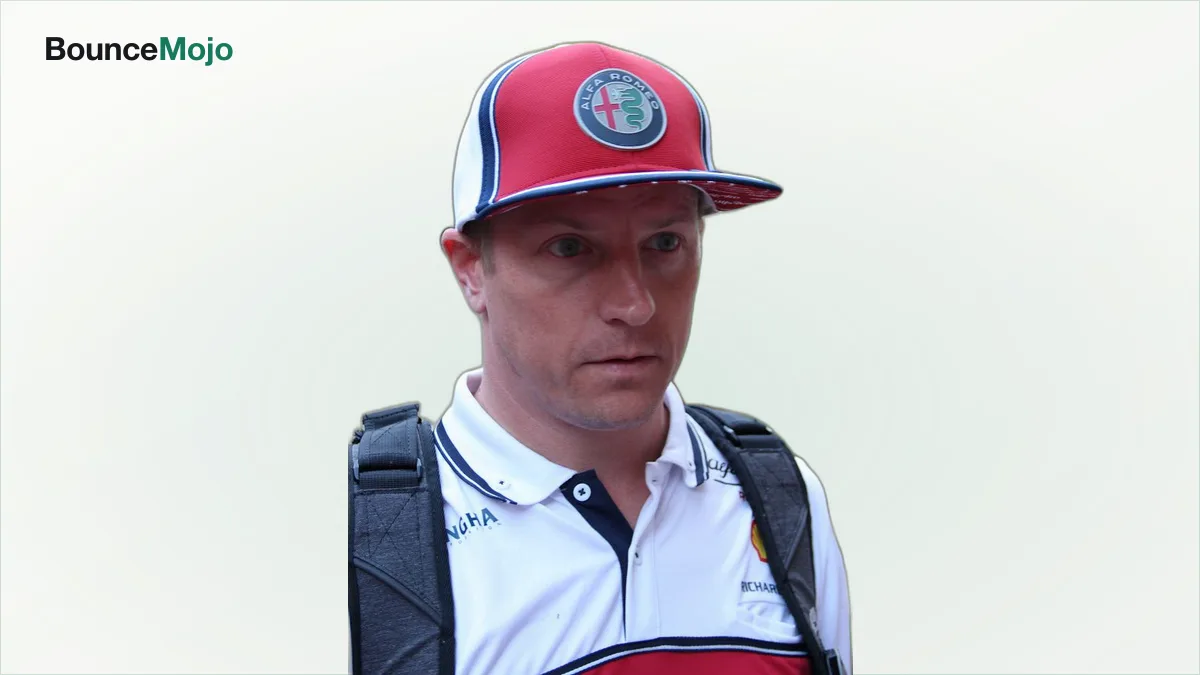
Everybody remembers the ice-cool champion who answered questions in five words or fewer. Almost nobody remembers just how absurd his rise really was, from a near-unknown Finn to the F1 grid in the blink of an eye.
Here’s what most people miss: the thing that made Kimi Räikkönen an icon, his refusal to pretend to be anything other than himself, is the same thing that made him one of the sport’s most beloved and best-paid drivers.
In this story, you’ll discover:
- The quiet Finnish upbringing that produced the coolest head in racing
- The jaw-dropping leap from karting to Formula 1 in barely any time
- The McLaren near-misses that preceded his crowning glory
- The single-point 2007 title that made him a Ferrari legend
- Why he walked away, then came back, entirely on his own terms
- What the Iceman’s story teaches about staying true to yourself
The world title is the headline. The authenticity is the real story. Let’s get into it.
The Myth vs. The Reality
The myth is a meme. Kimi Räikkönen, the Iceman, a monosyllabic robot who feels nothing, drinks a bit, and drives fast. “Leave me alone, I know what I’m doing.” A cult figure built on deadpan one-liners.
That version is real. It’s also a caricature.
Here’s the truth: behind the memes is one of the most naturally gifted drivers of his generation, a man whose sheer speed was so obvious that Formula 1 bent its own rules to let him race. The “funny quiet guy” framing undersells a serious champion, a family man, and a competitor who won a world title in one of the closest finishes the sport has ever produced. The Iceman was never a joke. He was the real thing.
Think about it. We love the meme because it’s easy and fun. But if you stop at the one-liners, you miss a driver who could put a car on pole from almost nowhere, who beat some of the best in the business, and who did it all without ever compromising who he was.
Now, that authenticity didn’t come from nowhere. It came from a specific country, a specific temperament, and a rise so fast it barely gave him time to change. Which raises the question: what makes a driver this fast and this unbothered?
The World That Made Kimi Räikkönen
To understand Räikkönen, you have to understand Finland, a nation that has produced a remarkable number of world-class racing drivers from a small population.
He was born on October 17, 1979, in Espoo, Finland, into a modest family. This was no wealthy racing dynasty. His father worked in construction, and money was tight, but the family supported his early karting however they could.
Finland matters to the story. The country has a deep culture of motorsport, forged on slippery roads and rally stages, and a reputation for producing calm, quick, unshowy drivers. Räikkönen fit that mold perfectly: fast, undramatic, and utterly focused on the driving rather than the show around it.
Here’s the deal: like many Finnish racers, Räikkönen learned car control in demanding conditions and let his speed speak for itself. He wasn’t built for press conferences. He was built for going quick, and in Finland that was more than enough.
But talent from a small country still has to be discovered. What came next was one of the fastest rises the sport has ever seen.
The Crucible: Early Life and the Climb
The environment that shaped him
Two things defined young Kimi Räikkönen: raw speed and a complete indifference to hype.
He came up through karting, showing the kind of natural pace that makes rivals nervous. Money was limited, so results had to do the talking, and they did. He won and impressed his way up the junior ladder, but with far fewer car races than almost any driver who reaches Formula 1.
The environment demanded results without fuss, and that suited him. Räikkönen never courted attention or built a persona. He simply drove, and let the lap times make his case.
You might be wondering: how does a driver with barely any car-racing experience reach Formula 1? The answer is that Räikkönen was so extraordinarily fast that Sauber signed him almost straight out of the junior formulae, and F1’s governing body had to grant a special dispensation for his superlicence because he had raced so few car events. It was almost unheard of.
By 2001 the quiet Finn was on the Formula 1 grid, and he did not look out of place.
The catalyst
The catalyst was Peter Sauber’s leap of faith, and McLaren’s belief that followed.
Peter Sauber took the gamble that defined Räikkönen’s career, putting an almost untested youngster into an F1 car in 2001. Räikkönen repaid him instantly with points on debut and a season of eye-catching pace. His talent was so evident that the sport’s biggest teams came calling within a year.
Here’s the kicker: McLaren signed him for 2002, and there he became a genuine title contender, fighting at the front and nearly winning the championship in 2003 and 2005. The near-misses hurt, but they established him as one of the very best drivers in the world.
The quiet kid from Espoo was now a superstar. And his biggest prize was still to come.
The Key Players
No career this big is a solo act, and Räikkönen was shaped by the people around him.
Start with Peter Sauber, the team boss who gambled on an almost unproven driver and launched one of the great modern careers. Räikkönen’s whole story runs through that first chance.
Then there’s Ferrari, the team that made him a world champion. Signing for the Scuderia in 2007 gave Räikkönen the car to finally win the title that McLaren had let slip, and it cemented his place in the sport’s history.
And there’s Minttu Räikkönen, his wife and the mother of his two children, a steadying presence in a life that, for all the memes, became grounded in family in its later years.
There was also the wider circle of rivals, from Fernando Alonso to Lewis Hamilton, against whom Räikkönen measured himself across two decades at the sharp end of Formula 1.
Now: get the right chance from the right believer, and raw talent can become history. Räikkönen did exactly that. But even a champion’s career has its twists.
The Turning Point
The pinnacle
The pinnacle came in Brazil, at the final race of the 2007 season.
Räikkönen went into the last Grand Prix of the year third in the standings, needing everything to fall his way against the two McLarens of Lewis Hamilton and Fernando Alonso. It did. He won the race, and when the points were counted, the Iceman had taken the world championship by a single point, one of the most dramatic title finishes the sport has ever seen.
It was Ferrari’s crowning driver’s title of that era, and it made Räikkönen a legend of the Scuderia. The quiet Finn who reached F1 with almost no experience was now a world champion.
For a driver so often reduced to a meme, it was a reminder of exactly how good he really was.
The price
Because even a title didn’t make Formula 1’s politics or its cars behave.
After his championship, Räikkönen’s Ferrari years grew frustrating, and the team eventually paid him to leave before his contract was up. Rather than chase another uncompetitive seat, he did something almost no champion does: he walked away from F1 entirely, spending two years racing in the World Rally Championship and even trying NASCAR.
The price of being so uncompromising was that he sometimes stepped away from the sport at his peak. But it was also the source of his appeal. Räikkönen did things his way, or not at all.
He returned to Formula 1 in 2012 and raced on for years more, a testament to how much he simply loved driving.
The Unvarnished Truth
Räikkönen is not a flawless hero, and pretending otherwise misses what makes him human.
His famously blunt, minimalist approach to the media frustrated teams and sponsors who wanted a more polished ambassador. His off-track love of a good time became part of his legend, but it occasionally raised eyebrows in a sport obsessed with image.
There’s also the debate about whether he could have won more. Some argue his laid-back approach, and his willingness to walk away, cost him extra titles. Others counter that his 2007 championship and his years fighting at the front are proof enough of his class, and that his refusal to fake enthusiasm is exactly why fans adore him.
Here’s what’s easy to miss: his greatest strength and his most divisive trait were the same thing. The total authenticity that made him beloved also made him hard to market and, at times, hard to manage. The gift and the friction were one and the same.
None of that dims the title or the talent. But it explains why the Iceman remains one of the most fascinating characters the sport has known.
Controversies and Criticisms
Räikkönen’s career carried its share of debate, and it’s worth being honest about it.
His minimalist media persona drew criticism from those who felt a world champion should do more to promote the sport. Team radio clips of his blunt replies became legendary, delighting fans while occasionally exasperating his engineers.
His reputation for enjoying life away from the track fed plenty of stories over the years, part of a hard-driving, hard-living image that made him a cult hero but also invited scrutiny.
There’s also a fairer debate about his legacy. Critics point to the years in uncompetitive cars and ask whether he underachieved; supporters point to his 2007 title, his longevity, and the fact that he retired as one of the most experienced drivers in F1 history, holding records for race starts. Either way, few dispute his raw talent.
So what does a career like this actually teach the rest of us? More than the memes suggest.
What We Can Learn From Kimi Räikkönen
Navigating hard times
Räikkönen’s real lesson isn’t about winning. It’s about staying true to yourself under enormous pressure.
When Ferrari pushed him out, he didn’t cling on or reinvent himself into something he wasn’t. He went rallying, tried NASCAR, and did what he actually enjoyed, then returned to F1 on his own terms when the time was right.
In other words: he refused to let the sport’s expectations dictate who he was. He built a career, and a life, around authenticity.
The success blueprint
The blueprint here is about letting genuine ability, not image, drive your success.
Räikkönen reached the very top with almost no conventional preparation, purely on speed, and he stayed at the top for two decades by being unmistakably himself. He never manufactured a persona, and that honesty became one of his most valuable assets.
Want the fuller picture of how that translated into wealth? The full net worth breakdown shows how a world title and 20-plus years of elite seats became a fortune of an estimated $250 million. And to see how he ranks among motorsport’s biggest earners, the richest race car drivers list puts it in context.
The deeper takeaway is about authenticity. Räikkönen proved you don’t have to play a character to reach the top. In a sport of polished media training, the man who said the least became one of the most loved.
Which brings us to the final reckoning on the man.
Final Verdict
Kimi Räikkönen is going to be remembered for the wrong reasons by a lot of people.
Most will file him under “the funny quiet one,” the meme, the radio one-liners, the Iceman shrug. A smaller, smarter group will remember something more impressive: a driver so fast that Formula 1 rewrote its rules to let him in, who beat the best in the world to a world title by a single point, and who did it all without ever pretending to be someone he wasn’t.
Here’s the bottom line: the title made him a champion. The authenticity made him an icon. In an era of carefully managed images, Räikkönen’s refusal to perform is exactly what made him unforgettable.
He is a Formula 1 World Champion and one of the most experienced drivers in the sport’s history. He is also living proof that being yourself, completely, is its own kind of greatness. And in the long run, that story, the honest one, is the version worth remembering.
Shop Kimi Räikkönen on Amazon
Books, audiobooks, merch and more, handpicked for fans.
As an Amazon Associate we earn from qualifying purchases.

Frequently Asked Questions
Where did Kimi Räikkönen grow up?+
Räikkönen grew up in Espoo, Finland, in a modest family, and started out in karting before an extraordinarily fast rise through car racing took him to Formula 1.
Why is Kimi Räikkönen called the Iceman?+
Räikkönen earned the nickname 'the Iceman' for his calm, unflappable demeanor under pressure and his famously deadpan, no-nonsense personality both on and off the track.
How did Kimi Räikkönen reach Formula 1 so fast?+
Räikkönen reached F1 with Sauber in 2001 after only a handful of car races, an almost unheard-of leap from karting that required a special dispensation for his superlicence because of how little experience he had.
When did Kimi Räikkönen win the world championship?+
Räikkönen won the 2007 Formula 1 World Championship with Ferrari, clinching the title at the final race of the season by a single point in one of the sport's most dramatic finishes.
What did Kimi Räikkönen do outside Formula 1?+
Räikkönen took a two-year break to race in the World Rally Championship and NASCAR, and he is known for his love of motocross, snowmobiling and other motorsport, including racing under the pseudonym 'James Hunt'.
Want the money side of the story?
Read Kimi Räikkönen's Full Net Worth Breakdown →Shop Kimi Räikkönen on Amazon
Books, audiobooks, merch and more, handpicked for fans.
As an Amazon Associate we earn from qualifying purchases.