Khabib Nurmagomedov Biography: The Undefeated Son of Dagestan
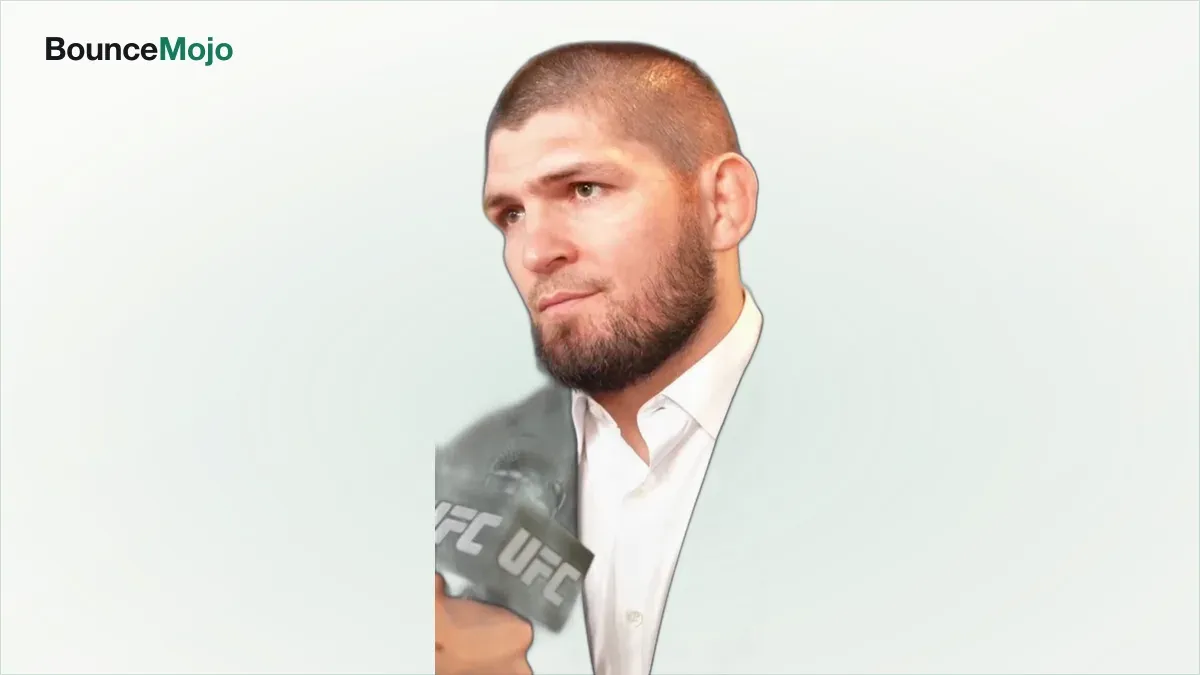
Most people know Khabib Nurmagomedov as the man who mauled Conor McGregor and never lost a fight. That’s the highlight reel, not the heart of it.
Here’s what most people miss: the most dominant fighter of his era walked away at his absolute peak, not because he was beaten, but because a promise to his mother mattered more than any belt.
The Myth vs. The Reality
The myth is the bear. A boy wrestling a cub in the Dagestan snow, a superhuman grappler bred in the mountains to crush everyone he faced. It’s a great image. It’s also a cartoon.
The reality is more human, and more moving.
Here’s the deal: Khabib’s dominance wasn’t mystical. It was the product of one of the most disciplined training cultures on earth and a father who built his son’s entire life around a single, exacting standard. The “unbeatable” wasn’t magic. It was decades of relentless, unglamorous work.
And the “cold assassin” framing misses the man entirely. Khabib is deeply devout, family-centered, and guided by promises and principles that ultimately mattered more to him than money or records. The fighter who looked merciless in the cage retired the moment his heart wasn’t in it.
You might be wondering: how does a kid from a remote Russian village become the most feared fighter on the planet? To understand that, you have to understand where he’s from.
The World That Made Khabib Nurmagomedov
Khabib was born in 1988 in Sildi, a village in Dagestan, a mountainous republic in Russia’s North Caucasus.
Dagestan is one of the great wrestling cultures of the world. Combat sports there aren’t a pastime. They’re woven into identity, honor and survival. The region has produced Olympic wrestlers and world champions in staggering numbers relative to its size. To grow up a boy in Dagestan was often to grow up on the mat.
Now: this was also a hard, sometimes dangerous place, remote, economically tough, shaped by a fierce sense of faith and family. A young man from Dagestan who wanted more had few roads out, and fighting was one of the most respected.
That environment forged Khabib. He didn’t stumble into toughness. He was raised in a culture that treated grappling as a way of life and a father who treated it as a calling.
But before the UFC, there was a boy whose entire world revolved around one man: his father.
The Crucible: Early Life and the Climb
The Environment That Shaped Him
Khabib’s father, Abdulmanap Nurmagomedov, was a decorated combat-sports coach and the central figure of his life. He ran a hard, disciplined program and trained a stable of fighters, with Khabib as his prized student from the earliest age.
The training was brutal by design. Khabib grew up wrestling, then added judo, sambo and eventually mixed martial arts, absorbing a total command of grappling. The famous bear-cub footage came from this world, a childhood built entirely around fighting.
Here’s the truth: everything Khabib became was shaped by his father’s exacting expectations. Abdulmanap wasn’t just a coach. He was the architect of a dynasty, mentoring not only his son but a generation of Dagestani fighters who would follow Khabib to the top of the sport.
That bond, father and son, coach and fighter, is the emotional core of the entire story.
The Catalyst
Khabib turned professional and simply started winning, and never stopped. He carried an unblemished record into the UFC in 2012 and mauled his way up the lightweight division with a grappling-heavy style opponents couldn’t solve.
He wasn’t just beating fighters. He was smothering them, taking them down at will and controlling entire fights. The mystique grew with every dominant performance.
It gets better, and stranger. His rise would collide with the biggest star the sport had ever produced, in a rivalry so charged it spilled out of the cage. But the people around Khabib, above all his father, are the reason the story reads the way it does.
The Key Players
No fighter is built alone, and Khabib’s story is defined by the people closest to him.
Abdulmanap Nurmagomedov. His father, coach and guiding force. Every decision Khabib made ran through his father’s philosophy. Abdulmanap’s death in 2020, from complications related to COVID-19, is the hinge on which the whole story turns.
His mother. After his father’s death, Khabib’s promise to his mother, that he would not continue fighting without his father in his corner, became the reason he retired at the height of his powers.
Conor McGregor. The rival who defined his most famous night. Their bout at UFC 229 in 2018 was the most-bought event in UFC history, and Khabib’s submission win, followed by a brawl that spilled into the crowd, cemented the rivalry. As Khabib’s own net worth story shows, beating McGregor delivered the biggest purse of his career.
Islam Makhachev. His close friend and protege, whom Khabib trained and cornered to a UFC championship, extending the Dagestani dynasty his father began.
Think about it: nearly every key relationship traces back to one man, his father, and the values he instilled. Those values reached their peak, and their breaking point, at the same time.
The Turning Point
The Pinnacle
Khabib’s mountaintop was a perfect record and a defining win.
In 2018 he beat Al Iaquinta to claim the vacant UFC lightweight title, then defended it in the biggest fight of his life against Conor McGregor at UFC 229. He dominated the bout and submitted McGregor in the fourth round, the culmination of a bitter, trash-talk-fueled buildup. He followed with defenses against Dustin Poirier and Justin Gaethje.
By October 2020, after submitting Gaethje, Khabib stood at a flawless 29-0. Few fighters in history have been so thoroughly untouchable. He had beaten the sport’s biggest names and never come close to defeat.
The Price
Here’s the kicker: the pinnacle arrived draped in grief.
Khabib’s father, the center of his life and career, had died months earlier. Fighting Gaethje without Abdulmanap in his corner broke something in him. In the octagon after the win, an undefeated champion wept. Then he took off his gloves, laid them in the center of the cage, and retired on the spot. The greatest run in lightweight history ended not in defeat but in loss, of the one person the whole journey was for. Which brings us to the harder, more human truths.
The Unvarnished Truth
Khabib is admired almost universally, but no life is without friction.
The intensity his father instilled made him magnificent in the cage and, at times, combustible outside it. The post-UFC 229 brawl, when Khabib leaped the octagon to confront McGregor’s corner, drew heavy fines and suspensions and showed a rare crack in his composure. He later said the personal, faith-directed insults in the buildup had pushed him past his limits.
Now: none of this diminishes him. The devotion and discipline that made him great are the same forces that made the McGregor buildup so personal and the brawl so raw.
But those trade-offs are real. His strict adherence to his principles has occasionally put him at odds with promoters and the freewheeling entertainment side of the sport. He fights, and lives, by a code, and codes come with costs.
The most honest thing you can say is this: his greatest strength and his rare vulnerability spring from the same source. Devotion, to his father, his faith, his family. It made him unbeatable and, once his father was gone, made walking away the only choice he could live with.
Controversies and Criticisms
Khabib’s career, though cleaner than most, has not been without dispute.
The UFC 229 brawl. After submitting McGregor, Khabib climbed out of the cage to attack a member of McGregor’s team, sparking a wider melee. He and several others were fined and suspended by the Nevada commission. It remains the ugliest scene of his career.
The early retirement debate. Some fans and analysts argued Khabib retired before proving himself against the very best of the next generation, leaving “what if” questions about fights that never happened. He was unmoved, honoring his promise to his mother.
Political and social scrutiny. As a prominent, devout public figure from the Caucasus, Khabib has at times faced scrutiny over his statements and associations, the kind of attention that follows any athlete who speaks openly about faith and values.
Balancing sport and belief. His strict principles sometimes clashed with the entertainment demands of MMA. Critics wanted more showmanship. Khabib gave them dominance instead, on his own terms.
What We Can Learn From Khabib Nurmagomedov
Navigating Hard Times
The first lesson is about grief and integrity. Khabib faced the loss of his father at the peak of his career and chose to honor a promise over chasing more glory. He walked away undefeated because some things mattered more than the record.
But here’s the truth his choice makes plain: knowing when to stop is its own kind of strength. Most champions get dragged past their prime by money or ego. Khabib left with the record perfect and his word kept, a discipline as rare as anything he did in the cage.
The Success Blueprint
If you want the replicable part, it’s this: Khabib mastered one thing so completely that no one could counter it. His grappling wasn’t flashy. It was inescapable. He built an unbreakable foundation and applied it with relentless consistency.
That’s transferable. The lesson is “own your fundamentals so thoroughly they become a weapon.” He then extended that mastery into a coaching and business pipeline, producing champions and building an empire. The full mechanics of that live in his net worth breakdown.
Becoming Better
The deepest lesson is about foundations. Everything Khabib achieved rests on values planted in childhood, faith, family, discipline, honoring his word. Those weren’t obstacles to success. They were the engine of it.
In other words, the strongest careers are built on principles that hold when the winning stops. Khabib proved that a man can be feared and beloved at once, dominant and humble, unbeaten and, in the end, willing to walk away for the people he loved.
Final Verdict
Khabib Nurmagomedov is one of the greatest fighters in the history of mixed martial arts, and “greatest” is almost the easy part. He went 29-0, mauled the sport’s biggest star, and never lost so much as a round in most of his title fights. But what sets him apart is how, and why, he stopped.
And here’s the twist that reframes everything: the most dominant fighter of his generation was ultimately defined not by a win but by a loss outside the cage, the death of his father, and the promise it led him to keep. He walked away at the top and turned that unbeaten legend into a growing business empire of gyms, a promotion, and a new generation of champions. The full financial story lives in his net worth breakdown, and it’s the most fitting ending imaginable: the son of Dagestan who conquered the sport, then went home to build the next dynasty in his father’s name.
Khabib’s legacy isn’t just the perfect record. It’s the proof that you can be the most feared man in the sport and still be guided, entirely, by love.
Here’s the truth that lingers: in a sport that so often rewards spectacle and self-promotion, Khabib won everything while staying stubbornly true to who he was. He never traded his values for a bigger paycheck or a flashier persona. He fought like a machine and lived like a monk, and both were authentic. That authenticity is why fans in Dagestan and around the world revere him well beyond the wins. He carried his region, his faith and his father’s name onto the biggest stages in the world and never once seemed to bend. The 29-0 record will be studied forever. But the choice to walk away for the people he loved, at the very moment he could have chased more, is the part of his story that will outlast even the highlight reel.
Shop Khabib Nurmagomedov on Amazon
Books, audiobooks, merch and more, handpicked for fans.
As an Amazon Associate we earn from qualifying purchases.
Frequently Asked Questions
Where is Khabib Nurmagomedov from?+
Khabib Nurmagomedov is from Dagestan, a republic in the North Caucasus region of Russia, known for producing elite wrestlers and combat athletes. He grew up in the village of Sildi and trained under his father from early childhood.
Why did Khabib retire undefeated?+
Khabib retired at 29-0 in October 2020, shortly after his father and coach Abdulmanap died from complications related to COVID-19. He had promised his mother he would not fight without his father in his corner.
Did Khabib really wrestle a bear?+
Yes. Famous childhood footage shows a young Khabib wrestling a bear cub as part of his training in Dagestan, an image that became part of his legend as one of the toughest fighters in MMA.
What is Khabib's relationship with Conor McGregor?+
Khabib and Conor McGregor were fierce rivals. Khabib beat McGregor by submission at UFC 229 in 2018, a bout followed by a chaotic brawl. Their rivalry became one of the most famous in the sport's history.
What does Khabib do now?+
Since retiring, Khabib has focused on coaching, his Eagle gyms, the Eagle FC promotion, business ventures and his family. He mentored fellow Dagestani champion Islam Makhachev to a UFC title.
Want the money side of the story?
Read Khabib Nurmagomedov's Full Net Worth Breakdown →Shop Khabib Nurmagomedov on Amazon
Books, audiobooks, merch and more, handpicked for fans.
As an Amazon Associate we earn from qualifying purchases.