Kevin Harvick Biography: The Rookie in NASCAR's Hardest Seat
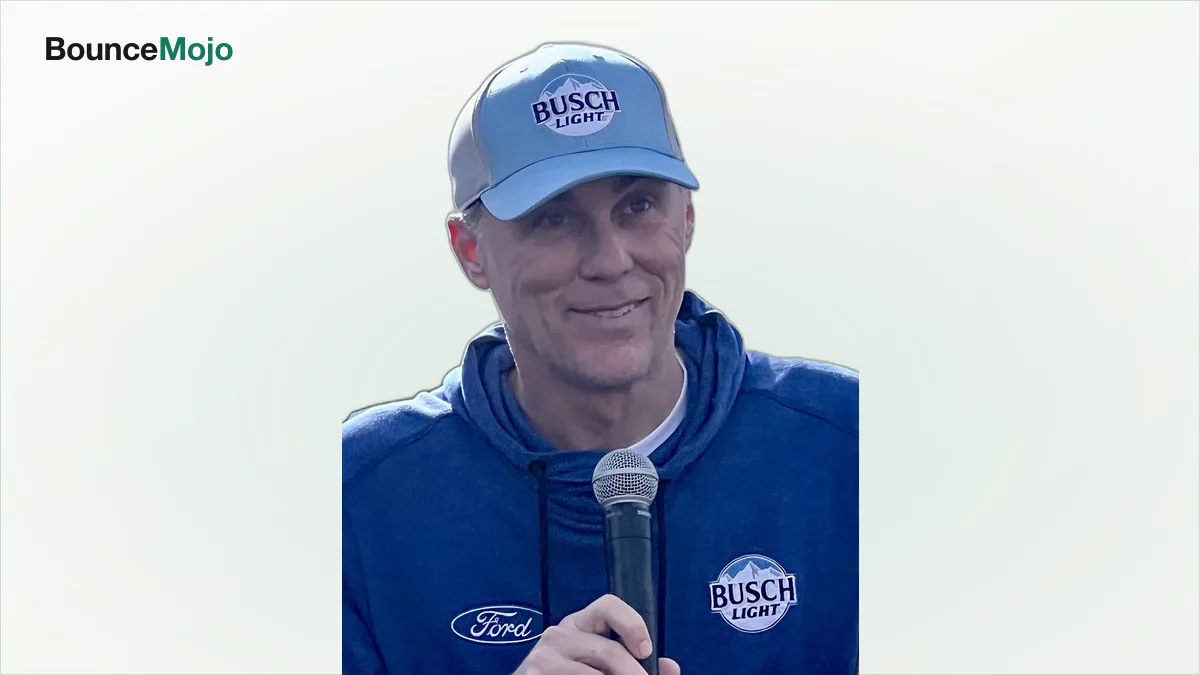
Everybody remembers the driver who took over Dale Earnhardt’s car. Almost nobody remembers the kid from Bakersfield who wasn’t supposed to be there yet.
Here’s what most people miss: the impossible situation that could have crushed Kevin Harvick’s career is the exact thing that made it.
The Myth vs. The Reality
The myth is convenient. Kevin Harvick, the guy who stepped into a legend’s car and just happened to succeed, a lucky beneficiary of terrible timing. A driver defined entirely by whose ride he inherited.
That version is real. It’s also wildly incomplete.
Here’s the truth: the “lucky replacement” story erases everything Harvick did before and after 2001. He was a hard-nosed West Coast racer who’d already won at the lower levels, and he’d spend more than two decades proving the break was earned, not gifted. The man who inherited the seat went on to build a championship résumé and a business that most of his rivals never came close to.
Think about it. We love a story of fortunate timing because it’s tidy. If Harvick just fell into greatness, then his success requires no explanation. But that’s not what happened. He was thrown into an emotional inferno as a rookie and answered it with wins, then spent his career compounding that opening.
Now, that opportunity didn’t appear from nowhere. It came out of a specific place and a specific grind. Which raises the question: what makes a kid tough enough to handle that kind of pressure?
The World That Made Kevin Harvick
To understand Harvick, you have to understand the working-class California racing world he came up in.
He was born on December 8, 1975, and raised in Bakersfield, a hard-working city in California’s Central Valley far from NASCAR’s Southern heartland. This wasn’t a stock-car dynasty town. It was a place where kids raced go-karts on local tracks and dreamed of moving east. Harvick started karting young and stacked up championships before he was old enough to drive on the road.
The era mattered too. Harvick came up as NASCAR was booming in the 1990s, expanding into a national sport with real money and national television. A talented West Coast racer could realistically climb the ladder from local tracks to the touring series and, eventually, to the big leagues in North Carolina.
Here’s the deal: Harvick did it the grinding way, through the West Coast stock-car ranks and NASCAR’s lower national divisions, earning rides on merit rather than family name. By the time bigger teams noticed him, he’d already proven he could win.
But nothing in those early years could have prepared him for how his shot at the top would actually arrive.
The Crucible: Early Life and the Climb
The environment that shaped him
Two things defined the young Kevin Harvick: relentless short-track competition and a chip on his shoulder.
Bakersfield racing was unforgiving. There were no soft introductions, just close-quarters short-track battles where you either learned fast or got left behind. Harvick developed an aggressive, no-nonsense style there, the kind that makes enemies and wins races. He wasn’t a polished prospect handed to a top team; he was a scrapper who forced his way up.
Then came the move into NASCAR’s national ladder. Harvick impressed enough in the lower series that Richard Childress Racing, one of the sport’s premier organizations, brought him aboard as a development driver. He was on the cusp of a full-time Cup ride, on his own timeline, when everything changed overnight.
You might be wondering: how does a driver stay steady when the biggest opportunity of his life arrives through tragedy? The answer is that Harvick’s short-track toughness had already built the temperament for it. He’d spent years racing under pressure with no cushion, and that hardness is exactly what the moment would demand.
By his late twenties, the scrapper from Bakersfield was standing at the doorstep of NASCAR’s top series, ready but not yet expecting the call.
The catalyst
The catalyst was the darkest day in modern NASCAR history.
In February 2001, Dale Earnhardt, the sport’s biggest star and the driver of Richard Childress Racing’s famous number, was killed on the final lap of the Daytona 500. In the grief that followed, Childress made a wrenching decision: he asked Harvick to step into the seat, renumbered and repainted, and carry the team forward.
Here’s the kicker: Harvick didn’t just survive it. Just weeks later, he won a Cup race at Atlanta in a heart-stopping finish, then went on to win the rookie of the year honors and a lower-series championship in the same season. He proved, immediately and under unimaginable scrutiny, that he belonged.
The scrapper from Bakersfield had answered the hardest question the sport could ask. But the road from promising rookie to champion would take years and test his patience.
The Key Players
No career this big is a solo act, and Harvick was surrounded by people who shaped his path.
Start with Richard Childress, the team owner who developed him and then trusted him with the most emotionally charged seat in NASCAR. That leap of faith launched Harvick’s Cup career and tied his story permanently to one of the sport’s great organizations.
Then there’s DeLana Harvick, his wife and business partner. She was there through the early climb and became central to the operation, helping build Kevin Harvick Inc. into a real business. Their partnership blended the personal and the professional in a way that defined how Harvick ran his career.
And there’s the shadow of Dale Earnhardt, the legend whose seat Harvick inherited. Harvick never chose that comparison, but he carried it with a toughness that honored it, earning respect from a fan base that could have rejected him.
There was also Tony Stewart, the co-owner of Stewart-Haas Racing, the team where Harvick would finally win his championship years later.
Now: surround yourself with the right people and answer the hardest moments, and you can build something lasting. Harvick was about to do exactly that, but the biggest prize would make him wait.
The Turning Point
The pinnacle
The pinnacle came in the fall of 2014.
Harvick had spent more than a decade as a strong, consistent Cup driver, a winner and a contender, but not yet a champion. After moving to Stewart-Haas Racing, everything clicked. He powered through NASCAR’s playoff format and, in the season finale, drove to the win he needed to clinch the 2014 NASCAR Cup Series championship.
Thirteen years after that emotional rookie season, the driver who inherited the hardest seat in the sport was finally a champion in his own right, on merit, with no asterisk.
Across his career, the totals became formidable: dozens of Cup victories, a Daytona 500 win, and year after year of playoff runs. He became one of the most consistent front-runners of his era.
Here’s the truth: the title validated everything, but it didn’t slow him down.
The price
Because Harvick’s aggressive, blunt style came with friction.
He earned a reputation early as a hot-tempered driver who wasn’t afraid of confrontation, on the track and in the garage. That edge made him formidable, but it also drew rivalries and criticism, and it took time for the wider fan base to fully embrace him. Following a beloved icon meant every misstep was magnified.
There was pressure, too, in carrying expectations for so long without the championship to show for it. For years Harvick was labeled a driver who won races but couldn’t close out a title, a narrative that only ended in 2014. Living under that story, season after season, was its own kind of weight.
He’d spent his career being tough enough to handle anything. Learning to channel that toughness without letting it define him took time.
The Unvarnished Truth
Harvick is not a storybook hero, and pretending otherwise does his story a disservice.
He was combative. His hard-charging style created feuds and cost him goodwill at times, and his bluntness didn’t always play well. He was, for a long stretch, the driver fans loved to root against as much as for.
There’s also the reality of the comparison he could never escape. Stepping into Earnhardt’s seat meant living in a giant’s shadow, and no matter how well he drove, some fans would always measure him against a man he never got to replace on his own terms.
Here’s what’s easy to miss: his greatest strength and his greatest friction were the same trait. The aggression that made him a winner also made him a lightning rod. The edge was the engine.
None of that erases the championship. But it does explain why his second act, as a respected broadcaster and businessman, feels like a fitting turn.
Controversies and Criticisms
Harvick’s career carried real controversy, and it’s worth being honest about it.
His on-track aggression led to well-documented run-ins and rivalries over the years, the kind that fuel highlight reels and hard feelings alike. He was penalized and fined at points across his career for incidents typical of a driver who raced on the edge.
Critics also debated the “inherited seat” narrative endlessly, some arguing it handed him a platform few drivers ever get, others noting he immediately proved he deserved it. Both things can be true: the opportunity was extraordinary, and so was his answer to it.
So what does a life like this actually teach the rest of us? More than the wins suggest.
What We Can Learn From Kevin Harvick
Navigating hard times
Harvick’s real lesson is about performing under pressure that would break most people.
Handed the most scrutinized seat in his sport during a period of national grief, he didn’t fold. He won, he earned rookie honors, and he carried a heartbroken team forward. He turned an impossible situation into the launchpad for a two-decade career.
In other words: the pressure was the point. He built a career by proving, over and over, that he could deliver when the stakes were highest.
The success blueprint
The blueprint here is about building beyond the thing you’re famous for.
Harvick could have been just a driver. Instead, he and DeLana built Kevin Harvick Inc., lined up a broadcasting future, and turned a racing career into a durable business. He was always thinking about what came after the checkered flag.
Want the fuller picture of how that translated into wealth? The full net worth breakdown shows how a championship career became an estimated $85 million fortune built on winnings, sponsorships and business. And to see how he ranks among the sport’s biggest earners, the richest race car drivers list puts it in context.
The deeper takeaway is about earning respect the hard way. Harvick proved that you can start under a shadow, absorb the criticism, and still write your own story if you keep delivering. The people who last are the ones who let the results answer the doubters.
Which brings us to the final reckoning on the man.
Final Verdict
Kevin Harvick is going to be remembered for the wrong reason.
Most people will file him under “the guy who took over Earnhardt’s car,” a footnote to someone else’s legend. A smaller, smarter group will remember something better: a scrapper from Bakersfield who answered an impossible moment with wins, spent 20 years as one of the toughest competitors in the garage, finally captured his own championship in 2014, and then built a business and broadcasting career that outlasted his driving.
Here’s the bottom line: the seat made him famous. What he did in it, and after it, made him respected. He took the hardest introduction imaginable and turned it into a Hall-of-Fame-caliber career on his own terms.
He is a NASCAR champion. He is also living proof that inherited opportunity means nothing without the toughness to seize it. And in the long run, that second story, the earned one, is the version worth remembering.
Shop Kevin Harvick on Amazon
Books, audiobooks, merch and more, handpicked for fans.
As an Amazon Associate we earn from qualifying purchases.
Frequently Asked Questions
Where did Kevin Harvick grow up?+
Harvick grew up in Bakersfield, California, where he started racing go-karts as a young boy before working his way up through the West Coast short-track and stock-car ranks.
How did Kevin Harvick get his big break?+
In 2001, after the death of Dale Earnhardt, team owner Richard Childress put Harvick in the seat of NASCAR's most famous car. Harvick won early and announced himself as a genuine Cup contender.
Did Kevin Harvick win a NASCAR championship?+
Yes. Harvick won the 2014 NASCAR Cup Series championship with Stewart-Haas Racing, the highlight of a career that also included a Daytona 500 victory and dozens of Cup wins.
Who is Kevin Harvick's wife?+
Harvick is married to DeLana Harvick, his longtime partner in both life and business. Together they built Kevin Harvick Inc., a driver-management company, and raised their family near NASCAR's North Carolina hub.
What does Kevin Harvick do now?+
After retiring from full-time Cup racing at the end of 2023, Harvick became a lead NASCAR analyst for Fox Sports, staying close to the sport while running his business interests.
Want the money side of the story?
Read Kevin Harvick's Full Net Worth Breakdown →Shop Kevin Harvick on Amazon
Books, audiobooks, merch and more, handpicked for fans.
As an Amazon Associate we earn from qualifying purchases.