Keith Tkachuk Biography: Hockey's Toughest Power Forward
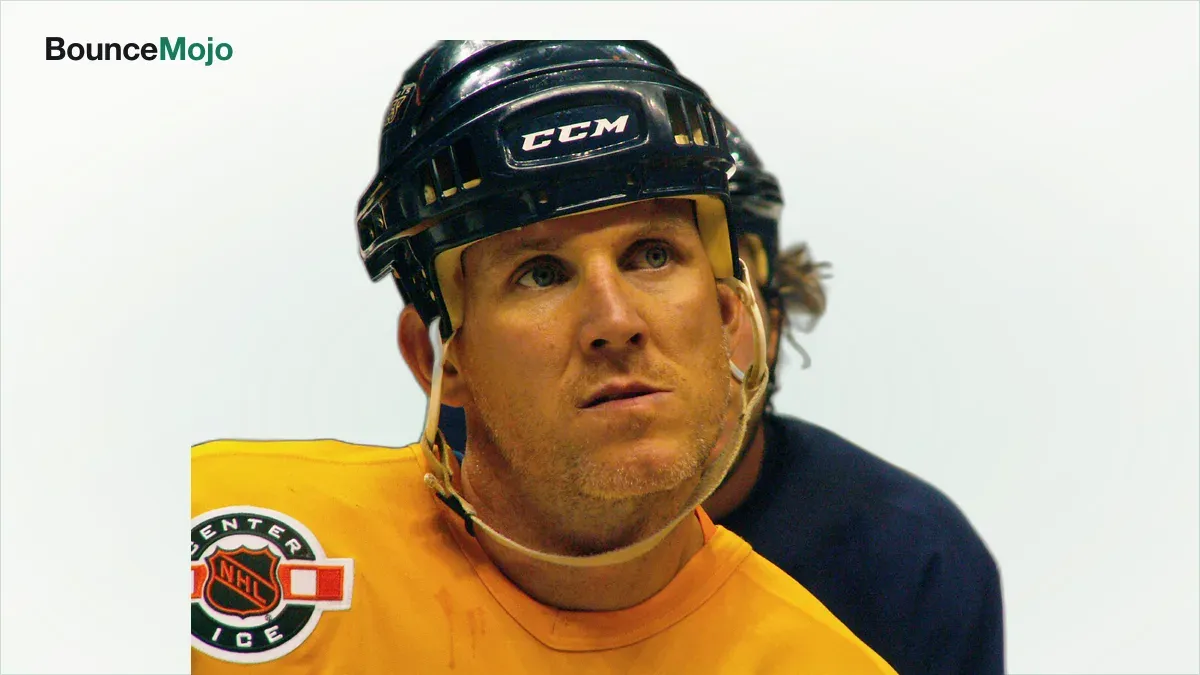
The bruising checks, the goals scored from the crease, the snarl that made goalies flinch. That’s the Keith Tkachuk most fans remember.
Here’s what most people miss: the fearsome power forward was raised by parents who lived paycheck to paycheck, and that grinding, working-class start shaped everything about how he played and how he handled the fortune that followed.
The Myth vs. The Reality
The myth is simple. Keith Tkachuk was a wrecking ball, a mean, physical power forward who punished defensemen and parked in front of the net until goalies gave up.
The reality is richer than that.
Here’s the truth: underneath the brute-force reputation was a genuinely skilled scorer, a player who led the entire NHL in goals and racked up more than 1,000 career points. He wasn’t just muscle. He was one of the best pure finishers of his generation who happened to be built like a linebacker.
Now think about how rare that combination is. Most heavy hitters can’t score. Most scorers won’t hit.
Tkachuk did both, at an elite level, for nearly two decades. And to understand where that dual identity came from, you have to start in a working-class corner of Massachusetts.
The World That Made Keith Tkachuk
Keith Matthew Tkachuk was born on March 28, 1972, in Melrose, Massachusetts, just north of Boston. This was hard-nosed New England hockey country, where the game was played on frozen ponds and in cold rinks, and toughness was a birthright.
His family was blue-collar to the core. Tkachuk later described his parents as “blue-collar people from Boston who lived paycheck to paycheck and did everything they could so I was able to live my dream.” That sentence explains him better than any stat line.
Here’s the deal: nothing was handed to him. Every advantage he got, his parents sacrificed for.
Growing up near Boston in the 1980s, he idolized Cam Neely, the Bruins’ bruising power forward who scored goals and dropped gloves in equal measure. Tkachuk built his own game in that image, a big American kid who could bury the puck and make you pay for standing in his way. He earned a scholarship to Boston University, where in a single season he made the Hockey East All-Rookie Team and put himself on the NHL radar.
It’s worth pausing on what made that path unusual. In the late 1980s and early 1990s, American-born stars were still rare in the NHL, and power forwards from the United States rarer still. Tkachuk wasn’t following a well-worn road. He was helping build one. The Boston area produced tough, hard-nosed players, and he embodied that reputation, but few from his generation carried it all the way to NHL stardom. He also came through the U.S. national development pipeline and represented his country at the 1992 Winter Olympics before he’d even played a full pro season, a sign of how highly the American hockey establishment already rated him.
But here’s the kicker: before he could become a franchise star, he had to prove an American power forward could carry a team.
The Crucible: Early Life and the Climb
The environment that shaped him
Tkachuk came up in an era when American players still had to fight for respect in a league dominated by Canadians and Europeans. The blue-collar chip on his shoulder became fuel.
The Winnipeg Jets drafted him 19th overall in 1990. He made his NHL debut in 1992, right after suiting up for the United States at the Winter Olympics, and he wasted no time establishing himself as a physical, productive force.
Now: the raw tools were obvious. What he needed was the season that would announce him as a superstar.
The catalyst
The catalyst came in 1996-97.
By then the Jets had relocated and become the Phoenix Coyotes, and Tkachuk exploded. He scored 52 goals to lead the entire NHL, becoming the first American-born player ever to top the league in goals. It was the campaign that transformed him from a very good player into one of the faces of American hockey.
That season did two things. It cemented his legacy, and it made him rich, because it proved to every general manager that he was worth a franchise-sized contract.
You might be wondering: with that kind of value, why does his story carry a shadow? The answer is the one thing all that scoring never bought him.
The Key Players
You cannot tell the Keith Tkachuk story without a few names.
Cam Neely is the first, the Boston Bruins legend Tkachuk grew up idolizing. Neely defined the modern power forward, and Tkachuk consciously built his game as a tribute to that style, big, mean, and dangerous around the net.
Chantal Oster is the second, the Winnipeg native Tkachuk married in 1997. She became the anchor of a family-first life, and their partnership grounded him through the moves, the trades, and the pressures of a two-decade career.
Then there are Matthew and Brady, his two sons, both born during his Phoenix years. Here’s the truth: they may be the most important figures in his entire story. Raised around NHL rinks and coached by a father who knew exactly what elite hockey demanded, both grew into NHL stars themselves. Keith’s playing career gave them a head start no development academy could match, and the family name became one of the most recognizable in the sport.
His teammates in St. Louis mattered enormously too. Traded to the Blues in his prime, Tkachuk found a second home there, becoming a beloved leader and settling his family in the city for good. It was in St. Louis that the fierce competitor became an elder statesman, respected across the league for his toughness and his generosity in the room.
Everything he built was about to run into the one wall he could never break through.
The Turning Point
The pinnacle
Start with the peak, because it was genuinely great.
Tkachuk’s career resume is loaded. He scored over 500 goals and more than 1,000 points across 1,201 NHL games. He led the league in goals, represented the United States on the biggest international stages, and stood for years as the gold standard for American power forwards. Few players of any nationality combined his production and physicality.
He was, for a stretch, one of the highest-paid and most feared forwards alive. The 52-goal season, the 500-goal milestone, the constant fear he struck in opponents: that was the summit.
The price
Now the cost, and it’s a real one.
For all the goals and all the money, Tkachuk never won a Stanley Cup. He played 19 seasons and came up empty on the one prize every player chases. He carried strong teams deep at times, but the championship always slipped away.
Here’s the deal: that absence stings more given everything else he accomplished. A player of his caliber “should” have a ring, and he doesn’t.
There was also the physical toll. Playing a punishing, contact-heavy style for nearly two decades wore his body down, the price of a game built on collisions and net-front battles that no amount of skill could soften. Power forwards pay a unique tax. They score their goals from the dirtiest areas of the ice, in front of the net where cross-checks and slashes rain down every shift. Tkachuk chose that real estate for 19 seasons, and his body absorbed every hit that came with it. The goals were spectacular. The bruises were permanent.
There was the emotional cost too. Being the face of a franchise, first in Winnipeg and then through the wrenching relocation to Phoenix, meant carrying a fan base’s hopes through instability and upheaval. Tkachuk was the constant while everything around him changed, and that weight of expectation followed him for years.
You might be wondering whether the competitive fire ever tipped into something darker. It did, at times.
The Unvarnished Truth
Let’s not pretend the edge was always clean.
Tkachuk played angry, and that fury sometimes crossed lines. He racked up penalty minutes, got into scraps, and earned a reputation as an agitator opponents genuinely disliked. The same intensity that made him great also made him a lightning rod.
There were quieter struggles too. Nineteen seasons of physical hockey, constant travel, and the pressure of huge contracts take a toll that fans rarely see. Tkachuk carried the weight of being an American superstar in a league that didn’t always make room for one, and he answered that pressure by hitting harder and scoring more.
Here’s the truth: his greatest strength, that relentless, snarling competitiveness, was inseparable from its cost. It drove him to greatness and it made him enemies, and he never once apologized for it.
Even so, teammates loved him. The same fire that opponents hated made him the guy his own locker room wanted in the trenches.
Controversies and Criticisms
For a player this physical, the real controversies are relatively contained.
The biggest knock is the ring-shaped hole in his resume. Critics point out that for all his individual brilliance, Tkachuk never got over the hump in the playoffs, and a Hall of Fame-caliber career without a championship invites second-guessing.
There were also the on-ice incidents that came with his style. Suspensions, fines, and heated confrontations followed a player who lived on the edge of the rules. Some saw a warrior. Others saw a repeat offender.
Beyond that, the criticism is mild. He was a fierce competitor who played hard and occasionally too hard, and in a sport that celebrates toughness, that’s a forgivable sin.
Here’s the thing though: none of it dents the legacy. Because the goals, the milestones, and the family he raised answered every doubt about whether he mattered.
What We Can Learn From Keith Tkachuk
Navigating hard times
When you come from nothing, you can let it shrink you or you can let it drive you.
Tkachuk let it drive him. The blue-collar Boston kid whose parents scraped by turned that hunger into a fortune and a legacy. The lesson isn’t that hardship is a gift. It’s that the values forged in it, discipline, gratitude, relentlessness, can carry you further than talent alone.
The success blueprint
Now the part that built the wealth.
Tkachuk peaked in the highest-spending era in NHL history and cashed in with contracts that made him one of the richest hockey players of his generation. But the real genius was what he did after: he protected the money and reinvested it in his sons’ development. The full money breakdown lives in our Keith Tkachuk net worth analysis, and you can see where he ranks among the richest athletes overall.
Becoming better
The deepest lesson is about legacy. Tkachuk never won a Cup, but he built something that outlasts any trophy: a family that carried his name to the top of the sport. He turned his own career into a foundation for the next generation, which is a rarer and more durable kind of success.
So what’s the final word on hockey’s toughest American power forward?
Final Verdict
Keith Tkachuk is one of the great “what could have been” stories that still ended up a triumph.
On the ice, he was a 500-goal scorer, a league-leading sniper, and the toughest power forward of his era, everything but a champion. Off it, he was a grounded, family-first man who protected his fortune and raised two NHL stars.
Here’s the bottom line: the toughness was only the surface. Underneath was a disciplined kid from a paycheck-to-paycheck home who earned a fortune, kept it, and passed the game down to his sons.
Anyone who remembers only the snarl and the penalty minutes has missed the real story. Tkachuk’s legacy isn’t the ring he never won. It’s the dynasty he built.
Shop Keith Tkachuk on Amazon
Books, audiobooks, merch and more, handpicked for fans.
As an Amazon Associate we earn from qualifying purchases.
Frequently Asked Questions
Where did Keith Tkachuk grow up?+
Keith Tkachuk was born on March 28, 1972, in Melrose, Massachusetts, and grew up in a blue-collar family outside Boston, idolizing Bruins star Cam Neely.
What made Keith Tkachuk special as a player?+
He was a rare power forward who combined heavy hitting and net-front toughness with elite scoring, leading the NHL with 52 goals in 1996-97, the first American-born player to lead the league in goals.
Which teams did Keith Tkachuk play for?+
He played 19 NHL seasons for the Winnipeg Jets, Phoenix Coyotes, St. Louis Blues and Atlanta Thrashers, finishing his career in St. Louis in 2010.
Are Keith Tkachuk's sons in the NHL?+
Yes. Both Matthew and Brady Tkachuk became NHL stars, extending the family name into a second generation of elite hockey.
Did Keith Tkachuk win a Stanley Cup as a player?+
No. Despite a decorated career and over 1,000 career points, Tkachuk never won a Stanley Cup during his 19 seasons as a player.
Want the money side of the story?
Read Keith Tkachuk's Full Net Worth Breakdown →Shop Keith Tkachuk on Amazon
Books, audiobooks, merch and more, handpicked for fans.
As an Amazon Associate we earn from qualifying purchases.