Kamaru Usman Biography: The Nigerian Nightmare Who Refused to Lose
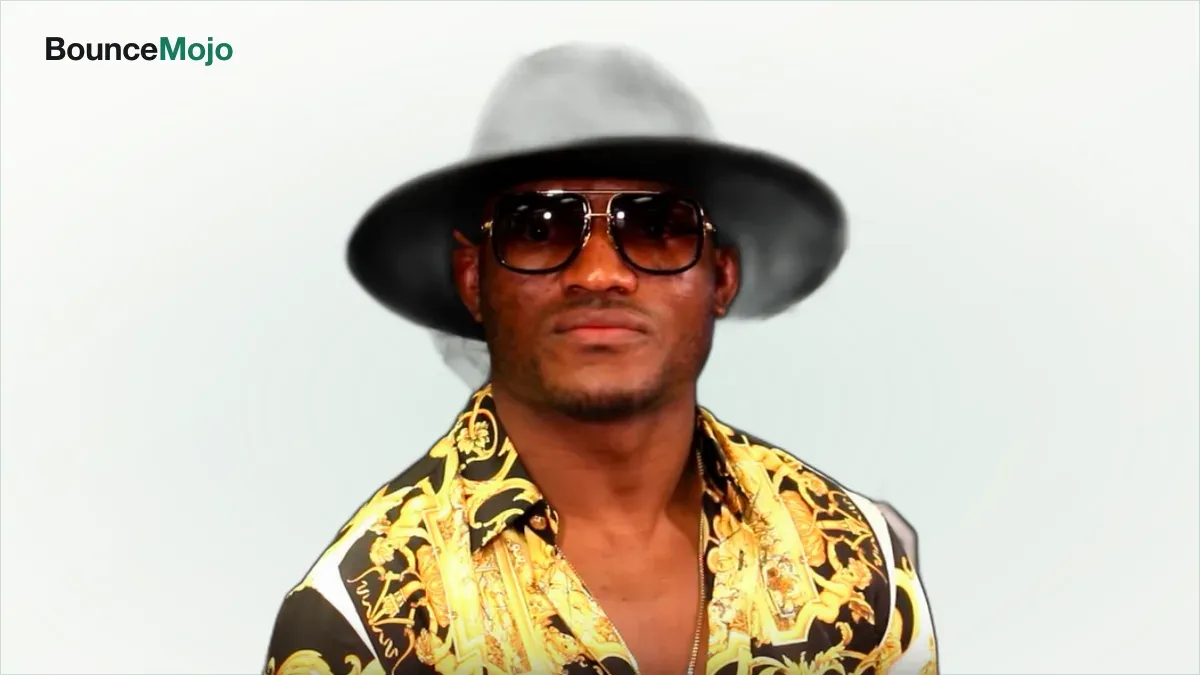
Most people know Kamaru Usman as the wrestler who smothered a whole division for years. That version leaves out the part that actually explains him.
Here’s what most people miss: the relentless control he showed in the cage was rehearsed long before, in a family fighting a very different battle outside it.
The Myth vs. The Reality
The myth is convenient. Kamaru Usman: a boring wrestler who lay on people for five rounds, a champion built on suffocation rather than spectacle, a reign nobody quite enjoyed watching. Grinder. Blanket. Roll credits.
The reality is a lot heavier than that.
Here’s the deal: Usman didn’t just wrestle his way to a title. He evolved into a genuine two-way threat, adding knockout power to a base of elite grappling until he was beating strikers at their own game. The “boring” label ignored a fighter who was quietly one of the most complete athletes the division ever produced.
And the “just a wrestler” framing misses the fuel behind it all. Usman fought with the intensity of a man carrying something, an immigrant’s pressure, a family’s ordeal, a refusal to waste the improbable chance America had handed him.
You might be wondering: how does a kid from Auchi, Nigeria end up ruling a UFC division on another continent? To understand that, you have to understand the world he came from.
The World That Made Kamaru Usman
Usman was born in 1987 in Nigeria, into a family that would soon gamble everything on a new country.
He grew up in Auchi, in Edo State, before his family emigrated to the United States, settling largely in Texas. That journey, from West Africa to the American South, is the load-bearing beam of his entire identity. He arrived as an outsider, learning a new culture while his parents worked to build a foothold in a place that promised more but guaranteed nothing.
Now: this was the immigrant experience in full, the pressure to justify the sacrifice, the sense that failure wasn’t just personal but generational. Usman absorbed that weight early. It shaped a work ethic that bordered on relentless and a seriousness that would later read, in a loud sport, as coldness.
That collision, an African immigrant’s discipline meeting the flash-and-noise machine of American combat sports, is the backdrop for Usman’s whole career. He wasn’t built to entertain. He was built to prove something.
But before any of that, there was a teenager on a wrestling mat, discovering the one thing that would carry him.
The Crucible: Early Life and the Climb
The Environment That Shaped Him
Wrestling found Usman in American high school, and it fit him perfectly. The sport rewards exactly what his upbringing had instilled, discipline, endurance, and a willingness to suffer that most people can’t fake.
He was good enough to earn a place in college wrestling, and there he became elite, winning an NCAA Division II national championship. That title matters. It means Usman wasn’t a natural fighter who picked up grappling. He was a genuinely great wrestler first, with a skill so refined it would later become almost impossible for MMA opponents to solve.
Think about it: while other future fighters were still learning the basics, Usman had already reached the summit of one of the hardest sports on earth.
The Catalyst
Here’s the truth: the deepest fire in Usman’s story is family.
His father was arrested and imprisoned in the United States on federal charges, and served years behind bars, a wound Usman has spoken about openly and disputed publicly. For a young man already carrying the immigrant’s burden, watching his father taken away turned motivation into something fiercer. He fought, in part, to hold his family together and to reclaim a name he felt had been unfairly damaged.
It gets better, and more determined. Usman channeled that pain into an all-consuming pursuit. He turned to MMA, ground through the regional circuit, and won a reality-competition tournament that opened the UFC’s door. He arrived not as a hot prospect but as a relentless grinder with something to prove.
That’s where the climb truly began. But no fighter rises without allies and adversaries, and Usman’s story has both in abundance.
The Key Players
No champion is built alone, and Usman’s rise is populated by mentors, friends and one unforgettable enemy.
His family. His parents and siblings are the emotional core of everything. His father’s imprisonment and the family’s immigrant journey supplied the motivation that outlasted any single opponent. Usman has been open about fighting for them, not just himself.
Israel Adesanya. A close friend and fellow Nigerian-born UFC champion, Adesanya shared Usman’s cultural pride and rise. The two became symbols of a wave of African fighters reaching the top of the sport, a bond of mutual respect and shared heritage.
Colby Covington. The villain of the story. Their rivalry was genuinely venomous, personal, insulting, and unrelenting, spilling far past the cage. Covington pushed Usman to some of his most dramatic performances, proving that a great enemy can sharpen a champion as much as any coach.
His coaches and camp. Usman’s evolution from pure wrestler to knockout threat came through dedicated striking coaching, the mechanics of which turned a grinder into a finisher. That growth is part of why his net worth breakdown reflects a long, lucrative reign.
Think about it: every one of these relationships fed the same engine, a hunger to prove doubters, and history, wrong.
The Turning Point
The Pinnacle
Usman’s coronation came in 2019, when he dethroned the reigning welterweight champion to claim the belt.
What followed was a dynasty. He defended the title again and again, building one of the longest win streaks in UFC history and stamping his authority on the division. He knocked out a hated rival in one of the sport’s most satisfying revenge arcs, silencing critics who called him a one-dimensional grappler. At his peak, Usman was ranked at or near the top of the pound-for-pound lists, the complete modern fighter.
As his own net worth story lays out, that reign transformed his earnings, turning steady purses into championship pay-per-view paydays year after year.
The Price
Here’s the kicker: the very dominance that made him champion made him hard to celebrate.
Usman’s style, controlling, methodical, punishing, drew respect but not always love. Casual fans wanted fireworks; he gave them clinics. And the toll of a long reign, the training, the weight cuts, the relentless competition, wears on any body. The pinnacle brought a fortune and a legacy, and with them the quiet cost of a champion who was admired more than embraced. Which brings us to the human side of the Nigerian Nightmare.
The Unvarnished Truth
Usman is not a flawless machine, and the intensity that fueled him had a shadow.
He could be cold and dismissive with rivals, especially Covington, matching venom with venom in a feud that got genuinely ugly. His seriousness sometimes read as arrogance. And like any fighter chasing greatness, he pushed his body to extremes that carry long-term risks.
Now: none of this makes him a villain. Much of his edge is the residue of everything he carried, the immigrant’s pressure, the family ordeal, the sense that anything less than dominance was failure. When you fight to reclaim your family’s name, you don’t fight politely.
But that same intensity had costs. The refusal to play the entertainment game the way flashier stars did kept his crossover appeal, and arguably his crossover earnings, below what his dominance deserved.
The most honest thing anyone can say about Usman is this: his greatest strength and his blind spot are the same trait. Relentlessness. It built a dynasty and, at times, made him hard to warm to.
Controversies and Criticisms
Usman’s career has been more disciplined than most, but it hasn’t been free of friction.
The Covington feud. The rivalry crossed lines that made even fight fans uncomfortable, with personal jabs and political needling on both sides. It sold fights, but it also dragged Usman into ugly exchanges.
The “boring” criticism. For years, detractors dismissed his control-based style as dull, arguing he neutralized opponents rather than finishing them, until a run of knockouts forced them to reconsider.
The father’s case. His father’s federal imprisonment drew scrutiny and became a talking point. Usman has disputed the charges publicly, and the episode remains a painful, contested chapter.
The politics of a global star. As an African immigrant champion, Usman occasionally became a symbol in broader cultural debates, a role he handled with more grace than many.
Compared with the tabloid chaos surrounding some champions, Usman’s controversies are mostly about style and a bitter rivalry rather than personal misconduct.
What We Can Learn From Kamaru Usman
Navigating Hard Times
The first lesson is about turning pain into fuel: hardship, handled right, becomes horsepower. Usman faced an immigrant’s uncertainty and a family crisis that would flatten most people.
But here’s the truth his rise makes plain: he refused to let circumstance define his ceiling. He took the pressure of a father behind bars and a family depending on him and converted it into a discipline that outlasted every opponent. Real strength wasn’t avoiding pain. It was metabolizing it into purpose.
The Success Blueprint
If you want the replicable part, it’s this: master one thing so completely that it becomes unbeatable, then build outward. Usman’s wrestling was elite before he ever fought professionally. He didn’t chase flash. He perfected a foundation and added to it patiently.
That’s transferable anywhere. The lesson isn’t “wrestle.” It’s “own a core skill so thoroughly that it forces opponents to fight on your terms.” That mastery put him among the sport’s best-compensated names on our richest MMA fighters ranking, and it echoes in every athlete who wins with substance over spectacle.
Becoming Better
The deepest lesson is about consistency. Usman didn’t win with one magic night. He won by refusing to have a bad year, defending his title over and over with the same relentless standard.
In other words, greatness is a habit, not a highlight. Show up, do the unglamorous work, and repeat it until dominance becomes routine. It’s a quieter path than the viral knockout, and it leads directly to a legacy that lasts.
Final Verdict
Kamaru Usman is one of the greatest welterweights in UFC history, and the word “greatest” is earned by longevity as much as skill. He didn’t just win a belt. He held it, defended it, and turned a division into his personal territory for years. In a sport obsessed with the next viral moment, he built a case for the long, disciplined reign.
And here’s the twist that reframes everything: the immigrant kid who arrived as an outsider became a symbol of exactly the opposite, a champion so established that a whole generation of African fighters looked to him as proof it could be done. His full earning story, and how the reign transformed it, lives in his net worth breakdown, and it’s the classic American arc with a Nigerian heart.
If you want the story in his own words, read Usman’s memoir The Nigerian Nightmare: Fifteen Rounds Toward a Championship (2022). It’s the immigrant hustle, the wrestling grind, and the mindset behind a dynasty, told by the man who lived it. Read it if you love the sport, and read it more carefully if you’ve ever wondered how far discipline and purpose can carry someone who started with almost nothing.
Shop Kamaru Usman on Amazon
Books, audiobooks, merch and more, handpicked for fans.
As an Amazon Associate we earn from qualifying purchases.
Frequently Asked Questions
Where was Kamaru Usman born?+
Kamaru Usman was born in Auchi, Edo State, Nigeria, and moved to the United States with his family as a child, growing up mainly in Texas.
What is Kamaru Usman's wrestling background?+
Usman was an NCAA Division II national champion wrestler before transitioning to MMA. That elite wrestling base became the foundation of his suffocating fighting style.
What happened to Kamaru Usman's father?+
Usman's father was imprisoned for years in the United States on federal charges Usman has publicly disputed. The family ordeal became a defining part of his motivation and story.
How long was Kamaru Usman's UFC win streak?+
Usman built one of the longest win streaks in UFC history, going years without a loss while dominating the welterweight division as champion.
Who is Kamaru Usman's biggest rival?+
His fiercest rivalry was with Colby Covington, a bitter feud that spilled far beyond the cage and produced multiple high-stakes fights.
Want the money side of the story?
Read Kamaru Usman's Full Net Worth Breakdown →Shop Kamaru Usman on Amazon
Books, audiobooks, merch and more, handpicked for fans.
As an Amazon Associate we earn from qualifying purchases.