Jurgen Klopp Biography: The Making of Football's Great Motivator
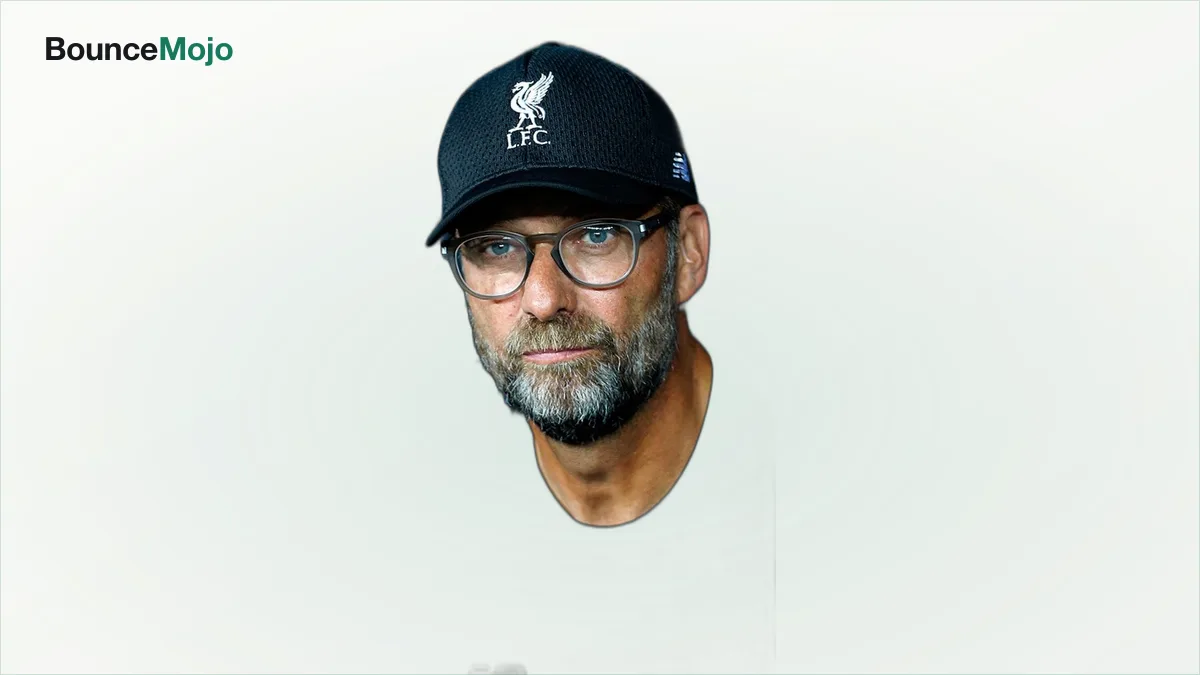
Everybody remembers the fist pumps at Anfield. Almost nobody remembers the second-division defender who was never good enough to play at the level he’d one day rule from the sideline.
Here’s what most people miss: the thing that limited Jurgen Klopp as a player is the exact thing that made him one of the greatest managers of his generation.
The Myth vs. The Reality
The myth is simple. Jurgen Klopp, the charismatic genius, born to stand on a touchline, turning every club he touches into a winning machine with a grin and a bear hug.
That version is real. It’s also wildly incomplete.
Here’s the truth: Klopp was a limited footballer who spent most of his playing days in Germany’s second tier, a hard-working defender who succeeded through effort and football intelligence rather than gifts. The “born winner” story skips the decade he spent learning the game the slow way, as a player who had to think his way around opponents he couldn’t simply outrun.
Think about it. We love a story of natural charisma because it makes greatness look effortless. But Klopp’s magnetism was forged, not gifted. He became a brilliant communicator precisely because, as a player, he had to understand the game more deeply than his own body could express it.
Now, that understanding didn’t appear from nowhere. It came from a specific place, a specific family, and a specific club that took a wild chance on him. Which raises the question: what world produces a coach this driven and this human at the same time?
The World That Made Jurgen Klopp
To understand Klopp, you have to understand the corner of Germany he came from, and the club that shaped him.
He was born on June 16, 1967, in Stuttgart, and raised in Glatten, a small town in the Black Forest. His father, Norbert, was a former goalkeeper and a demanding sportsman who pushed young Jurgen relentlessly in football, skiing, and tennis. This was rural, disciplined, southwest Germany, a place that prized effort and toughness over flash.
The era mattered too. German football was a serious, tactical culture, and clubs valued students of the game. Klopp came up admiring coaches who taught, who built systems, who could squeeze more out of players than raw ability suggested. That environment planted the seed of the manager he’d become long before he ever thought about coaching.
Here’s the deal: Klopp’s playing talent could only take him so far. He landed at Mainz 05 in 1990 and stayed more than a decade, mostly in the second division, converting from a striker into a defender to keep his place. He was a squad man, not a star.
But that limitation was about to become the foundation of everything. And the turn came in the most unlikely way possible.
The Crucible: Early Life and the Climb
The environment that shaped him
Two things defined the young Klopp: relentless effort and a mind that never stopped studying football.
He knew he wasn’t the most gifted player on the pitch, so he learned to read the game instead. At Mainz, he became known as much for his tactical brain and his voice in the dressing room as for anything he did with the ball. Teammates listened to him. Coaches noticed.
Then came the moment that changed his life. In February 2001, with Mainz sliding toward relegation and out of options, the club made a desperate decision: they handed the job of head coach to Klopp himself, straight from the playing squad, with zero managerial experience.
You might be wondering: how does a second-division defender with no coaching record survive that? The answer is that Klopp had been preparing for it his whole career without knowing. All those years of thinking his way around better players had made him a natural teacher. He kept Mainz up against the odds, and a coach was born from a crisis.
By the mid-2000s, he’d taken little Mainz into the Bundesliga for the first time in the club’s history. The limited player had found the one arena where his mind, not his feet, decided everything.
The catalyst
The catalyst was Borussia Dortmund.
In 2008, Dortmund, a giant sleeping through hard times, took a chance on the charismatic young coach from Mainz. It was the perfect match. Klopp built a young, fearless team that pressed opponents into submission, a style so intense the German press called it “gegenpressing,” and the football world took notice.
Here’s the kicker: Klopp didn’t just win games. He built an identity. His Dortmund side captured back-to-back Bundesliga titles in 2011 and 2012, outrunning and outthinking the financial might of Bayern Munich, and reached the Champions League final in 2013. He turned an underdog into a European force on a modest budget.
That achievement made him one of the most wanted managers on the continent. The next call would take him to England, and into legend.
The Key Players
No career this big is a solo act, and Klopp was shaped by the people around him.
Start with Wolfgang Frank, the coach at Mainz who introduced Klopp to the zonal-marking and pressing ideas that would define his entire philosophy. Klopp has repeatedly credited Frank as the mentor who taught him how football could be organized and coached, not just played.
Then there’s Ulla Sander, Klopp’s wife, the steadying presence behind a life spent under enormous public pressure. Through the moves from Mainz to Dortmund to Liverpool, she has been the private anchor to a very public man.
And there are his players, the ones who bought into his intensity. From Dortmund’s young rebels to Liverpool stars like Mohamed Salah and Virgil van Dijk, Klopp’s gift was making players run through walls for him. His teams reflected his personality: relentless, emotional, and impossible to intimidate.
Now: surround yourself with the right mentor and the right believers, and you can build something historic. Klopp was about to do exactly that on the biggest stage of his career.
The Turning Point
The pinnacle
The pinnacle came at Liverpool.
Klopp arrived in October 2015 at a club heavy with history but starved of success, and he made a promise to turn doubters into believers. It took time. He lost his first cup finals. But he built patiently, and the breakthrough came in a rush.
In 2019, Liverpool won the Champions League, beating Tottenham in the final. A year later, in 2020, they won the Premier League, ending a 30-year wait for a league title that had haunted the club and its supporters. Add the FIFA Club World Cup, an FA Cup, and a League Cup, and Klopp had restored one of football’s great institutions to the summit of the game.
For the full picture of how those trophies translated into wealth, the net worth breakdown shows how a modest playing career became a nine-figure coaching brand.
The price
Because that level of intensity comes at a cost.
Klopp’s style demands everything, from his players and from himself. He has spoken about the exhaustion of top-level management, the relentless emotional toll of caring so deeply about every result. Over nine years at Liverpool, the pressure never let up, and the man who bear-hugged his players on the pitch was quietly running on empty.
In early 2024, he shocked football by announcing he would leave Liverpool at the end of the season. He said, simply, that he was running out of energy. It was the rarest thing in elite sport: a hugely successful manager choosing to walk away rather than be pushed.
The Unvarnished Truth
Klopp is not a flawless figure, and his story is better for admitting it.
He lost as many big finals as he won early in his career, and critics questioned whether his teams could hold up over a full season. His relentless pressing style burned players out and led to punishing injury runs. And his emotional touchline behavior earned him plenty of touchline bans and criticism over the years.
There’s also the honest question of resources. At Liverpool, Klopp eventually had significant financial backing to build his squad, and some argue his Dortmund overachievement is the truer measure of his genius than his success at a global superclub.
Here’s what’s easy to miss: his greatest strength and his greatest limit were the same trait. The all-in emotional intensity that made his teams unstoppable is exactly what eventually drained him and led him to step away. The fire was the fuel, and the fire was the cost.
None of that dims the achievements. But it explains why his next act looks so different from his first.
Controversies and Criticisms
Klopp’s career carried its share of friction, and it’s worth being honest about it.
His fierce touchline persona led to repeated clashes with referees, opposing managers, and the football authorities, along with fines and bans. Critics accused him at times of deflecting from his own team’s failings by complaining about fixture schedules and officiating.
There was also debate about the demands he placed on players. The high-pressing system that thrilled fans also correlated with waves of muscle injuries, and some questioned whether it was sustainable over the grind of a long season.
And when he took the Red Bull executive role in 2025, some traditionalists were uneasy about such a beloved figure joining a corporate football empire built on commercial branding. Klopp defended it as a new challenge, a chance to shape the game without the weekly toll of management.
So what does a life like this actually teach the rest of us? More than the trophy count suggests.
What We Can Learn From Jurgen Klopp
Navigating hard times
Klopp’s real lesson isn’t about winning. It’s about turning a limitation into an advantage.
He was never good enough to play at the top. Instead of resenting it, he used those years to become a student of the game, building the tactical and emotional intelligence that would make him a great coach. The ceiling on his playing career became the foundation of his managerial one.
In other words: the thing that held him back as a player is the thing that made him extraordinary as a manager.
The success blueprint
The blueprint here is about people, not just tactics.
Klopp’s genius was making players believe. He built cultures where footballers gave everything because they didn’t want to let him down. He proved that emotional leadership, the ability to connect and inspire, can be as decisive as any formation on a whiteboard.
Want the fuller picture of how that translated into wealth? The full net worth breakdown shows how those trophies became a $60 million fortune. And to see how he ranks among the game’s biggest coaching earners, the richest coaches list puts it in context.
The deeper takeaway is about knowing when to stop. Klopp walked away from Liverpool at the peak, protecting both his health and his legacy. The people who last are the ones who understand that leaving well is its own kind of victory.
Which brings us to the final reckoning on the man.
Final Verdict
Jurgen Klopp is going to be remembered as more than a trophy count.
Most people will file him under Champions League and Premier League winner, the coach who woke a sleeping giant. A smaller, smarter group will remember something harder to measure: an ordinary player who out-thought his own limits, built winning teams on emotion and intelligence, and had the wisdom to walk away before the fire consumed him.
Here’s the bottom line: the trophies made him famous, but the way he made people feel is what made him beloved. Few managers in history have connected with players and supporters the way Klopp did.
He is one of the great coaches of his era. He is also proof that you don’t need to be the most talented in the room to become the most important. And in the long run, that human story, the believer who made others believe, is the version worth remembering.
Shop Jurgen Klopp on Amazon
Books, audiobooks, merch and more, handpicked for fans.
As an Amazon Associate we earn from qualifying purchases.
Frequently Asked Questions
Where did Jurgen Klopp grow up?+
Klopp was born in Stuttgart on June 16, 1967, and grew up in Glatten, a small town in the Black Forest region of southwest Germany, where his father, a keen sportsman, pushed him hard in football, skiing, and tennis.
Was Jurgen Klopp a good player?+
Klopp was a solid but unspectacular player. He spent most of his career as a defender at Mainz 05, largely in Germany's second division, and has often joked that he had 'fourth-division feet and a first-division head.'
How did Jurgen Klopp become a manager?+
In 2001, with Mainz fighting relegation, Klopp was promoted straight from the playing squad to head coach. He kept the club up and later took them into the Bundesliga for the first time in their history.
What did Jurgen Klopp win at Liverpool?+
Klopp led Liverpool to the 2019 Champions League and the club's first league title in 30 years in 2020, along with the FIFA Club World Cup, an FA Cup, and a League Cup, restoring the club to the top of European football.
What does Jurgen Klopp do now?+
After leaving Liverpool in 2024, Klopp became Head of Global Soccer at Red Bull in January 2025, overseeing the company's clubs rather than managing a single team.
Want the money side of the story?
Read Jurgen Klopp's Full Net Worth Breakdown →Shop Jurgen Klopp on Amazon
Books, audiobooks, merch and more, handpicked for fans.
As an Amazon Associate we earn from qualifying purchases.