Carmelo Anthony Biography: The Red Hook Kid Who Beat the Odds
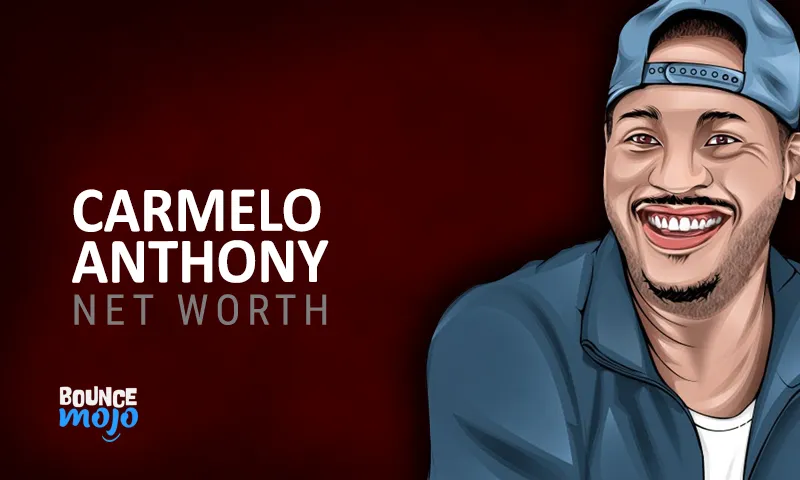
You know Carmelo Anthony as one of the greatest pure scorers basketball has ever seen, and probably as the great one who never won a ring.
Here’s what most people miss: Melo’s story was never really about basketball. It was about surviving a place designed to swallow him, and he buried more friends before eighteen than most people do in a lifetime.
The Myth vs. The Reality
The myth is easy to recite. Carmelo Anthony: silky scorer, three-time Olympic champ, a bucket-getter who could drop 30 in his sleep but never won a ring and never quite led a team to the top. Great talent, incomplete résumé. That’s the version that gets argued on sports talk shows.
The reality cuts a lot deeper.
Here’s the deal: Anthony’s story was never really about basketball. It was about survival. Before he was a lottery pick or an Olympic legend, he was a small kid in Red Hook, Brooklyn, and then West Baltimore, watching the people around him disappear into prison cells and early graves. Basketball wasn’t his passion so much as his exit ramp. The court was the one place the chaos couldn’t reach him.
And that “never won a title” line? It ignores the fact that he won at every level he could actually control. A national championship as a college freshman. Three straight Olympic golds. The truth is that Melo delivered championships everywhere the roster around him was good enough, and the NBA rings that eluded him say as much about his teammates as about him.
You might be wondering: how does a boy who loses his father at two and his friends to the streets grow into one of the steadiest stars of his generation? To get that, you have to understand the world that raised him.
The World That Made Carmelo Anthony
Anthony was born in 1984, into an America that had already decided what neighborhoods like his were worth.
The Red Hook Houses, where he spent his earliest years, sat on the Brooklyn waterfront, cut off from the rest of the city by highways and neglect. Then came the move to Baltimore’s Murphy Homes when he was around eight, a West Baltimore high-rise project so notorious it was known on the street as “Murder Homes.” This was the world of the crack era’s long hangover, of a city that would later be immortalized in shows about exactly the kind of blocks Melo walked every day.
Now: the popular image of an NBA superstar is Southern California sunshine, private trainers and AAU circuits stacked with sneaker money. Anthony came up in the opposite of that. His court was concrete. His competition was grown men. His lessons came from a place where, as one childhood friend put it, drugs and killings and everything else the roughest parts of town could throw at you were witnessed hands-on.
That environment did something specific to him. It didn’t make him loud. It made him watchful, guarded, hard to rattle. The unbothered calm fans later read as aloofness was really a survival skill, learned young, in a place where showing panic could cost you.
The question that hangs over all of it: what made this kid climb out when so many around him didn’t? The answer starts with a father he never got to know and a mother who held the line.
The Crucible: Early Life and the Climb
The environment that shaped him
Carmelo Kyam Anthony never really knew his father. Carmelo Iriarte, a Puerto Rican man from Manhattan, died of cancer when his son was just two years old. Melo grew up carrying the name of a man he had no memory of, raised by his mother, Mary Anthony, who moved the family from Red Hook to Baltimore in search of something better.
Better is relative. The Murphy Homes were their own kind of war zone. In his memoir, Anthony describes a childhood defined by poverty, racism and trauma, the constant low hum of danger that comes with growing up in a place the rest of the country would rather not look at.
Here’s the truth: Melo lost people. Friends to the streets, to prison, to violence. He has said for years that he still struggles to talk about those early days, and it took him decades and a book to finally put words to them. The toughness everyone praised in his game was forged in funerals no teenager should have to attend.
What saved him was a talent that became undeniable almost overnight.
The catalyst
The summer before high school ended, Anthony grew five inches, stretching into the frame of a 6-foot-8 forward with a guard’s touch. Almost suddenly, the kid who’d been good became the kid who was special.
He starred at Towson Catholic in Baltimore, earning Baltimore Sun metro player of the year honors. But the move that changed everything came for his senior season, when he transferred to Oak Hill Academy, the powerhouse prep school in the Virginia mountains. There, in a nationally televised game, he went head-to-head with a high schooler from Akron named LeBron James, dropping 34 points in an Oak Hill win. Two future faces of the league, sharing a court before either had a driver’s license worth bragging about.
It gets better: that senior year turned Anthony into one of the most coveted recruits in the country. And the school he chose next would hand him the greatest single season of his life, and the ring that mattered most.
The Key Players
No one climbs out of a place like the Murphy Homes alone. Anthony’s story is stitched together by the people who shaped it.
His mother, Mary, was the constant. She uprooted the family, kept it together, and gave Melo the ballast that a fatherless kid in a hard place so badly needs. When Anthony talks about who he owes, the conversation starts and ends with her.
Then there was Jim Boeheim, the legendary Syracuse coach who took a one-and-done gamble on a Baltimore teenager and handed him the keys. Boeheim built the 2003 Orange around Anthony’s scoring, and the two delivered something the program had chased for decades.
His draft class became a lifelong crew. Anthony came into the NBA in 2003 alongside LeBron James and Dwyane Wade, and the three, plus Chris Paul, became the “Banana Boat” brotherhood, friends who vacationed together and pushed one another for two decades. That bond outlasted every trade and every team.
And there are the friends who didn’t make it. The ones from Red Hook and Baltimore whose names don’t appear in box scores. Anthony carries them too, and his memoir is in many ways a tribute to that collateral damage, the people the streets kept.
Here’s the kicker: for all the mentors and brothers, the defining relationship of his career might be with a jersey. Because when Melo picked Syracuse, he wasn’t just picking a school. He was writing the first line of a story his own son would finish twenty years later.
The Turning Point
The pinnacle
In 2003, a nineteen-year-old freshman carried Syracuse to the one thing the school had never won.
Anthony was the best player on the floor throughout that NCAA Tournament, a walking mismatch who could post up, shoot over the top or bully his way to the rim. In the national championship game against Kansas, he did it all, and Syracuse won its first and only national title. He was named the tournament’s Most Outstanding Player and then declared for the draft, having conquered college basketball in a single year.
The Denver Nuggets took him third overall, and Melo immediately turned a losing franchise into a perennial playoff team. He gave Denver a full decade, becoming the face of the franchise and one of the most reliable scorers in the league.
But his greatest team success came in a different jersey. With Team USA, Anthony won a bronze in 2004 and then gold in 2008, 2012 and 2016, becoming the first men’s player ever to win three straight Olympic golds. In 2016 he broke the U.S. Olympic scoring record, and he retired as the program’s all-time leading scorer and rebounder with 336 points. On the international stage, no American had done more.
The price
Now here’s the part the highlight reels skip.
For all the scoring and all the golds, the NBA championship never came. There was the 2011 trade that sent him from Denver to the New York Knicks, the team he’d dreamed of playing for as a Brooklyn kid, and a stretch of brilliant individual seasons that never translated into a deep playoff run. Then came the hard late-career years, a nomadic run through Oklahoma City, Houston, Portland and finally the Lakers, chasing a ring that stayed just out of reach.
Anthony has been open about what that cost him emotionally. He has spoken about the doubt and even the depression that crept in during the wilderness years, the stretch when it looked like the league had moved on and no one wanted him. For a man whose whole identity was survival, being told he was finished cut close to the bone.
You might be wondering how a player that successful ends up wrestling with self-doubt. That contradiction is where the real Carmelo Anthony lives.
The Unvarnished Truth
Melo was never the loud, mythologized alpha the media loves to build. And he knows it.
The knock on him for years was that he was a “volume scorer,” a guy who put up big numbers but didn’t lift a team the way a LeBron or a Kobe did. There’s a grain of truth in it. Anthony’s game was built on isolation scoring, on getting his own bucket, and in an era that started to prize ball movement and defense, that style aged in complicated ways.
Here’s the deal: he could be stubborn about it too. He wanted the ball, wanted the shots, wanted to be the guy. That confidence made him one of the most gifted one-on-one scorers who ever lived. It also, at times, made him a hard fit next to other stars, and it contributed to those late-career years when teams weren’t sure how to use an aging isolation forward.
And underneath the calm exterior, there was real pain. The memoir makes clear that the guarded, sometimes distant public Melo was carrying a childhood full of loss that he’d never fully processed. The man who looked unbothered on the court was, for a long time, unable to even talk about where he came from.
That honesty, admitting the doubt, the depression, the stubbornness, is exactly what separated his later years from a simple decline story.
Controversies and Criticisms
Anthony’s career had its share of rough patches, and he’s never pretended otherwise.
There was the 2006 brawl at Madison Square Garden between the Nuggets and Knicks, in which Anthony threw a punch and was suspended fifteen games, one of the ugliest incidents of the era. Early on there were the usual questions about maturity, about a young star from a hard place adjusting to sudden fame and money.
The bigger, quieter controversy was about winning. Critics spent years arguing that a player of his talent should have gotten further in the playoffs, that his ball-dominant style capped the teams around him. It’s a fair debate. It’s also one that flattens a nineteen-year career into a single grievance.
Then there was the personal turbulence, the public strain in his marriage to television personality La La Anthony, which played out in tabloids in a way that clearly wore on him. Melo has generally kept his private life private, which made the occasional public rupture stand out all the more.
But here’s the truth: none of it defines him. What defines him is what he did with a second chance, both on the court and off it. That’s where the lessons live.
What We Can Learn From Carmelo Anthony
Navigating hard times
The clearest lesson from Anthony’s life is that where you start does not have to be where you finish, but escaping still costs something you have to be willing to pay.
He didn’t dodge Red Hook or the Murphy Homes by luck. He escaped through a talent he sharpened obsessively and a mother who refused to let him drift. When the streets were pulling his friends under, he kept showing up to the court. That’s the survival blueprint: find the one thing that’s yours, and guard it like your life depends on it, because sometimes it does.
And when the doubt came late in his career, he didn’t hide it. He named it. Talking openly about depression and self-doubt, especially for a Black man from a background that treats vulnerability as weakness, took a different kind of toughness than any he showed on the court.
The success blueprint
On the basketball side, the takeaway is about mastery over versatility. Anthony wasn’t the fastest or the most athletic. He was the most skilled scorer of his generation because he perfected a specific craft, the mid-range game, the footwork, the jab step, until it was unstoppable. In a world obsessed with doing everything, he got rich, literally and figuratively, doing one thing better than almost anyone alive.
The off-court blueprint is just as sharp. Melo banked roughly $260 million in NBA salary and, crucially, turned it into ownership through his Jordan Brand line, his venture fund and his media ventures. You can see exactly how that machine works in his full net worth breakdown, and how he stacks up against the game’s wealthiest names on our richest NBA players list.
The philosophical lesson? Legacy isn’t only about the trophy you didn’t win. It’s about the doors you open for the people coming behind you.
Final Verdict
Carmelo Anthony’s story doesn’t need a championship ring to be complete.
He came from two of the hardest neighborhoods in America, lost his father before he could remember him and his friends before he could vote, and turned a jump shot into a way out that also carried his family with him. A national title. Three Olympic golds. Nineteen NBA seasons and a Hall of Fame résumé. And now his son Kiyan, wearing orange at Syracuse, the exact school where his father’s legend began, closing a loop that started in a Baltimore project three decades ago.
That, more than any ring, is the measure of Melo. He didn’t just escape. He built a bridge back and walked others across it.
If you want the story in his own words, read Where Tomorrows Aren’t Promised: A Memoir of Survival and Hope, his 2021 memoir written with D. Watkins. It’s the rare athlete book that barely mentions the sport. It’s for anyone who wants to understand the price of surviving a place designed to swallow you, and what it takes to come out the other side with your name still standing.
Shop Carmelo Anthony on Amazon
Books, audiobooks, merch and more, handpicked for fans.
As an Amazon Associate we earn from qualifying purchases.
Frequently Asked Questions
Where did Carmelo Anthony grow up?+
Carmelo Anthony was born in the Red Hook Houses in Brooklyn, New York, then moved with his family to the tough Murphy Homes projects in West Baltimore when he was about eight. Both neighborhoods shaped the toughness he carried onto the court.
What happened to Carmelo Anthony's father?+
His father, Carmelo Iriarte, a Puerto Rican man from Manhattan, died of cancer when Anthony was just two years old. Melo was raised by his mother, Mary Anthony, and grew up without a memory of the man he was named after.
Did Carmelo Anthony win a national championship in college?+
Yes. As a freshman at Syracuse in 2003, Anthony led the Orange to the school's first and only NCAA national title and was named the tournament's Most Outstanding Player before turning pro.
What is Carmelo Anthony's Olympic record?+
Anthony is the first men's basketball player to win three consecutive Olympic gold medals (2008, 2012, 2016), added to a 2004 bronze. He retired as the all-time leading scorer and rebounder in U.S. Olympic men's basketball history with 336 points.
Did Carmelo Anthony's son go to Syracuse?+
Yes. His son Kiyan Anthony, a top-40 recruit in the 2025 class, committed to Syracuse, his father's alma mater, announcing the decision on Melo's own 7PM in Brooklyn podcast.
Want the money side of the story?
Read Carmelo Anthony's Full Net Worth Breakdown →Shop Carmelo Anthony on Amazon
Books, audiobooks, merch and more, handpicked for fans.
As an Amazon Associate we earn from qualifying purchases.