Tracy McGrady Biography: The Gift, the Injuries, the Missing Series
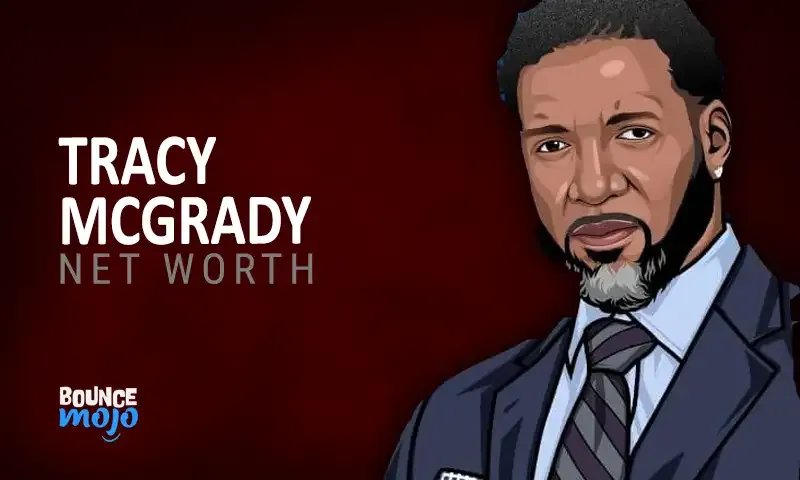
Tracy McGrady was the smooth, sleepy-eyed scorer they called T-Mac, one of the most beautiful players ever to touch a basketball.
Here’s what most people miss: they remember the talent and forget what it quietly cost him.
The Myth vs. The Reality
The myth is simple. Tracy McGrady was a lazy, gifted underachiever who never won anything and coasted on talent.
Here’s the truth:
That version is cruel, and it is mostly wrong. The reality is a story about a body that broke down at the worst possible time, a supporting cast that never quite fit, and a scorer so effortless that people mistook his ease for indifference. McGrady made everything look casual. That was the gift. It was also the trap.
Think about it:
Two scoring titles. Seven All-Star selections. A Hall of Fame jacket. And yet the first line of his obituary, in a lot of people’s minds, is a negative: the guy who never got out of the first round. How does a player that decorated end up defined by an absence?
To understand that, you have to go back to central Florida, to a boy who almost never left it.
The World That Made T-Mac
McGrady came up in the late 1990s, right at the hinge point of NBA history.
The league was searching for its next face after Michael Jordan, and it found a new pipeline in the process: kids straight out of high school. Kevin Garnett had cracked the door open in 1995. Kobe Bryant walked through it in 1996. By 1997, when McGrady declared, the “prep-to-pro” leap was still radical, still risky, still a gamble that could ruin a teenager who was not ready.
Here’s the deal:
This was also the age of the athletic wing, the long, switchable, do-everything perimeter player who could score from anywhere. McGrady was almost the prototype for what the modern NBA would later worship. He was 6-foot-8 with guard skills, a feathery jumper, and hang time that seemed to bend the rules. He arrived a little early for the game that would have loved him most.
And he arrived from a place nobody was watching.
The Crucible: A Small Town and a Grandmother’s House
The environment that shaped him
Tracy Lamar McGrady Jr. was born on May 24, 1979, in Bartow, Florida, and grew up in nearby Auburndale, a small working-class town tucked between Orlando and Tampa.
His father was not part of daily life. So he was raised by two women he both called “Mom”: his mother, Melanise Williford, who worked as a chambermaid at a Disney World hotel, and his grandmother, Roberta Williford, in whose house he spent much of his childhood. Money was tight. The lessons were not.
You might be wondering:
How does a quiet kid from a town most people cannot find on a map become one of the most electric players alive? The honest answer is that for a while, he almost didn’t. Coaches around him later admitted the truth out loud. Without basketball, without the discipline it forced on him, he could have drifted the wrong way. The talent was a lifeline as much as a gift.
The catalyst
The turning point came late, and fast.
McGrady played three years at Auburndale High School, good but not yet famous, before transferring for his senior year to Mount Zion Christian Academy in Durham, North Carolina. There, almost overnight, he exploded onto the national radar. He was named a McDonald’s All-American, North Carolina’s Mr. Basketball, and USA Today’s national high school Player of the Year. Scouts who had never heard of him in the fall were calling him a top-five talent by spring.
Now:
He had a choice that would have looked insane a decade earlier. Skip college entirely. Turn pro at 18. He did it. In the 1997 NBA Draft, the Toronto Raptors selected him ninth overall, straight out of high school, and a shy teenager from Auburndale packed up for a foreign country.
He was about to meet family he never knew he had.
The Key Players: A Cousin, a Rival, and the Women at Home
The strangest twist of McGrady’s early career had nothing to do with basketball. It was blood.
Around draft time, McGrady discovered that Vince Carter, the high-flying star out of North Carolina, was his second cousin. The two had no idea they were related until the family connection surfaced through their grandmothers. Then, in a script no writer would dare pitch, they became teammates. Carter joined the Raptors in 1998, and suddenly Toronto had two of the most explosive young wings in the sport, cousins, feeding off each other, turning a young franchise into appointment television. You can trace Vince Carter’s net worth back to those same Toronto years that launched them both.
But here’s the kicker:
Two alpha wings, one basketball. McGrady was tired of being the sidekick. After two seasons, he left Toronto in 2000 for the Orlando Magic, going home to Florida to become the man. That decision defined the rest of his career, for better and worse.
The other key players never wore a jersey. They were the two women back in Auburndale who raised him. Whatever composure McGrady carried, the refusal to panic, the calm that critics misread as coldness, traced straight back to that grandmother’s house.
Now came the part that made him a legend, and the part that broke his heart.
The Turning Point: The Peak and the Price
The pinnacle
In Orlando, McGrady became one of the deadliest scorers the league had ever seen.
He won back-to-back scoring titles, pouring in a league-high 32.1 points per game in 2003 and 28.0 in 2004. He carried undermanned Magic teams almost single-handedly, dragging rosters that had no business competing into playoff position on the strength of his shot-making alone. Then, in the summer of 2004, he was traded to the Houston Rockets and paired with a 7-foot-6 phenomenon from China, Yao Ming. On paper, it was a title contender. Two franchise players. Endless possibility.
And then came December 9, 2004.
This is the moment that outlived everything else. Houston trailed San Antonio by eight points with 35 seconds left. The game was over. Everyone in the building knew it. Then McGrady scored 13 points in 33 seconds: four three-pointers in a blink, one of them a four-point play over Tim Duncan, the last one the game-winner with under two seconds on the clock. He later described it as an out-of-body experience, and said once that second shot fell, he simply knew he could not miss. It remains one of the greatest closing stretches in NBA history.
The price
Here’s what the highlight never shows you.
McGrady’s back and knees were quietly betraying him. The same body that made the impossible look easy was wearing out early. A degenerative back condition sapped his lift. Then, in February 2009, he underwent microfracture surgery on his left knee, the kind of operation that has ended more explosive careers than it has saved.
The cruelest irony of his life happened that same season:
In 2009, the Rockets finally won a playoff series, the first-round breakthrough McGrady had chased for a decade. He watched it from the sideline, recovering from surgery, unable to log a single minute. The wall he spent his whole prime trying to climb came down without him.
That is where the “never won a series” story hardened into legend. And it is where the criticism began.
The Unvarnished Truth
Let’s be honest about the flaws, without pretending they were the whole man.
McGrady could disappear. There were nights the effort looked lower than it should have, stretches where the body language slumped and the defense wandered. His teams sometimes seemed to lean on him so heavily that when he had an off night, the whole thing collapsed. And he has admitted his own dark moments, once revealing that after the knee injury, in the depths of trying to save his career, he even considered performance-enhancing drugs before deciding against it.
Here’s the truth:
He was human in a job that punishes humanity. When your gift is looking effortless, every ordinary night gets read as apathy. McGrady paid a reputational tax that grinders never pay. The player who visibly strains and fails is called a warrior. The player who glides and falls short gets called soft. McGrady lived on the wrong side of that unfair line.
And the critics were only getting started.
Controversies and Criticisms
The knock on McGrady was never really about numbers. It was about January and April.
The central charge followed him everywhere: he never got his team out of the first round in his prime. Seven times his teams went in as contenders or hopefuls, and seven times they came out early, often in a Game 7, often in heartbreaking fashion. Fans turned it into a punchline. Analysts used it as the ceiling on his legacy. For a scorer of his caliber, it was a strange and specific kind of curse.
You might be wondering:
Was it fair? Partly. Great players are supposed to lift their teams in the biggest moments, and his rarely got over the hump. But context matters. His Orlando rosters were thin. His Houston runs kept colliding with injuries, his own and Yao’s. And the man himself never hid from it. When he was inducted into the Hall of Fame in 2017, he looked the doubt dead in the eye and said, “Yes, I deserve to be here,” turning a lifetime of criticism into the emotional core of his speech.
He was right to. But before that vindication, there was one more chapter almost nobody saw coming.
Quote Analysis: The Man in His Own Words
McGrady’s words carry the same quality as his game: calm on the surface, a lot going on underneath.
“Yes, I deserve to be here.” Said at his Hall of Fame induction, this is not arrogance. It is the sound of a man who spent years being told his career did not count, finally refusing to apologize for it. His wife, CleRenda, had reportedly made him stand in front of a mirror and say it out loud, because he could not at first. That detail tells you everything about the doubt he carried.
On the 33-second miracle, he called it “an out-of-body experience.” Read the subtext:
Even the man who did it could not fully explain it. The greatest moment of his career felt less like something he controlled and more like something that passed through him. That is a strikingly honest thing for a superstar to admit. It reframes the whole McGrady story: a player whose ceiling was so high that even he was sometimes a spectator to it.
So what do you do when the body finally quits? McGrady’s answer was not what anyone expected.
What We Can Learn From Tracy McGrady
Navigating the hard times
McGrady’s career is a study in accepting what you cannot control.
The back condition was genetic. The microfracture surgery was medical. The timing of that 2009 series win was pure, brutal luck. None of it was a character flaw, but all of it got blamed on his character anyway. The lesson is uncomfortable and real: sometimes you do the work, and the outcome still slips away, and the world writes the story wrong. What you own is how you carry it. McGrady eventually chose grace over grievance.
The success blueprint
Now, the part worth copying.
McGrady turned a huge but finite playing income into something that outlasts a jersey. His Adidas T-Mac signature line paid him for his name. He moved into an ESPN analyst chair to stay visible and relevant. And he founded the Ones Basketball League, betting his own money on a sport he understands better than almost anyone alive. That is the difference between a paycheck and a fortune, and it is exactly the pattern that separates the athletes who stay wealthy from the ones who don’t. You can see how it added up in his full net worth breakdown, and how he stacks up against the richest NBA players who built lasting money the same way.
Becoming better
Here’s the bottom line:
McGrady teaches you to separate your worth from your record. His talent was undeniable and his trophy case has a hole in it, and both things are true at once. He stopped letting the missing ring define him. That is a harder win than any playoff series.
Which brings us to the strangest, most human chapter of all.
Final Verdict
After basketball, Tracy McGrady did something almost nobody in his position would dare.
In 2014, at 35 and freshly retired, he tried to become a professional baseball pitcher. He made the Opening Day roster for the Sugar Land Skeeters of the independent Atlantic League, took the mound in four starts, posted a 6.75 ERA, and then walked away. It was not a stunt so much as a statement: the same restless kid from Auburndale who once bet everything on a leap from high school was still willing to look foolish in pursuit of something new.
That is the real Tracy McGrady.
Not the lazy myth. Not the first-round punchline. A quietly stubborn man from a small Florida town, raised by his grandmother, gifted beyond reason, wounded by timing, and honest enough to say out loud that he deserved his place among the greats. He was one of the most beautiful players to ever pick up a basketball. The series he never won does not change that. If anything, it makes the man more interesting than the legend ever was.
Shop Tracy McGrady on Amazon
Books, audiobooks, merch and more, handpicked for fans.
As an Amazon Associate we earn from qualifying purchases.
Frequently Asked Questions
Where did Tracy McGrady grow up?+
McGrady grew up in Auburndale, Florida, a small town in the center of the state. He was raised primarily by his mother, Melanise, and his grandmother, Roberta Williford, both of whom he called 'Mom.'
Did Tracy McGrady go to college?+
No. McGrady jumped straight from high school to the NBA, declaring for the 1997 draft after his senior year at Mount Zion Christian Academy in Durham, North Carolina. Toronto took him ninth overall at age 18.
Are Tracy McGrady and Vince Carter really cousins?+
Yes. They are second cousins and did not know it until they met through a family connection around the time of the 1997 draft. They later became teammates and All-Star running mates with the Toronto Raptors.
Why do people say Tracy McGrady never won a playoff series?+
For most of his prime, McGrady's teams kept losing in the first round, often in Game 7. He finally advanced past the first round only in 2013, at the very end of his career, as a benchwarmer for the San Antonio Spurs.
Did Tracy McGrady play professional baseball?+
Yes. In 2014, after retiring from the NBA, McGrady pitched for the Sugar Land Skeeters of the independent Atlantic League. He made four starts and posted a 6.75 ERA before stepping away.
Want the money side of the story?
Read Tracy McGrady's Full Net Worth Breakdown →Shop Tracy McGrady on Amazon
Books, audiobooks, merch and more, handpicked for fans.
As an Amazon Associate we earn from qualifying purchases.